Redefining the Enterprise Stack: Microsoft Accelerates Agentic AI Across Sales and Customer Service

Microsoft has officially expanded its enterprise artificial intelligence footprint by launching a new suite of dedicated tools across Microsoft 365 Copilot and Dynamics 365, marking the general availability of its specialized Sales Agent and Service Agent. As detailed by IT Brief UK, these specialized capabilities are strategically designed to alleviate systemic administrative friction by directly embedding role-specific intelligence into everyday applications like Outlook, Teams, and Word. This product expansion surfaces critical account summaries, opportunity timelines, and client interaction records, directly addressing the heavy contextual tax born by corporate teams moving manually between fragmented software environments.
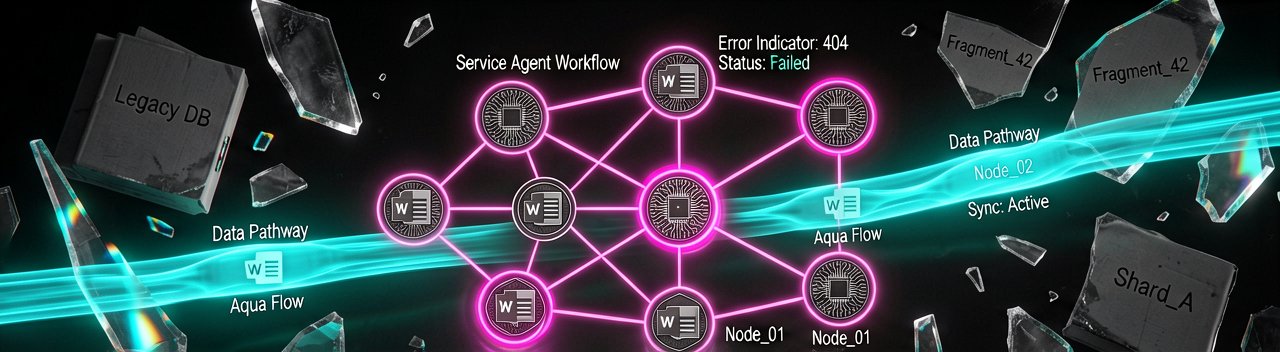
This deployment indicates an aggressive, broader architectural shift within the enterprise landscape, transitioning from passive conversational chat assistants to proactive, autonomous "agentic" infrastructure. According to an official strategy overview on the Microsoft Dynamics 365 Blog, the contemporary corporate mandate requires moving past traditional lookup methods to relieve front-line personnel from data assembly tasks. By synthesizing cross-platform telemetry via Work IQ alongside deep internal repositories via Microsoft Dataverse and SharePoint, these agents act as unified, context-aware systems capable of orchestrating complex cross-functional routines without human intervention.
The Structural Convergence of CRM and Productivity Environments
The market implications of anchoring specialized agents within the Microsoft 365 core ecosystem are profoundly disruptive to traditional, isolated customer relationship management (CRM) architectures. By combining productivity clients with transactional systems of record, Microsoft effectively minimizes systemic application-switching. This unified experience threatens legacy software models by natively executing complex tasks, such as generating child service cases, updating deal pipelines, and logging client notes directly out of communication feeds.
The Escalating Competitive Frontier of Agentic CX Platforms
Enterprise technology markets are witnessing an intense evolution as major cloud hyperscalers race to claim ownership over autonomous execution layers. Microsoft’s rapid commercialization of specialized service components challenges standalone enterprise solutions by establishing a deeply integrated alternative. As corporations prioritize consolidating vendor bills and extracting actual economic returns from heavily funded AI investments, providing direct, role-specific agents that fit cleanly into existing worker desktops is a massive competitive advantage.
The Hard Economics of Autonomous Workflow Orchestration
What Most Reports Miss: The aggressive deployment of the Sales and Service Agents happens amidst a larger, more pressing structural realignment across the enterprise software industry. While public announcements emphasize user convenience and administrative relief, chief information officers face rigorous pressure to justify steep AI software investments. High-tier premium licensing models, which combine Dynamics 365 Enterprise frameworks with Microsoft 365 Copilot subscriptions, create immediate financial hurdles that demand measurable operational returns to justify extensive cross-departmental deployment.
This operational pressure is visibly altering the corporate workforce. Tech sector restructurings, including recent internal sales reorganization strategies covered by ERP Today, highlight how commercial operating engines are shifting under the weight of automation. Corporate leadership teams firmly maintain that agent infrastructure is not an outright replacement for human staff, yet they acknowledge that a deep transformation of baseline roles is actively underway. The core focus is pivoting away from historical data input tasks toward higher-value client interactions and complex problem-solving routines.
The technical underpinning facilitating this transition relies heavily on the integration of over 70 Model Context Protocol (MCP) tools within the ecosystem, as documented by CRM Experts Online. This open-standard foundation prevents the agents from executing tasks inside an isolated vacuum. Instead, it allows them to read live operational patterns and move fluidly across diverse enterprise environments, converting passive chat interfaces into dynamic transactional execution engines.
However, moving from limited pilot projects to fully autonomous operations presents severe data readiness challenges. Early adoption telemetry indicates that the vast majority of legacy enterprises struggle to scale autonomous systems because their internal databases remain deeply fragmented. For these organizations, deploying agentic technology requires a comprehensive overhaul of data governance and security frameworks to ensure these background tools can execute real-time decisions safely and reliably.

Microsoft has officially expanded its enterprise artificial intelligence footprint by launching a new suite of dedicated tools across Microsoft 365 Copilot and Dynamics 365, marking the general availability of its specialized Sales Agent and Service Agent. As detailed by IT Brief UK, these specialized capabilities are strategically designed to alleviate systemic administrative friction by directly embedding role-specific intelligence into everyday applications like Outlook, Teams, and Word. This product expansion surfaces critical account summaries, opportunity timelines, and client interaction records, directly addressing the heavy contextual tax born by corporate teams moving manually between fragmented software environments.
This deployment indicates an aggressive, broader architectural shift within the enterprise landscape, transitioning from passive conversational chat assistants to proactive, autonomous "agentic" infrastructure. According to an official strategy overview on the Microsoft Dynamics 365 Blog, the contemporary corporate mandate requires moving past traditional lookup methods to relieve front-line personnel from data assembly tasks. By synthesizing cross-platform telemetry via Work IQ alongside deep internal repositories via Microsoft Dataverse and SharePoint, these agents act as unified, context-aware systems capable of orchestrating complex cross-functional routines without human intervention.
The Structural Convergence of CRM and Productivity Environments
The market implications of anchoring specialized agents within the Microsoft 365 core ecosystem are profoundly disruptive to traditional, isolated customer relationship management (CRM) architectures. By combining productivity clients with transactional systems of record, Microsoft effectively minimizes systemic application-switching. This unified experience threatens legacy software models by natively executing complex tasks, such as generating child service cases, updating deal pipelines, and logging client notes directly out of communication feeds.
The Escalating Competitive Frontier of Agentic CX Platforms
Enterprise technology markets are witnessing an intense evolution as major cloud hyperscalers race to claim ownership over autonomous execution layers. Microsoft’s rapid commercialization of specialized service components challenges standalone enterprise solutions by establishing a deeply integrated alternative. As corporations prioritize consolidating vendor bills and extracting actual economic returns from heavily funded AI investments, providing direct, role-specific agents that fit cleanly into existing worker desktops is a massive competitive advantage.
The Hard Economics of Autonomous Workflow Orchestration
What Most Reports Miss: The aggressive deployment of the Sales and Service Agents happens amidst a larger, more pressing structural realignment across the enterprise software industry. While public announcements emphasize user convenience and administrative relief, chief information officers face rigorous pressure to justify steep AI software investments. High-tier premium licensing models, which combine Dynamics 365 Enterprise frameworks with Microsoft 365 Copilot subscriptions, create immediate financial hurdles that demand measurable operational returns to justify extensive cross-departmental deployment.
This operational pressure is visibly altering the corporate workforce. Tech sector restructurings, including recent internal sales reorganization strategies covered by ERP Today, highlight how commercial operating engines are shifting under the weight of automation. Corporate leadership teams firmly maintain that agent infrastructure is not an outright replacement for human staff, yet they acknowledge that a deep transformation of baseline roles is actively underway. The core focus is pivoting away from historical data input tasks toward higher-value client interactions and complex problem-solving routines.
The technical underpinning facilitating this transition relies heavily on the integration of over 70 Model Context Protocol (MCP) tools within the ecosystem, as documented by CRM Experts Online. This open-standard foundation prevents the agents from executing tasks inside an isolated vacuum. Instead, it allows them to read live operational patterns and move fluidly across diverse enterprise environments, converting passive chat interfaces into dynamic transactional execution engines.
However, moving from limited pilot projects to fully autonomous operations presents severe data readiness challenges. Early adoption telemetry indicates that the vast majority of legacy enterprises struggle to scale autonomous systems because their internal databases remain deeply fragmented. For these organizations, deploying agentic technology requires a comprehensive overhaul of data governance and security frameworks to ensure these background tools can execute real-time decisions safely and reliably.
The Friction Between Marketing Promises and Operational Realities
Reading Between the Lines: The tech industry’s pivot toward agentic workflows contains an inherent contradiction regarding historical enterprise behavior. Software vendors routinely pitch autonomous agents as a mechanism to free humans from mundane administrative duties so they can focus on high-value strategy. However, the historic precedent of corporate cost-cutting suggests that when automation successfully eliminates ninety percent of routine tasks, leadership rarely reinvests that found time into strategic thinking; instead, they downsize the headcount to meet immediate margin targets.
Furthermore, the reliance on Model Context Protocol tools and multi-source data ingestion assumes a level of data hygiene that simply does not exist inside most Fortune 500 companies. Microsoft's sales and service tools are only as proficient as the context they scrape from unorganized SharePoint directories and outdated Dataverse fields. Forcing an autonomous agent to navigate a disorganized, historically messy corporate database introduces a high probability of confidently executed algorithmic errors, transforming simple data clerical errors into scaled operational bottlenecks.
Ultimately, this architectural shift highlights an ongoing tug-of-war for the underlying identity of the B2B tech stack. Microsoft is betting that productivity interfaces like Outlook and Teams will swallow up specialized transactional engines, forcing dedicated CRM software vendors into the background. Yet, this consolidation strategy depends entirely on enterprise buyers accepting a continuous cycle of premium seat monetization. Industry adoption will hinge less on technical novelty and more on whether corporations can actually quantify productivity improvements before tech budget fatigue definitively sets in.
The corporate dream has shifted from an employee who can answer emails faster to a background script that removes the human entirely, proving that the ultimate destination of modern digital transformation is a perfectly synchronized enterprise where automated software endlessly cross-references its own synthetic data while human executives look at charts of the interaction.
Artūras Malašauskas is an AI Systems Integrator with 20+ years of production-grade web engineering experience. He has designed, shipped, and scaled enterprise Python/PHP systems for logistics, SaaS, and public-sector clients. For the past year, he has focused exclusively on AI integrations: deploying open-source LLMs, building generative media pipelines (image, audio, video), and engineering multi-agent workflows for real production environments. His standard: reproducibility, security, cost-efficient inference—no vaporware. He documents and evaluates emerging AI tooling, separating verified capabilities from marketing noise. Technical editor at: muza-ai.eu, ai-verslas.lt, ai-naujinos.lt Connect on LinkedIn
Comments