Samsung Active Targets the Trillion-Dollar Gap in AI Infrastructure With New Network Bottleneck ETF

Samsung Active Asset Management has officially launched the KoAct Optical Communication & Satellite Network Active ETF, a specialized investment vehicle designed to target structural bottlenecks in artificial intelligence scaling. As detailed by The Asia Business Daily, this active fund isolates high-growth companies building essential hardware for rapid data transmission. Hyperscale data centers require seamless inter-GPU connectivity, making the underlying network architecture a pivotal driver of computing performance. By shifting financial focus toward the physical pipelines that move vast amounts of data, the fund aims to capture enterprise capital moving from core compute layers to interconnected networks.
This fund arrival signals a major strategic transition within the broader technology market, expanding beyond early-stage hardware accumulation. Earlier this year, a parallel product from Samsung Asset Management focused on optical transceivers revealed significant investor demand, indicating a broader pivot away from raw semiconductor manufacturing toward holistic network optimization, according to market insights tracked by BigGo Finance. As large language models scale exponentially, standard electrical interconnects introduce latency and thermal constraints, forcing major operators to adopt advanced photonics and satellite arrays to prevent severe processing slowdowns.
The institutional race for infrastructure supremacy has shifted the competitive landscape from capital spending volume to infrastructure capability, as observed by industry analysts at Investing.com . Hyperscalers must secure highly efficient physical pipelines alongside high-performance memory to protect their market position and support next-generation token delivery. This structural supply gap in back-end network capacity underscores the critical hardware limitations that currently restrict global cloud ecosystems from executing seamless AI workloads.
Solving the Interconnect Pipeline Constraint
Modern data center clusters face massive inefficiencies when thousands of graphical processing units communicate simultaneously. Traditional copper cabling cannot sustain the bandwidth requirements over long distances, which creates severe data transmission bottlenecks. By capturing companies specializing in optical interconnects and next-generation transceiver hardware, this active fund positions itself directly in front of the next mandatory upgrade cycle for high-density computing clusters.
Expanding Into Satellite and Edge Infrastructures
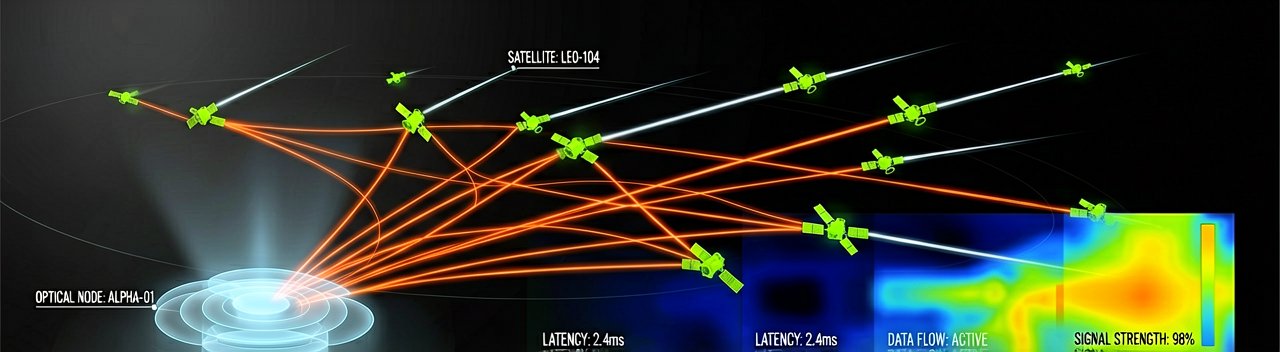
Deploying large-scale frontier models demands geographic diversity in data routing alongside hyper-localized data center operations. Integrating satellite communication companies alongside land-based optical developers provides an alternative networking fabric for distributed AI workloads. This approach helps lower spatial latency and supports remote enterprise edge installations, ensuring computing nodes stay synchronized globally without relying entirely on legacy telecom pathways.
Behind the Scenes: Inside the Physical Limits of Next-Generation Scaling
The Next Multi-Billion Dollar Chokepoint: The architecture of artificial intelligence clusters has hit a physical wall that cannot be solved by simply adding more processing cores. For the past several years, venture capital and institutional asset allocation poured almost exclusively into silicon manufacturing and raw compute performance. However, engineering teams at major hyperscalers are finding that thousands of cutting-edge accelerators are frequently left idling, waiting for data packets to travel across legacy copper-based internal networks. This latency deficit destroys operational efficiency, driving up the total cost of ownership for frontier models and turning network layout into the primary battleground for training performance.
Historical shifts in high-performance computing echo this current structural crisis. In previous technology cycles, data center operators scaled infrastructure horizontally through standardized ethernet configurations, which were more than adequate for decoupled cloud applications. Modern generative models, by contrast, require massive parallel processing workloads where clusters must act as a single, coherent supercomputer. This workload shift makes the physical layer of data transmission—specifically ultra-high-speed optical transceivers and automated switching matrices—the defining variable in whether an enterprise can successfully train a trillion-parameter model without encountering catastrophic data dropouts.
From the perspective of network architects, the transition from electrical to optical signaling is no longer an optional optimization but a mandatory architectural pivot. Silicon photonics companies are seeing unprecedented order backlogs as cloud providers rush to replace copper interconnects with laser-driven fiber pipelines capable of moving terabits of data per second with minimal heat generation. By packaging these deeply specialized component manufacturers into an active ETF, asset managers are giving institutional investors a way to hedge against GPU oversupply while capturing the high-margin hardware suppliers that make massive cluster synchronization physically possible.

This network bottleneck also extends far beyond the data center floor and into the global transit layer. As terrestrial fiber networks face regional power and permitting constraints, the integration of low-Earth orbit satellite constellations represents a critical secondary pathway for distributed machine learning workloads and edge deployment. The market is beginning to price in a future where data centers are no longer centralized monoliths, but globally distributed nodes that rely on a hybrid fabric of orbital links and subsea fiber to synchronize localized weights. This broader infrastructure reality shifts the investment thesis from a localized semiconductor race to a complex, multi-layered logistics challenge spanning hardware, light, and aerospace engineering.
Reading Between the Lines: The Friction Between Capital Inflow and Real-World Physics
The Illusion of Unlimited Scaling: Financial markets routinely treat infrastructure bottlenecks as simple arithmetic problems that can be solved by throwing capital at them. The launch of specialized networking funds rests on the assumption that identifying a hardware chokepoint automatically guarantees outsized returns for the companies tasked with clearing it. However, this perspective overlooks the reality that optical networking and silicon photonics face hard material science limitations that do not conform to the rapid development cycles of software or digital semiconductors. Upgrading data center fabrics from electrical to optical interconnects requires solving deep thermal, manufacturing, and yields-related issues that capital alone cannot instantly fix.
A notable contradiction lies in the market's current valuation of the AI supply chain. Wall Street eagerly penalizes core chipmakers at the first sign of a capital expenditure slowdown, yet simultaneously inflates the valuation of secondary infrastructure providers whose entire business models depend on that very same capital expenditure. If hyperscale cloud providers decide to decelerate their frantic data center expansions due to diminishing returns on software monetization, the demand for high-end optical transceivers and satellite links will drop sharply. Investors crowding into specialized infrastructure funds may find themselves holding highly cyclical hardware stocks right as the broader tech industry enters a consolidation phase.
Furthermore, relying on satellite networks to alleviate terrestrial data transmission chokepoints introduces a massive operational contradiction. While low-Earth orbit satellite constellations offer incredible geographical reach for edge deployments, they introduce variable latency and packet loss risks that are completely antithetical to the hyper-precise synchronization required by LLM training clusters. Using orbital networks as a foundational layer for AI infrastructure is highly speculative, blending two capital-intensive, low-margin hardware industries under the promotional banner of artificial intelligence scaling.
In the long run, the rush to fund network optimization could inadvertently accelerate a shift toward smaller, highly efficient local models that do not require massive cluster fabrics to operate. As algorithmic optimization outpaces hardware deployment, enterprise developers are finding ways to compress models so they run efficiently on existing, less complex hardware configurations. If the industry successfully pivots toward decentralized, low-bandwidth AI models, the massive, capital-heavy optical pipelines currently under construction risk becoming premature monuments to an era of unoptimized computational brute force.
Building a trillion-dollar intelligence engine is an impressive feat of modern engineering, right up until a multi-million dollar cluster gets brought to its knees because the industry forgot that photons travel slower through glass than hype travels through a marketing brochure.
Artūras Malašauskas is an AI Systems Integrator with 20+ years of production-grade web engineering experience. He has designed, shipped, and scaled enterprise Python/PHP systems for logistics, SaaS, and public-sector clients. For the past year, he has focused exclusively on AI integrations: deploying open-source LLMs, building generative media pipelines (image, audio, video), and engineering multi-agent workflows for real production environments. His standard: reproducibility, security, cost-efficient inference—no vaporware. He documents and evaluates emerging AI tooling, separating verified capabilities from marketing noise. Technical editor at: muza-ai.eu, ai-verslas.lt, ai-naujinos.lt Connect on LinkedIn
Comments