South Korea’s State-Backed Free AI Rollout: Redefining the Private Generative Market
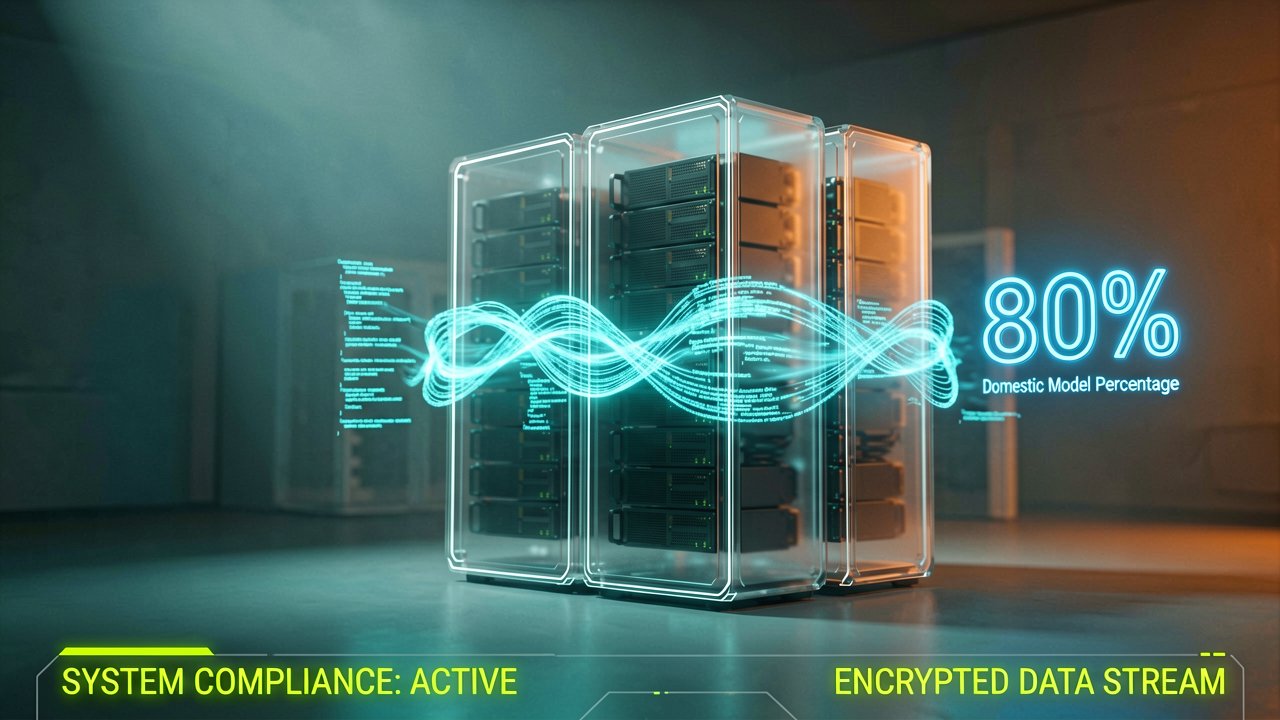
The South Korean Ministry of Science and ICT has officially initiated a disruptive public tender for its "AI for All" project, introducing a completely free, unlimited generative AI chatbot and public agent service for nationwide use. Operating on a stringent protectionist framework, the government mandates that selected private operators must ensure at least 80% of the underlying foundational models are developed domestically. This sudden transition from private monetization to state-subsidized public utility forces commercial vendors to radically pivot their business strategies to survive a state-sponsored infrastructure wave.
To catalyze this rollout, the government is immediately provisioning 512 state-owned Nvidia B200 graphics processing units (GPUs) to support service development before transitioning to a fully state-funded operational budget. The state-backed program targets the delivery of a general-purpose public chatbot alongside a proactive public AI agent designed to independently navigate welfare eligibility, cross-reference data, and complete government applications for citizens. By turning baseline conversational AI into an infrastructural right, the state effectively devalues the direct-to-consumer monetization models of local tech companies.
Market Disruption and Private Sector Adaptation
What Most Reports Miss: The state's aggressive entry does not simply crowd out private sector initiatives; it systematically forces a migration up the technology stack. Domestic tech giants, which previously relied on basic corporate enterprise subscriptions and tier-based premium consumer models, must now focus exclusively on hyper-specialized vertical services. Because the baseline utility of natural language processing and public administration assistance is completely subsidized, commercial entities are moving toward deep integration inside industries like automated heavy manufacturing and regional smart-factory logistics. This structural adjustment aligns with the state’s broader fiscal framework, including the multi-trillion won digital initiatives coordinated via the Ministry of Science and ICT budget.
This macro-economic shift forces participating private operators to monetize user interactions through secondary data acquisition rather than upfront subscription fees. The state explicitly requires chosen consortiums to establish distinct commercial revenue streams using anonymized data secured during citizen interactions, ensuring long-term financial viability. Consequently, private corporations are retooling their systems to deploy advanced data pipelines capable of refining industrial applications, education, and financial management tools. These specialized secondary layers operate independently of the free public tier, changing how local tech conglomerates value raw consumer traffic.
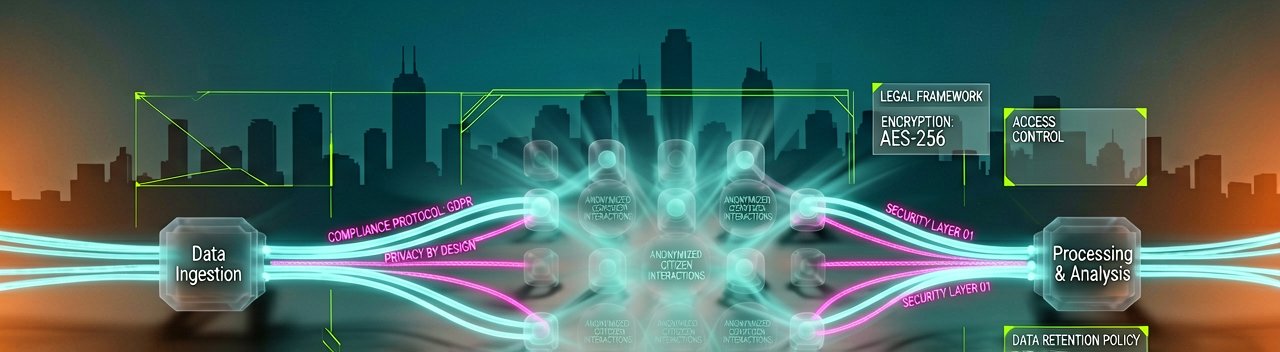
Furthermore, this public deployment operates under a strict, newly implemented legal environment that changes the risk calculation for local builders. Providers must balance rapid, free public iteration with the rigid compliance standards of the newly active AI Framework Act, which imposes stringent transparency obligations and watermarking protocols. The interaction between massive state computing subsidies and heavy domestic compliance creates a unique sandbox environment. South Korea’s strategy aims to insulate local industries from foreign hyperscaler dominance by establishing a fully domestic, sovereign digital base layer that transforms basic artificial intelligence from a commercial product into public infrastructure.
The Hidden Fault Lines of Sovereign AI
Reading Between the Lines: The state's aggressive socialization of generative AI presumes that treating large language models as a public utility will automatically spark private sector innovation up the technology stack. However, this assumption ignores the brutal capital realities of modern machine learning. By wiping out the domestic consumer monetization market overnight, the Ministry of Science and ICT is removing the very retail revenue runways that local mid-sized startups require to fund their high-risk R&D. Expecting private enterprises to seamlessly transition into hyper-specialized industrial verticals ignores the fact that B2B software integration requires immense customized engineering overhead—a luxury few companies can afford when their primary consumer consumer-facing pipelines have been made obsolete by free state alternatives.
A glaring structural contradiction also lies in the government's computing math. Provisioning 512 Nvidia B200 GPUs is an impressive political gesture for a press release, but it represents a mere drop in the bucket compared to the massive clusters utilized by global hyperscalers. If the state-backed service achieves the universal, friction-free adoption the ministry anticipates, this modest compute infrastructure will face immediate bottlenecks. The state will then be forced into an uncomfortable fiscal dilemma: either continually siphon trillions of won from taxpayers to heavily subsidize private cloud infrastructure, or ration access to what was promised as an unlimited public right, ultimately throttling the very digital adoption it set out to accelerate.
Furthermore, the mandate that private operators derive secondary revenue from anonymized citizen data creates a dangerous friction point with the nation's strict data protection frameworks. The state is essentially asking private consortiums to volunteer their technical expertise for free public utility in exchange for the right to mine public interactions. This setup creates an perverse incentive structure where the "free" public tool must be designed to maximize data harvesting rather than pure user utility. As regulatory scrutiny intensifies under the newly minted AI Framework Act, the legal liabilities of managing this public-private data loop may quickly outweigh the financial benefits of the government's subsidized compute access.

Ultimately, this initiative risks trapping South Korea’s tech ecosystem in a localized sandbox. While the 80% domestic foundational model requirement successfully insulates the local market from immediate American or Chinese tech dominance, it simultaneously disincentivizes domestic firms from building models that can compete globally. By optimizing architectures purely for the unique, state-regulated administrative needs of Seoul's public sector, South Korean AI developers may find themselves building highly sophisticated tools for which there is absolutely no market outside their own borders.
In the end, treating artificial intelligence like public tap water ensures everyone gets a drink, but it leaves private tech giants trying to sell gourmet ice cubes in a flood—proving once again that when the government promises to level the playing field, it usually does so by flattening the players.
Artūras Malašauskas is an AI Systems Integrator with 20+ years of production-grade web engineering experience. He has designed, shipped, and scaled enterprise Python/PHP systems for logistics, SaaS, and public-sector clients. For the past year, he has focused exclusively on AI integrations: deploying open-source LLMs, building generative media pipelines (image, audio, video), and engineering multi-agent workflows for real production environments. His standard: reproducibility, security, cost-efficient inference—no vaporware. He documents and evaluates emerging AI tooling, separating verified capabilities from marketing noise. Technical editor at: muza-ai.eu, ai-verslas.lt, ai-naujinos.lt Connect on LinkedIn
Comments