RedCloud CORE Unveils the Next Paradigm of Algorithmic Trade Execution
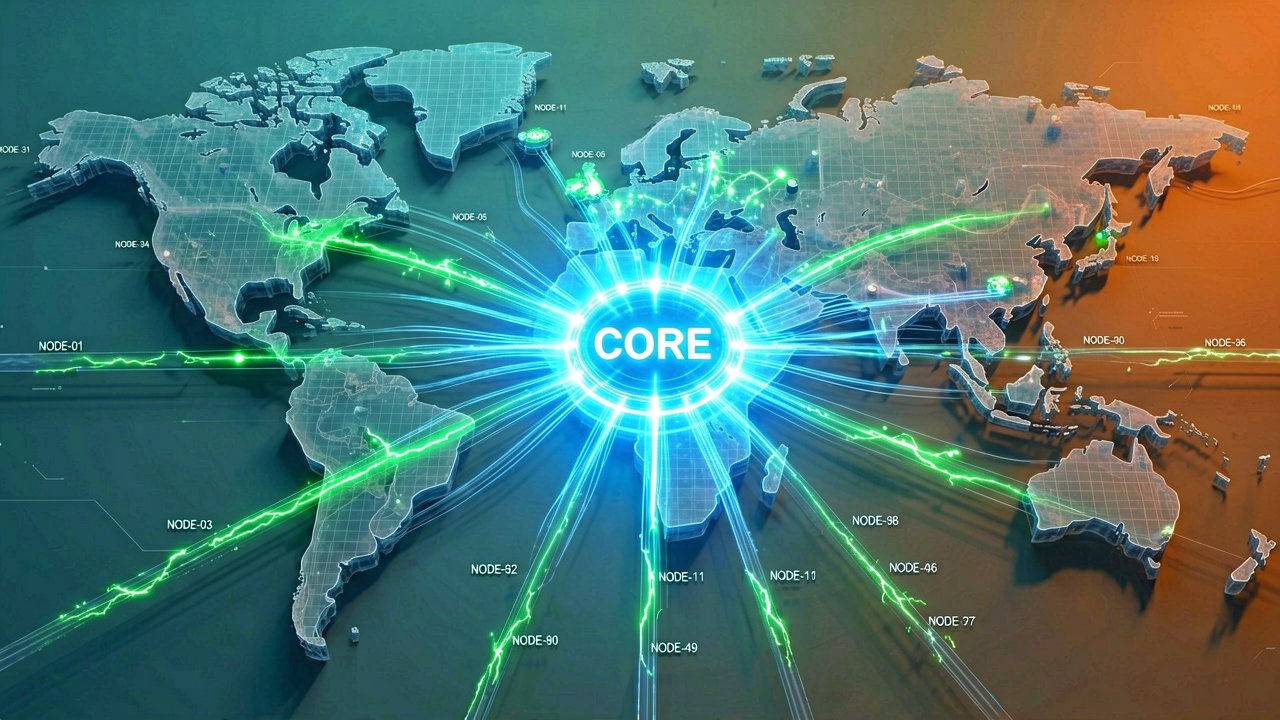
The global trading infrastructure is shifting from passive recommendation engines toward unified environments capable of automated execution. The official launch of CORE (Compounding Operating Runtime Engine) by Yahoo Finance marks a critical milestone for RedCloud Holdings plc, integrating real-time market insights with immediate transactional operations. Built directly upon a staggering $6.9 billion proprietary fast-moving consumer goods data foundation, this new operating environment effectively bridges the systemic latency between discovering an opportunity and deploying capital.
Historically, enterprise trading systems separated business intelligence from market execution, demanding human intervention to transfer data insights across disjointed platforms. By pairing CORE with its foundational RAID intelligence engine, RedCloud bypasses these administrative bottlenecks to let specialized AI agents handle complex workflows from predictive pricing benchmarks to localized order fulfillment. This strategy significantly addresses the trillions of dollars lost annually to global supply chain inefficiencies and persistent inventory misalignment.
Architecting Decision Intelligence Over Administration
Modern commercial frameworks face a severe data fragmentation issue where business planners analyze trends in one tool but place manual orders in another. The launch of CORE provides a unified environment where autonomous agents analyze patterns, adjust channel distribution, process regional payments, and update inventories instantly.
Expanding Infrastructure across High-Growth Global Markets
RedCloud is actively scaling its AI-native architecture across international corridors through highly targeted joint ventures and regional licensing models. This ongoing rollout follows substantial commercial deployments including an operational launch in Nigeria, a major joint venture in Saudi Arabia, and a strategic $120 million licensing agreement expanding operations into India.
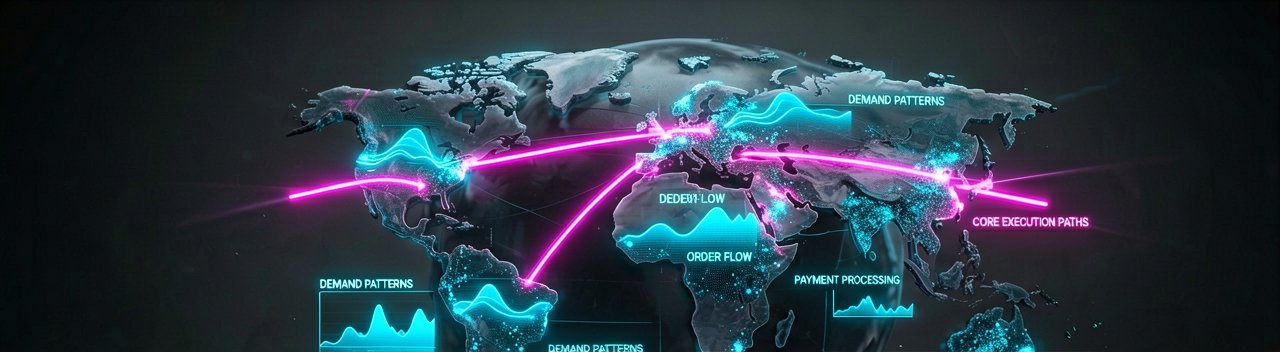
Behind the Scenes: The launch of CORE (Compounding Operating Runtime Engine) marks a fundamental shift away from static "systems of record" toward active operational execution. According to detailed disclosures on Yahoo Finance, global trade infrastructure has traditionally been trapped in administrative loops. Companies routinely look at intelligent predictions in one software interface and then instruct employees to log into an entirely separate enterprise resource planning platform to actually purchase the physical goods. This administrative handoff causes severe operational latency, leaving trillions of dollars tied up in inventory backlog or missed hyper-local market opportunities.
The core technology strategy relies on pairing this new runtime engine with RedCloud's existing RAID (Realtime AI for Distribution) infrastructure. While RAID operates as the analytical brain—combing through raw fast-moving consumer goods transactions to map local demand and pricing fluctuations—CORE acts as the physical nervous system. When specialized software agents identify an emerging regional deficit or a sudden pricing anomaly, they pass that intelligence to CORE to immediately place purchasing orders, route border payments, and allocate localized logistics networks without waiting on human data entry.
Balancing Autonomous Control and Human Verification
To safely scale autonomous trade across complex international supply chains, the platform enforces a rigorous human-in-the-loop governance structure. In practice, when an agent detects an optimized trading opportunity, it generates a comprehensive strategy that a human trade planner must review, adjust, or formally authorize. Fully automated execution is intentionally isolated to tightly constrained, low-value, and low-risk transactions. This explicit structural safeguard protects enterprise customers from runaway algorithmic loops while systematically eliminating the repetitive data input that slows down cross-border trading velocity.
Capital Deployment and International Footprint Realities
The rollout of this unified trade environment directly underpins RedCloud's aggressive global market expansion across high-growth corridors. The corporate footprint has scaled via major regional joint ventures and high-value licensing frameworks, including an up to $120 million deployment partnership in India and a specialized enterprise infrastructure rollout across Saudi Arabia. By deploying localized AI agents backed by Anthropic's Claude infrastructure, the technology is moving directly into localized consumer goods, footwear, and apparel categories to capture clear, real-time ground truths within complex emerging economies.

The Friction Between Algorithmic Realities and Ground-Level Supply Chains
Reading Between the Lines: The tech sector regularly treats a multi-billion-dollar data foundation as an unassailable source of truth, yet a fundamental contradiction lies at the intersection of digital decisioning and physical moving parts. RedCloud’s CORE promises to erase latency by matching real-time market data with automated execution, but the fast-moving consumer goods ecosystems it targets are notoriously messy. Algorithms require clean, predictable inputs to route capital optimally, but the actual warehouses, truck fleets, and border checkpoints in developing markets operate on a chaotic diet of missing paperwork, fuel shortages, and unpredictable local disruptions.
This reality forces tech journalists and market analysts to look carefully at how much efficiency an operating environment can squeeze out of a fundamentally inefficient physical world. If a software agent executes a flawless, real-time transaction based on an impeccable demand curve, that efficiency stalls the moment an ordered shipment of consumer goods hits a physical port bottleneck or a regional distribution center lacking automated offloading. The technology effectively solves the intellectual half of the commerce equation, while leaving the heavy lifting of physical infrastructure vulnerable to legacy operational friction.
Furthermore, scaling this model through massive international licensing agreements—such as the hundred-million-dollar pushes into highly complex geographies—introduces distinct structural hurdles. Different regulatory jurisdictions interpret algorithmic trade execution and autonomous payments through entirely different compliance lenses. As these automated agents shift from recommending actions to executing trades independently, they will inevitably collide with disparate anti-money laundering frameworks and shifting cross-border tax codes, requiring constant localized engineering overrides that could slow down the platform's core compounding engine.
"We have officially reached the point in technological history where a digital agent can spot a global consumer trend, negotiate a complex contract, and move millions of dollars across borders in a fraction of a second—only for the entire brilliant operation to sit on a loading dock for three days waiting for a human being with a clipboard to sign off on the pallet."
Artūras Malašauskas is an AI Systems Integrator with 20+ years of production-grade web engineering experience. He has designed, shipped, and scaled enterprise Python/PHP systems for logistics, SaaS, and public-sector clients. For the past year, he has focused exclusively on AI integrations: deploying open-source LLMs, building generative media pipelines (image, audio, video), and engineering multi-agent workflows for real production environments. His standard: reproducibility, security, cost-efficient inference—no vaporware. He documents and evaluates emerging AI tooling, separating verified capabilities from marketing noise. Technical editor at: muza-ai.eu, ai-verslas.lt, ai-naujinos.lt Connect on LinkedIn
Comments