Musk’s Anthropic Reversal Reshapes the AI Competitive Landscape for Amazon and Alphabet Investors
Elon Musk has publicly admitted that his prior skepticism regarding generative artificial intelligence developer Anthropic was "clearly wrong," fundamentally altering the narrative surrounding the enterprise AI race. In a candid statement posted on the social media platform X, Musk explicitly recognized Anthropic as the current frontrunner in artificial intelligence capability, pointing to the exceptional performance of its newly released Mythos and Fable model ecosystems. This public capitulation marks a staggering about-face from Musk’s previous assertions that victory was never a viable outcome for the startup, which he had frequently criticized for its developmental philosophies.
For investors in Amazon and Alphabet, Musk’s concession serves as an institutional validation of their aggressive, multi-billion-dollar capital deployments into Anthropic. The market validation arrives at a critical juncture, directly fortifying the strategic positions of Google Cloud and Amazon Web Services (AWS) as they battle for enterprise cloud dominance. By conceding that no competitor—including his own xAI venture—has field-tested systems capable of matching Anthropic's latest architecture, Musk has effectively certified the core product engine driving Big Tech's cloud ecosystems.
Validating the Multi-Billion Dollar Hyperscaler Playbook
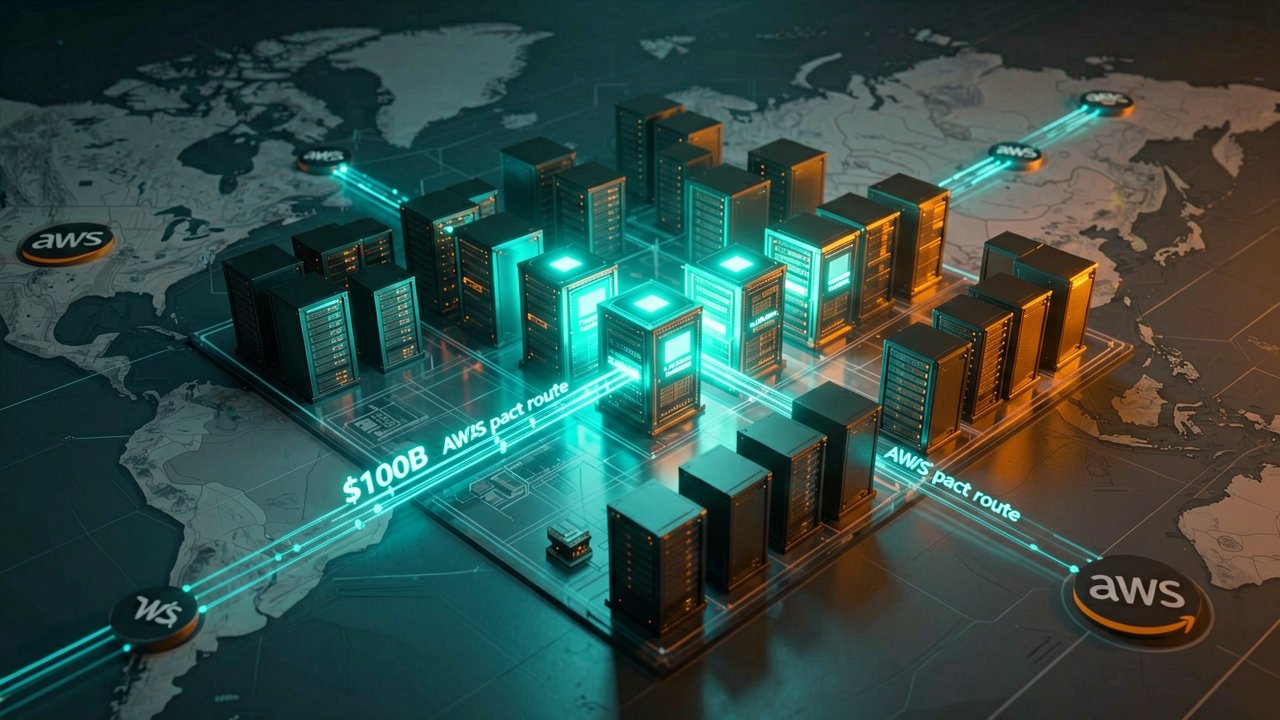
The explicit praise from a primary competitor solidifies the massive valuation premiums underlying recent hyperscaler megadeals. In early 2026, Amazon expanded its relationship with Anthropic by committing an additional investment of up to $25 billion, alongside a historic ten-year, $100 billion AWS technology expenditure pact anchored by its proprietary Trainium custom silicon, as outlined by Amazon. Shortly thereafter, Alphabet aggressively followed suit, with Google committing up to $40 billion to Anthropic, anchoring the Claude developer to Google's custom chips and infrastructure, according to market reports from CNBC. Musk's public validation signals to Wall Street that these staggering balance-sheet commitments are tethered to the market’s premium foundational models, directly mitigating fears of overvaluation.
Shifting Competitive Dynamics and Compute Interdependence
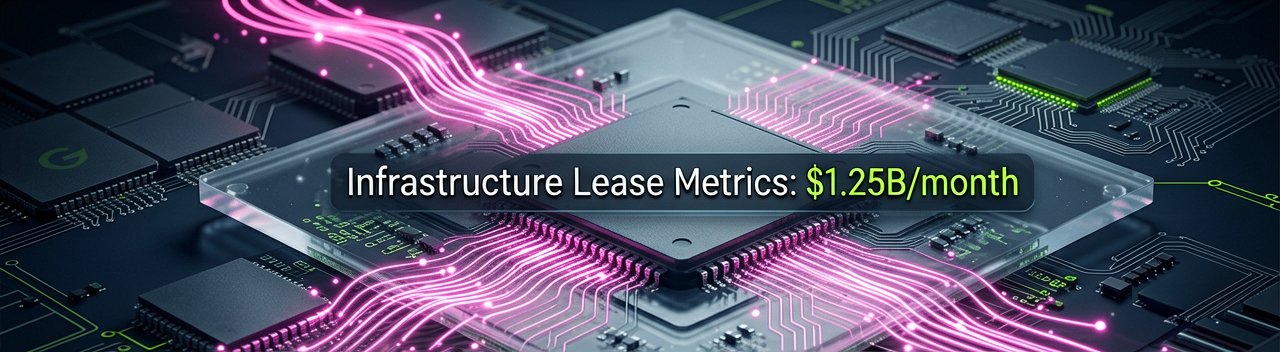
The reversal also illuminates a complex web of infrastructure interdependence that complicates xAI’s rivalry with Anthropic. Market disclosures monitored by Yahoo Finance show that Anthropic signed a massive infrastructure lease to utilize 300 megawatts of compute from xAI’s Colossus 1 data center facility, paying an estimated $1.25 billion monthly through 2029. When public speculation suggested Musk could cripple his rival by severing this infrastructure access, Musk demurred, pledging to maintain fair competitive boundaries. This dynamic proves that even as Anthropic fuels the cloud ecosystems of Alphabet and Amazon, it simultaneously operates as a major revenue generator for Musk’s infrastructure plays, creating a deeply interconnected and resilient market landscape.
Behind the Scenes of the Compute Cartel
The sudden detente between Elon Musk and Anthropic exposes a deeper macroeconomic reality that seasoned Silicon Valley insiders have tracked for months: the commoditization of raw compute power is forcing fierce ideological rivals into pragmatic economic alliances. While public attention focused on the philosophical rift between Musk’s open-accelerationist stance at xAI and Anthropic’s safety-first constitutional AI framework, the balance sheets told a different story. Foundational model training has reached a capital threshold where ideological purity is a luxury no builder can afford, transforming fierce platform rivalries into co-dependent supply chain relationships.
For Alphabet and Amazon, this structural shift changes the nature of their investment risk from model obsolescence to hardware capacity constraints. By anchoring Anthropic to their respective custom silicon pipelines—Google’s Tensor Processing Units (TPUs) and Amazon’s Trainium architectures—both hyperscalers have successfully insulated themselves from the broader Nvidia supply squeeze. Musk’s public admission that Anthropic’s models have achieved a temporary qualitative lead means that Google Cloud and AWS are no longer just selling raw computing infrastructure; they are the exclusive pipelines hosting the world's most sophisticated commercial intelligence engines.
This evolving dynamic fundamentally alters the monetization timeline for institutional investors who have grown weary of abstract generative AI promises. Instead of relying purely on speculative consumer subscriptions, Alphabet and Amazon are leveraging Anthropic’s enterprise-grade reliability to secure high-margin, long-term cloud migration contracts from Fortune 500 companies. Enterprise buyers who previously hesitated to commit to proprietary cloud ecosystems due to model volatility now view Musk's concession as a stabilizing green light for multi-year software architectures.
Concurrently, the massive financial windfall xAI secures from leasing its Colossus infrastructure to Anthropic provides Musk with the non-dilutive capital required to fund his own next-generation frontier models. This symbiotic ecosystem creates a highly unusual market equilibrium where a victory for Anthropic directly subsidizes the compute infrastructure of its primary challenger. For tech investors, the lesson is clear: the AI landscape is transitioning away from a winner-take-all arms race and moving toward a mature, deeply integrated multi-polar market where infrastructure dominance ultimately dictates commercial survival.
Reading Between the Lines of the Silicon Compromise
The sudden public reconciliation between Elon Musk and Anthropic demands a degree of institutional skepticism that goes beyond taking Musk’s social media declarations at face value. While the market celebrated his admission as an unvarnished validation of Anthropic’s engineering, the timing of this concession points toward strategic utility rather than purely objective humility. By designating Anthropic as the premier model developer, Musk shifts the intense regulatory and public pressure surrounding artificial general intelligence (AGI) away from xAI, effectively painting his own venture as a nimble challenger rather than a reckless frontrunner. This calculated positioning allows xAI to operate with greater flexibility under the radar of antitrust regulators who are increasingly scrutinizing the sector’s dominant players.
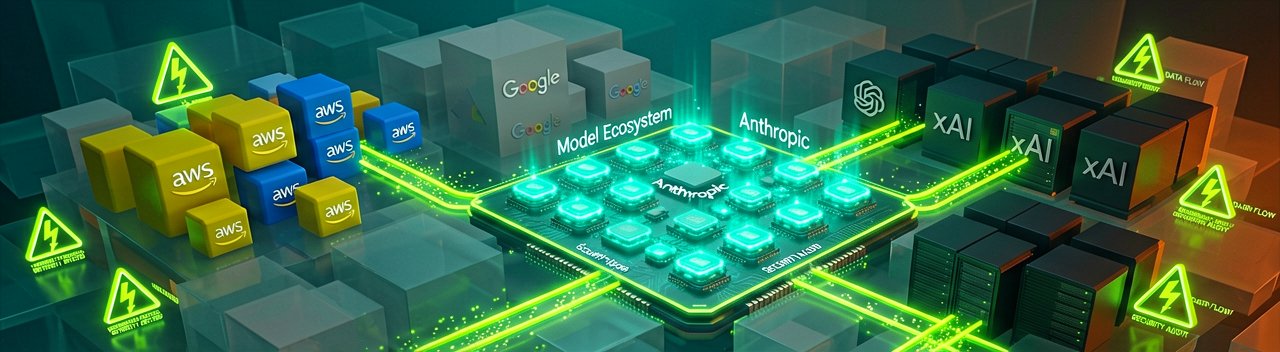
Furthermore, the financial contradictions underlying this public truce reveal a fragile equilibrium that Amazon and Alphabet investors cannot afford to ignore. Anthropic’s heavy reliance on xAI’s Colossus infrastructure creates a glaring strategic vulnerability for the startup, exposing a stark irony where the premier software engine of Google and Amazon's AI strategy is structurally dependent on a competitor’s physical hardware. While Musk has promised fair competitive boundaries, the historical volatility of his corporate governance suggests that infrastructure access remains a potent geopolitical lever within the tech industry. Investors are left to weigh the nominal strength of Anthropic’s models against the systemic risk of a supply chain anchored to a primary rival’s data centers.
This interdependence also highlights a broader shift in the monetization metrics that will define the next phase of the AI market cycle. As the performance gap between top-tier foundational models inevitably fluctuates, the long-term enterprise value is migrating entirely from the algorithmic layer to the physical infrastructure and proprietary data pipelines. Alphabet and Amazon are essentially engaged in a high-stakes hedging strategy, subsidizing Anthropic to drive enterprise cloud consumption while simultaneously bracing for the eventual commoditization of the models themselves. The true winners of this paradigm shift will not be determined by temporary benchmark victories, but by whichever hyperscaler successfully locks corporate clients into their broader, irreversible data ecosystems.
Ultimately, Musk's reversal signals that the initial, chaotic land-grab phase of the generative AI boom has officially drawn to a close, replaced by a cold war of economic pragmatism. The narrative of the lone genius or the isolated startup transforming the world has surrendered to the reality of capital expenditure requirements that rival the GDP of mid-sized nations. As the boundaries between competitor, vendor, and customer continue to blur into a singular, consolidated tech oligopoly, the market must prepare for a landscape where alliances are dictated entirely by power grids and silicon yields rather than philosophical alignment.
In the end, Silicon Valley’s grand ideological battle over the future of human consciousness has concluded exactly how everyone secretly feared it would: as a very expensive, deeply bureaucratic real estate dispute over server racks and electrical substations.
Artūras Malašauskas is an AI Systems Integrator with 20+ years of production-grade web engineering experience. He has designed, shipped, and scaled enterprise Python/PHP systems for logistics, SaaS, and public-sector clients. For the past year, he has focused exclusively on AI integrations: deploying open-source LLMs, building generative media pipelines (image, audio, video), and engineering multi-agent workflows for real production environments. His standard: reproducibility, security, cost-efficient inference—no vaporware. He documents and evaluates emerging AI tooling, separating verified capabilities from marketing noise. Technical editor at: muza-ai.eu, ai-verslas.lt, ai-naujinos.lt Connect on LinkedIn
Comments