Lawyers, Rejoice: Zylpha Injects AI to Battle the Court Bundle Nightmare

Anyone who has stepped foot inside a law firm knows the absolute dread that comes with compiling court bundles. It is a tedious, late-night ritual of sorting hundreds of trial documents, wrestling with pagination, and praying to the legal gods that a single missing date does not derail an entire proceeding. Fortunately, the Southampton-based legal technology company Zylpha has rolled out an algorithmic lifeline. On July 13, 2026, the company officially launched its first artificial intelligence features under the new Zylpha Auto umbrella brand, promising to dramatically accelerate document preparation while preserving accuracy and strict court compliance.
This is not a sweeping attempt to replace legal teams with silicon, but rather a hyper-focused administrative assistant designed to tackle the most exhausting aspects of the job. Developed over the past 12 months alongside a select group of clients and partners, the technology acts directly within the platform's bundle editor. When a user uploads a mountain of trial files, the AI system scans the text to generate intelligent suggestions for document titles and alternative dates. By eliminating the necessity of manual data entry for every single piece of evidence, early testing has shown an impressive time reduction of more than 20% per bundle creation.
Human Oversight Meets Algorithmic Speed
Wisely, Zylpha is keeping humans firmly in the driver's seat. Legal tech can occasionally overpromise, but Zylpha Auto ensures compliance and precision by requiring manual confirmation for every single tweak. When the AI analyzes a file and suggests a clearer title or a corrected date, users retain full control to accept or reject the change. Furthermore, a dedicated Auto icon tags every single AI-assisted modification, maintaining a transparent audit trail that is critical for court-mandated accuracy.
According to Tim Long, CEO of Zylpha, the goal is simply to strip away repetitive administrative work so legal professionals can focus on actual legal strategy. This rollout marks only the first phase of a broader artificial intelligence roadmap, meaning more workflow automations are already cooking in the lab. For an industry historical slow to adapt to tech, a 20% shortcut on paperwork might just make this tool an indispensable fixture in modern law firms.
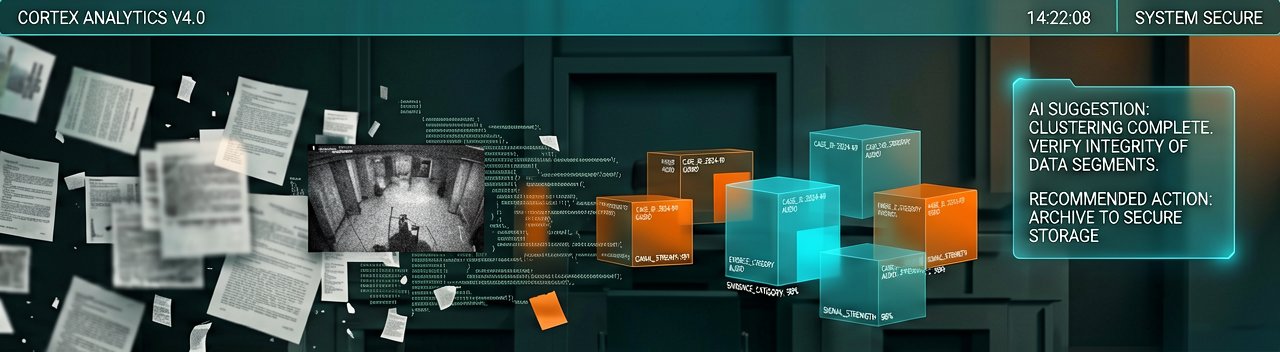
Behind the Bureaucracy: The legal sector’s historical resistance to technology is not born out of pure stubbornness, but rather a deeply ingrained culture of risk aversion. In a profession where a single typo in a thousand-page bundle can delay a trial or compromise client confidentiality, "moving fast and breaking things" is an existential threat. Zylpha's measured, human-in-the-loop strategy highlights a shifting paradigm in legal tech, where software developers have realized that winning over skeptical lawyers requires building guardrails, not just generating speed.
For years, the creation of court bundles was treated as an administrative hazing ritual for junior lawyers and paralegals. They would spend agonizing hours printing, indexing, paginating, and binding levers of files, only for last-minute evidence submissions to ruin the numbering sequence and force a complete restart. While digital bundle software mitigated the paper waste, it still demanded heavy manual curation. By introducing Zylpha Auto, the development team is addressing the mental fatigue of data entry, allowing algorithms to lift the heavy cognitive load of scanning metadata while keeping lawyers legally liable for the final output.
Balancing Compliance with Innovation
The true battleground for AI adoption in law firms is compliance. Regulatory bodies hold solicitors strictly accountable for the integrity of court submissions, meaning black-box AI models that offer no explanation for their outputs are dead on arrival. Zylpha's inclusion of a dedicated Auto icon to track machine-assisted changes is a clever nod to this reality. It gives compliance officers a transparent audit trail, ensuring that if a date or title suggestion goes awry, the firm can quickly pinpoint the discrepancy and verify the human checker's oversight.
Early feedback from the platform's 12-month pilot phase suggests that the 20% time savings is only a baseline metric. For complex commercial disputes involving thousands of fragmented emails and invoices, the efficiency gains could scale exponentially as the system learns to recognize recurring document structures. As more firms embrace these automated shortcuts, the pressure will mount on lagging competitors to modernize their workflows or risk pricing themselves out of a highly competitive market where clients refuse to pay billable hours for basic administrative tasks.

Reading Between the Lines: While a 20% reduction in bundle creation time sounds like a clear victory for overworked paralegals, the broader economic implications for law firms are far more complicated. The legal industry has long relied on the billable hour as its primary engine of revenue. For decades, firms have comfortably billed clients for the painstaking, manual labor required to assemble trial documents. By automating this administrative bottleneck, Zylpha inadvertently forces a confrontation with a traditional business model, as firms must now figure out how to recoup the lost billable hours that software efficiency suddenly erases.
There is also a notable paradox in Zylpha’s reliance on human verification to ensure compliance. The system is marketed as an unprecedented speed boost, yet its safety mechanism requires a flesh-and-blood lawyer to manually audit every single suggestion made by the algorithm. In practice, this creates a psychological trap known as automation bias, where tired users blindly trust machine recommendations after reviewing hundreds of pages. If a lawyer approves a hallucinated date or a mislabeled title simply because they were clicking through suggestions too quickly, the blame still falls entirely on the human professional, raising questions about whether the software actually reduces stress or just shifts the nature of the liability.
The Skeptical Path to Widespread Adoption
Furthermore, the claim that this technology preserves absolute accuracy will face a harsh reality check when confronted with the chaotic nature of real-world legal evidence. Algorithms thrive on clean, structured data, but court bundles are notoriously messy, often consisting of poorly scanned PDFs, handwritten notes, distorted cell phone screenshots, and fragmented WhatsApp chains. If Zylpha Auto encounters highly degraded documents and begins generating low-confidence suggestions, the time spent by a lawyer rejecting or rewriting those titles could easily cancel out the promised efficiency gains.
Ultimately, the success of this AI rollout will not be measured by laboratory benchmarks, but by how well it survives the messy realities of the courtroom floor. For an industry that still occasionally clings to paper bundles out of a deep-seated fear of technological failure, an algorithmic assistant must prove itself entirely bulletproof before it becomes the new standard. Until then, early adopters will likely treat these tools with healthy suspicion, balancing the allure of a shorter workday against the terrifying prospect of explaining a machine-generated error to an angry judge.
In the end, legal tech may finally liberate lawyers from the dark ages of manual pagination, but it will never truly eliminate their late-night anxieties; it simply ensures that when a document goes missing at 2:00 AM, they can blame the algorithm before correcting it themselves.
Artūras Malašauskas is an AI Systems Integrator with 20+ years of production-grade web engineering experience. He has designed, shipped, and scaled enterprise Python/PHP systems for logistics, SaaS, and public-sector clients. For the past year, he has focused exclusively on AI integrations: deploying open-source LLMs, building generative media pipelines (image, audio, video), and engineering multi-agent workflows for real production environments. His standard: reproducibility, security, cost-efficient inference—no vaporware. He documents and evaluates emerging AI tooling, separating verified capabilities from marketing noise. Technical editor at: muza-ai.eu, ai-verslas.lt, ai-naujinos.lt Connect on LinkedIn
Comments