Cracking Neurodegeneration: Why C-BRAIN’s New Open-Source AI Framework Is a Game Changer for Alzheimer’s Research
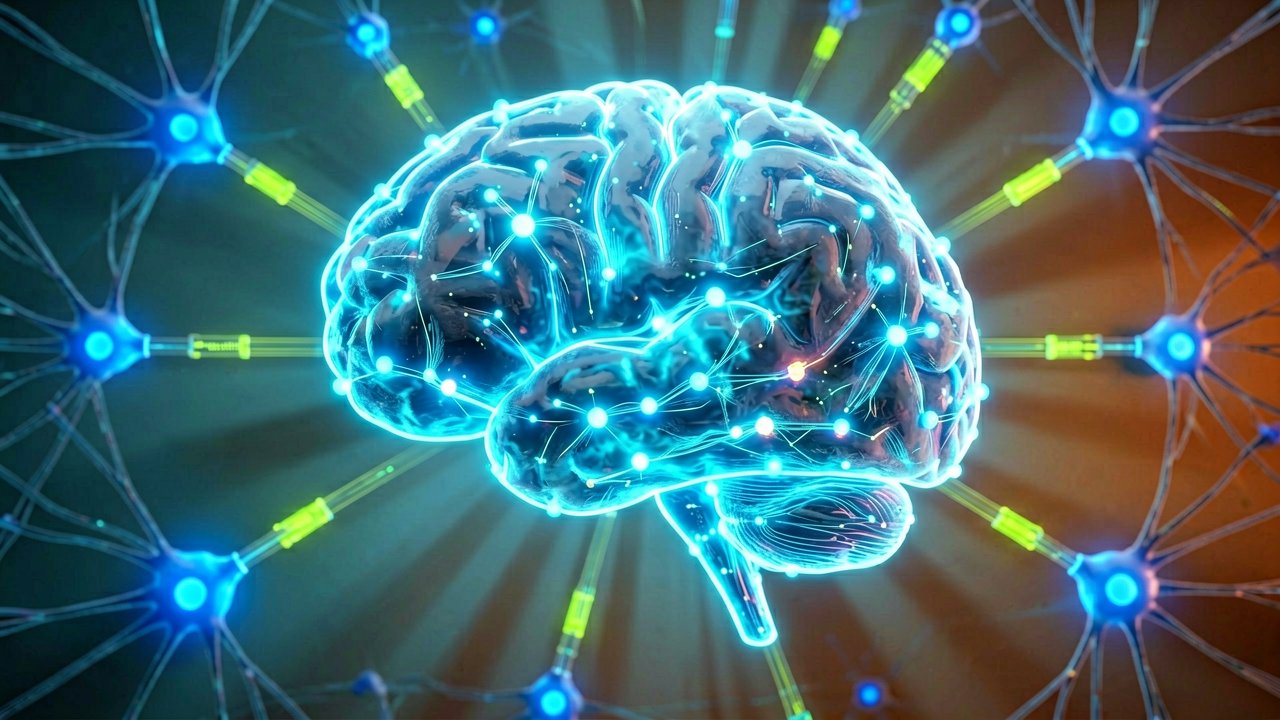
For decades, Alzheimer’s research has been plagued by a staggering statistic: more than 99% of drug candidates fail during clinical trials. It is a frustrating bottleneck that has left scientists drowning in isolated pockets of data while patients wait for breakthroughs. To break this logjam, a 17-member global collaboration spearheaded by the Washington University School of Medicine in St. Louis has officially introduced C-BRAIN, the Consortium for Biomedical Research and Artificial Intelligence in Neurodegeneration. Unveiled at the Alzheimer’s Association International Conference in London, this initiative aims to build a cooperative digital partner for human researchers, potentially shifting the paradigm of how we discover treatments for neurodegenerative diseases.
What sets this deployment apart from traditional, corporate-siloed software ventures is its commitment to transparency. Unlike proprietary, "black-box" models that guard their code behind steep licensing walls, C-BRAIN is treating its newly minted tools as public utilities for approved biomedical researchers. Developed alongside the WashU Digital Intelligence and Innovation Accelerator with infrastructure support from Microsoft, the suite leans on an open-source ethos so that the broader scientific community can examine, audit, and improve the underlying codebase.
A Three-Pronged Digital Assistant
The newly launched toolbox tackles the fragmented nature of modern medical data by deploying three highly specialized, interrelated applications designed to handle different stages of the research lifecycle. The first component focuses on AI literature and data synthesis, utilizing advanced retrieval mechanics to cross-reference and summarize millions of neuroscience publications, effectively collapsing months of manual lit-reviews into mere hours. The second tool, dubbed the "Dark Data Analyzer," bridges a critical gap in pharmaceutical development by surfacing negative results and insights from unpublished studies contributed by its network members, ensuring labs do not squander precious capital replicating failed experiments.
Rounding out the trio is "Reviewer Three," a critical reasoning agent engineered to evaluate scientific manuscripts, experimental designs, and grant applications before they are finalized. Human oversight remains a firm requirement of the ecosystem through a strict "scientist-in-the-loop" framework, guaranteeing that any machine-generated hypotheses are thoroughly vetted and reproducible by flesh-and-blood doctors. By standardizing this workspace, backing organizations like the Alzheimer's Drug Discovery Foundation hope to foster a reliable, non-commercial foundation that moves clinical medicine closer to targeted precision treatments.

Protecting IP with Federated Learning
The classic stumbling block for massive academic-industry partnerships has always been intellectual property. Commercial giants are historically hesitant to throw their proprietary data into shared pools, fearing they will lose their competitive edge. C-BRAIN circumvents this hurdle using a federated design architecture, which lets pharmaceutical heavyweights like Bristol Myers Squibb train these models collectively without ever needing to transfer, expose, or relinquish ownership of their private internal datasets. It creates a rare pre-competitive environment where rival entities can align to sharpen the baseline biology before separating to build their individual therapies.
What Most Reports Miss: The Hidden Architectural Gambit Saving Pharma from Itself
The standard press narrative surrounding C-BRAIN focuses entirely on the altruism of open-source science, but the real breakthrough lies in how the consortium quietly solved the "prisoner’s dilemma" of modern drug discovery. Historically, pharmaceutical companies have guarded their chemical libraries and failed trial data like crown jewels, choosing to let valuable molecular insights gather digital dust rather than risk exposing intellectual property to a competitor. By implementing a federated learning architecture, C-BRAIN essentially acts as a neutral Swiss vault. The artificial intelligence models travel to the secure servers of individual stakeholders—such as Bristol Myers Squibb—to learn from the data locally, and then return to the central hub carrying only the refined mathematical insights, never the raw proprietary files. This technical compromise transforms fierce market rivals into accidental collaborators, allowing them to collectively train tools on a scale no single corporation could ever achieve alone.
This decentralized approach also directly addresses the systemic lack of diversity that has plagued neurodegenerative research for decades. Traditional clinical trials are notoriously homogenous, heavily skewed toward patients who live near major Western academic medical centers. When AI models are trained exclusively on these narrow datasets, their diagnostic and therapeutic predictions fail to generalize to the broader global population. Because C-BRAIN’s framework can interface with localized clinical data repositories across different continents without violating strict regional data privacy laws like Europe's GDPR, it allows researchers to catch subtle genetic and environmental variations in Alzheimer’s pathology that were previously invisible. It is a vital correction for an industry that has spent billions chasing silver-bullet treatments that only work for a fraction of the population.
Veterans of the neurology space recognize this initiative as the spiritual successor to early-2000s data-sharing experiments, but with teeth. Earlier attempts at open science often collapsed under the weight of unstandardized formatting; one lab’s brain scan metric was entirely unreadable by another lab's software. The WashU Digital Intelligence and Innovation Accelerator spent a significant portion of the foundational phase building automated data-harmonization pipelines. These pipelines ingest messy, unstructured real-world data—ranging from electronic health records to complex proteomic profiles—and translate them into a unified linguistic format that the AI can instantly parse. This unsexy, backend plumbing is what actually enables the "Dark Data Analyzer" to successfully resurrect forgotten insights from old, abandoned clinical trials.

Crucially, the consortium's long-term viability hinges on its strict adherence to a "scientist-in-the-loop" philosophy, which acts as a bulwark against the hallucinations that frequently cripple standard generative AI models. In specialized medical research, a hallucinated citation or an inflated statistical correlation isn't just an inconvenience—it can derail years of laboratory funding and jeopardize patient safety. By designing "Reviewer Three" and the literature synthesis tools to explicitly demand verifiable cross-references and human sign-offs at every critical inference step, the developers have built an environment focused on absolute precision. The ultimate goal isn't to replace the intuition of seasoned neuroscientists, but to strip away the administrative and analytical friction that keeps them from seeing the broader patterns hidden within the global noise.
Reading Between the Lines: The Friction Between Open-Source Idealism and Market Realities
While the launch of C-BRAIN is being heralded as a triumph of democratic science, a healthy dose of industry skepticism is warranted. The open-source ethos relies on the assumption that global research communities will actively maintain, audit, and improve these tools over time. However, history shows that academic software frequently suffers from "abandonware" syndrome once initial grant funding dries up or the primary developers migrate to high-paying Silicon Valley tech firms. Transitioning a massive digital infrastructure from a university-led initiative to a self-sustaining global utility requires continuous capital, an unsexy reality that press releases rarely address. Without a robust, long-term funding mechanism independent of erratic academic grants, C-BRAIN risks becoming a highly sophisticated time capsule rather than a living, evolving ecosystem.
Furthermore, the reliance on a "scientist-in-the-loop" model introduces an ironic paradox. The entire premise of deploying advanced artificial intelligence is to accelerate drug discovery by automating the processing of immense datasets that human minds cannot comprehend. Yet, by implementing strict human-vetting checkpoints to prevent AI hallucinations and errors, the consortium inadvertently creates human bottlenecks. If every major algorithmic synthesis or cross-referenced hypothesis requires exhaustive, manual peer review before it can be trusted, the actual speed of therapeutic development may not accelerate nearly as fast as promised. The industry is essentially trying to drive a sports car with one foot firmly planted on the brake, trapped between the need for computational velocity and the absolute mandate for medical safety.
There is also the unresolved tension of commercialization. While the pre-competitive framework allows rival pharmaceutical giants to collaborate on baseline biology, the ultimate goal of these corporations is still to patent blockbuster drugs and generate massive returns for shareholders. It remains to be seen how smoothly a company can transition from utilizing public, open-source C-BRAIN insights to locking down those discoveries behind proprietary patents. If the open-source tools merely serve as free R&D departments for big pharma to capitalize on, the democratization of science starts to look a lot more like a corporate subsidy, testing the altruism of the academic institutions that built the framework in the first place.
Ultimately, C-BRAIN’s true test will not be the elegance of its code or the prestige of its founders, but its ability to survive the messy politics of international data ownership. Even with federated learning architectures designed to protect IP, navigating the fluctuating regulatory landscapes of global super-powers remains a legal minefield. As national governments increasingly view AI infrastructure and medical datasets through the lens of national security and economic sovereignty, a truly borderless, collaborative scientific ecosystem faces steep geopolitical headwinds that no amount of clever software engineering can fully solve.
“We have finally designed an artificial intelligence brilliant enough to synthesize forty years of fragmented medical data in forty seconds, yet the entire apparatus still hinges on getting rival pharmaceutical executives to share their toys in the sandbox—proving once again that mastering complex neurobiology is far easier than altering basic human nature.”
Artūras Malašauskas is an AI Systems Integrator with 20+ years of production-grade web engineering experience. He has designed, shipped, and scaled enterprise Python/PHP systems for logistics, SaaS, and public-sector clients. For the past year, he has focused exclusively on AI integrations: deploying open-source LLMs, building generative media pipelines (image, audio, video), and engineering multi-agent workflows for real production environments. His standard: reproducibility, security, cost-efficient inference—no vaporware. He documents and evaluates emerging AI tooling, separating verified capabilities from marketing noise. Technical editor at: muza-ai.eu, ai-verslas.lt, ai-naujinos.lt Connect on LinkedIn
Comments