DeKalb Regional Medical Center Rollout Highlights Automation Boom in Community Healthcare

The recent launch of the robotic-assisted surgery program at DeKalb Regional Medical Center represents a pivotal milestone for localized clinical infrastructure. Armed with the advanced da Vinci Xi Surgical System, the provider successfully completed its inaugural automated procedure, signaling a major hardware upgrade for the region. This transition underscores a broader trend where community hospitals deploy sophisticated robotics to achieve parity with urban medical institutions, ultimately retaining patients who would otherwise migrate to larger metropolitan networks for specialized operations.
By bringing minimal-incision platforms to local communities, regional healthcare systems are fundamentally reshaping the medical economics of rural and suburban areas. This strategic investment mitigates geographic disadvantages by introducing high-definition 3D visualization and enhanced articulation directly to community operating rooms. As regional clinics face rising patient demands, tech integration acts as both a competitive differentiator and a volume driver, allowing complex urological, gynecological, and general surgeries to occur close to home.
Market Penetration of Robotic Platforms in Sub-Metropolitan Sectors
The arrival of the platform at DeKalb Regional Medical Center, documented via local reporting by WHNT-TV, mirrors a macro-level transformation sweeping through the domestic hospital market. Once restricted to heavily capitalized academic research hospitals, multi-axis robotic carts are actively penetrating secondary markets. Hospital administrators recognize that long-term fiscal stability relies on shortening patient stays and dropping readmission metrics—operational goals optimized by automated systems that reduce blood loss, lower infection rates, and minimize human fatigue margins.
The Competitive Landscape of Decentralized Specialized Care
In community healthcare systems, technological stagnation equates to losing market share to surrounding healthcare conglomerates. To secure territorial patient loyalty, regional networks are aggressively investing in advanced medical automation. This paradigm shift ensures that community-tier facilities can offer equivalent clinical outcomes to major metropolitan hubs, transforming localized medicine from a system of basic triage into a network capable of executing high-tier, minimally invasive procedures safely and effectively.
An Investigative Deep Dive into the Micro-Economics of Community Automation
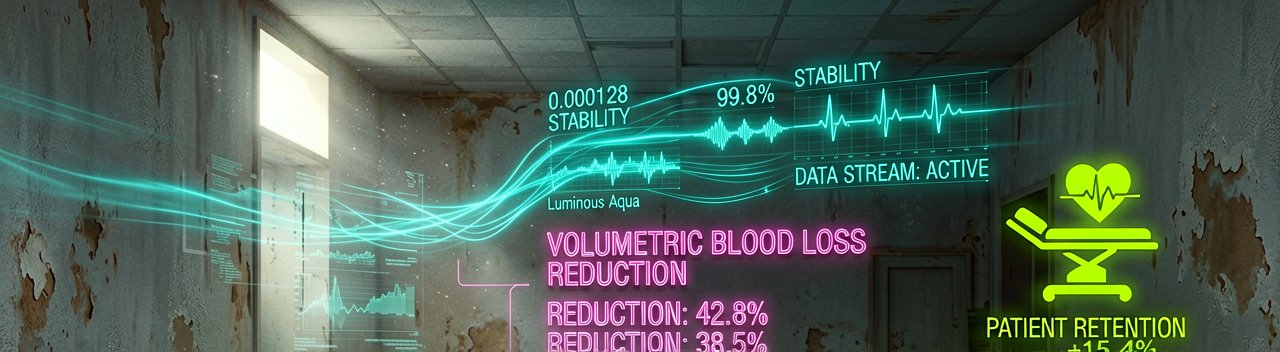
Behind the Corporate Press Release: The capital allocation strategy behind introducing the da Vinci Xi platform into a community ecosystem like Fort Payne involves a high-stakes calculation. Beyond the upfront hardware acquisition cost—which frequently exceeds one million dollars—regional institutions must heavily invest in continuous specialized staff training, sterile processing upgrades, and recurring service contracts. For a community hospital, this risk is mitigated by an anticipated reduction in post-operative bed occupancy and a sharp decrease in historical complications that typically drain localized resources.
Local clinical leaders emphasize that the primary driver for this technological integration extends beyond sheer marketing prestige. Experienced surgical staff point out that the enhanced ergonomics and tremor-filtration software inherently extend the peak career longevity of regional surgeons. By reducing the physical strain associated with traditional open or standard laparoscopic procedures, community networks can retain veteran medical talent who might otherwise retire or migrate to less physically demanding administrative positions in larger metropolitan systems.
From a community patient perspective, the regional deployment of automated precision fundamentally addresses the hidden economic tax of healthcare transit. Historically, rural and sub-metropolitan patients requiring complex urological or gynecological interventions faced the added financial burdens of long-distance travel, hotel stays for family members, and extended time away from local jobs. Bringing multi-axis robotic visualization directly into the community infrastructure eliminates these secondary socioeconomic hurdles, ensuring equitable access to modern medical standards without geographic displacement.
Furthermore, the arrival of advanced robotics serves as an essential recruitment magnet for the next generation of medical school graduates. Newly minted residents are trained almost exclusively on digitized, computer-assisted modalities and are increasingly reluctant to sign contracts with rural facilities relying solely on legacy surgical equipment. By modernizing the operating suite, community hospitals secure a critical pipeline of young, highly trained specialists, effectively preventing the rural physician shortages that threaten decentralized healthcare networks across the nation.

The Hidden Paradoxes of Localized Automation
Reading Between the Lines: The celebration surrounding regional robotic rollouts often obscures a stark operational reality: the financial math of advanced automation requires a continuous volume of procedures that small-town demographics struggle to sustain. While community hospitals boast about matching the clinical capabilities of metropolitan medical centers, they rarely discuss the intense internal pressure to scale up utilization rates. Without a massive, steady influx of patients, the steep fixed costs of robotic maintenance contracts and single-use specialized instruments can quietly cannibalize the budgets of other essential, yet less glamorous, local departments.
This dynamic introduces a troubling clinical contradiction where technology might inadvertently dictate treatment rather than the other way around. When an institution heavily capitalizes an automated platform, the mandate to justify that investment can subtly influence surgical recommendations, sometimes favoring a high-tech approach for routine procedures that could be resolved just as effectively via traditional, less costly methods. Skeptics within healthcare economics point out that while marketing campaigns heavily emphasize faster recovery times, peer-reviewed data often shows that for standard surgeries, the statistical difference in long-term patient outcomes between a seasoned traditional surgeon and a robotic interface remains remarkably narrow.
Furthermore, relying on automation as a primary recruitment tool for young medical talent creates an underlying vulnerability for decentralized networks. By altering the local ecosystem to appeal exclusively to a generation of physicians who depend on digital assistance, community hospitals risk alienating older, highly versatile general surgeons who form the backbone of rural emergency care. If a mid-sized facility anchors its clinical identity entirely to a proprietary hardware system, it hitches its long-term viability to the supply chains, software updates, and pricing whims of a single medical device monopolist.
Ultimately, the democratization of surgical robotics may accelerate a stratification of care rather than a true equalization. Wealthier sub-metropolitan pockets will successfully leverage these platforms to boost prestige, while genuinely underfunded rural facilities will fall even further behind, unable to clear the multi-million-dollar barrier to entry. The true test for community automation will not be the flawless execution of its celebratory first operations, but whether a localized patient population can generate the sheer volume needed to keep the machinery from becoming an incredibly expensive piece of administrative theater.
"In the modern medical arms race, community hospitals have discovered that an multi-million-dollar robot is the ultimate status symbol—proving that while you may still have to wait three hours in the emergency room for a stitch, your gallbladder can at least be removed with the exact same military-grade precision as a stealth drone."
Artūras Malašauskas is an AI Systems Integrator with 20+ years of production-grade web engineering experience. He has designed, shipped, and scaled enterprise Python/PHP systems for logistics, SaaS, and public-sector clients. For the past year, he has focused exclusively on AI integrations: deploying open-source LLMs, building generative media pipelines (image, audio, video), and engineering multi-agent workflows for real production environments. His standard: reproducibility, security, cost-efficient inference—no vaporware. He documents and evaluates emerging AI tooling, separating verified capabilities from marketing noise. Technical editor at: muza-ai.eu, ai-verslas.lt, ai-naujinos.lt Connect on LinkedIn
Comments