The Emotional Pivot: Chinese Manufacturers Scale Bionic Companions Beyond the Factory Floor
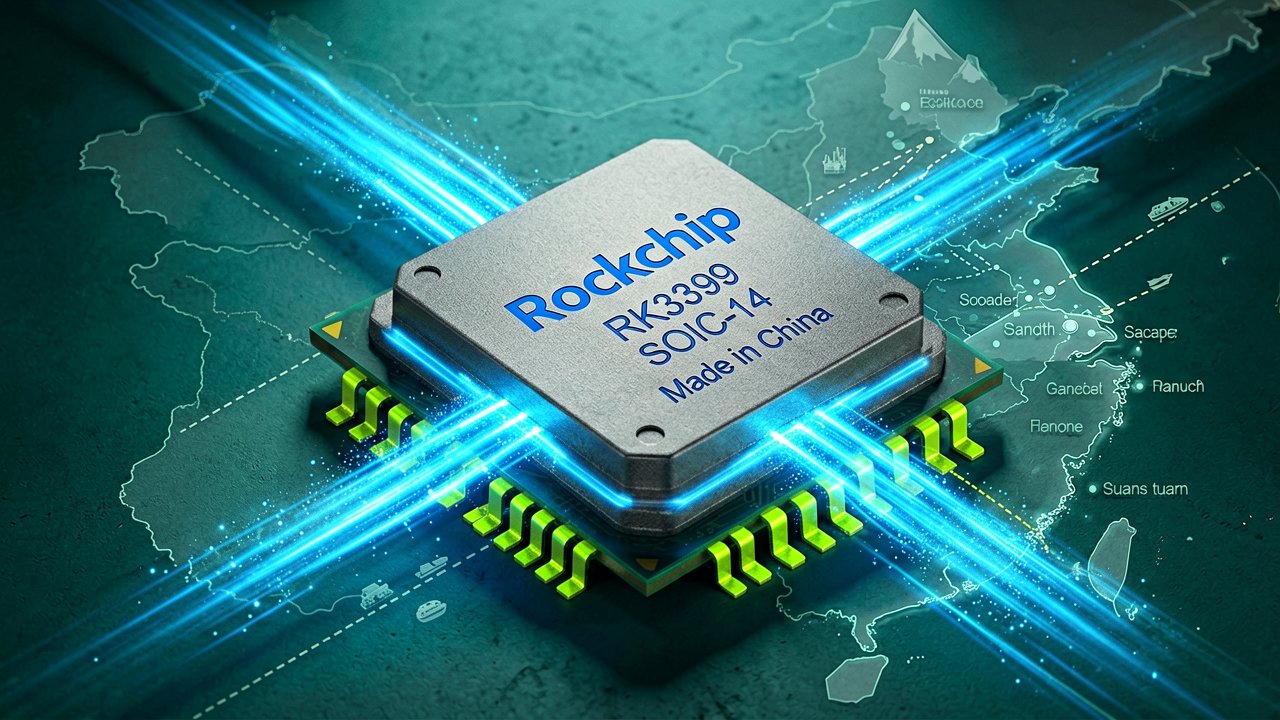
The consumer robotics landscape is experiencing a foundational shift as Chinese manufacturers aggressively target the domestic and international social robotics sector. Decoupling from traditional factory floor applications, companies are deploying capital into hyper-realistic, ultra-bionic machines tailored specifically for emotional interaction and human companionship. Driven by a dense domestic supply chain and robust policy coordination under the national Humanoid Robot Action Plan, these entities are accelerating assembly line output to address demographic vacuums and pioneer consumer-facing, embodied artificial intelligence.
This market transition reached a commercial inflection point when UBTech Robotics officially launched its UWORLD U1 series in Shenzhen, establishing the world's first full-size, mass-produced ultra-bionic companion line, as detailed by PA Media. Standing alongside industrial models, these consumer-facing iterations represent a tactical pivot toward monetizing user experience rather than simple industrial throughput. Propelled by the rapid rise of single-person households and an aging population, the localized industry is transitioning from trial adoptions to scaled market deployment with tens of thousands of units pre-ordered at launch.
Supply Chain Integration and Speed to Market
The swift introduction of mass-produced companions highlights a unique structural advantage within Chinese manufacturing hubs. The Yangtze River Delta and Shenzhen ecosystems compress traditional twelve-week Western prototyping timelines into a ten-to-fourteen-day window, according to data from the Robotics Center AI. This unmatched infrastructure allows companies to optimize production dynamics by sourcing over a quarter of global actuators and major rare-earth components domestically. This dense network allows consumer robotics firms to scale mass manufacturing rapidly while establishing a formidable barrier to entry for international competitors.
Advanced Emotional AI Stack and Local Edge Computing
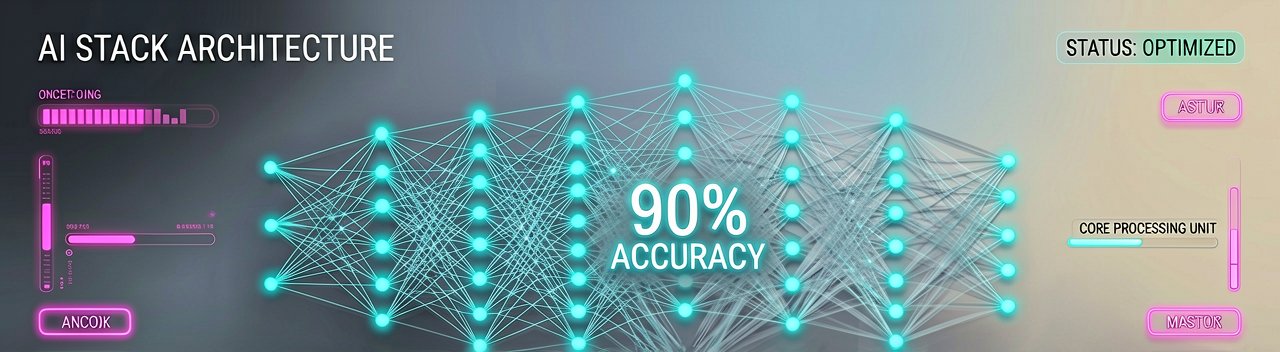
To bridge the gap between artificial intelligence and human emotional connection, the latest bionic models utilize specialized neural network architectures instead of classic motion programming. The U1 series relies on a highly integrated proprietary technology stack running locally on Rockchip processors, ensuring consumer data remains isolated on the hardware rather than uploaded to external clouds, as reported by the South China Morning Post . These machines feature an emotion-aware large language model designed to identify more than twenty fine-grained emotional states with an accuracy rate exceeding ninety percent. By syncing multimodal situational awareness with up to eighty-eight degrees of freedom, the companion humanoids mirror basic human gestures, maintain eye contact, and deliver contextual psychological support.
Demographic Vacuums Driving Commercial Traction
The strategic deployment of these companions targets a profound societal crisis across major urban centers. Industry research noted by Interesting Engineering reveals that over ninety million adults live alone in China alongside more than one hundred million empty-nest seniors, creating an unprecedented economic demand for scalable care alternatives. While base models enter the market at approximately 119,800 yuan, premium tiers featuring realistic silicone skin, visible blood vessels, and lifelike fingerprints scale up to 990,000 yuan. These early figures have already translated into over thirteen thousand formal consumer orders, validating an initial consumer base willing to fund high-end bionic technology to mitigate loneliness.
Geopolitical Ambitions and Standardizing the Ecosystem
China's aggressive push into social robotics forms part of a broader macroeconomic strategy to outpace global competitors in embodied AI. To sustain this momentum, the state is rolling out a multi-billion dollar investment infrastructure to fuel domestic AI data centers, reducing reliance on Western chip manufacturers and bolstering local hardware pipelines, as covered by Yahoo Finance. Industry forecasters project that the ultra-realistic humanoid market will expand from tens of billions of yuan to a multi-trillion yuan industry over the next decade. If Chinese firms successfully standardize their proprietary robot operating systems and emotional AI platforms, they stand poised to dominate the global companion robotics market much like early leaders did during the smartphone era.
Inside the Assembly Echo: The High-Stakes Gamble on Engineered Intimacy
Beyond the Factory Automation: The rapid pivot from rigid industrial automation to soft-tissue bionics relies on a massive re-engineering of the consumer relationship with machinery. For decades, robotic development focused exclusively on precision, speed, and structural rigidity. Today, Chinese engineering teams are dismantling those exact design philosophies to prioritize compliance, elasticity, and safety. This structural shift requires a complete overhaul of the domestic hardware supply chain, replacing heavy steel alloys with specialized carbon fiber frames and soft-touch polymers. Engineers are no longer optimizing for heavy payload capacities but are instead calibrating delicate, multi-jointed fingers to grip a human hand without applying excessive, hazardous pressure.
This technical transition is triggering a quiet battle over software architectures and regional data governance. Industry insiders acknowledge that the real test for these companion humanoids lies in their long-term cognitive utility rather than their physical aesthetic. Unlike static smart-home hubs, a mobile, embodied AI gathers a continuous stream of highly sensitive visual and acoustic data within private living spaces. Leading developers are feeling intense pressure from local regulators to guarantee absolute data privacy while simultaneously training their emotion-recognition models on real-world interactions. Balancing local edge-computing limitations against the massive computational demands of fluid conversation remains the primary operational hurdle for software architects across the industry.

From a commercial standpoint, the target demographic is proving to be much more complex than initial market forecasts anticipated. While early marketing campaigns focused heavily on affluent urban singles seeking a futuristic lifestyle status symbol, real-world order patterns show a strong surge in demand from the adult children of aging parents. These buyers are looking for a reliable, tech-driven solution to monitor and comfort isolated seniors across distant provinces. This shift forces manufacturers to adjust their design priorities away from hyper-realistic aesthetic novelties and toward practical, long-term durability. It requires designing battery systems capable of running safely for eighteen hours continuous and synthetic skin materials that can withstand everyday cleaning agents without degrading.
The scaling of this consumer market is also igniting intense philosophical and regulatory debates among global automation experts. Critics voice significant concerns over the psychological impacts of substituting genuine human connection with pre-programmed, algorithmic empathy. However, domestic stakeholders counter that engineering these automated companions is a necessary, proactive step to address deep structural demographic crises that traditional social services simply cannot manage alone. As these mass production lines ramp up to full speed, the line between helpful consumer tool and deep emotional proxy continues to blur, permanently reshaping how society interacts with embodied artificial intelligence.
Reading Between the Lines: The Friction of Manufactured Sentience
The Reality Behind the Code: The widespread optimism surrounding the mass production of companion humanoids deliberately minimizes the significant technical gap between simulated empathy and genuine utility. Marketing narratives present a future of seamless, emotionally intuitive relationships, yet current hardware deployments reveal a more mechanical reality. A robot operating on pre-programmed behavioral trees often struggles with the chaotic, unpredictable nature of real human conversation. When confronted with nuanced sarcasm, cultural idioms, or deeply complex emotional crises, these machines frequently default to repetitive, generic scripts that can break the illusion of companionship and leave vulnerable users feeling more isolated than before.
Furthermore, an unresolved economic contradiction threatens the long-term viability of the consumer robotics market. Manufacturers face a difficult choice: they must either keep retail prices low to achieve true mass adoption or absorb the massive, ongoing costs of updating sophisticated cloud-based AI models. While a base hardware price of 119,800 yuan makes the technology accessible to affluent buyers, it rarely covers the immense computing power needed to run real-time, context-aware large language models across millions of active units over several years. If factories transition to aggressive monthly subscription fees to fund these servers, they risk alienating the exact middle-class families and elderly consumers who stand to benefit most from automated care.
This financial strain is further complicated by the complex physical maintenance of high-end bionics inside everyday homes. Silicone skin tears, mechanical micro-actuators burn out from constant motion, and complex sensory arrays require frequent calibration to function correctly. Unlike a standard smartphone that can be easily repaired at a local shop, a multi-jointed companion robot demands a highly specialized, localized network of technicians to handle routine upkeep. Without a robust, affordable repair infrastructure firmly in place, early buyers risk finding themselves stuck with incredibly expensive, non-functional kinetic sculptures occupying space in their living rooms.
Ultimately, the global export ambitions of these manufacturers will likely clash with strict international regulatory walls and deeply rooted cultural differences. Western markets maintain rigid data privacy standards that view mobile, cameras-everywhere consumer devices with deep suspicion, especially when manufactured within competing trade blocs. Additionally, while domestic audiences may be more receptive to technological solutions for loneliness, international consumers often demonstrate a much lower tolerance for the "uncanny valley" effect of hyper-realistic bionics. Overcoming these deep-seated cultural anxieties and structural trade barriers will require a lot more than just optimization of factory assembly lines.
"We have spent centuries trying to make machines seem less like cold, unfeeling steel, only to realize that the hardest part of mass-producing a perfect human companion is finding a customer service department that can troubleshoot a broken heart on a Tuesday afternoon."
Artūras Malašauskas is an AI Systems Integrator with 20+ years of production-grade web engineering experience. He has designed, shipped, and scaled enterprise Python/PHP systems for logistics, SaaS, and public-sector clients. For the past year, he has focused exclusively on AI integrations: deploying open-source LLMs, building generative media pipelines (image, audio, video), and engineering multi-agent workflows for real production environments. His standard: reproducibility, security, cost-efficient inference—no vaporware. He documents and evaluates emerging AI tooling, separating verified capabilities from marketing noise. Technical editor at: muza-ai.eu, ai-verslas.lt, ai-naujinos.lt Connect on LinkedIn
Comments