UBTech’s UWorld U1 Humanoid Robots Signal New Era in Consumer Robotics
The consumer robotics landscape shifted significantly on June 30, 2026, when Chinese manufacturer UBTech officially unveiled its UWorld U1 series at a global launch event in Shenzhen. The rollout represents the world’s first full-size, ultra-bionic humanoid robot built for commercial mass production. Unlike industrial platforms that prioritize mechanical torque, the U1 series targets human companionship by leveraging lifelike silicone skin, micro-actuators that simulate human facial expressions, and emotion-aware large language models capable of recognizing over 20 emotional states. This shift introduces a distinct alternative to industrial automation, establishing a new commercial paradigm focused on the consumer-facing emotional economy.
Market demand materialized immediately, with cumulative pre-orders across all channels surpassing 13,361 units on launch day alone, according to details published by China Daily . The commercial lineup spans three distinct tiers designed to capture different market segments. The portfolio starts at 119,800 yuan (~$16,700 USD) for the semi-torso U1 Lite, moves to 169,800 yuan for the high-performance full-body U1 Pro, and reaches up to 990,000 yuan for the flagship, high-dynamic full-body U1 Ultra. Initial consumer deliveries are committed to begin in mid-September 2026, establishing a compressed timeline from public reveal to household deployment.
By engineering a full-sized humanoid frame where the female variant weighs 35.2 kg and the male stands 183 cm at 42 kg, UBTech has overcome major material science and actuator barriers. The hardware utilizes 88 degrees of freedom to enable fluid physical interaction, while local encrypted memory storage addresses escalating data privacy concerns surrounding domestic AI hardware. This structured transition from industrial hardware to consumer emotional hardware underscores a broader macroeconomic trend within China, where robotic technology is being systematically positioned to alleviate social pressures stemming from shifting demographics and expanding solo-living populations.
Strategic Market Reorientation from Utility to Presence
The launch of the UWorld brand signifies a profound structural pivot for UBTech. The company previously dedicated its primary engineering capacity to industrial and enterprise environments, deploying platforms like the Walker S series into automotive assembly lines and logistics hubs. By carving out a dedicated consumer hardware division, management is actively betting on the monetization of human-robot symbiosis. The core value proposition has transitioned from mechanical labor, such as payload capacity or walking velocity, to psychological presence and continuity of interaction. The underlying emotion-driven software architecture creates a persistent memory layer, establishing personal context over long deployment cycles to make the hardware feel less like a tool and more like an adaptive domestic fixture.
Demographic Drivers and the Companion Economy
The consumer targeting strategy for the U1 series addresses specific macroeconomic realities within East Asia. With tens of millions of adults living alone and an expanding aging population, the market for structured psychological support systems has reached a critical commercial inflection point. UBTech is positioning ultra-bionic humanoids as proactive companion interfaces capable of providing situational awareness, health reminders, and identity replication via 3D facial reconstruction and voiceprint cloning. Corporate projections indicate that China's ultra-bionic robotics market will scale from tens of billions to a trillion-yuan ecosystem over the next decade, transforming what was once a niche research segment into a core pillar of consumer technology.
Supply Chain Integration and Economies of Scale
UBTech's ability to offer a mass-produced, full-scale bionic robot at these price points stems from its existing vertical manufacturing infrastructure. While western competitors largely focus on low-volume, high-cost research models or specialized industrial form factors, Chinese robotics firms are aggressively leveraging system-level manufacturing ecosystems to achieve rapid cost deflation. By integrating proprietary biomimetic skin production directly with automated actuator assembly lines, the company can bypass the fragmented supply chains that historically stalled humanoid commercialization. This operational advantage allows the firm to establish a scalable consumer footprint, utilizing pre-existing retail and digital distribution networks to lock in early market share before global tech giants can field competing consumer-tier hardware.
Behind the Lines of the Bionic Boom:
The engineering blueprint of the UWorld U1 series exposes a fundamental divergence in how Eastern and Western robotics companies approach the humanoid design paradigm. While American firms like Figure and Boston Dynamics prioritize heavy kinetic power, industrial lifting capacities, and rugged hydraulics for warehouse fulfillment, UBTech has optimization protocols explicitly tuned for residential environments. The decision to limit the weight of the 183-centimeter male variant to just 42 kilograms reflects a meticulous focus on domestic safety and structural weight reduction. By substituting heavy metallic frames with high-strength carbon composites and localized structural plastics, the engineering team addressed a critical barrier to consumer adoption: minimizing the terminal velocity and impact force of a humanoid robot in the event of an accidental household fall.
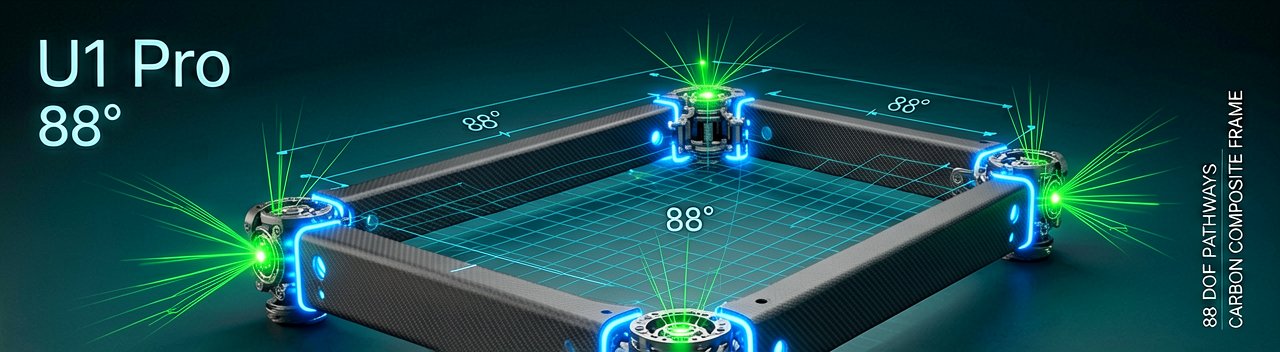
This physical design philosophy interfaces directly with a complex matrix of micro-actuators embedded beneath the bionic silicone skin. In typical industrial models, actuators are engineered for high torque and repeatable positioning accuracy down to the millimeter. In contrast, the U1 series utilizes ultra-miniaturized, low-noise facial servomotors designed to mimic human micro-expressions, working in tandem with an AI engine that maps digital emotional states to physical facial topography. The integration of 88 degrees of freedom across the chassis ensures that physical touch, hand gestures, and head tilts feel naturally compliant rather than rigidly motorized, satisfying a psychological threshold necessary for long-term human cohabitation.

However, the integration of 3D facial reconstruction and voiceprint cloning introduces a complex web of ethical and regulatory friction points that tech journalists are actively monitoring. The capability to replicate the vocal cadences and visual appearances of deceased or distant relatives transforms the robot into a vessel for emotional projection, a development that psychologists warn could complicate natural grief cycles or foster unhealthy technological dependencies. Furthermore, from a strict cybersecurity standpoint, storing highly detailed biometric profiles and localized interpersonal conversation histories within a household appliance creates an attractive target for digital intrusion. UBTech’s reliance on local encrypted memory modules is a direct response to these concerns, attempting to construct an air-gapped data architecture that satisfies rigid data sovereignty laws while reassuring apprehensive consumers.
From a macroeconomic perspective, the rollout of the U1 series is less about a standalone consumer novelty and more about building a foundational infrastructure for an aging society. Economists view the commercialization of affordable bionic companions as an essential buffer against the accelerating labor shortages in healthcare and eldercare sectors across East Asia. By enabling the hardware to execute basic domestic management tasks, track physiological telemetry, and offer conversational engagement, the technology acts as a force multiplier for existing medical networks. As production lines scale and unit costs continue to deflate, the integration of these bionic platforms will likely transition from a luxury status symbol to a standardized element of civic healthcare strategies, fundamentally redefining the relationship between human populations and autonomous machines.
The Friction Between Illusion and Utility
Peeling Back the Synthetic Skin: The commercial narrative surrounding the UWorld U1 series champions a seamless merger of lifelike presence and domestic utility, yet a stark engineering contradiction lies just beneath its silicone exterior. By prioritizing 88 degrees of freedom optimized for facial micro-expressions and gentle physical compliance, UBTech has constructed a machine that mimics human vulnerability rather than human capability. This creates a severe psychological expectation gap for the consumer. A buyer spending up to 990,000 yuan may intuitively expect an ultra-bionic entity to seamlessly manage complex, heavy-duty domestic labor, yet the structural realities of a lightweight 42-kilogram frame mean the U1 is fundamentally unsuited for rigorous physical chores. It remains an expensive interface, presenting an illusion of capability while its actual physical output is constrained to low-torque, highly delicate interactions.
Furthermore, the strategic pivot toward an emotional economy exposes a glaring vulnerability in current AI architectures. UBTech claims its proprietary large language models can recognize and mirror over 20 distinct emotional states, but algorithmic empathy is fundamentally a reactive statistical model, not genuine comprehension. In a domestic setting, human emotional needs are fluid, highly contextual, and frequently contradictory. Programming a robot to perpetually deliver optimized, non-confrontational companionship risks creating a synthetic feedback loop that rewards social withdrawal among users. Instead of integrating isolated individuals back into society, mass-producing compliant, voice-cloned digital proxies may inadvertently accelerate the very atomization of the companion economy that these machines are publicly marketed to solve.
From an industrial scaling perspective, UBTech’s aggressive price deflation strategy also carries significant financial risk. Forcing a full-sized humanoid into a sub-$17,000 price bracket for the entry-tier model requires unprecedented supply chain efficiency, yet the maintenance and longevity profiles of complex bionic skin remain entirely unproven outside laboratory environments. Synthetic polymers degrade rapidly under ambient UV exposure, friction, and household chemical contact, meaning consumers may face steep, recurring refurbishment costs to keep their companions looking human. If early adopters find themselves dealing with tearing skin, fading voice modulations, and mechanical joint fatigue within the first year of deployment, the market enthusiasm could quickly sour, turning a projected trillion-yuan industry into a cautionary tale of premature commercialization.
"We have spent decades worrying that robots would become smart enough to replace us in the workforce, only to discover that our ultimate commercial achievement is a machine expensive enough to replace our roommates, though it still refuses to carry the heavy groceries up the stairs."
Artūras Malašauskas is an AI Systems Integrator with 20+ years of production-grade web engineering experience. He has designed, shipped, and scaled enterprise Python/PHP systems for logistics, SaaS, and public-sector clients. For the past year, he has focused exclusively on AI integrations: deploying open-source LLMs, building generative media pipelines (image, audio, video), and engineering multi-agent workflows for real production environments. His standard: reproducibility, security, cost-efficient inference—no vaporware. He documents and evaluates emerging AI tooling, separating verified capabilities from marketing noise. Technical editor at: muza-ai.eu, ai-verslas.lt, ai-naujinos.lt Connect on LinkedIn
Comments