China Launches World's First Mass-Produced Humanoid Robot, Accelerating Global AI Hardware Race
The global race for hardware supremacy has entered a decisive phase following the official debut of the UWORLD U1 series by Chinese robotics pioneer UBTECH. Billed as the world’s first full-size ultra-bionic humanoid robot engineered for high-volume commercial production, this rollout marks a critical structural shift from experimental lab prototypes to factory-floor scaling. By merging advanced hardware with large language models optimized for physical and emotional interaction, the launch effectively signals that the infrastructure for deploying autonomous humanoids at scale is no longer a long-term projection, but a current reality.
This milestone arrives amidst a coordinated national push by China's Ministry of Industry and Information Technology to move embodied artificial intelligence out of demonstration phases and into active commercial deployment. Backed by highly concentrated supply chains in tech hubs like Shenzhen, Chinese firms are rapidly driving down production costs for critical components like actuators and sensory arrays. Consequently, international competitors face intensified pressure to accelerate their own commercial timelines as the baseline for global manufacturing capabilities undergoes a profound transformation.
Industrial Repercussions and Supply Chain Domination
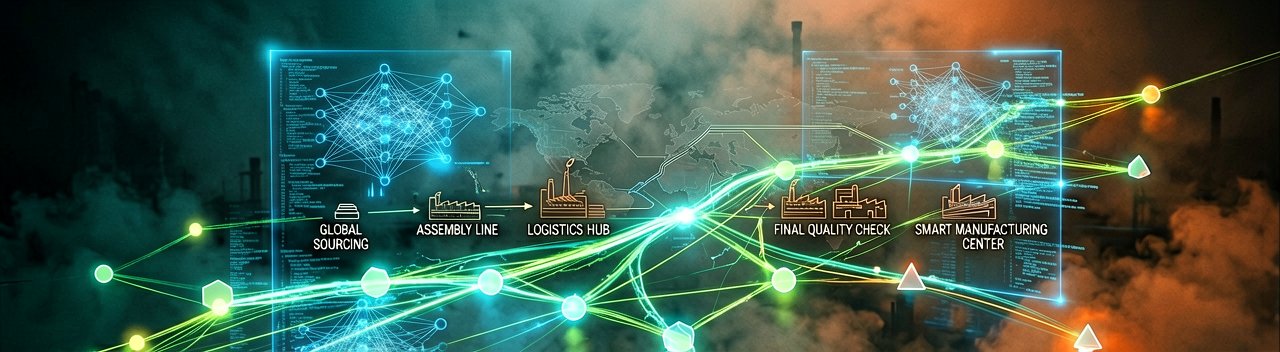
The transition to mass production drastically alters the economics of the robotics sector. China's domestic ecosystem is optimized to convert complex designs into manufactured goods at a fraction of Western costs, utilizing integrated manufacturing loops that enable rapid iteration. According to analysts tracking the industry via , factories in industrial hubs are positioning themselves to meet aggressive capacity targets, fundamentally challenging traditional manufacturing strongholds like Germany and Japan. This creates an immediate imperative for Western firms to secure their own hardware supply lines or risk falling behind in physical deployment capabilities.
The Convergence of Embodied AI and Hardware Scaling
Beyond pure mechanical assembly, the hardware race is increasingly dictated by how effectively physical bodies integrate with sophisticated AI architectures. The newly unveiled systems leverage multi-axis degrees of freedom paired with emotion-aware large language models, allowing them to interpret environmental context and execute precise physical tasks. As thousands of these units enter commercial spaces, hotels, and logistics hubs, the massive influx of real-world operational data will create an compounding development loop, widening the competitive moat for companies that can manufacture and deploy hardware at scale.
An Analysis of the Structural Shift
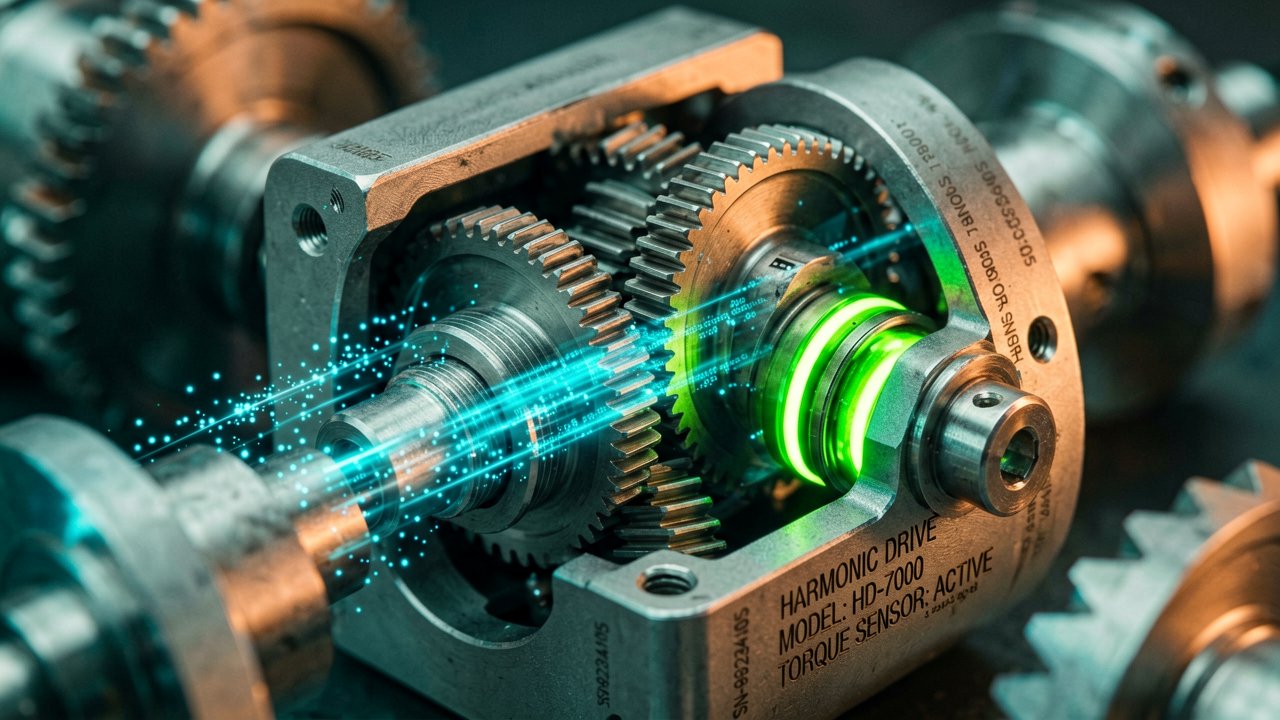
What Most Reports Miss: The true disruption of China’s mass-production milestone lies not in the sophistication of the robotic intellect, but in the immediate commoditization of highly complex precision hardware. While global attention remains focused on the algorithmic breakthroughs of Western labs, the baseline engineering challenge of humanoid robotics has always been mechanical reproducibility. Replicating multi-axis harmonized movement requires specialized harmonic drive reducers, high-torque density brushless motors, and proprietary tactile feedback sensors. Traditionally, these components were handcrafted or produced in small batches, bottlenecking delivery timelines and inflating the cost per unit to prohibitive levels.
By industrializing this specific layer of the stack, domestic manufacturers have effectively transformed custom aerospace-grade components into off-the-shelf industrial hardware. This rapid supply chain verticalization mimics the early scaling patterns seen in the lithium-ion battery and electric vehicle markets over the previous decade. As regional component suppliers retool their facilities to churn out standardized planetary gear trains and high-voltage actuators by the thousands, the cost structure of building a functional humanoid is shifting from an capital-intensive enterprise endeavor to a manageable line item for commercial operational budgets.
From a stakeholder perspective, this operational shift triggers an immediate strategic pivot for enterprise buyers and automation engineers alike. Logistics giants and automotive assembly plants are moving away from pilot programs toward full-scale operational integration, evaluating humanoids based on hourly operational costs rather than speculative technological capability. This data-driven approach to procurement forces a rapid evolution in software deployment. Manufacturers are no longer just selling a machine; they are licensing an evolving hardware ecosystem that amortizes its own development costs through continuous data collection on the factory floor.
The geopolitical ramifications of this manufacturing capability extend far into the broader semiconductor and AI hardware sectors. Mass-produced humanoids represent a massive new end-market for edge-computing silicon, requiring dedicated neural processing units capable of executing multi-modal inference locally to avoid latency in physical feedback loops. By establishing dominance in the physical chassis of the robot, regional tech ecosystems ensure that future international standards for robotic operating systems, safety protocols, and hardware interfaces will heavily favor their internal technological baselines, altering the balance of industrial power for the foreseeable future.
The Friction Between Automation Ideals and Factory Realities
Reading Between the Lines: The triumphalist narrative surrounding mass-produced humanoid robots routinely glosses over a fundamental contradiction in modern industrial engineering. While the achievement of scaling complex physical chassis to high-volume assembly lines is technically impressive, the economic rationale for replacing specialized automation with generalized humanoids remains largely unproven. For decades, the most efficient factories have relied on highly predictable, single-purpose robotic arms and automated guided vehicles. Introducing a bipedal machine to perform tasks specifically designed for humans is a complex workaround, revealing that the current push is driven more by geopolitical optics and tech-sector speculation than immediate operational necessity.
Furthermore, the claim that mass production will instantly democratize advanced robotics ignores the massive hidden costs of deployment, maintenance, and software adaptation. A humanoid robot standing idle due to a specialized joint failure or an unmapped environmental change can paralyze an integrated logistics line faster than a traditional human labor shortage. Western manufacturers, while trailing in hardware volume, are banking on the assumption that superior contextual AI and simulation-to-reality transfer models will ultimately matter more than sheer physical output. If a mass-produced robot lacks the adaptive software to navigate dynamic, unpredictable factory floors safely, it quickly becomes little more than an expensive piece of kinetic sculpture.
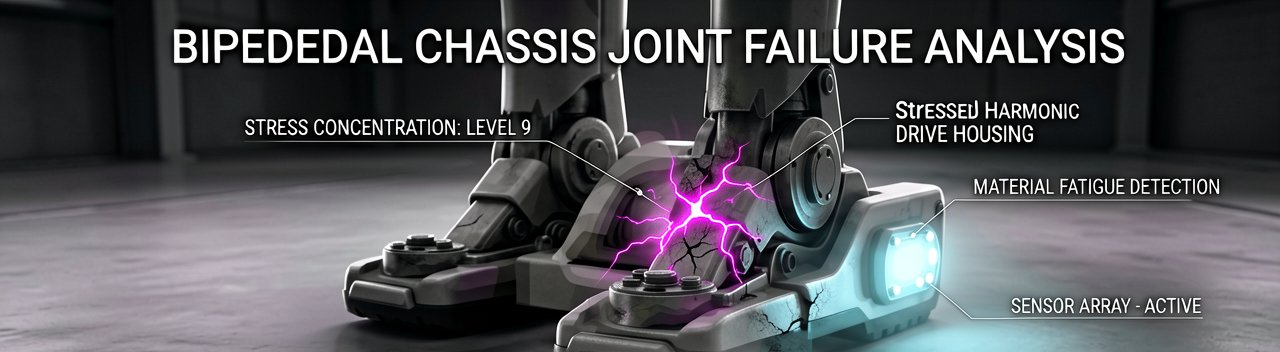
This hardware-first approach also creates a severe vulnerability regarding long-term component reliability under continuous industrial strain. Scaling manufacturing lines to output thousands of units annually requires substituting boutique, highly tested materials with cheaper, mass-grade alternatives. The historical precedent of rapid tech scaling suggests that early cohorts of these mass-produced humanoids will likely suffer from high failure rates in their harmonic drives and sensory arrays, potentially flooding the market with depreciating mechanical assets and forcing a costly retreat back to reliable, purpose-built automation frameworks.
"We have successfully engineered a machine capable of mimicking human exhaustion, down to the mechanical fatigue in its joints and the unexpected downtime, proving that the ultimate achievement of advanced robotics is reproducing the exact operational unpredictability we originally built automated factories to escape."
Artūras Malašauskas is an AI Systems Integrator with 20+ years of production-grade web engineering experience. He has designed, shipped, and scaled enterprise Python/PHP systems for logistics, SaaS, and public-sector clients. For the past year, he has focused exclusively on AI integrations: deploying open-source LLMs, building generative media pipelines (image, audio, video), and engineering multi-agent workflows for real production environments. His standard: reproducibility, security, cost-efficient inference—no vaporware. He documents and evaluates emerging AI tooling, separating verified capabilities from marketing noise. Technical editor at: muza-ai.eu, ai-verslas.lt, ai-naujinos.lt Connect on LinkedIn
Comments