Anthropic Claude Science Beta Reshapes Biotech Workflows With Multi-Agent Reproducibility
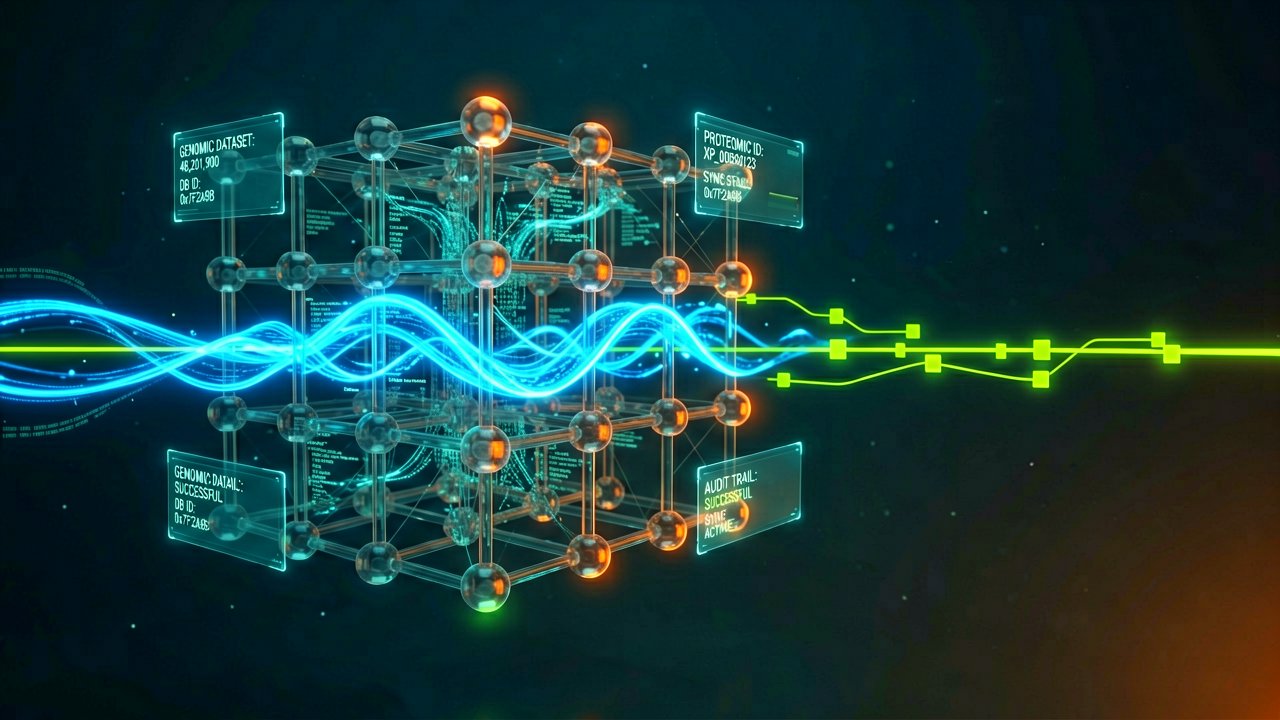
Anthropic has unveiled Claude Science Beta, an AI-driven research workbench engineered to automate complex life sciences pipelines. The platform coordinates multi-agent workflows across genomics, proteomics, and cheminformatics. It marks a shift from generic model capabilities to specialized scientific environments. The tool features pre-configured integration with over 60 scientific databases and computing tools in a unified workspace, as reported by Anthropic.
The product launch reflects an industry shift from parameter scaling to workflow integration. Competitors previously focused on expanding context windows. Anthropic is prioritizing operational infrastructure for specialized enterprise markets. According to TechCrunch, Claude Science targets workflow management rather than introducing a new underlying foundational model. This packaging of agent skills and audit trails addresses reproducibility challenges in digital biology.
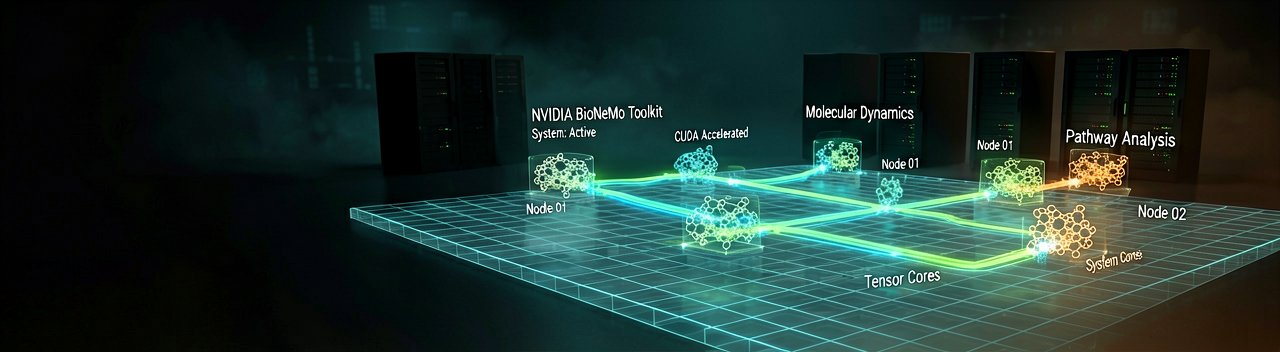
Anthropic is also expanding into proprietary pre-clinical drug programs focused on neglected diseases. This expands its market presence beyond serving as an infrastructure provider. As reported by Reuters, this initiative targets areas outside traditional commercial priorities. The multi-agent workbench also integrates with specialized hardware frameworks, such as the NVIDIA Blog BioNeMo Agent Toolkit. This integration accelerates generative AI deployment within pharmaceutical research pipelines.
Strategic Implications for the Biotech AI Market
The release of Claude Science highlights the increasing specialization of the foundational model market. Top AI developers are moving beyond chat interfaces to create domain-specific laboratory platforms. Incorporating auditable artifacts directly addresses scientific reproducibility criteria. This design helps prevent data hallucinations within critical R&D pipelines.
Disrupting Traditional Biopharma Software Ecosystems
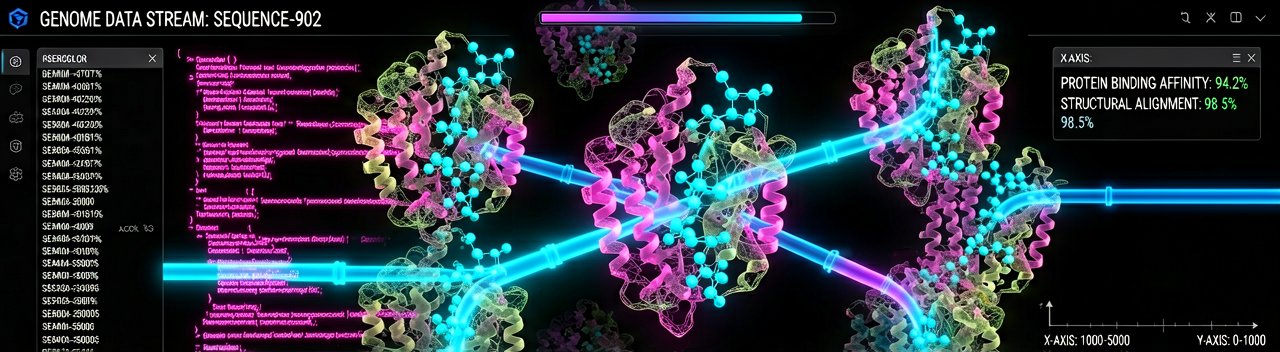
Anthropic is challenging traditional software vendors in the bioinformatics and digital chemistry markets. By providing direct access to native computation and visualization tools, it lowers barriers to complex data analysis. Native data visualization allows researchers to interact directly with 3D protein structures and genome browser tracks. This setup reduces reliance on fragmented legacy software suites.
Regulatory and Compliance Frameworks in AI-Driven R&D
The platform runs on existing models evaluated under biosecurity protocols. As these autonomous agents execute complex multi-step pipelines, data provenance becomes essential for regulatory compliance. Anthropic emphasizes tracing results back to source code and environments. This documentation supports the audit trails required for regulatory filings in drug discovery.
Behind the Scenes: Inside the Agentic Pivot in Digital Biology
What Most Reports Miss: The launch of Claude Science Beta represents a fundamental pivot in how AI developers approach the pharmaceutical industry. For years, the bottleneck in computer-aided drug discovery was not the lack of reasoning capability, but the structural fragmentation of laboratory tools. Researchers routinely spent more time writing glue code to connect disparate databases than analyzing structural variants. By embedding over 60 scientific databases into a containerized multi-agent architecture, Anthropic is shifting the value proposition from a generic conversational intelligence to an active, programmatic laboratory operator.
This operational shift directly confronts the structural reproducibility crisis that has long plagued computational biology. Early trials of generative AI in drug discovery frequently stumbled when models produced seemingly plausible molecular structures that could not be synthesized or replicated across different computing environments. Industry insiders note that Claude Science combats this by generating self-documenting code artifacts alongside its scientific hypotheses. When an agent executes a protein-ligand docking simulation, it creates an immutable log detailing the specific software dependencies, random seeds, and data snapshots used, allowing external teams to replicate the exact results instantly.
From a market perspective, this architecture positions Anthropic against legacy bioinformatics software providers and cloud infrastructure giants. Rather than forcing biopharma companies to build bespoke agent networks from scratch, the platform provides pre-trained agent personas that understand the syntax of tools like AlphaFold and local molecular dynamics packages. Large pharmaceutical firms are already evaluating how these interconnected agents can independently manage multi-step pipelines. These tasks range from querying genomic databases for specific disease targets to executing cheminformatics scripts that filter out toxic compounds before expensive laboratory synthesis begins.
The strategic expansion into neglected disease research indicates a broader effort to build institutional trust. By deploying its multi-agent platform on public-interest science, Anthropic creates a high-visibility testing ground to refine agent coordination without the immediate pressure of corporate patent litigation. This strategy provides the company with a robust stream of real-world validation data. The resulting telemetry from these non-profit pipelines will likely inform the security and optimization of the commercial infrastructure used by the world's largest biotechnology companies.
However, integrating autonomous agents into enterprise R&D introduces distinct operational challenges. Computational biologists emphasize that as multi-agent systems gain the autonomy to modify and execute code across multiple cloud instances, data provenance and security boundaries must be strictly enforced. The success of the platform will ultimately depend on how seamlessly it handles edge cases where different scientific databases conflict. It must also maintain data privacy within the highly competitive, proprietary data silos that define modern therapeutic development.
Reading Between the Lines: The Friction Point of Autonomous Lab Benches
Reading Between the Lines: The industry enthusiasm surrounding multi-agent reproducibility glosses over a fundamental contradiction in the current state of generative AI. Anthropic promises an environment where complex genomics and cheminformatics workflows can be automated with total reliability. Yet, the underlying architecture of these systems still relies on probabilistic large language models that are inherently prone to stochastic variance. Labeling a platform as a champion of reproducibility while its core cognitive engine remains a black box presents a paradox that computational biologists are already beginning to question.
This structural tension becomes obvious when examining how these agents interact with legacy scientific software. While Claude Science can synthesize code to bridge disparate databases, it cannot inherently validate the underlying biological truth of its outputs. There is a distinct risk that multi-agent systems will simply accelerate the production of deeply flawed, yet beautifully formatted, computational pipelines. If an agent misinterprets a subtle annotation in a genomics database, it can seamlessly cascade that error across dozens of downstream proteomics tools, creating a highly reproducible chain of misinformation that looks entirely convincing to the untrained eye.
Furthermore, Anthropic’s dual identity as both an infrastructure provider and an active participant in neglected disease drug discovery introduces an unusual market dynamic. By entering the pre-clinical space directly, the company is no longer just selling the shovels for the digital biology gold rush; it is actively digging in adjacent plots. This crossover may cause traditional biopharma partners to hesitate. Enterprise software clients are notoriously protective of their proprietary target validation data, and they may look skeptically at an AI vendor that is simultaneously developing its own therapeutic pipeline, even if that pipeline is currently cordoned off under the banner of public-interest science.
The reliance on hardware frameworks like NVIDIA’s BioNeMo toolkit also underscores a deeper infrastructure dependency. While the software layer introduces impressive orchestrational capabilities, the actual computational heavy lifting remains tethered to scarce, expensive silicon. This reliance limits the democratization of the platform. Instead of leveling the playing field for smaller research institutions, the high compute costs associated with running continuous, multi-agent reasoning loops may instead consolidate power among the few mega-pharmaceutical firms that can afford to keep these autonomous pipelines spinning indefinitely.
Ultimately, the true test of the platform will not be its ability to automate simple data-munging scripts, but its capacity to handle the messiness of real-world biology. Laboratory data is notoriously dirty, incomplete, and poorly documented. Human scientists spend a significant portion of their careers using intuition to reject anomalous data points that look statistically valid on paper. Teaching autonomous agents when to distrust a peer-reviewed database is a far more complex hurdle than engineering a clean multi-agent execution environment, and it is a milestone that remains firmly on the horizon.
"We have finally achieved the dream of automated science: a system that can replicate a biological error across three different cloud environments in under thirty seconds, leaving human researchers completely free to figure out why the data makes absolutely no sense."
Artūras Malašauskas is an AI Systems Integrator with 20+ years of production-grade web engineering experience. He has designed, shipped, and scaled enterprise Python/PHP systems for logistics, SaaS, and public-sector clients. For the past year, he has focused exclusively on AI integrations: deploying open-source LLMs, building generative media pipelines (image, audio, video), and engineering multi-agent workflows for real production environments. His standard: reproducibility, security, cost-efficient inference—no vaporware. He documents and evaluates emerging AI tooling, separating verified capabilities from marketing noise. Technical editor at: muza-ai.eu, ai-verslas.lt, ai-naujinos.lt Connect on LinkedIn
Comments