Anthropic Slashes AI Agent Costs with Claude Sonnet 5 as Tech Giants Hunt for Efficiency
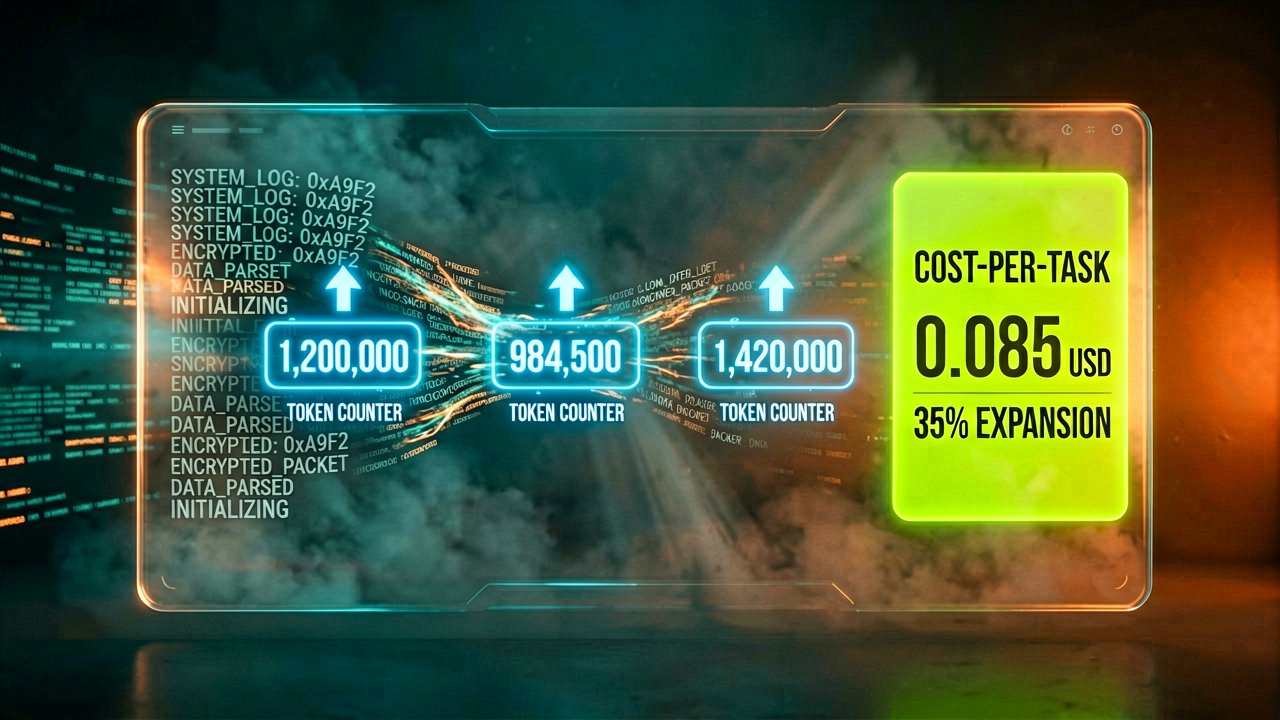
Anthropic has officially launched its new mid-tier model, Claude Sonnet 5, aiming to fundamentally change the economics of running autonomous AI agents. The model is engineered to handle complex, multi-step planning, browser manipulation, and terminal execution at a performance tier previously reserved for significantly bulkier and more expensive flagship systems. By closing the capability gap with its premium lineup, the deployment offers enterprise clients a viable vector for scaling agentic workflows without experiencing exponential increases in operational expenditures.
The strategic release arrives at a critical juncture for the broader artificial intelligence industry, where tech giants and startups alike are facing intense pressure to deliver sustainable return on investment amid soaring infrastructure costs. To capture market share during this efficiency hunt, Anthropic introduced Claude Sonnet 5 with aggressive introductory pricing set at $2 per million input tokens and $10 per million output tokens. Following an initial promotional period ending August 31, 2026, the model will transition to its standard rate of $3 per million input tokens and $15 per million output tokens, matching the baseline cost of its predecessor while delivering superior raw performance.
Market analysts note that the introduction of Sonnet 5 intensifies the fierce race toward unit-economic optimization across the enterprise landscape. While competitive offerings like Google’s lightweight alternatives still undercut the broader market on base pricing, Anthropic’s tactical positioning targets high-end agentic capabilities—such as real-world professional knowledge work, software development, and complex data analysis—where performance density dictates overall project success. By making Sonnet 5 the default model across its Free, Pro, Team, and Enterprise tiers, Anthropic is attempting to anchor its ecosystem as the definitive operating environment for corporate AI automation.
Balancing Performance Gains Against Real-World Token Overhead
While the promotional pricing makes for highly appealing marketing copy, expert analysis reveals that the true cost of agentic performance requires a deeper examination of model mechanics. Benchmarks indicate that Sonnet 5 performs remarkably well on complex reasoning tasks, effectively closing the gap with ultra-premium flagship models. For instance, evaluations show the model matching high-end systems on demanding professional examinations and practical knowledge-work tests. This compression of top-tier intelligence into a mid-priced model allows companies to bypass expensive premium tiers for high-volume enterprise operations.
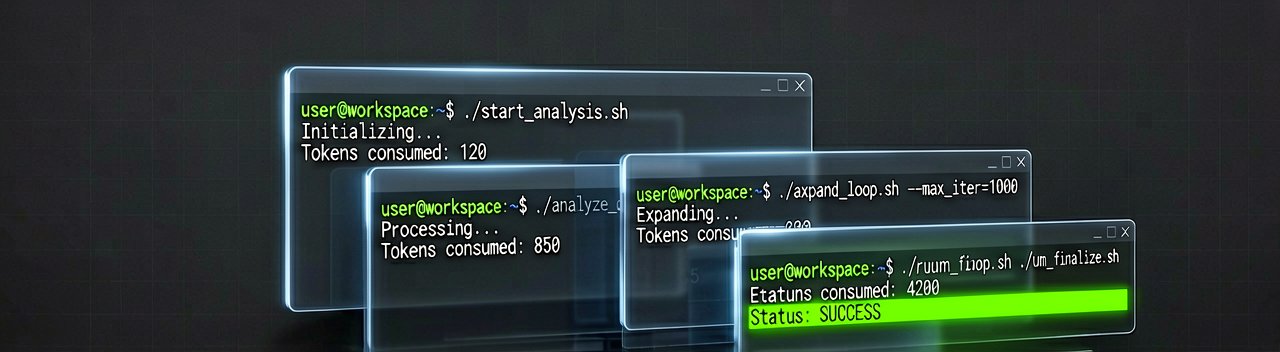
However, early technical teardowns by independent benchmarking organizations like Medium caution that real-world operational costs may diverge from headline token rates. The integration of a revamped tokenizer within Sonnet 5 can expand token counts by up to 35% on identical text payloads compared to older models. Because autonomous agents naturally consume massive amounts of tokens through repetitive prompt loops and iterative tool orchestration, this token inflation means the actual cost per completed task could end up higher than paper-thin list margins suggest, forcing enterprises to maintain strict monitoring over raw agent behaviors.
The Enterprise Shift Toward Specialized Research Environments
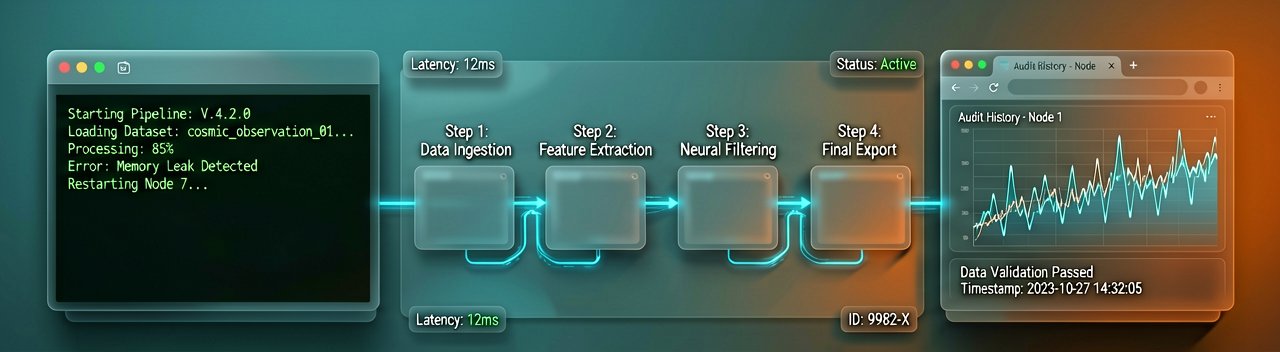
Beyond standard API deployments, Anthropic is leveraging the architectural efficiency of Sonnet 5 to pioneer specialized application layers tailored for vertical industries. Alongside the model launch, the company unveiled Claude Science, an integrated digital workbench optimized for scientific research. This application consolidates fragmented academic tools, literature analysis functions, and multi-step research execution pipelines into a single digital workspace that outputs an auditable, reproducible history of data generation. As reported by PYMNTS, this move builds on a broader strategic push to embed highly capable, cost-efficient models directly into specialized professional environments, transforming AI from a generic chatbot into an active, compliant research partner.
The Hidden Dynamics of Agentic Unit Economics
Beneath the Pricing Warfare: The standard industry metric of cost per million tokens has increasingly become a superficial marker that masks the actual operational expenses of running modern AI agents. In an enterprise setting, an autonomous agent does not simply receive a prompt and return a response; it operates in a continuous loop of observation, planning, tool execution, and self-correction. This iterative loop means a single user objective can trigger dozens of sequential model calls, compounding token consumption exponentially. Consequently, Anthropic’s decision to optimize Claude Sonnet 5 for high-density reasoning at a mid-tier price point is a direct response to enterprise pilot programs that stalled when early adopters realized that running first-generation agents on premium flagship models was financially unsustainable at scale.
This economic friction has forced a significant pivot in how corporate engineering teams evaluate model efficiency. Instead of focusing entirely on raw API list prices, architects now calculate the "cost-per-successful-task," a metric where Claude Sonnet 5 attempts to redefine the baseline. By improving the model's native ability to manipulate browser environments and terminal interfaces without relying on bloated, multi-step prompt engineering frameworks, Anthropic reduces the total number of round-trips required to complete a complex workflow. This structural efficiency helps mitigate the financial penalty of the model's larger tokenizer, allowing companies to deploy long-horizon agents that can run for hours or days without generating catastrophic cloud computing bills.
From a competitive standpoint, this release intensifies a broader philosophical divide among the major AI laboratories. While some hyperscalers focus heavily on distilling models down to ultra-low-cost, lightweight form factors that execute simple tasks for pennies, Anthropic is double-downing on the middle tier as the true sweet spot for business automation. The strategic bet here is that enterprise buyers care less about reaching the absolute absolute lowest price per token, and more about achieving a predictable, bound cost for high-value intellectual labor, such as automating software engineering pipelines or executing complex financial audits.
Ultimately, the rollout of Sonnet 5 underscores a shift from the experimental "chatbot era" into an era of industrialized agentic workflows. As tech giants continue to hunt for computational efficiency, the battleground is moving away from raw parameter counts and toward architectural optimizations that directly serve autonomous software. Companies that master this layer of the stack are positioned to capture the next wave of enterprise spending, as businesses migrate away from basic search-and-retrieval applications toward fully integrated digital workers that operate independently within legacy corporate systems.
The Paradox of Cost-Efficient Intelligence
Reading Between the Lines: The tech industry’s enthusiastic embrace of Claude Sonnet 5 as a financial savior highlights a glaring contradiction in the current narrative surrounding AI scaling. For months, enterprise leaders have clamored for cheaper tokens, operating under the assumption that price cuts would directly translate to reduced corporate expenses. However, this logic ignores the reality of Jevons’ Paradox: as the cost of a resource falls, its consumption tends to rise rather than decline. By lowering the financial barrier to entry for agentic workflows, Anthropic is not necessarily shrinking enterprise AI budgets; instead, it is incentivizing companies to unleash vastly larger, more complex fleets of autonomous agents that will ultimately consume more compute time than ever before.
Furthermore, the reliance on aggressive promotional pricing creates a fragile foundation for long-term corporate strategy. Enterprises integrating Sonnet 5 into their core software development pipelines or data analytics infrastructures during the initial launch window are building workflows optimized for a temporary economic reality. When the promotional rates expire and transition to standard pricing, the sudden margin compression could catch engineering teams off guard, particularly those who overlooked the model's high token overhead. This bait-and-switch pricing strategy, common among SaaS providers but increasingly weaponized by AI labs, forces a cynical conclusion: the tech sector is still prioritizing rapid market acquisition and developer lock-in over stable, transparent unit economics.
There is also an inherent tension between Anthropic’s public commitment to safety and the raw demands of agentic autonomy. Sonnet 5 is built to interact directly with web browsers and terminal interfaces, tasks that fundamentally require a model to operate with minimal human oversight. While the cost reductions make these long-horizon tasks economically viable, they also accelerate the deployment of systems that can make errors, misinterpret commands, or alter codebases at a fraction of the previous cost. In their race to match the operational efficiency of rival tech giants, AI providers risk democratizing access to autonomous bugs and execution errors, trading the controlled safety of tightly bounded chat interfaces for the chaotic unpredictability of cheap, widespread automation.
"We are rapidly approaching an era where an AI agent can brilliantly diagnose a multi-million dollar corporate systemic failure, fix it in milliseconds, and then accidentally spend the remaining budget buying three thousand identical desk chairs because its tokenizer misunderstood the plural form of inventory."
Artūras Malašauskas is an AI Systems Integrator with 20+ years of production-grade web engineering experience. He has designed, shipped, and scaled enterprise Python/PHP systems for logistics, SaaS, and public-sector clients. For the past year, he has focused exclusively on AI integrations: deploying open-source LLMs, building generative media pipelines (image, audio, video), and engineering multi-agent workflows for real production environments. His standard: reproducibility, security, cost-efficient inference—no vaporware. He documents and evaluates emerging AI tooling, separating verified capabilities from marketing noise. Technical editor at: muza-ai.eu, ai-verslas.lt, ai-naujinos.lt Connect on LinkedIn
Comments