Nebius AI Cloud 3.6: Redefining Enterprise Operations Through Autonomous Infrastructure
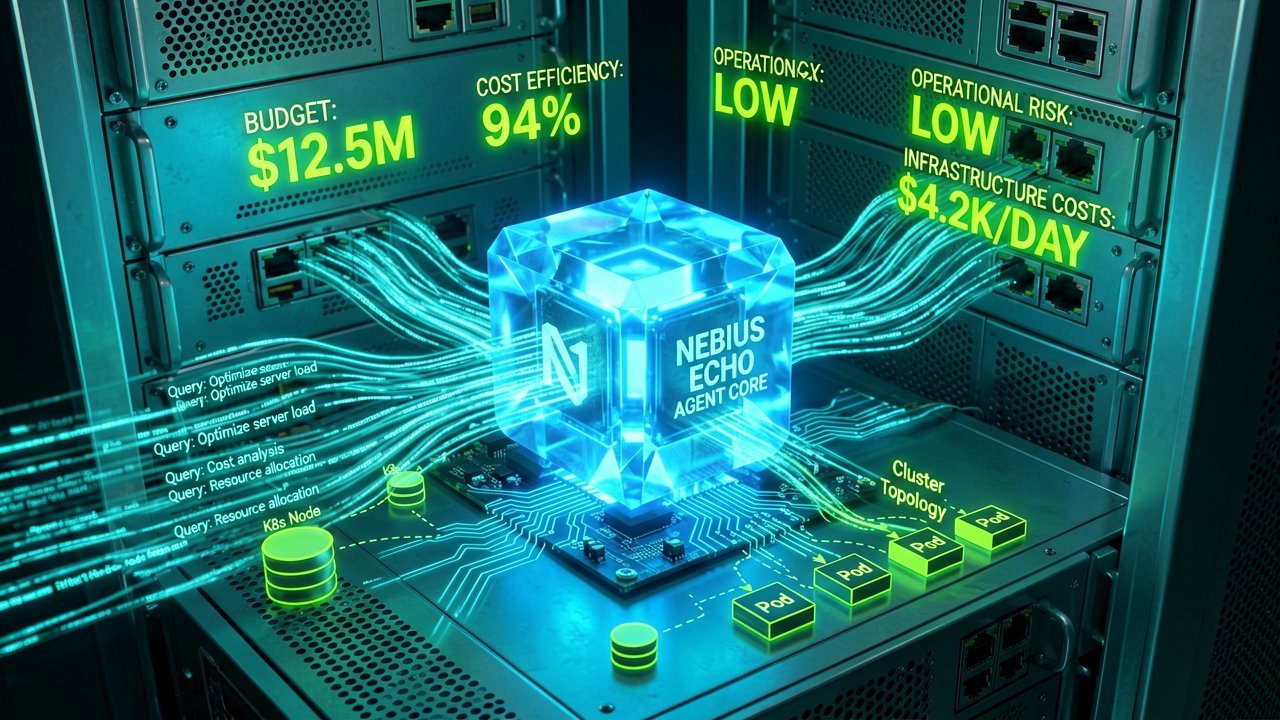
The formal rollout of the Nebius AI Cloud "Aether 3.6" platform represents a major milestone in the evolution of enterprise cloud architectures. By natively embedding Nebius Echo, an advanced AI-powered autonomous agent, directly into the infrastructure layer, the release marks a significant departure from standard point-and-click or script-heavy cloud management frameworks. Nebius is shifting the core paradigm of cloud computing from a passive, human-driven utility into a self-orchestrating, natural language-driven ecosystem tailored for large-scale AI operations.
Historically, enterprise cloud strategies required specialized engineering teams to manually manage complex infrastructure provisioning, security configurations, and FinOps pipelines. The integration of Nebius Echo addresses this friction head-on by enabling software engineers and administrators to instantiate, monitor, and debug specialized GPU-accelerated environments using native language queries. According to details shared in the official Nebius Newsroom announcement, the agent operates securely within the web console without requiring manual Setup or Model Context Protocol configurations. Echo offers context-aware assistance alongside strict engineering guardrails to prevent accidental resource destruction.
This deployment establishes Nebius as a critical architectural layer for enterprises transitioning from localized AI pilot projects to production-grade, autonomous deployments. By consolidating core infrastructure tasks—such as automated multi-step deployments, localized image registries, and real-time environment debugging—into an intelligent console assistant, the platform addresses the acute technical debt that frequently stalls enterprise AI scaling. Instead of treating AI as an isolated workload running on top of legacy architecture, Nebius integrates autonomous decision-making directly into the foundation of the data center, setting a new benchmark for competitive hyperscalers.
Market Imperatives and Strategic Pivots in Hyperscaler Competition
The market context surrounding Nebius's latest release underscores a deeper, highly competitive capital expenditure race among AI-native infrastructure providers. Competing directly alongside specialized cloud platforms and legacy tech giants, Nebius’s strategy focuses on delivering high-performance, predictable AI infrastructure that offers a lower Total Cost of Ownership (TCO) compared to traditional, non-specialized hyperscalers. Investors tracking the market transition note that updates like the 3.6 Aether release represent an evolution in how the platform positions its investment narrative, as reported by Simply Wall St News. Nebius is moving rapidly beyond raw bare-metal hardware provisioning to offer a fully unified software and governance stack.
Enterprise-Grade Security, Storage, and Governance Frameworks
Beyond natural language orchestration, scaling production AI inside highly regulated corporate environments requires rigid compliance and security controls. The 3.6 deployment satisfies these enterprise demands by integrating robust governance upgrades, including Customer-Managed Encryption Keys (CMEK) and Workload Identity Federation. Industry analysts at HPCwire highlight that these enhancements allow organizations to host production workloads within heavily regulated sectors while fully maintaining data residency compliance. Furthermore, the release directly tackles persistent storage bottlenecks by adding local SSD support for GPU instances and deploying an intelligent, tier-based object storage structure designed to optimize expensive training cycles.
Operational Efficiency and the Rise of Autonomous FinOps
Controlling cloud expenditures remains a primary barrier to enterprise AI scaling. The 3.6 release introduces granular cost-management features designed to balance developer autonomy with strict financial guardrails. FinOps teams gain access to real-time budgeting tools, customizable spending targets, and proactive alerting mechanisms to mitigate runaway compute expenditures. Concurrently, technical engineering teams receive highly refined management parameters over Kubernetes clusters and containerized image deployments. By blending autonomous infrastructure execution with programmatic cost and access guardrails, Nebius offers a scalable blueprint for operationalizing enterprise AI without exposing corporations to unacceptable financial or security liabilities.
Behind the Scenes: The Invisible Friction of the Autonomous Transition
While the marketing narrative surrounding Nebius 3.6 focuses heavily on the convenience of natural language orchestration, veteran data center architects recognize that the real breakthrough lies in how the platform resolves underlying state-management complexities. In traditional setups, executing infrastructure-as-code scripts via tools like Terraform requires engineers to maintain precise state files, where a single syntax error can cascade into catastrophic system downtime. By shifting this responsibility to an autonomous agent running natively inside the web console, the system replaces rigid, deterministic scripts with a dynamic reasoning engine. This approach allows the infrastructure to self-heal and adapt to unexpected hardware anomalies without requiring continuous human intervention.
From a developer perspective, this strategic shift addresses the acute cognitive overload currently plaguing machine learning engineers. In most enterprise environments, highly paid data scientists spend a disproportionate amount of time debugging low-level driver conflicts, provisioning network file systems, and manually configuring InfiniBand fabrics instead of refining algorithms. The introduction of an autonomous interface abstracts these operational headaches away, transforming complex cluster provisioning into a conversational checkpoint. This evolution mirrors the early transitions of web development from assembly code to high-level frameworks, signaling a mature stabilization period for the generative AI software stack.
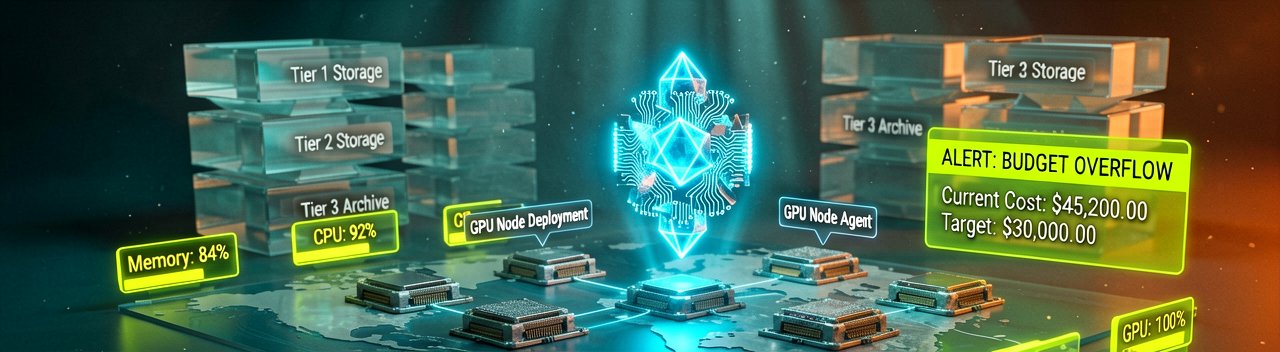
However, this structural transition introduces a new set of organizational and cultural anxieties for corporate leadership. Enterprise security officers remain deeply skeptical of giving autonomous agents the programmatic authority to destroy or modify expensive GPU clusters. To appease these conservative stakeholders, the architectural design must enforce absolute boundaries, ensuring the system operates purely within a sandboxed advisory capacity unless explicitly granted elevated permissions. The success of this platform hinges not on the raw intelligence of its models, but on the transparency of its guardrails, forcing companies to carefully recalibrate the balance between developer speed and systematic risk management.
Historically, hyperscalers competed almost entirely on raw hardware volume, securing the latest semiconductor allocations to win over corporate clients. As GPU availability begins to stabilize globally, the competitive battlefield is rapidly shifting from hardware scarcity to software efficiency and orchestration capabilities. Organizations are discovering that poorly optimized data pipelines and idle compute instances can drain budgets faster than the actual training of an AI model. Nebius’s pivot toward an autonomous agent infrastructure layer indicates that future market dominance belongs to providers that can maximize hardware utilization rates while simultaneously lowering the technical barriers to entry.
Ultimately, this architectural evolution redefines the role of the modern cloud architect from a manual configuration manager to a policy setter. As autonomous agents take over the repetitive tasks of provisioning local SSDs, managing container registries, and troubleshooting node failures, engineering teams will pivot toward long-term data strategy and ethical governance models. The release of the 3.6 platform provides a clear look at a future where enterprise data centers run themselves, altering the structural economics of software development and accelerating the commercialization of corporate artificial intelligence.
Reading Between the Lines: The Structural Paradox of Self-Governing Clouds
The enterprise rush toward autonomous infrastructure relies on a fundamentally flawed premise: that adding layers of complex AI reasoning will inherently simplify complex computing environments. By embedding an agent like Nebius Echo directly into the infrastructure layer, organizations are effectively curing the complexity of legacy cloud management by introducing a different, less predictable form of algorithmic complexity. While natural language commands eliminate syntax errors in configuration scripts, they introduce the persistent risk of semantic ambiguity. A vague prompt regarding resource optimization could lead an autonomous agent to de-provision underutilized but highly critical secondary nodes, trading predictable human error for erratic machine reasoning.
Furthermore, this architectural shift exposes a glaring contradiction in current corporate risk-management strategies. Enterprises are eagerly adopting autonomous tools specifically to reduce the human headcount required to manage massive AI workloads, yet they are simultaneously implementing rigid governance frameworks like Customer-Managed Encryption Keys and Workload Identity Federation to maintain granular human control. This creates an operational bottleneck where an autonomous agent can generate a highly optimized multi-step deployment in seconds, only for the entire process to stall for days while waiting for manual security clearances. The technology is moving at machine speed, but corporate bureaucracy remains stubbornly analog, diluting the efficiency gains promised by hyperscalers.
This gap between automated capability and human oversight also complicates the financial realities of modern cloud computing. Autonomous infrastructure is frequently marketed as a silver bullet for runaway FinOps costs, with the promise that AI agents will instantly spot idle GPUs and optimize tier-based object storage. However, running these sophisticated, context-aware management agents requires a constant baseline of foundational compute power itself. Enterprises may find themselves trapped in an expensive cycle, burning billable GPU cycles on AI models whose sole purpose is to figure out how to stop burning billable GPU cycles, turning cloud optimization into a costly exercise in computational recursion.
Long-term architectural projections suggest that the reliance on autonomous agents will create a generation of enterprise engineers who understand how to converse with a cloud platform, but lack the foundational knowledge to debug it when the AI layer inevitably fails. When a natural language interface acts as the permanent intermediary, the underlying mechanics of Kubernetes orchestration, network fabrics, and local storage routing become black boxes. If the autonomous agent misinterprets a critical system failure during an outage, an engineering team that has grown accustomed to conversational prompts will face a steep learning curve trying to manually untangle a system they no longer fully understand.
Ultimately, the transition toward autonomous agent infrastructure represents a calculated gamble that the speed of automated scaling outweighs the risks of losing direct operational visibility. Hyperscalers are no longer just selling raw processing power; they are selling automated decision-making as a service, requiring a level of institutional trust that corporate legal and compliance departments are rarely equipped to give. As these platforms evolve, the true measure of success will not be how fast an agent can spin up a cluster, but how gracefully the system handles the chaotic edge cases that defy natural language logic.
"We are rapidly moving toward an era where enterprise cloud management requires no human intervention at all, leaving IT departments perfectly free to spend their entire week arguing with an AI agent about why it decided to delete the primary production database to save fifteen dollars on the monthly utility bill."
Artūras Malašauskas is an AI Systems Integrator with 20+ years of production-grade web engineering experience. He has designed, shipped, and scaled enterprise Python/PHP systems for logistics, SaaS, and public-sector clients. For the past year, he has focused exclusively on AI integrations: deploying open-source LLMs, building generative media pipelines (image, audio, video), and engineering multi-agent workflows for real production environments. His standard: reproducibility, security, cost-efficient inference—no vaporware. He documents and evaluates emerging AI tooling, separating verified capabilities from marketing noise. Technical editor at: muza-ai.eu, ai-verslas.lt, ai-naujinos.lt Connect on LinkedIn
Comments