Klaviyo Redefines E-commerce Automation With New AI Marketing Agent Composer and Customer Agent Overhaul

The e-commerce landscape is shifting from fragmented SaaS tools toward autonomous ecosystem orchestration. In a strategic expansion of its artificial intelligence ecosystem, Klaviyo has launched the public beta of Composer, its core AI marketing agent, alongside an overhauled Customer Agent. Rather than acting as separate, disconnected systems, both tools run natively on top of the company's central customer relationship management platform. This shared infrastructure ensures that marketing workflows and direct customer support interactions pull from identical, real-time data streams to maximize brand revenue and performance efficiency.
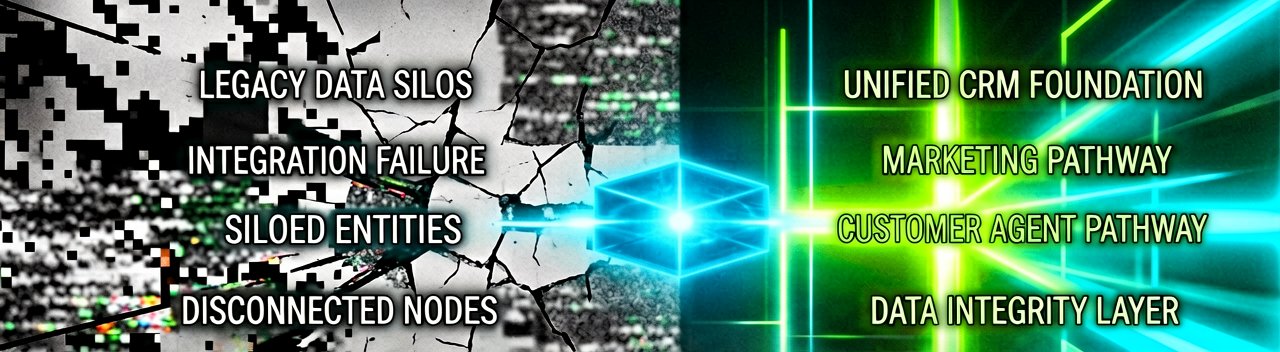
Historically, consumer brands have struggled to generate meaningful returns on their artificial intelligence investments due to localized data silos and generic large language model outputs. By anchoring these autonomous agents to a single CRM foundation, historical campaign trends, and deep behavioral signals, this rollout directly addresses the market's demand for context-aware automation. According to merchant research compiled by Digital Commerce 360, vendors utilizing these underlying automation toolsets accounted for over $9 billion in online retail revenue, signaling massive scale potential for the vendor's integrated agent architecture.
This product launch represents a transition from purely generative copilots to proactive, data-driven orchestration agents. Enterprise marketing teams are frequently overwhelmed by the operational maintenance of extensive, cross-channel communication flows. By consolidating predictive data modeling, real-time support data, and cross-channel campaign building under a unified framework, the platform establishes an automated feedback loop where customer care updates directly influence outbound marketing strategy.
Proactive Revenue Optimization via Composer
The newly launched Composer agent acts as an autonomous systems auditor that eliminates manual database querying. The agent proactively analyzes live customer journeys, active marketing flows, and historical audience segments to rank growth opportunities by their projected financial impact. For instance, it can isolate an underperforming cart abandonment sequence or locate high-value customer segments that have disengaged. Once a target is selected, the tool references historic metrics from nearly 200,000 brands to generate multi-channel campaigns across email and SMS. Crucially, the platform enforces strict human-in-the-loop control, meaning no system-generated campaign can deploy without direct marketer approval.

Overhauling the Support Experience with Customer Agent
The updated Customer Agent shifts support automation from static, rule-based chatbots to autonomous problem-solving interfaces. Because the system arrives pre-trained on a brand's specific operational guidelines, inventory directories, and communication style, it can execute sophisticated workflows directly through plain-text prompts from the merchant. Instead of merely explaining corporate return parameters to a consumer, the agent connects via APIs to complete the actual return process or dynamically credit loyalty balances. Operating natively across live chat, SMS, email, and WhatsApp, it logs subsequent resolution signals straight back to the central customer profile to continuously refine future marketing content.
The Architectural Shift from Generative Copilots to Autonomous Ecosystems
What Most Reports Miss: The true disruption of this rollout lies not in the generation of clever marketing copy, but in the underlying consolidation of data infrastructure. For years, e-commerce brands have been caught in a fragmented tech stack trap, using isolated platforms for email marketing, SMS dispatch, and customer helpdesks. When generative AI burst into the mainstream, vendors rushed to add surface-level "copilots" into these separate interfaces, requiring human operators to act as the manual bridge between systems. By embedding both marketing orchestration and customer support capabilities into a unified CRM data layer, the platform removes the friction of cross-tool data synchronization. This allows data collected during a messy customer support interaction to instantly modify how that same customer is targeted by automated marketing flows.
From an enterprise engineering perspective, the technical challenge has always been grounding large language models in accurate, real-time contextual data to prevent hallucinations and generic outputs. When a support agent handles a complex return or a marketing agent calculates a personalized discount, they are pulling from identical historical datasets and brand guidelines. This shared memory prevents the operational embarrassment of a customer receiving an aggressive upsell email while simultaneously locked in an active dispute with customer service over a damaged delivery. Industry analysts note that this architectural unification marks the maturity of AI in retail, moving away from novelty text generators toward dependable operational infrastructure that handles actual revenue-generating logic.
Furthermore, the introduction of a human-in-the-loop control mechanism within the Composer system highlights a critical compromise between automation and brand safety. Elite digital merchants are notoriously protective of their brand voice and customer experience, making them hesitant to hand complete autonomy over to algorithmic engines. By structuring the marketing agent to surface prioritized growth opportunities and draft complete multi-channel campaigns while leaving final deployment to human approval, the platform addresses a major enterprise trust barrier. This balance allows lean marketing teams to operate with the output capacity of a massive agency without sacrificing creative oversight or strategic veto power.
Looking at the broader macroeconomic picture, this transition arrives as rising customer acquisition costs force e-commerce brands to pivot heavily toward retention and customer lifetime value optimization. Merchants can no longer afford to burn capital on inefficient, broad-stroke advertising campaigns that treat every shopper the same. The interplay between proactive audience segmentation and reactive customer care ensures that every digital touchpoint actively builds a richer customer profile. As autonomous agents become the standard operational layer for online retail, the ultimate competitive advantage will belong to the brands possessing the cleanest, most deeply integrated first-party data foundations.
The Hidden Costs of Algorithmic Interdependence
Reading Between the Lines: The promise of an interconnected marketing and support ecosystem assumes that centralizing automation under a single platform solves operational chaos, yet it simultaneously introduces a single point of failure. E-commerce merchants have long sought a unified solution to bridge the gap between customer service frustrations and aggressive promotional pushes. However, outsourcing both proactive customer acquisition and reactive customer retention to an autonomous agent matrix creates an ecosystemic dependency that could amplify errors at scale. If a data synchronization lag occurs or a platform wide update alters an underlying prompt framework, a brand risks deploying misaligned messaging across all consumer touchpoints simultaneously.
There is also an inherent tension in using the same data foundation to power two systems with fundamentally opposing objectives. The marketing agent is designed to maximize extraction—optimizing open rates, driving conversions, and pushing consumers further down the sales funnel based on historical behaviors. Conversely, a truly effective support agent is built to minimize friction, protect brand equity, and occasionally absorb a financial loss to preserve long term customer goodwill. Forcing these two specialized roles to operate on identical data pathways risks flattening the nuance required for high touch retail, potentially turning support resolutions into pushy cross-selling opportunities that alienate sensitive shoppers.
Furthermore, the reliance on historical training data from hundreds of thousands of brands to predict optimal campaign strategies introduces a paradox of commoditization. While utilizing aggregated industry benchmarks allows the marketing agent to build high converting templates out of the box, it inherently drives competing retailers toward identical marketing playbooks. If every mid market consumer brand relies on the same systemic logic to optimize its cart abandonment flows and SMS cadences, the resulting consumer experience risks becoming entirely standardized. In trying to automate hyper personalization, platforms may inadvertently strip away the distinct creative eccentricities that allow challenger brands to stand out in a crowded digital marketplace.
Ultimately, the true barrier to realizing this autonomous vision is not the sophistication of the machine learning models, but the messy reality of merchant data hygiene. Decades of legacy tech stack transitions have left many mid market and enterprise retailers with deeply fragmented, inaccurate databases filled with duplicate profiles and conflicting purchase histories. An AI agent is only as intelligent as the data layer it interrogates, and dropping a sophisticated autonomous engine on top of a broken data foundation will simply accelerate the speed at which mistakes are generated. Until brands commit to the tedious, unglamorous work of manual data cleaning, these automated orchestration layers will serve as highly polished interfaces running on unpredictable foundations.
“We are rapidly approaching an era where one brand's rogue AI marketing agent will spend all afternoon negotiating a bulk discount refund with another customer's autonomous procurement agent, while both human executives sit in a coffee shop completely unaware that their margin has just evaporated into thin air.”
Artūras Malašauskas is an AI Systems Integrator with 20+ years of production-grade web engineering experience. He has designed, shipped, and scaled enterprise Python/PHP systems for logistics, SaaS, and public-sector clients. For the past year, he has focused exclusively on AI integrations: deploying open-source LLMs, building generative media pipelines (image, audio, video), and engineering multi-agent workflows for real production environments. His standard: reproducibility, security, cost-efficient inference—no vaporware. He documents and evaluates emerging AI tooling, separating verified capabilities from marketing noise. Technical editor at: muza-ai.eu, ai-verslas.lt, ai-naujinos.lt Connect on LinkedIn
Comments