Zanderio Enters the Fragmented Wellness Market: How Dedicated AI Assistants Are Reshaping Clinic Automations
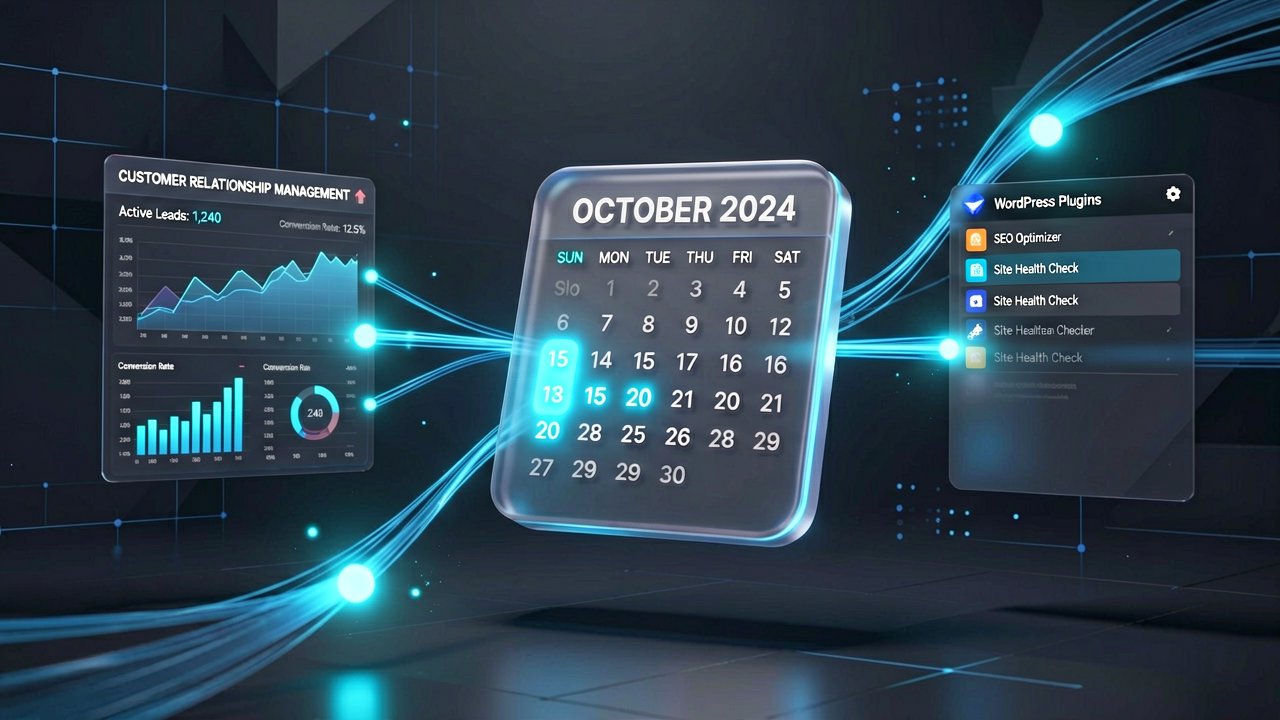
The highly fragmented wellness and medical spa sector is facing an operational turning point as artificial intelligence transitions from generic chat widgets to specialized operational agents. E-commerce AI innovator Zanderio AI has expanded its strategic footprint by launching a dedicated AI booking assistant engineered explicitly for wellness clinics and med spas, as reported via regional platforms like Knoxville News Sentinel. This tool focuses heavily on bridging the gap between passive website traffic and synchronized calendar integrations to reduce administrative bottlenecks at the clinic front desk.
According to Zanderio's Chief Executive Officer, Zuriel Babalola, most service businesses endure heavy financial expenditure to drive consumers to their web channels, only for prospects to drop off before completing manual forms or securing consultation slots, a sentiment detailed by SalesTechStar. By implementing an automated, real-time conversational layer, the architecture aims to transform unstructured web traffic into qualified leads. This shift addresses a critical bottleneck in specialized healthcare environments where patient drop-off rates are notoriously high during off-hours.
Solving the Pre-Booking Information Gap
Unlike standard consumer retail, treatments within medical spas and wellness clinics require a high degree of pre-consultation clarity regarding eligibility, preparation, and post-procedure care. Potential clients routinely hesitate to book invasive or high-value procedures if their immediate questions go unanswered on a static service page. The AI assistant functions as a continuous intelligence layer that triages these nuanced inquiries, educating patients while simultaneously guiding them toward open calendar availability. This dual-purpose utility alleviates front-desk fatigue, allowing clinical staff to prioritize in-person patient experiences rather than managing continuous inbound digital triage.
Frictionless Integration into Existing Practice Workflows
A primary friction point for medical practitioners adopts standalone software architectures that do not coordinate with pre-existing booking infrastructure. Zanderio mitigates this onboarding friction by designing its assistant to sync seamlessly with multiple web backends via no-code plugins, including WordPress and custom service dashboards. By collecting intent-based lead criteria directly during live chat sessions, data flows directly into the core customer relationship management (CRM) and calendar routing engines already utilized by the clinic. This ensures that clinic coordinators encounter a unified workflow rather than a fragmented software stack.

Capitalizing on Inbound Omnichannel Campaigns
Wellness facilities depend heavily on hyper-targeted local marketing funnels across search, social platforms, and seasonal email campaigns. When promotional traffic spikes, internal reception teams struggle to provide immediate, synchronous responses to an influx of incoming inquiries. Automated scheduling agents capture this intent the moment a user arrives on-site from an ad or promotional link. By maintaining contextually aware conversations 24/7, the assistant guarantees that marketing capital is not wasted on unreturned inquiries, thereby maximizing conversion rates across active promotional cycles.
The Hidden Bottlenecks of Wellness Operations
Behind the Scenes of Clinical Workflow Automation: The operational reality of running a modern med spa or wellness clinic involves managing an unpredictable intersection of high-touch patient care and intricate digital logistics. Front-desk personnel are routinely forced to choose between welcoming an in-person patient or answering a ringing phone from a prospect inquiring about a multi-thousand-dollar body contouring package. When administrative staff are stretched thin, inquiries slip through the cracks, resulting in immediate revenue leaks for businesses operating on competitive local margins.
Historically, the wellness sector attempted to solve this availability issue by adopting rigid, form-based online booking widgets. While these tools successfully automated calendar selections for decisive consumers, they failed to convert hesitant prospects who required upfront clarification on treatment prerequisites, provider credentials, or pricing tiers. This systemic failure created a clear opening for conversational AI platforms capable of handling preliminary technical triage while guiding patients smoothly through the scheduling funnel.
From a stakeholder perspective, the integration of intelligent scheduling agents represents a fundamental shift in how clinic managers allocate human capital. Instead of dedicating valuable clinical coordinators to repetitive data entry and basic appointment coordination, practice owners can refocus their staff on optimizing the premium in-clinic experience. This transition elevates the role of the receptionist from a clerical gatekeeper to a hospitality specialist, which directly influences patient retention rates and positive digital reviews.

Furthermore, the data collected during these automated booking conversations offers an unprecedented layer of business intelligence for wellness brands. By analyzing the specific patterns of pre-booking inquiries, marketing teams can identify exact gaps in their existing website content and refine their localized ad campaigns. This creates an ongoing optimization loop where consumer interactions directly inform operational adjustments, driving long-term efficiency across highly competitive regional markets.
The Friction Between Automated Frictionless Care and Human Luxury
Reading Between the Lines of the Wellness AI Boom: The prevailing narrative among automated scheduling platforms suggests that removing human intervention from the booking funnel is an unalloyed victory for practice efficiency. However, this assumption overlooks a fundamental paradox inherent to the premium wellness and medical spa markets. These establishments command premium pricing precisely because they sell a high-end, deeply personalized luxury experience. Replacing a warm, empathetic human voice at the initial point of contact with an algorithmic chat interface risks commoditizing the brand before the patient ever steps through the clinic door.
There is also a glaring structural contradiction in relying on large language models to manage pre-consultation medical triage. While Zanderio and its contemporaries promise to answer nuanced questions regarding treatment eligibility and contraindications, the legal reality of clinical operations demands strict risk aversion. An AI booking assistant that overpromises results, minimizes potential side effects, or misinterprets a patient’s self-reported medical history to secure a calendar slot creates a massive liability engine for practice owners. Consequently, clinics often find themselves trapped in a cycle of continually tightening their AI’s conversational parameters, which frequently reduces the "intelligent" assistant back to the status of a rigid, glorified web form.
Furthermore, the long-term economic promise of these tools relies on the assumption that front-desk staffing costs will drop significantly as automation scales. In practice, clinical workflows rarely experience a clean reduction in headcount. Instead, the administrative burden simply shifts downstream; staff who previously spent their days answering phone calls must now spend their time auditing AI conversational logs, correcting calendar synchronization errors, and managing data discrepancies within the CRM. Until AI architectures achieve flawless, error-free integration with fragmented legacy medical software, the promise of total operational autonomy remains a distant marketing ideal.
"We are rapidly approaching an era where an AI will effortlessly schedule a five-thousand-dollar facial, synchronize it perfectly across three separate calendar systems, and send a flawless SMS confirmation—only for the human patient to show up and realize the clinic's front door is jammed because nobody had time to call a locksmith."
Artūras Malašauskas is an AI Systems Integrator with 20+ years of production-grade web engineering experience. He has designed, shipped, and scaled enterprise Python/PHP systems for logistics, SaaS, and public-sector clients. For the past year, he has focused exclusively on AI integrations: deploying open-source LLMs, building generative media pipelines (image, audio, video), and engineering multi-agent workflows for real production environments. His standard: reproducibility, security, cost-efficient inference—no vaporware. He documents and evaluates emerging AI tooling, separating verified capabilities from marketing noise. Technical editor at: muza-ai.eu, ai-verslas.lt, ai-naujinos.lt Connect on LinkedIn
Comments