TECNO EllaClaw Reboots the Mobile AI Race with Hands-Free Autonomy
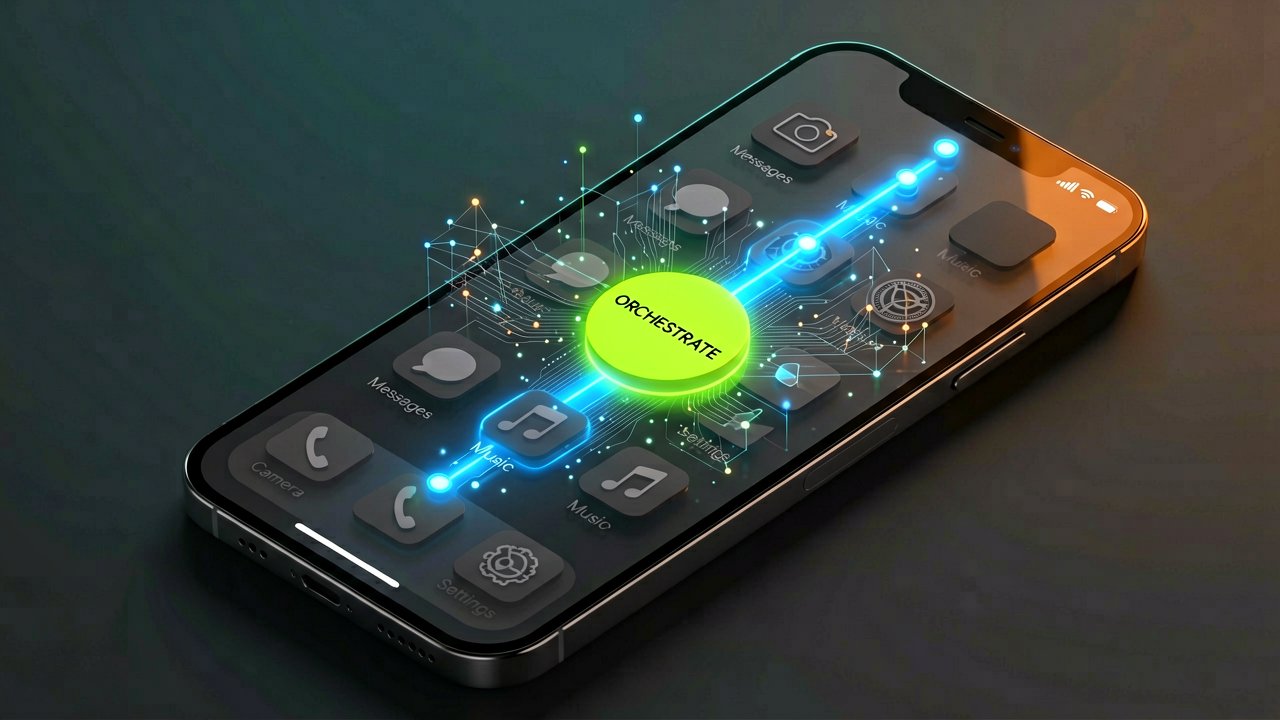
Most smartphone AI assistants love to talk but stubbornly refuse to actually pull their weight when it comes to chores. TECNO is looking to fundamentally disrupt that dynamic. On June 24, 2026, the company officially showcased the next major evolution of EllaClaw, its beta-stage mobile AI agent engineered to handle cross-app tasks and system-level device optimizations entirely on its own. Instead of just returning search queries, this upgraded "agentic AI" aims to take direct control of your smartphone's interface to handle complex workflows without requiring you to manually click through a half-dozen apps.
What makes this development particularly compelling is how the digital assistant executes these commands. Built as an open framework port, the cloud-based assistant reads mobile screens much like a human user would, rather than relying on hidden back-end API access. This design choice means users can literally watch the assistant navigate, manage file storage via tools like Smart CleanUp Boost, or track expenses from incoming SMS threads in real time. It is a refreshing, highly transparent take on automation that keeps the user firmly in the driver’s seat while outsourcing the tedious scrolling.
Deep Automation Beyond the Chatbox
The tech sector is currently awash with conversational chatbots, but true cross-app intelligence has remained a notoriously difficult nut to crack. Reports from GSMArena reveal that EllaClaw’s expanded capabilities allow it to optimize mobile data, battery life, and storage deep within the phone's native architecture. By integrating more than 40 distinct smart skills, the agent can effortlessly handle multi-step routines like syncing travel itineraries from emails or generating structured daily schedules based on unstructured user prompts.
Bridging the Third-Party App Divide
The real test for any modern digital assistant is how well it plays with external ecosystems. According to hands-on analysis by Phandroid, EllaClaw can autonomously book a ride through natural conversation, interact with connected smart home gadgets, and even hunt down specific retail products inside third-party shopping platforms like Lazada. Because the AI interacts with the on-screen visual interface rather than rigid code integrations, it possesses the unique flexibility to navigate app updates and design changes dynamically.

TECNO's underlying strategy here is focused on democratizing advanced AI features for emerging markets, proving that cutting-edge automation does not have to be locked behind four-figure premium flagship hardware. Though the platform is currently going through closed beta testing to refine its strict permission safeguards, it represents a tangible shift away from reactive voice assistants and toward proactive, intent-driven mobile companions.
What Most Reports Miss: The Architectural Shift Powering True Autonomy
Behind the screen layout, TECNO’s approach represents a radical departure from how the tech industry has traditionally approached mobile automation. Historically, silicon giants like Apple and Google have locked down deep device control, requiring developers to adopt strict, proprietary APIs to make external apps talk to one another. TECNO is bypassing this gatekeeping entirely by training EllaClaw to interact with the graphical user interface itself. By treating the smartphone screen as a visual map rather than a web of hidden code, the assistant can theoretically pilot any app that a human finger can tap, completely changing the power dynamics of third-party app integration.
This design philosophy addresses a massive fragmentation problem in global markets. In regions where localized apps dominate daily life, waiting for individual developers to build custom AI plugins is a losing strategy. Industry insiders note that by focusing on visual screen-reading and contextual understanding, TECNO can deploy sophisticated cross-app automation across an array of regional ride-hailing, banking, and e-commerce platforms overnight. It effectively shifts the burden of integration away from independent software developers and onto the AI model itself.
However, running an autonomous agent that can read text messages, view bank balances, and make purchases introduces massive privacy considerations. To keep user trust intact, the framework utilizes an on-device orchestration layer that acts as a strict gatekeeper before any data reaches cloud servers for heavy processing. Industry analysts emphasize that for agentic AI to succeed globally, users must feel certain that the assistant is only "looking" at the screen when explicitly summoned, rather than constantly scraping data in the background.

There is also a significant hardware efficiency play happening under the hood. While premium competitors rely heavily on massive, battery-draining on-device large language models, TECNO is optimizing a hybrid edge-to-cloud pipeline. This approach allows mid-range devices to benefit from advanced autonomous workflows without causing severe thermal throttling or rapid battery depletion. It is a calculated engineering compromise that prioritizes practical, real-world utility over the theoretical purity of running everything locally.
Ultimately, this launch signals the beginning of the end for the traditional app-silo ecosystem. Instead of users spending their days opening, closing, and copying data between a dozen disparate applications, the smartphone interface is evolving into a single, unified conversational canvas. As these autonomous agents transition from closed betas to wider commercial availability, the value of a phone will no longer be measured by its raw processing specs, but by how effectively its assistant can claw back time for the user.
Reading Between the Lines: The Friction Between Promise and Practicality
Beneath the glossy marketing of effortless autonomy lies a massive technical gamble that tech journalists and engineering purists view with healthy skepticism. The decision to have EllaClaw pilot devices by visually interpreting the screen, rather than relying on back-end APIs, is a brilliant shortcut around ecosystem silos, but it is also inherently fragile. Smartphone interfaces are notoriously dynamic, subjected to constant user interface tweaks, pop-up ads, and seasonal redesigns. If a third-party shopping or ride-hailing app suddenly moves its checkout button two inches to the left, a visual-based AI agent risks clicking blindly or stalling out completely, turning a hands-free luxury into a frustrating troubleshooting exercise.
Furthermore, there is a glaring contradiction between the promise of democratized AI and the realities of modern mobile network infrastructure. TECNO’s hybrid edge-to-cloud architecture is designed to keep hardware costs down, but it offloads the heavy cognitive lifting to remote servers. In the emerging markets where TECNO commands its largest market share, data connections can be spotty, expensive, or heavily metered. An autonomous assistant that requires a constant, high-speed data stream to read your screen and process multi-step workflows could easily become an expensive data hog, limiting its actual utility to affluent urban centers rather than the broader population.
The financial viability of this model also raises long-term questions that hardware manufacturers are reluctant to answer. Running cloud-based AI agents incurs massive, recurring computational costs for every single query and screen interaction. If TECNO intends to keep these features free to boost budget smartphone sales, they will eventually face a stark choice: subsidize the server costs indefinitely, lock the best automation behind a monthly subscription fee, or find a way to monetize the user data being funneled through the assistant's visual scanner. The latter option would completely undermine the strict privacy guardrails currently being touted in early betas.
If these hurdles are overcome, the broader economic fallout could hit digital storefronts and gig-economy platforms in unexpected ways. Traditional app monetization relies heavily on user attention—advertisers pay for the eyeballs that scroll past banners while a user manually inputs data. By completely eliminating the human element from the navigation process, autonomous agents threaten to render impression-based mobile advertising obsolete. App developers may soon find themselves forced to optimize their interfaces not for human delight, but for robotic efficiency, completely rewriting the rules of the mobile app economy.
The dream of a smartphone that completely manages your digital life for you sounds incredible, until you realize you are trusting a beta-stage software agent to book your morning commute and clean your storage without accidentally deleting your wedding photos or ordering three hundred dollars' worth of the wrong laundry detergent.
Artūras Malašauskas is an AI Systems Integrator with 20+ years of production-grade web engineering experience. He has designed, shipped, and scaled enterprise Python/PHP systems for logistics, SaaS, and public-sector clients. For the past year, he has focused exclusively on AI integrations: deploying open-source LLMs, building generative media pipelines (image, audio, video), and engineering multi-agent workflows for real production environments. His standard: reproducibility, security, cost-efficient inference—no vaporware. He documents and evaluates emerging AI tooling, separating verified capabilities from marketing noise. Technical editor at: muza-ai.eu, ai-verslas.lt, ai-naujinos.lt Connect on LinkedIn
Comments