Apptronik Unveils Apollo 2 and a Massive 'Robot Park' to Factory-Train Humanoids
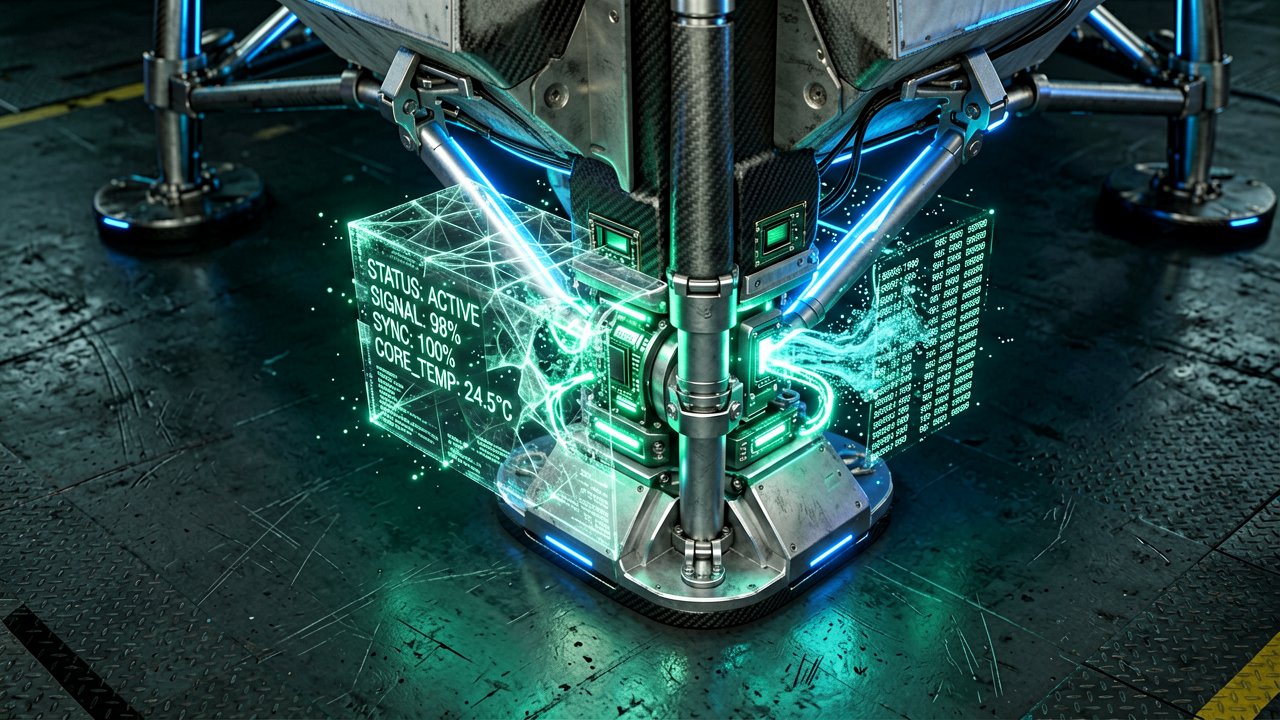
The race to put functional bipedal hardware into real-world factories just accelerated. Austin-based hardware startup Apptronik officially pulled back the curtain on its next-generation Apollo 2 humanoid robot, alongside a massive new 90,000-square-foot data and testing facility aptly named Robot Park. Developed in close research partnership with Google DeepMind, the newly expanded Texas hub is built to operate as a literal data factory, utilizing fleets of humanoids to generate the massive datasets required to train advanced physical AI models.
While tech enthusiasts love a flashy keynote, Apptronik's approach with Apollo 2 favors industrial utility over pure theater. The company has quietly built hundreds of these second-generation units over the last year, leveraging them as internal data collection platforms rather than rushing them into premature commercial sales. It is a calculated bet on embodied AI; by letting these machines run logistics, manufacturing, and retail simulations under one massive roof, the company is feeding critical telemetry directly into Google's Gemini Robotics platform.
Building the Data Engine for Physical AI
As detailed by Reuters, Apollo 2 is built with modularity in mind, sporting both traditional bipedal legs and wheeled configurations optimized for smooth warehouse floors. The strategy here emphasizes raw capability over speculative hype. Instead of constantly arguing over niche hardware specs with competitors, the focus is squarely on generating high-quality training data to move hardware from isolated pilot programs into robust, multi-machine industrial deployments.
According to reports from Forbes, Apptronik CEO Jeff Cardenas views the hardware and the data it produces as two sides of the same coin. This iterative loop with Apollo 2 is explicitly designed to lay the groundwork for Apollo 3, which the company frames as its first true commercial production-grade product expected to hit the market in 2027. Backed by a massive $520 million funding round that valued the company at roughly $5 billion earlier this year, Apptronik has the financial runway to take its time, perfect the software ecosystem, and ensure its machines can actually handle the chaotic realities of a modern fulfillment center.
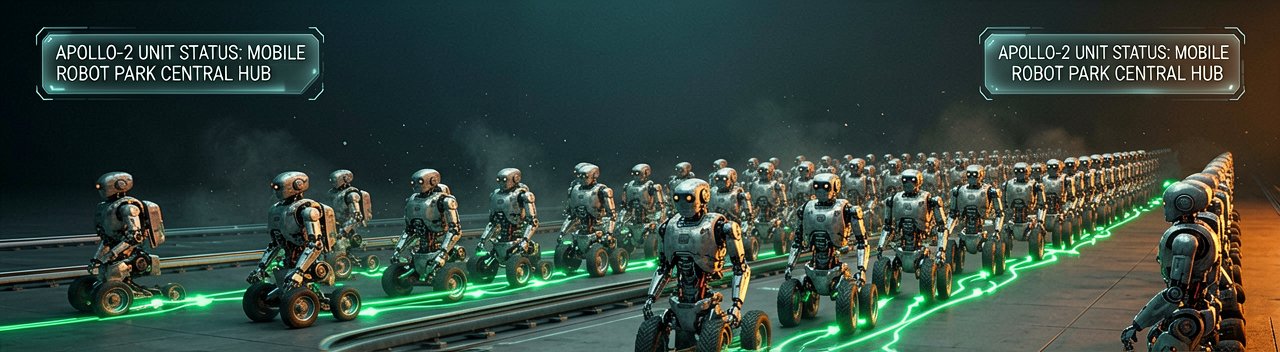
What Most Reports Miss: The Data Bottleneck in Embodied AI
The rush to build humanoid robots has largely been treated as a hardware war, with companies competing over actuator torque, battery life, and finger dexterity. Yet, Apptronik’s massive pivot toward infrastructure reveals a starker industry reality: hardware is no longer the primary limiting factor. The real bottleneck holding back widespread industrial deployment is the severe deficit of high-fidelity, real-world data required to train neural networks for physical manipulation. By establishing Robot Park, the company is shifting the battleground from factory floor mechanics to large-scale data harvesting.
For years, roboticists relied on simulation environments to teach machines how to interact with their surroundings. While effective for basic navigation, these virtual spaces inevitably suffer from the "sim-to-real gap," where subtle physics differences cause a robot to fail when handling actual objects in a noisy warehouse. Apptronik’s continuous operation of hundreds of Apollo 2 units inside a physical data factory allows them to bypass this limitation. Every dropped box, slipped footstep, and adjusted grip generates telemetry that refines the robot's foundational models in real-time.
This massive scale of data collection is precisely what drew Google DeepMind into the partnership. While tech giants possess unparalleled computational power and advanced AI architectures like the Gemini Robotics platform, they lack the physical fleet necessary to feed these models at scale. Apptronik effectively acts as the physical sensor layer for Google's digital brain, turning mundane warehouse tasks into a structured, machine-readable training loop that accelerates how quickly a robot learns to adapt to unexpected environment changes.
From an operational standpoint, this hardware-as-a-service approach to data collection represents a major shift in how robotics companies plan to achieve profitability. Selling individual humanoids to skeptical logistics firms yields slow, unpredictable revenue. Conversely, building a proprietary, highly sophisticated AI model trained on millions of hours of real-world physical data creates an incredibly defensible moat. Competitors entering the space later will find that building a functional bipedal robot is relatively simple compared to replicating the sheer volume of training hours Apptronik is logging right now.
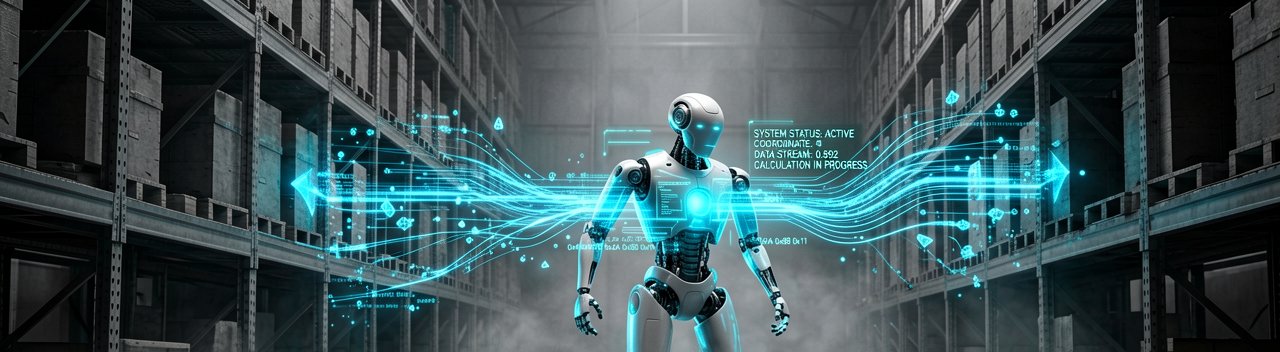
Industry insiders view this aggressive data scaling as a direct attempt to shorten the runway toward Apollo 3's commercial release in 2027. By treating the current generation as internal workhorses rather than commercial products, Apptronik avoids the reputational damage of deploying half-baked hardware into client facilities. When the production-grade units finally ship to enterprise customers, they will not arrive as blank slates, but as highly experienced workers backed by years of accumulated cloud-based intelligence.
Reading Between the Lines: The Financial Gamble of the Data Factory
The prevailing narrative surrounding Apptronik's massive expansion frames it as a triumphant leap toward automation, but a cold look at the numbers suggests a much riskier gambit. Pouring a significant portion of a $520 million funding round into a 90,000-square-foot facility to run hundreds of non-commercial robots is a wildly expensive way to collect data. The company is essentially betting that the cost of generating physical data will drop faster than their cash reserves disappear. If the commercial rollout of Apollo 3 slips past 2027, this massive infrastructure could quickly transform from a cutting-edge data factory into a financially draining monument to over-engineering.
Furthermore, the deep reliance on Google DeepMind presents a classic strategic paradox for a hardware startup. While the partnership gives Apptronik immediate elite-tier AI credibility, it also ties their hardware to an external software ecosystem that they do not control. If Google decides to diversify its bets or acquires a rival robotics firm, Apptronik's proprietary "data moat" could lose its primary buyer overnight. The tech industry is littered with hardware companies that assumed their data loops made them indispensable, only to find themselves commoditized by the software giants they helped train.
There is also an inherent contradiction in Apptronik's dual-track approach to robot design. By building both traditional bipedal legs and wheeled bases, the company is hedging its bets on what industrial clients actually want. Humanoid robots are championed because they can navigate human spaces, yet the moment you put wheels on an Apollo 2 unit, you admit that traditional, specialized automation is often more stable and cost-effective than a fragile two-legged machine. This raises the uncomfortable possibility that the ultimate realization of this research won't be a sci-fi humanoid at all, but rather a slightly smarter, glorified automated forklift.
Ultimately, the true test for Apptronik will not be the volume of telemetry data gathered inside their controlled Texas "Robot Park," but how that data translates to a chaotic third-party environment. A warehouse simulation, no matter how large, cannot accurately predict the sheer randomness of a live logistics hub staffed by unpredictable humans, varying lighting conditions, and shifting inventory priorities. If the AI models trained in isolation struggle to cope with the messy realities of the real world, the entire premise of the data factory model begins to unravel.
"We are told that these multi-million-dollar training hubs will finally teach humanoids how to think on their feet, which is ironic considering how many of them will likely spend their working lives safely bolted to a set of wheels."
Artūras Malašauskas is an AI Systems Integrator with 20+ years of production-grade web engineering experience. He has designed, shipped, and scaled enterprise Python/PHP systems for logistics, SaaS, and public-sector clients. For the past year, he has focused exclusively on AI integrations: deploying open-source LLMs, building generative media pipelines (image, audio, video), and engineering multi-agent workflows for real production environments. His standard: reproducibility, security, cost-efficient inference—no vaporware. He documents and evaluates emerging AI tooling, separating verified capabilities from marketing noise. Technical editor at: muza-ai.eu, ai-verslas.lt, ai-naujinos.lt Connect on LinkedIn
Comments