WIRobotics Launches ALLEX Simulation Model to Anchor the Next Generation of Physical AI Ecosystems
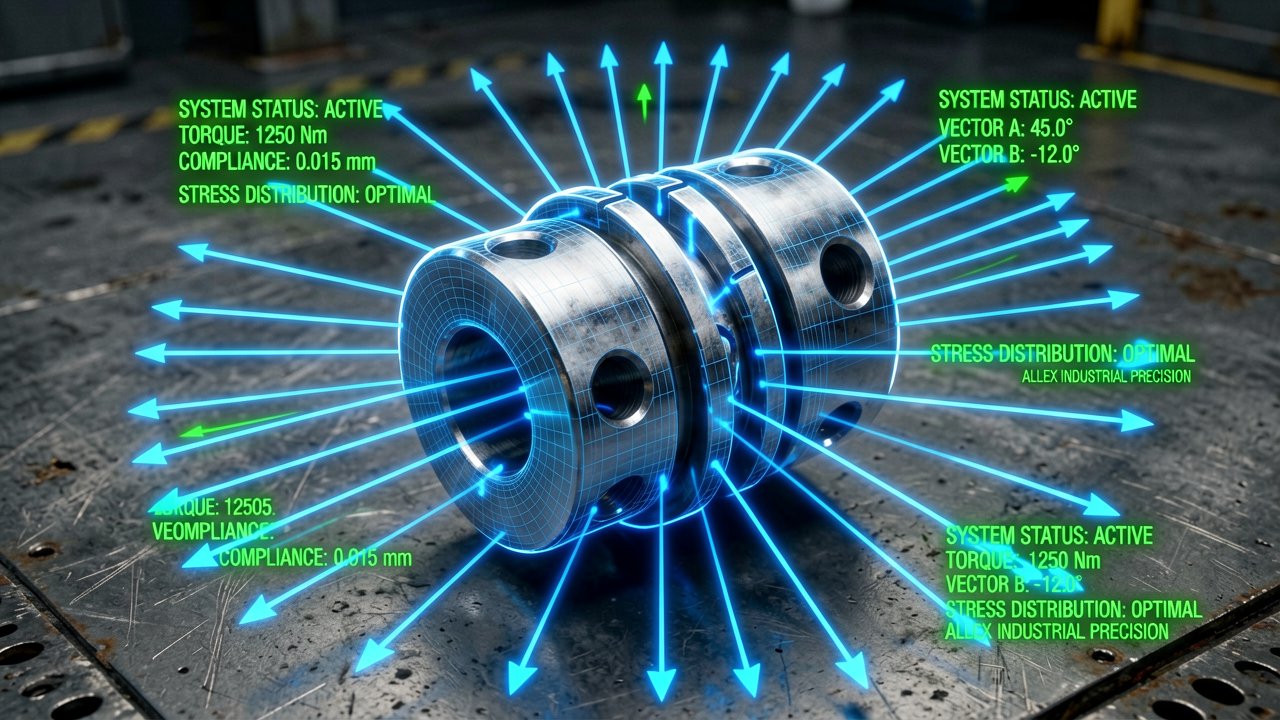
South Korean robotics innovator WIRobotics has announced the deployment of its high-fidelity ALLEX humanoid simulation model, establishing a foundational cornerstone for the global open Physical AI development landscape. Released on June 29, 2026, this technology serves as the first step in a strategic roadmap to drastically narrow the industry-wide "Sim-to-Real" gap. By accurately mimicking joint torques, contact forces, whole-body external forces, and precise fingertip compliance, the simulation platform allows developers and global researchers to execute advanced control, learning, and synthetic data testing without requiring immediate access to physical hardware. This framework is distributed across major formats, including MuJoCo (MJCF), Isaac Sim (USD), and ROS (URDF), paving the way for rapid algorithm deployment ahead of the actual ALLEX hardware launch scheduled for late 2026, as detailed on RoboticsTomorrow.
The company, founded in 2021 by a team of premier former Samsung Electronics robotics engineers, has moved to aggressively scale its operations following a massive Series B funding injection of approximately KRW 95 billion earlier in 2026. This financial surge, coupled with the startup's acceptance into the elite Physical AI Fellowship led by tech giants NVIDIA and Amazon Web Services (AWS), underscores its competitive edge in integrating high-DOF hand dexterity and safe human-robot interaction (HRI). According to documentation reported by PR Newswire, this strategy shifts focus away from traditional industrial isolation toward dynamic, contact-driven physical AI utility. By redefining physical interaction from a dangerous hazard into a controllable metric, WIRobotics positions its Seoul-backed ecosystem as an indispensable player in global hardware and software synthesis.
Strategic Imperatives in the Sim-to-Real Race
In traditional humanoid development, physical prototypes represent an expensive and fragile bottleneck. Software and AI algorithms cannot easily be trained or verified in real-time on early mechanical iterations due to the risk of destructive collisions. High-fidelity virtual environments provide an alternative, yet historical simulation models fail to translate subtle environmental forces directly into real-world mechanics. The ALLEX simulation model resolves this friction point by ensuring that the virtual environments accurately mirror the physical hardware down to the fractional force. This development enables early testing of micro-assembly, delicate fastening, and heavy lifting operations across logistics and manufacturing, driving immediate valuation gains for prospective industrial clients looking to incorporate physical AI systems ahead of commercial deployment timelines.
Ecosystem Building as a Defensible Competitive Moat
By transforming its hardware architecture into an open-source simulation toolkit, WIRobotics is executing a platform-play strategy reminiscent of operating system rollouts in computing history. Securing the backing of AWS and NVIDIA ensures that these simulation environments interface seamlessly with the foundational cloud infrastructure and specialized AI training chipsets required to host scaling robot networks. Instead of competing purely on actuator performance or payload capacity, the company is building a deep developer ecosystem. The integration of its proprietary reducers and Maxon high-precision motors ensures that when the physical platform arrives at research centers and corporate floors at the tail-end of 2026, thousands of operational neural networks will be ready to execute intricate, real-world tasks immediately.
What Most Reports Miss: The Architectural Synergy Driving Korea's Robotics Pivot
While industry standard summaries focus heavily on the raw computational metrics of the ALLEX model, the true breakthrough lies in the structural mechanics that underpin WIRobotics' software architecture. Most virtual environments treat humanoid platforms as rigid kinematic chains, resulting in jerky real-world movements and rapid mechanical fatigue once code is exported to actual hardware. The ALLEX simulator diverges by embedding advanced contact-dynamics logic directly into its physics engine. This enables developers to test complex compliance algorithms—essential for tasks requiring a robot to wipe down a delicate surface or hand tools to a human factory worker—without fear of causing catastrophic system overloads or crushing fragile payloads during early-stage validation trials.
This initiative represents a calculated pivot for the Seoul-based startup, which originally captured the market's attention through its specialized wearable assistive robots, the WIM series. The transition from designing ultra-lightweight, ergonomic walking aids for elderly mobility to engineering a full-scale humanoid ecosystem demonstrates an deliberate scaling strategy. By leveraging years of intense R&D on compact, high-efficiency actuators and human-robot interaction safety protocols, the engineering team has bypassed the common trial-and-error phases that plague newly established robotics labs. They are directly applying verified biomechanical telemetry to the virtual footprint of the ALLEX humanoid model.
From a stakeholder perspective, the massive influx of Series B funding and backing from tech titans NVIDIA and AWS signal a deeper geopolitical shift in the global AI landscape. For years, North American and Chinese enterprises dominated the conversation around foundational physical AI models. South Korea's aggressive push via localized hubs like WIRobotics positions Seoul not just as an exporter of premium electronic hardware, but as a critical sovereign custodian of open-source automation infrastructure. Industrial automation consortiums view this simulation framework as a vital layer of independence, shielding upcoming manufacturing plants from vendor lock-in with proprietary software environments.
Furthermore, the early release of multi-format simulation profiles across MuJoCo, Isaac Sim, and ROS creates an immediate operational loop for global machine learning researchers. Instead of competing on expensive, scarce physical prototypes, labs around the world can instantly benchmark their reinforcement learning policies against a standardized model. This strategy creates a self-sustaining ecosystem where the global developer community actively refines the control algorithms for WIRobotics' hardware months before the actual machines leave the assembly line, effectively crowdsourcing the most complex aspects of robotic evolution.
Reading Between the Lines: The Friction Point of Virtual Perfection
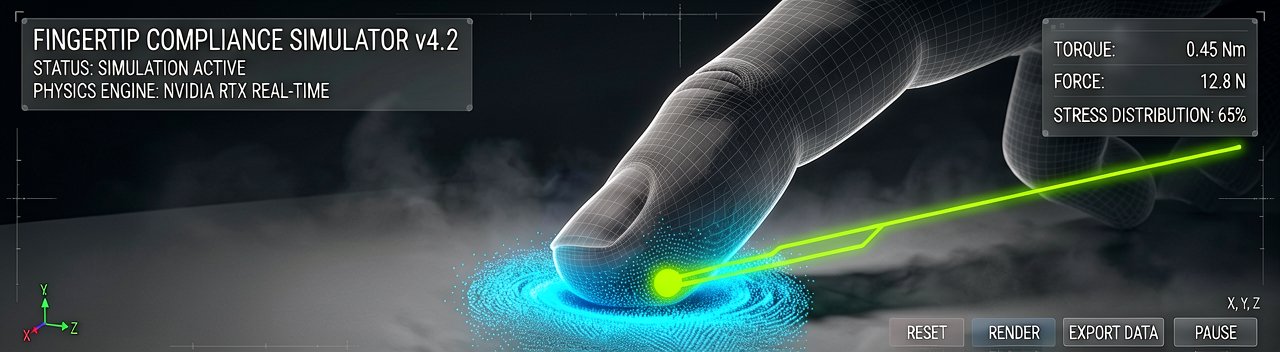
The tech sector is notoriously prone to simulation optimism, and WIRobotics' bold open-ecosystem strategy is no exception. Deploying the ALLEX model across MuJoCo, Isaac Sim, and ROS creates a brilliant marketing runway, but it glosses over a stubborn reality: digital environments are inherently clean, predictable, and structurally perfect. In contrast, the factory floors and domestic spaces these machines are slated to inhabit are chaotic, unpredictable, and dirty. While the simulation promises precise fingertip compliance, virtual mathematics cannot fully account for unexpected grease on a conveyor belt, varying atmospheric humidity, or the micro-vibrations that degrade physical actuators over hundreds of hours of continuous operation.
There is also an underlying contradiction in relying on global crowdsourcing to validate a highly precise hardware architecture. By opening the simulation platform to independent global researchers, WIRobotics gains free software refinement, but it also invites immense fragmentation. Machine learning models optimized by third-party labs on specialized, high-performance cloud networks may not translate smoothly to the onboard compute modules that the physical ALLEX hardware must carry. History shows that when a software-first approach meets the uncompromising constraints of battery life, thermal throttling, and weight distribution, the initial virtual performance metrics face a steep degradation curve.
Furthermore, the strategic backing from NVIDIA and AWS introduces a subtle form of cloud-infrastructure dependency that contradicts the ideal of an open physical AI ecosystem. High-fidelity reinforcement learning in environments like Isaac Sim demands immense GPU compute clusters and extensive cloud data pipelines. For smaller enterprise clients and academic institutions, the barrier to entry shifts from the cost of physical robotics hardware to the ongoing, compounding costs of massive cloud subscriptions. This dynamic risks bottlenecking actual deployment, transforming a supposedly democratic robotic framework into an exclusive sandbox for well-funded tech institutions.
Ultimately, WIRobotics is gambling that virtual familiarity will automatically translate into physical market dominance by late 2026. However, establishing a simulation moat only works if the physical hardware delivers on its exact mathematical promises without severe production delays or crippling unit costs. If the actual ALLEX hardware arrives late, overpriced, or mechanically inconsistent with its digital twin, the vibrant developer community built around the simulation will quickly migrate to competing platforms, leaving WIRobotics with a highly optimized virtual ghost town.
Designing a flawless humanoid robot is remarkably straightforward, provided you never actually build the hardware or let humans near it.
Artūras Malašauskas is an AI Systems Integrator with 20+ years of production-grade web engineering experience. He has designed, shipped, and scaled enterprise Python/PHP systems for logistics, SaaS, and public-sector clients. For the past year, he has focused exclusively on AI integrations: deploying open-source LLMs, building generative media pipelines (image, audio, video), and engineering multi-agent workflows for real production environments. His standard: reproducibility, security, cost-efficient inference—no vaporware. He documents and evaluates emerging AI tooling, separating verified capabilities from marketing noise. Technical editor at: muza-ai.eu, ai-verslas.lt, ai-naujinos.lt Connect on LinkedIn
Comments