The Shift from Virtual to Physical: Why Developers Are Prioritizing AI Robotics
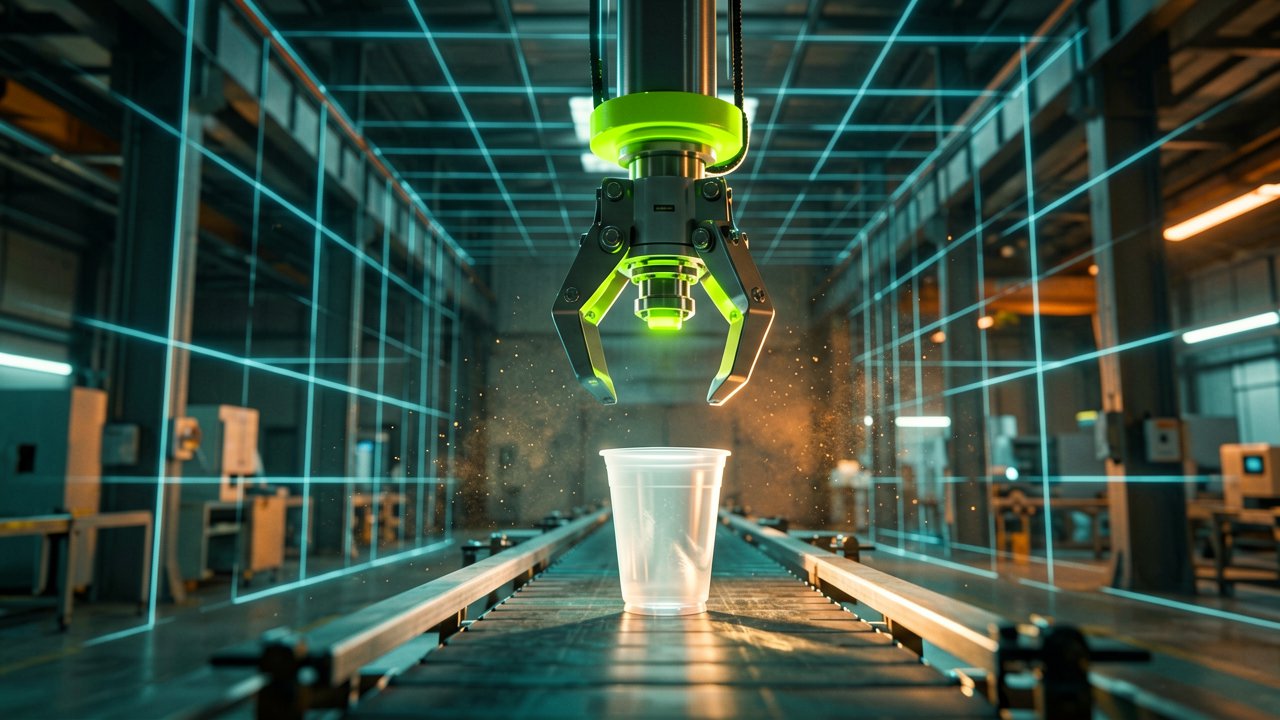
The artificial intelligence landscape is undergoing a structural realignment as top-tier developers pivot away from conversational text interfaces toward physical, embodied AI. While large language models successfully democratized text and image generation, tech pioneers are increasingly recognizing that chatbots lack the fundamental spatial awareness required to interact with the material world. By shifting priorities to "world models," engineers aim to build systems that do not merely predict the next word, but accurately simulate physical environments, intuition, and real-time kinetic dynamics.
The Architecture of Spatial Intelligence
Behind the Scenes: The transition to physical AI requires a fundamental overhaul of existing software and hardware stacks to accommodate the messy, continuous realities of the physical world. Unlike digital text corpuses, real-world data cannot be easily scraped or tokenized, forcing robotics companies to rely on high-fidelity simulation frameworks and visual intuition extracted from massive video datasets. Prominent industry leaders point out that physical and embodied AI represent the natural maturation of legacy robotics, upgrading standard mechanical automation into adaptive machine brains capable of parsing unexpected environmental changes. To bypass the severe constraints of data scarcity, developers are training platforms on thousands of physical scenarios in minutes, utilizing spatial data grids optimized for real-time processing to achieve minimal latency.
This massive infrastructural push has triggered heavy investments from venture firms and compute providers alike, all seeking to build the foundation for autonomous industrial applications. Startups are partnering with hardware giants to establish custom compute networks tailored specifically for the heavy, localized processing loads that spatial intelligence demands. By training algorithms to predict physics and object permanence, these world models allow a robot to adapt seamlessly to unpredictable workspaces rather than following hardcoded, static operational scripts.
Commercial Realities and the Industrial Horizon
The strategic push toward embodied AI is heavily driven by immediate demand across industrial sectors, including logistics, healthcare, infrastructure, and automated manufacturing. Experts from organizations like Fast Company emphasize that giving machines the ability to perceive, reason, and act in real life drastically enhances operational precision and worker safety. Rather than replacing human oversight entirely, the current market consensus focuses on tightly orchestrated human-AI collaboration where physical platforms absorb high-risk kinetic tasks, leaving strategic problem-solving to human operators.
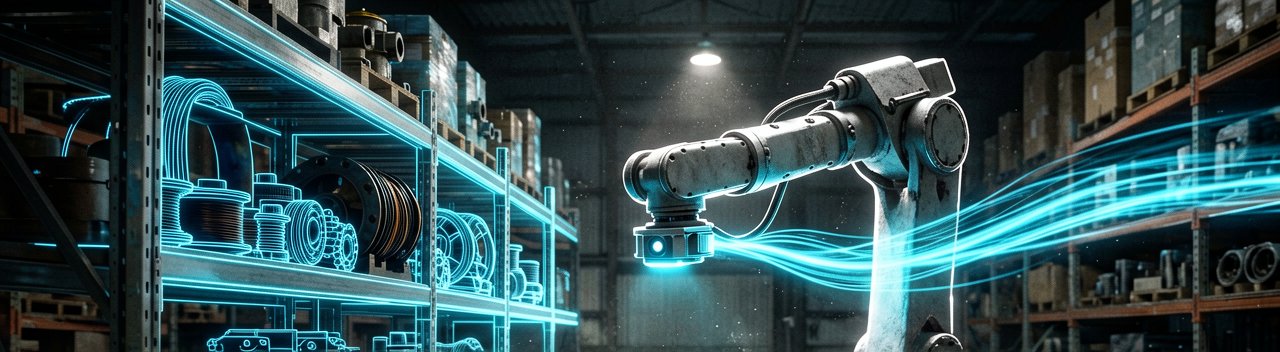
As standard enterprise workflows continue to integrate vision AI alongside localized motor control, the boundary between digital software and physical hardware will continue to blur. Companies that successfully deploy these spatial models stand to achieve unprecedented efficiency gains, shifting the competitive landscape from who owns the largest text model to who controls the most reliable physical deployment engine. The ultimate trajectory of the market points toward a future where autonomous, contextually grounded machines seamlessly execute complex physical tasks across dynamic, unscripted human environments.
The Friction of Material Reality
Reading Between the Lines: The tech industry’s pivot from digital chatbots to embodied robotics glosses over a harsh structural truth: the physical world does not come with an "undo" button. While a generative AI hallucination results in an awkward text string or an anatomically questionable image, a hallucination in physical space manifests as a broken industrial arm, destroyed warehouse inventory, or a catastrophic workplace injury. Silicon Valley’s traditional playbook of "move fast and break things" faces a hard wall of physical liabilities, strict hardware engineering tolerances, and unforgiving insurance premiums that cannot be easily bypassed through software patches.
Furthermore, the current corporate narrative surrounding world models often conflates simulation success with real-world competence. Training a robotics platform inside a highly sanitized, GPU-accelerated digital twin is computationally elegant, yet these environments systematically fail to capture the chaotic entropy of actual human workspaces. The transition from pristine pixel matrices to grease, dust, and unpredictable human behavior introduces a data gap that cannot be bridged solely by stacking more layers on an artificial neural network. This creates a striking paradox where the companies raising billions for embodied AI are still fundamentally dependent on fragile, low-margin hardware components that suffer from real-world wear and tear.
The economic justification for this sudden capital realignment also warrants measured skepticism from market observers. Proponents argue that spatial AI will immediately solve structural labor shortages across logistics and manufacturing, yet the total cost of ownership for these advanced platforms remains astronomically high. When accounting for specialized maintenance, localized edge-computing infrastructure, and continuous sensor calibration, the actual return on investment may take decades to materialize for mid-sized enterprises. Until developers can commoditize the underlying physical hardware to the same extent they have commoditized cloud-based software APIs, physical AI risks remaining an exclusive, high-cost playground for tech giants and heavily subsidized research labs.
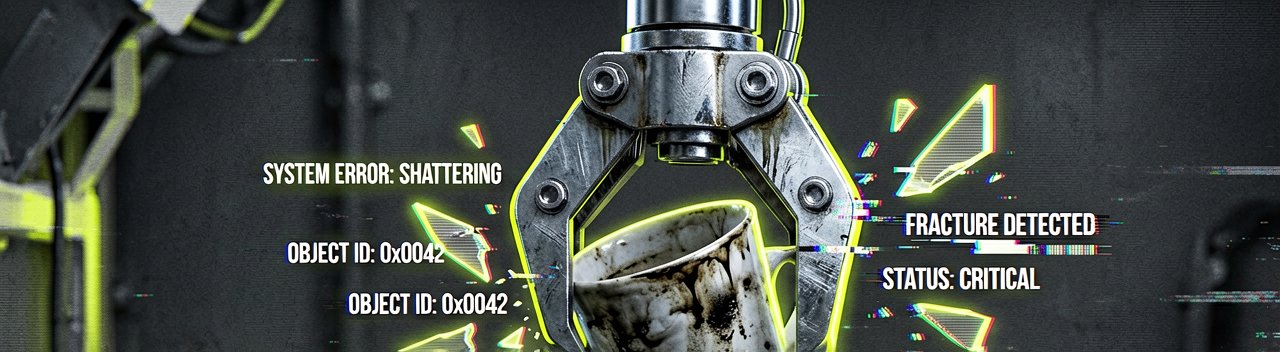
The supreme irony of the silicon revolution is that after spending decades trying to coax humanity into a completely virtual world, tech developers have realized that the real money is still out here in the dirt, trying to teach a million-dollar machine how to pick up a plastic cup without smashing it into pieces.
Artūras Malašauskas is an AI Systems Integrator with 20+ years of production-grade web engineering experience. He has designed, shipped, and scaled enterprise Python/PHP systems for logistics, SaaS, and public-sector clients. For the past year, he has focused exclusively on AI integrations: deploying open-source LLMs, building generative media pipelines (image, audio, video), and engineering multi-agent workflows for real production environments. His standard: reproducibility, security, cost-efficient inference—no vaporware. He documents and evaluates emerging AI tooling, separating verified capabilities from marketing noise. Technical editor at: muza-ai.eu, ai-verslas.lt, ai-naujinos.lt Connect on LinkedIn
Comments