OPPO Enco Air5: Mid-Range Audio Packed with Heavyweight Spec Ambitions
OPPO's relentless push into affordable wireless audio hits another milestone with the global debut of the Enco Air5. Freshly broken down by the eagle-eyed team at GIZGUIDE, these earbuds show that the company isn't content with just filling a price bracket; they want to disrupt expectations. On paper, it's a tempting recipe, dropping premium features down to an audio tier where consumers are usually forced to compromise on silence or sonic punch.
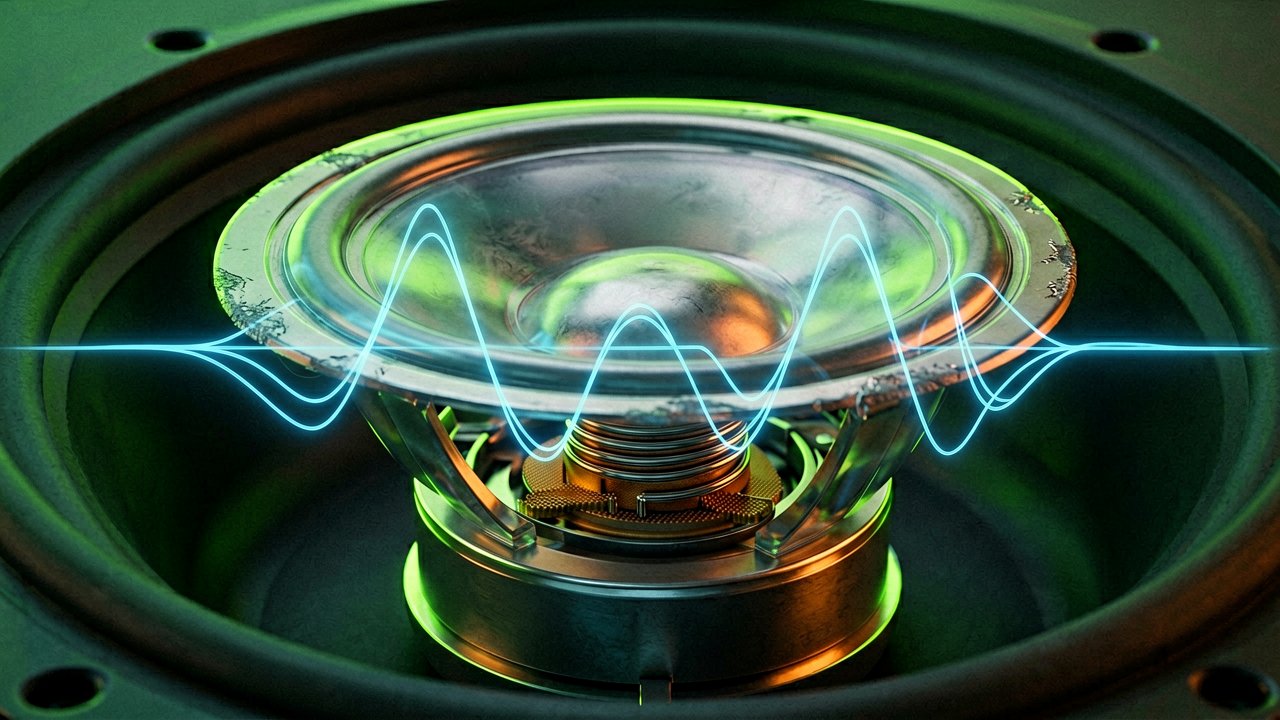
The hardware architecture relies on massive 12mm dynamic bass drivers designed to shift serious air. It's a calculated move away from the tiny, thin-sounding transducers common in value-oriented buds. This acoustic core pairs with an advanced dual-feed active noise cancellation layout utilizing a three-microphone array per side. According to the official documentation on the OPPO Pressroom, this architecture achieves an impressive 52dB of deep noise reduction across an ultra-wide 5,000 Hz frequency range. What that means for daily use is real-world suppression capable of wiping out tricky mid-and-high-frequency ambient chaos alongside standard low-frequency rumble.
Intelligent Performance Metrics
Silencing the background requires smart processing, which is why the system integrates an intelligent IIR scene-based algorithm. Rather than hammering your ears with a blanket level of anti-noise, it automatically re-calibrates the reduction depth to match whether you are in a quiet office or a loud café. This smart power management preserves a staggering 54 hours of maximum combined battery life when cycling with ANC disabled, pulling juice from a 530mAh charging case and high-capacity 62mAh internal cells. Efficiency doesn't trade off connectivity either, since the architecture moves to Bluetooth 6.1 to guarantee a stable dual-device pairing experience without the typical dropouts.
Behind the Scenes: The real engineering triumph of the OPPO Enco Air5 lies in how it balances raw acoustic physics with strict digital signal processing limitations. In wireless audio systems, deploying a massive 12mm driver introduces significant transient response challenges, as a heavier diaphragm possesses more mechanical inertia. To counter this, the onboard audio SoC must implement specialized Infinite Impulse Response (IIR) digital filters that dynamically correct for phase distortion and prevent muddy bass spillover into the mid-range frequencies. Engineers must tune these algorithms precisely at the register level to ensure that the driver's physical excursion aligns perfectly with the incoming digital audio stream.

Managing a 52dB active noise cancellation envelope demands ultra-low latency throughout the entire audio processing pipeline. The internal signal chain utilizes a feedback and feedforward microphone topology, where external acoustic waves are sampled, inverted, and mixed with the playback signal in under a few microseconds. To achieve this without draining the 62mAh battery cells, the chip architecture offloads the heavy mathematical matrix operations of the AI-driven noise cancellation to a dedicated, low-power digital signal processing core. This hardware-level acceleration allows the main CPU to remain in a low-power state during standard playback cycles, dramatically extending operational longevity.
Algorithmic Efficiency and Bluetooth 6.1 Integration
The implementation of Bluetooth 6.1 architecture introduces sophisticated packet-handling mechanisms that directly benefit the dual-device connection layer. Rather than relying on traditional, high-overhead switching protocols that cause audible sync drops, the system employs prioritized asynchronous connectionless links to maintain simultaneous data streams. When a user switches audio sources, the firmware executes a seamless handover by manipulating the audio buffer size dynamically, dropping latency to near-zero levels during active transmission blocks. This buffer management is tightly coupled with the chip's power-management integrated circuit to prevent voltage spikes when transitioning between idle and maximum processing states.
Refining the wide-bandwidth 5,000 Hz cancellation spectrum required a complete overhaul of traditional acoustic chamber design and digital tuning. High-frequency noise is inherently unpredictable, meaning the digital anti-noise wave must adapt in real time to the shifting physical position of the earbud inside the ear canal. The IIR scene-based algorithm constantly monitors the error microphones to detect acoustic leakage, applying instant micro-adjustments to the filter coefficients to maintain the integrity of the quiet zone. By shifting the heavy computational burden from generic software loops into optimized fixed-point arithmetic routines within the silicon, OPPO successfully bridges the gap between high-fidelity sound reproduction and aggressive ambient isolation.
Reading Between the Lines: While a 52dB active noise cancellation metric sounds revolutionary on a promotional spec sheet, experienced listeners know that raw decibel reduction numbers are often a marketing distraction from real-world performance. In laboratory environments, these peak attenuation figures are captured under highly artificial conditions, typically isolating a singular, ultra-narrow frequency band. Wiping out a high-pitched whistle in a test lab is a far cry from processing the unpredictable, multi-layered chaos of a windy subway platform, where physical microphone placement and algorithmic speed matter far more than theoretical peak depth. Buyers should remain skeptical of any claims that imply absolute silence across the entire audible spectrum based solely on a single maximum metric.

There is also an inherent engineering tension between cramming oversized 12mm drivers into a chassis and claiming record-breaking battery life. Massive diaphragms inherently demand more current to push air and maintain tight bass control, especially when working against an aggressive anti-noise signal wave. While the inclusion of Bluetooth 6.1 and efficient digital signal processors mitigates some of this drain, the staggering 54-hour maximum playback figure relies on leaving the active noise cancellation completely disabled. Activating the very features that define these earbuds inevitably slashes those longevity metrics, revealing the delicate compromise brands must make when balancing physical acoustic power with battery constraints in a mid-range budget.
The Realities of Smart Automation
Furthermore, relying heavily on automated, scene-based IIR algorithms to handle environmental transitions introduces its own set of practical frustrations. When an earbud dynamically alters its noise-canceling profile based on ambient volume shifts, users often experience a distracting "pumping" sensation or an abrupt change in acoustic pressure. If the software misinterprets a sudden loud noise as a permanent environmental shift, the resulting filter adjustment can inadvertently color the frequency response of the music being played. This tension between seamless automation and predictable high-fidelity sound remains a difficult hurdle, proving that smart features are only as good as their real-time execution under imperfect, real-world conditions.
It turns out that achieving absolute acoustic serenity on a budget is much like ordering a quiet night out at a crowded bar—you can tune out the background roar if you try hard enough, but you will always be hyper-aware of the premium you didn't pay for the VIP section.
Artūras Malašauskas is an AI Systems Integrator with 20+ years of production-grade web engineering experience. He has designed, shipped, and scaled enterprise Python/PHP systems for logistics, SaaS, and public-sector clients. For the past year, he has focused exclusively on AI integrations: deploying open-source LLMs, building generative media pipelines (image, audio, video), and engineering multi-agent workflows for real production environments. His standard: reproducibility, security, cost-efficient inference—no vaporware. He documents and evaluates emerging AI tooling, separating verified capabilities from marketing noise. Technical editor at: muza-ai.eu, ai-verslas.lt, ai-naujinos.lt Connect on LinkedIn
Comments