AI-Driven Chip Demands Fuel Tech Industry Pricing Crisis
The global consumer electronics market is experiencing a severe structural pricing crisis as the explosive expansion of artificial intelligence infrastructure monopolizes the semiconductor supply chain. Tech giants and hardware manufacturers are forced to implement aggressive price increases on consumer devices, directly attributing the hikes to the skyrocketing costs of essential chip components. As hyperscalers and enterprise data centers outbid traditional electronics brands for advanced fabrication capacity and specialized memory, the foundational economics of mass-market hardware are being fundamentally rewritten.
This supply-chain imbalance is most visible in the critical escalation of component pricing, where raw materials that once served as affordable staples have transformed into premium commodities. According to market data from BBC News , the contract price of random-access memory (RAM) has more than doubled, driven entirely by the relentless race to build out enterprise AI data centers. Tech research firm Gartner reports that this historic surge in memory costs is projected to drive a 17% increase in retail PC prices and a 13% jump in smartphone prices, suppressing global shipment volumes across both sectors throughout the year.
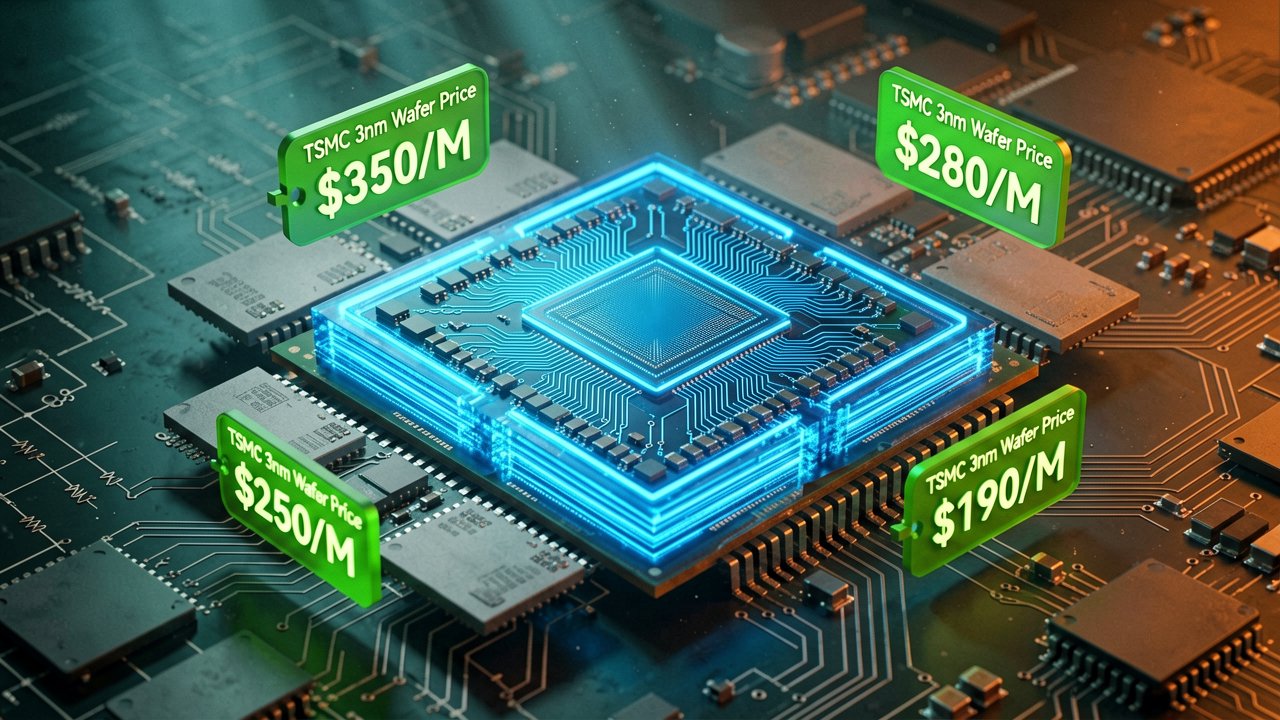
The pricing pressure extends from memory architectures directly into leading-edge logic fabrication, where foundries hold unmatched leverage over hardware designers. Market tracking by TrendForce reveals that Taiwan Semiconductor Manufacturing Company (TSMC) is implementing up to a 15% price increase on its highly coveted 3-nanometer wafers, with subsequent hikes already planned for 2027. Faced with these compounding wafer costs, major hardware developers like Apple and Microsoft have initiated direct retail price increases on premium computing devices and gaming consoles, signaling that the consumer electronics industry can no longer absorb the financial premiums dictated by the AI boom.
Data Center Prioritization and Foundry Dominance
The core catalyst for this pricing crisis is a deliberate realignment of manufacturing priorities by major semiconductor foundries and chip designers. Memory giants like Samsung, SK Hynix, and Micron have aggressively shifted their production lines away from standard consumer DRAM and NAND flash to prioritize high-bandwidth memory (HBM) required for AI accelerators. Industry projections compiled by KuCoin indicate that data centers are on track to consume nearly 70% of total global memory production. This massive reallocation leaves the consumer sector operating on highly constrained inventories, allowing suppliers to push through steep contract price increases that heavily inflate the bill of materials for entry-level and mid-range consumer goods.
Structural Margins and the Consumer Fallout
As advanced node capacity remains entirely sold out, semiconductor fabrication plants are prioritizing high-margin enterprise chips over mass-market consumer silicon. Reports from Tom's Hardware highlight that designers like NVIDIA, AMD, and Qualcomm face unavoidable margin compression unless these inflated manufacturing costs are transferred cleanly to end-users. With enterprise AI chips commanding massive premiums, hardware developers are structurally disincentivized to optimize for price-sensitive consumer segments. The resulting supply constraints mean that retail hardware pricing will remain elevated for the foreseeable future, permanently altering consumer replacement cycles and device affordability metrics across the globe.
The Hidden Cost of Silicon Prioritization
Behind the Scenes: The escalating retail prices of consumer tech are not merely the result of routine inflation, but rather the fallout of a calculated, structural reallocation of global silicon capacity. For the past decade, consumer electronics manufacturers enjoyed predictable, descending cost curves as manufacturing nodes matured. However, the generative AI boom has broken this cycle. Foundries are actively dismantling the production lines once reserved for consumer-grade microcontrollers and standard DRAM to make physical room for high-bandwidth memory (HBM) and massive AI logic dies. This pivot means that even when overall wafer production volumes rise, the specific allocation available for household devices, laptops, and entertainment consoles is shrinking, creating an artificial bottleneck designed to maximize foundry yield metrics.
This reality is forcing hardware engineering teams into difficult architectural compromises. Historically, a generational leap in a smartphone or a gaming console relied on migrating to a smaller, more efficient transistor node while keeping the retail price stable. Today, securing allocation on advanced nodes like TSMC’s 3nm or 2nm processes requires competing directly with hyperscalers whose business models tolerate infinitely higher margins. While an enterprise data center can rapidly recoup the cost of a thirty-thousand-dollar accelerator through cloud subscription fees, a consumer electronics brand cannot easily pass a proportional cost spike onto an average retail shopper without triggering severe demand destruction. Consequently, hardware developers are slowing down their hardware refresh cycles, opting to reuse older silicon architectures rather than pay the premium required to compete with enterprise AI buyers.
The pricing crisis is further aggravated by the shifting power dynamics among industry stakeholders. Original design manufacturers (ODMs) in East Asia report that chip suppliers are now tying the availability of standard components to strategic corporate alignments. Memory and logic suppliers increasingly prioritize clients who are actively building out AI-adjacent ecosystems, leaving traditional, standalone hardware vendors with diminished bargaining power. This ecosystem leverage has effectively institutionalized a multi-tiered supply chain where non-AI consumer goods are treated as secondary priorities. As contract manufacturers pass these increased operational risks and component premiums down the line, the retail market is left to absorb an across-the-board inflation of technology costs that shows no signs of abating.
The Fault Lines in the Enterprise-First Strategy
Reading Between the Lines: The tech industry’s current narrative presents the consumer pricing crisis as an unavoidable byproduct of a historic, universally beneficial technological leap. However, this positioning obscures a highly speculative gamble being forced upon the broader electronics market. Foundries and component suppliers are cannibalizing stable, predictable consumer hardware margins to over-index on enterprise AI infrastructure. This aggressive reallocation assumes that the corporate demand for specialized silicon will remain insatiable indefinitely. Yet, a growing faction of market analysts warns that if the enterprise monetization of generative AI fails to match its current multi-billion-dollar capital expenditure, the semiconductor supply chain will face a catastrophic whiplash effect, leaving foundries with overbuilt, hyper-specialized capacity that cannot easily be repurposed for mass-market consumer electronics.
A glaring contradiction lies in how major hardware brands justify their latest retail price hikes. Companies frequently cite the soaring bill-of-materials cost driven by AI components, while simultaneously marketing these same devices as "AI-native" to incentivize consumer upgrades. This dual strategy creates a jarring consumer paradox: the end-user is expected to pay a steep premium for integrated neural processing units (NPUs) and expanded memory architectures that they did not explicitly request, simply to execute tasks that were previously handled efficiently via standard cloud computing or traditional local processing. By forcing these advanced, expensive hardware specifications into mid-range devices, manufacturers risk alienating the very consumer base required to sustain their long-term hardware ecosystems.
Furthermore, the long-term implications of this silicon gentrification will likely reshape global digital equity. As the cost of entry-level computing hardware increases to absorb enterprise supply chain shocks, the replacement cycle for personal electronics is extending to historic lengths. Consumers are opting to repair aging laptops and smartphones rather than transition to overpriced, AI-laden iterations. This trend threatens to stall software optimization efforts, as developers are forced to continue supporting legacy architectures because the mass market cannot afford the mandatory hardware buy-in dictated by the enterprise AI boom. Ultimately, the industry's fixation on maximizing data center margins is building a fragile, top-heavy ecosystem that leaves the foundational consumer base entirely behind.
It seems the grand promise of artificial intelligence was not to liberate humanity from mundane labor, but to ensure that upgrading a basic family laptop now requires a corporate-level financing structure usually reserved for commercial real estate.
Artūras Malašauskas is an AI Systems Integrator with 20+ years of production-grade web engineering experience. He has designed, shipped, and scaled enterprise Python/PHP systems for logistics, SaaS, and public-sector clients. For the past year, he has focused exclusively on AI integrations: deploying open-source LLMs, building generative media pipelines (image, audio, video), and engineering multi-agent workflows for real production environments. His standard: reproducibility, security, cost-efficient inference—no vaporware. He documents and evaluates emerging AI tooling, separating verified capabilities from marketing noise. Technical editor at: muza-ai.eu, ai-verslas.lt, ai-naujinos.lt Connect on LinkedIn
Comments