Inside Dell's PowerEdge XE8812: Hardware Innovations Powering Next-Gen AI Workloads
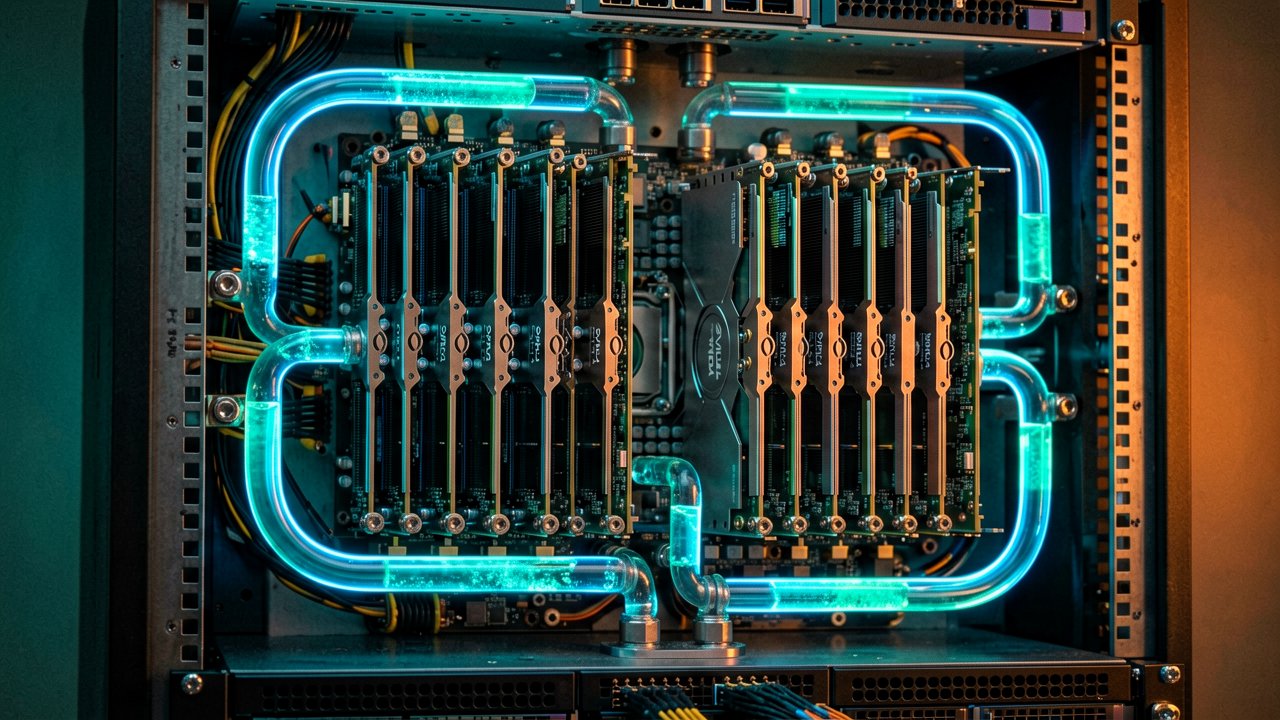
Dell has dropped a massive piece of hardware news for the enterprise AI sector. Freshly unveiled at the ISC conference in Hamburg, Germany, the new Dell PowerEdge XE8812 represents a substantial leap in data center engineering. It is not just another minor spec bump. Instead, it is a fully reimagined, fanless supercomputing engine built exclusively to handle the crushing computational demands of sovereign AI, molecular engineering, and trillion-parameter model training.
The headline-grabbing architectural feat here is extreme compute density. By integrating the brand-new NVIDIA Vera Rubin NVL4 architecture, Dell is packing an astonishing 144 GPUs into a single, standard-based OCP ORv3 rack. It is a design ethos that shifts supercomputing from a bespoke, one-off engineering project into a modular product that enterprises can actually order, deploy, and boot in an afternoon. This density allows institutions to run massive deep learning networks that previously would have required sprawling server rooms, crushing the traditional hardware footprints.
But stuffing that many accelerators into a single cabinet creates an immediate, terrifying thermodynamic problem. Air cooling simply will not cut it when a fully loaded rack demands over 300kW of power. To keep this beast from melting, Dell engineered the XE8812 with a 100% direct liquid cooling (DLC) system that pulls heat directly from the CPUs and the silicon dies of the GPUs. To soothe the nerves of data center operators terrified of plumbing inside their server racks, the platform ships with automated leak detection running through Dell's OpenManage Enterprise and Integrated Rack Controller.
Breaking the Memory Wall
Beyond raw compute, the architecture tackles AI's biggest modern bottleneck: the data transfer penalty. Moving from previous GPU standards to the Vera Rubin platform yields a massive 50% increase in memory per socket and GPU memory. This is crucial because it allows research teams to host ultra-large models completely in-memory, bypassing the high-latency dance of streaming data continuously back and forth from storage arrays. The performance metric shift is stark; removing this microsecond latency bottleneck means real-world effective bandwidth scales dramatically under massive parallel workloads. According to a press release by Dell Technologies, early global deployments are already underway for demanding projects like the Doudna supercomputer at Lawrence Berkeley National Laboratory. Organizations are looking at global availability early next year, marking a definitive new phase in the enterprise infrastructure arms race.
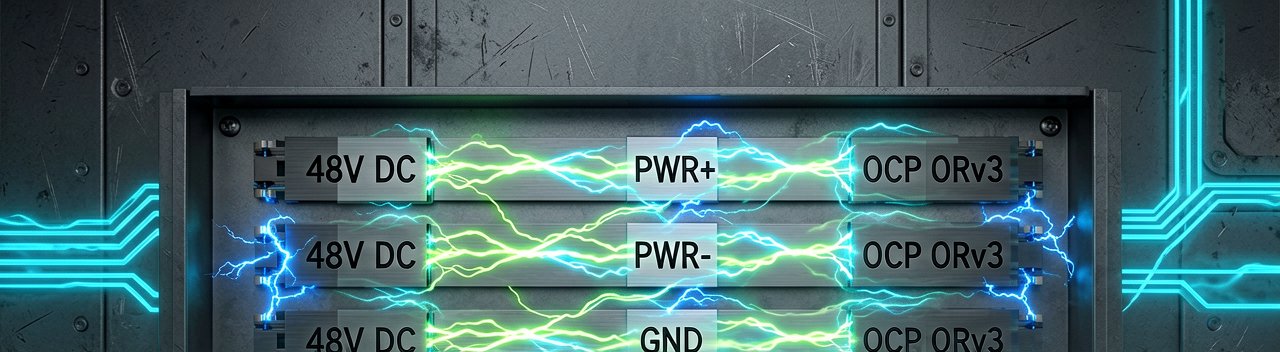
Behind the Scenes: At the physical layer, the real magic of the PowerEdge XE8812 happens within its dense OCP ORv3 bus bar infrastructure. Systems engineers know that delivering 300kW across a single rack requires meticulous power distribution to combat voltage drop. Dell tackles this by feeding 48V DC power directly into the server midplane, drastically reducing resistive power losses compared to legacy 12V architectures. This localized power delivery subsystem allows the motherboard to feed stable, high-amperage current straight to the dual-socket Intel Xeon 6 processors and the adjacent NVIDIA Rubin NVL4 accelerators without suffering from localized thermal throttling or power sag under maximum synthetic AI training loops.
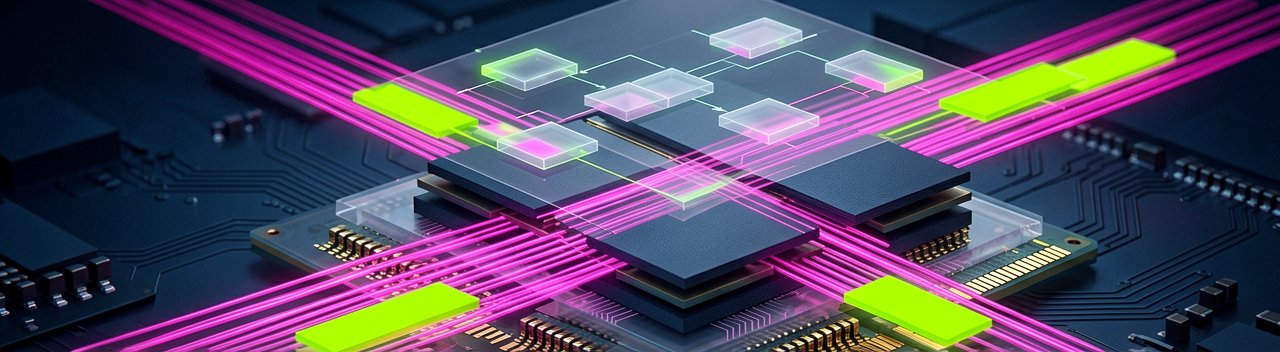
From an architectural networking standpoint, managing inter-node communication is just as vital as processing the data itself. The XE8812 completely bypasses traditional PCIe bottlenecks by utilizing high-bandwidth NVLink interconnects running directly across a unified server backplane. This custom topology delivers incredibly low latency for All-Reduce and All-to-All collective communication primitives, which form the backbone of distributed deep learning. By keeping memory fabrics tightly coupled, a systems engineer can orchestrate cluster-wide distributed training runs without worrying about individual nodes stalling while waiting for remote memory page syncs.
When you dive deep into code execution and optimization on this platform, the combination of hardware capability and software engineering becomes evident. To maximize the 50% increase in GPU memory bandwidth, the server relies on fine-grained kernel optimizations within the CUDA execution model. Engineers can configure asynchronous memory copies via TMA (Tensor Memory Accelerator) units to move vast data blocks directly between HBM4 and shared memory spaces, entirely skipping intermediate register files. This unblocks the warp schedulers to execute dense matrix-matrix operations simultaneously, keeping the specialized Tensor Cores completely saturated during complex transformer layer evaluations.
Maximizing Compiler and Runtime Execution
Hardware optimization is only half the battle; the underlying software stack must actively exploit these hardware pipelines. Utilizing specialized compilation passes through compiler infrastructures like Triton allows developers to write custom tensor kernels that automatically match the physical layout of the Rubin GPU architecture. This layer optimizes memory access patterns, grouping global memory reads into coalesced transactions that perfectly match the wide data bus width. Consequently, it minimizes cache misses at the L2 cache level, which is a common performance killer during large-scale model inference when dealing with erratic, dynamic token lengths.
Finally, data ingestion pipelines require a flawless handoff from storage arrays directly to GPU memory. The PowerEdge XE8812 handles this through GPUDirect Storage over a high-throughput InfiniBand network fabric. By carving out direct DMA paths between the network interface cards and the high-bandwidth memory on the accelerators, the server completely offloads the host CPU from storage-to-compute data copying tasks. This unified systems approach guarantees that data-hungry vision-language models remain continually fed with training tokens, maintaining peak teraflops utilization across the entire cluster without hitting the dreaded I/O wall.
Reading Between the Lines: The marketing narrative surrounding 300kW, direct-liquid-cooled racks suggests a seamless plug-and-play evolution for enterprise AI, but the engineering reality presents a stark contradiction. While packing 144 GPUs into an OCP ORv3 rack solves the immediate physical footprint problem, it simultaneously shifts the burden from data center real estate to municipal utility grids. Most legacy corporate data centers are built to handle average power densities of 10kW to 15kW per rack. Dropping an architecture that demands an order of magnitude more power means that before a single tensor calculation can even occur, enterprises face a multi-million-dollar infrastructure overhaul just to upgrade their power substations and industrial chillers.
Furthermore, the reliance on 100% direct liquid cooling introduces a layer of operational friction that enterprise IT departments are notoriously hesitant to accept. Dell promises automated leak detection and integrated rack controllers, but the existential threat of fluid circulating millimeters away from ultra-expensive silicon remains a high-stakes gamble. This creates a cultural mismatch between the agile, fast-moving software engineering teams eager to spin up massive clusters and the conservative facilities managers whose primary metric of success is uptime. The bottleneck for AI adoption is rapidly shifting away from chip architecture and toward the availability of specialized HVAC technicians and facility pipefitters.
There is also a subtle economic irony embedded in the pursuit of ultra-dense sovereign AI hardware. The primary justification for building internal clusters like the XE8812 is data sovereignty and cost predictability over volatile cloud-rented compute. Yet, by locking into bespoke, proprietary cooling loops and specialized infrastructure configurations, organizations risk an equally restrictive form of vendor lock-in at the facility level. The flexibility of moving workloads freely between the cloud and on-premise hardware becomes choked by the specialized, rigid engineering requirements of the physical environment housing the machines.
The Realities of Continuous Maximum Saturation
From an optimization standpoint, hardware manufacturers frequently quote theoretical peak performance metrics obtained under perfect, synthetic testing environments. In practice, maintaining peak teraflops utilization across 144 interconnected GPUs requires a flawless software stack that rarely exists in wild enterprise deployments. The moment an engineering team encounters unoptimized model code, poorly configured model parallelism parameters, or minor network jitter across the InfiniBand fabric, the massive capital expenditure sits idle for microsecond intervals. At this scale, even a minor 5% drop in cluster efficiency due to software overhead translates to thousands of dollars of wasted power every single day.
Ultimately, this architectural push forces an industry-wide realization that hardware innovation alone cannot sustain the current pace of AI growth. As models expand to trillions of parameters, simply throwing denser, hotter silicon at the problem hits diminishing returns dictated by thermodynamics and basic economics. The hardware is undeniably a masterpiece of modern engineering, but its true success depends entirely on whether software optimization, data curation, and algorithmic breakthroughs can evolve quickly enough to justify the staggering utility bills required to keep these systems breathing.
"We've successfully reached an era where running a next-generation neural network requires roughly the same amount of power, cooling, and plumbing as a small nuclear submarine—leaving one to hope that the resulting AI models are used for something slightly more profound than generating infinite variations of corporate slideshows."
Artūras Malašauskas is an AI Systems Integrator with 20+ years of production-grade web engineering experience. He has designed, shipped, and scaled enterprise Python/PHP systems for logistics, SaaS, and public-sector clients. For the past year, he has focused exclusively on AI integrations: deploying open-source LLMs, building generative media pipelines (image, audio, video), and engineering multi-agent workflows for real production environments. His standard: reproducibility, security, cost-efficient inference—no vaporware. He documents and evaluates emerging AI tooling, separating verified capabilities from marketing noise. Technical editor at: muza-ai.eu, ai-verslas.lt, ai-naujinos.lt Connect on LinkedIn
Comments