Silicon Valley’s Hegemony Challenged as Asian Tech Giants Launch Rival Systems to Anthropic’s Mythos AI
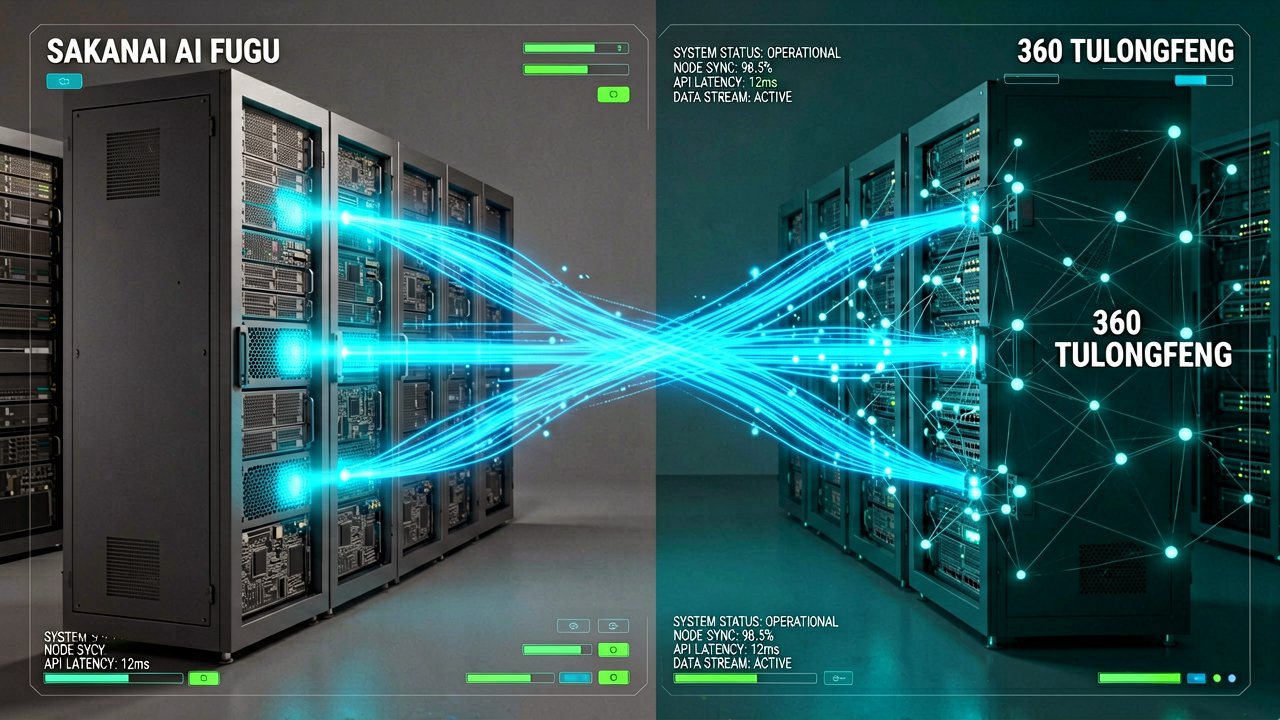
The global artificial intelligence landscape has reached a critical geopolitical turning point as prominent Chinese and Japanese technology enterprises challenge Western market dominance. In a series of rapid product rollouts, Asian firms have unveiled sophisticated AI models specifically engineered to match the capabilities of Anthropic’s highly restricted, cybersecurity-focused Claude Mythos and Fable 5 systems. This synchronized counter-offensive directly exploits the current administrative friction in Washington, effectively fragmenting a frontier AI sector that was previously monopolized by a handful of Silicon Valley laboratories.
The structural escalation materializes precisely two weeks after the United States government enforced emergency national security export controls, which abruptly isolated non-American enterprises from accessing Anthropic's most advanced computing models. Seizing this operational window, Tokyo-based startup Sakana AI introduced "Fugu," an agentic frontier AI model explicitly advertised as delivering top-tier technical performance completely isolated from the systemic risks of American export jurisdiction. Simultaneously, Chinese internet security conglomerate 360 launched "Tulongfeng," a cybersecurity-optimized engine positioned to go head-to-head with Western defense architectures, signaling that the era of uncontested U.S. frontier AI supremacy has concluded.
Geopolitical Blindspots and the Rise of Sovereign Asian Infrastructure
The sudden emergence of capable alternatives highlights a glaring vulnerability in the United States' strategy of using unilateral export prohibitions to preserve its technological lead. By restricting Anthropic's multi-tier deployment channels, Western regulators unintentionally incentivized foreign tech hubs to accelerate the commercialization of sovereign, sanction-immune infrastructure. According to market reporting from TechCrunch, Sakana AI’s Fugu model is engineered to operate natively as an agentic coordinator, orchestrating access across various distinct application programming interfaces (APIs) to replicate the long-horizon reasoning tasks that previously defined Anthropic's proprietary ecosystem.
This localized product pivot occurs amid an increasingly volatile regulatory backdrop for American frontier developers. While Anthropic faces localized enforcement actions and ongoing legal challenges regarding the corporate deployment thresholds of its code validation suites, international competitors are operating with significant regulatory agility. Tech analysts note that the deployment of Tulongfeng by 360 and comparable technical models by Chinese developer Zhipu AI (Z.ai) demonstrates that near-frontier capabilities can be achieved without mirroring the multi-billion dollar capital expenditure frameworks typical of Silicon Valley giants.

The Economics of Distillation and Closing the Capability Gap
A profound shifting mechanism driving this rapid catch-up is the industrial-scale application of adversarial distillation, a training methodology wherein localized developers utilize the outputs of premium American systems to refine their own models at a fraction of the original research and development cost. The financial implications are stark; as detailed by TechRepublic, prominent Chinese alternatives such as DeepSeek are vastly undercutting American API pricing baselines, allowing global enterprise consumers to realize millions of dollars in localized development savings. This aggressive pricing structure is actively reshaping the risk-reward calculus for corporate software architectures globally.
The structural compression of this technological gap has triggered immediate alarm across the executive suites of American labs. Anthropic recently submitted formal documentation to United States legislators, as covered by The Japan Times, accusing Chinese e-commerce titan Alibaba of orchestrating an industrial-scale data extraction campaign involving nearly 28.8 million discrete programmatic exchanges via thousands of obfuscated customer profiles. This conflict underscores a broader reality: while Washington attempts to lock down physical semiconductor distribution pipelines and model access parameters, the fluid nature of algorithmic knowledge transfer ensures that specialized AI capabilities continue to proliferate globally, permanently resetting the parameters of international technology competition.
Under the Hood: The Algorithmic Arbitrage and Regulatory Blindspots Redefining the Race
What Most Reports Miss: The sudden parity achieved by Tokyo and Beijing is not merely a triumph of raw computation, but a masterclass in algorithmic arbitrage. When the U.S. restricted Anthropic’s frontier systems, it operated on a legacy defense paradigm that treats AI weights like enriched uranium—tangible assets that can be contained behind digital walls. However, artificial intelligence is inherently fluid. By analyzing the structural patterns of Anthropic’s public outputs and employing advanced synthetic data pipelines, Asian engineering teams have successfully mapped the behavioral boundaries of systems like Mythos. This reverse-engineering process allows them to bypass the costly, brute-force trial periods that historically consumed billions of dollars in Silicon Valley venture capital.
This technical convergence has triggered a profound shift in corporate boardrooms across the Asia-Pacific region, where dependency on American cloud infrastructure is increasingly viewed as a systemic business liability. Japanese enterprises, traditionally risk-averse and deeply integrated with Western software ecosystems, are spearheading the transition toward localized models out of operational necessity. Executives in Tokyo note that the unpredictability of unilateral export updates leaves them vulnerable to sudden service disruptions. By adopting sovereign platforms like Sakana AI's Fugu, these conglomerates are ensuring that their automated logistics, financial compliance, and internal codebases remain entirely insulated from the shifting political winds of Washington, D.C.

Meanwhile, the economic reality on the ground is rendering the traditional Silicon Valley monetization model obsolete. Chinese developers are aggressively leveraging hyper-optimized, open-weight architectures that require significantly less hardware to run at scale compared to the massive, monolithic frameworks favored by American labs. This efficiency allows them to offer high-tier reasoning capabilities at a fraction of the cost, forcing a dramatic price war across international developer ecosystems. As global startups migrate their back-end infrastructure to these highly efficient, cost-effective Asian alternatives, the financial justification for the multi-billion-dollar infrastructure investments currently being made by Western venture capitalists is facing its first major structural challenge.
The geopolitical fallout extends far beyond pricing dynamics, fundamentally altering how international standard-setting bodies view AI safety and proliferation. As Western institutions focus heavily on alignment philosophies rooted in Eurocentric corporate governance, Asian developers are prioritizing hyper-localized utility and structural resilience. This philosophical divergence means the global AI ecosystem is fracturing into distinct regional spheres of influence, each governed by entirely different compliance metrics and ideological guardrails. With the technological barrier to entry effectively collapsed, the strategy of maintaining a permanent lead through resource hoarding has reached its limit, giving way to a decentralized era where localized implementation, rather than centralized control, dictates market dominance.
The Sovereign Paradox: Structural Constraints and the Illusion of Parity
Reading Between the Lines: The triumphalist narrative surrounding Asia’s sudden AI breakthroughs obscures a foundational contradiction: both the Chinese and Japanese ecosystems remain profoundly dependent on the very Western supply chains they claim to defy. While software architectures like Tulongfeng and Fugu can simulate near-frontier capabilities through clever distillation and algorithmic optimization, they are still fundamentally constrained by legacy hardware realities. Developing sophisticated software algorithms using synthetic data is a highly effective short-term workaround, but it cannot indefinitely substitute for the physical possession of next-generation, high-bandwidth memory chips and advanced EUV lithography equipment that remain tightly controlled by Western-aligned supply networks.
Furthermore, the assumption that these models can seamlessly replace Silicon Valley infrastructure on the global stage ignores the fragmented nature of regional regulatory regimes. For instance, while Japanese firms benefit from a highly permissive domestic copyright environment that accelerates model training, they must navigate strict international data privacy frameworks like Europe's GDPR to scale globally. Conversely, Chinese enterprises operate under stringent domestic alignment mandates that require models to pass rigorous ideological reviews before commercial rollout, a bureaucratic hurdle that inherently limits the real-time adaptability and creative reasoning capabilities of their systems in open, unconstrained environments.
The long-term economic sustainability of this localized model boom also remains highly questionable. The current price war initiated by open-weight alternatives creates an industry dynamic where frontier AI reasoning is treated as a low-margin commodity rather than a premium service. While this benefits enterprise consumers in the short term, it severely undermines the long-term profitability of the developers themselves. Without the massive sovereign subsidies currently propping up these initiatives, few of these localized players possess a clear path to independent financial viability, raising the distinct possibility that the current explosion of Asian AI models may eventually culminate in a structural consolidation wave driven by capital exhaustion rather than technical obsolescence.
"The ultimate irony of the great global AI race is that while Washington and Beijing spend billions attempting to build an automated digital superpower, the entire global tech economy remains entirely dependent on a single, earthquake-prone island's ability to keep its semiconductor fabrication plants running without a power outage."
Artūras Malašauskas is an AI Systems Integrator with 20+ years of production-grade web engineering experience. He has designed, shipped, and scaled enterprise Python/PHP systems for logistics, SaaS, and public-sector clients. For the past year, he has focused exclusively on AI integrations: deploying open-source LLMs, building generative media pipelines (image, audio, video), and engineering multi-agent workflows for real production environments. His standard: reproducibility, security, cost-efficient inference—no vaporware. He documents and evaluates emerging AI tooling, separating verified capabilities from marketing noise. Technical editor at: muza-ai.eu, ai-verslas.lt, ai-naujinos.lt Connect on LinkedIn
Comments