The Custom Silicon Showdown: Weighing the AI Infrastructure Trajectories of Broadcom and Marvell
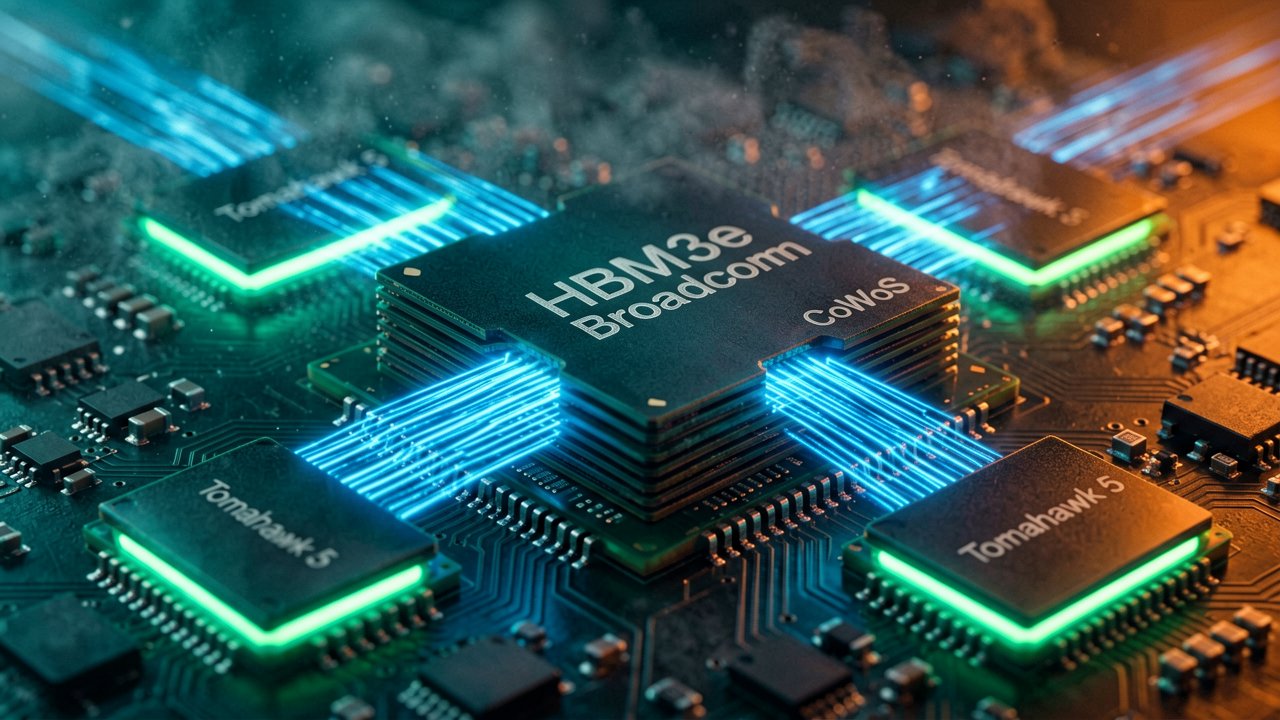
The race to supply the modern artificial intelligence gold rush has evolved beyond a single-player dominance story, forcing Wall Street to scrutinize the foundational layers of the data center stack. At the heart of this evaluation is the intensifying rivalry between Broadcom and Marvell Technology, two semiconductor titans whose specialized hardware dictates how efficiently hyperscalers can run massive AI clusters. Analysts are deeply divided on which company provides the superior risk-adjusted return as big tech looks to mitigate its extreme reliance on off-the-shelf graphics processors. This investor debate has intensified following a series of high-stakes corporate updates in June 2026, forcing a side-by-side assessment of their custom application-specific integrated circuit (ASIC) pipelines and networking portfolios.
Broadcom has established itself as the absolute heavyweight in the custom AI accelerator space, operating with an unmatched scale that its rivals can only envy. During its fiscal second-quarter earnings call in June 2026, the company showcased its massive operational leverage, underpinned by deep-rooted partnerships with mega-cap cloud operators. Chief Executive Officer Hock Tan provided the market with definitive validation of this momentum, revealing a staggering $73 billion AI backlog and confirming that the company has clear visibility toward generating over $100 billion in cumulative AI chip revenue by 2027. According to analysis published by The Motley Fool, Broadcom remains highly attractive to value-oriented growth investors because it trades at roughly 25 times forward earnings, making it one of the most reasonably valued mega-cap AI plays relative to its rapid trajectory.
The Architecture of Scale Versus Agility
The baseline technical difference between these two entities lies in their architectural approach and customer ecosystem depth. Broadcom handles massive, complex, multi-year projects for the largest hyperscalers on earth, serving as the primary design engine behind Google’s highly successful Tensor Processing Units, a relationship secured via an expanded long-term supply agreement extending through 2031. It also builds custom silicon for Meta and OpenAI, leveraging its dominant position in high-bandwidth Ethernet switching and routing to bundle custom compute with necessary networking fabrics. This dual-threat capability makes it incredibly difficult for hyperscalers to transition away from Broadcom's ecosystem once embedded.
Marvell, by contrast, positions itself as an agile, full-service custom silicon partner tailored for rapid deployment across a broader array of application layers. While smaller in scale, its technology footprint is vital for the optical interconnects and data-center plumbing that prevent processing bottlenecks. Market reporting from CMC Markets emphasizes that Marvell’s custom ASIC business is expanding rapidly through collaborative projects with Amazon, Microsoft, and Google, positioning it as an underappreciated beneficiary as these tech giants design hardware to run specific internal workloads. Additionally, Marvell has targeted a more flexible market tier by integrating its custom silicon with proprietary interconnect technologies, projecting that its custom silicon business alone will scale past $10 billion in the coming years.
Financial Realities and Valuation Hurdles
From a purely financial standpoint, the investment thesis for each stock diverges significantly on margin structure and growth predictability. Broadcom’s historical acquisitions, including its integration of VMware, have created a highly diversified software and hardware hybrid model that insulates its corporate margins from the harsh cyclical downturns typical of the semiconductor industry. Wall Street analysts expect this combination to yield superior near-term growth, with consensus estimates projecting robust double-digit top-line increases through its fiscal year ending in late 2026. This financial predictability gives Broadcom a distinct edge for conservative institutional capital.
Marvell operates as a more traditional, pure-play semiconductor firm, leaving its valuation multiples highly sensitive to hardware spending cycles and near-term execution risks. Because its revenue is tied directly to physical component shipments, it carries lower structural margins and higher customer concentration risks than Broadcom. However, its upside potential stems from a smaller baseline revenue figure, meaning that even a single massive custom chip win with a cloud provider can radically accelerate its financial growth rate. For growth investors willing to tolerate higher volatility, Marvell represents an aggressive bet on the long-term expansion of cloud-based optical networking infrastructure.
Technical Specifications Matrix
| Comparison Parameter | Broadcom AI Solutions | Marvell Technology Solutions |
|---|---|---|
| Speed / Latency | Ultra-low latency cluster fabrics with Tomahawk 5 / Jericho3-AI routing at 51.2 Tbps; ASIC interconnects support sub-microsecond point-to-point transfers. | Industry-leading electro-optics; Teralynx switching and PAM4 optical DSPs deliver high-throughput, low-jitter connections across optical links. |
| Model Size / Parameters | Optimized for massive-scale cluster deployments handling frontier models with trillions of parameters across tens of thousands of coordinated nodes. | Suited for modular scaling and highly specialized, domain-specific deep learning models, scaling efficiently up to multi-billion parameter tiers. |
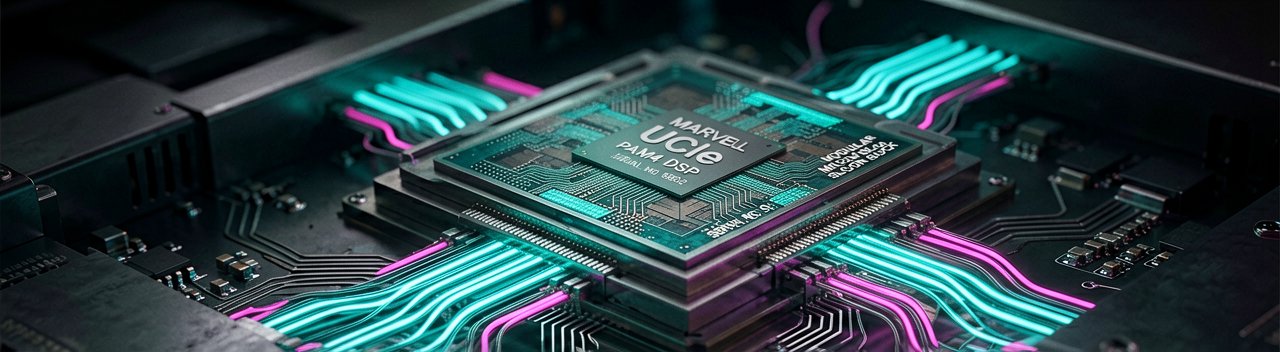
| Hardware Requirements | Custom-tailored ASICs integrated with state-of-the-art High Bandwidth Memory (HBM3e/HBM4) and highly rigid CoWoS packaging layouts. | Flexible custom accelerators utilizing diverse chiplet architectures, multi-die interconnect standards (UCIe), and advanced optical engines. |
Decoding the Hardware Architectures
The stark contrasts outlined in the technical specifications matrix stem from fundamentally different philosophies regarding AI cluster engineering. Broadcom addresses the AI infrastructure bottleneck by focusing heavily on physical scale and ultra-dense component integration. By co-designing massive, single-die custom accelerators directly bound to state-of-the-art High Bandwidth Memory, Broadcom ensures that data moving between the compute engine and storage layers experiences minimal physical resistance. This architecture is vital for training frontier models with trillions of parameters, where memory bandwidth starvation is the primary threat to hardware efficiency.
Conversely, Marvell leverages a modular chiplet philosophy to provide greater architectural agility. Instead of forcing hyperscalers into rigid, massive monolithic dies that suffer from lower manufacturing yields, Marvell focuses on advanced multi-die packaging utilizing the Universal Chiplet Interconnect Express standard. This approach allows cloud architects to mix and match computing cores with diverse specialized memory tiers, creating application-specific accelerators that target precise enterprise workloads. While this multi-die layout introduces minor routing complexities, Marvell offsets the potential latency penalties by embedding its premier optical digital signal processors directly into the packaging fabric.

Networking capabilities further differentiate how these competing systems scale from localized hardware racks into planet-scale computing environments. Broadcom relies on its market-dominant Ethernet positioning, using its Tomahawk and Jericho switching silicon to establish reliable, high-throughput communication paths across thousands of parallel computing nodes. Marvell attacks the same problem from an optical standpoint, prioritizing optical interconnects over traditional copper cabling to maintain signal integrity over longer physical distances within the data center. Ultimately, the choice between these hardware ecosystems hinges on whether an infrastructure team values Broadcom's raw, monolithic scaling power or Marvell's modular, optical-centric adaptability.
Editorial Pros & Cons
| Silicon Provider | Operational Advantages (Pros) | Operational Disadvantages (Cons) |
|---|---|---|
| Broadcom | Unmatched scale with multi-billion dollar long-term hyperscaler contracts; elite software integration layer via VMware asset stabilization; absolute dominance in high-end Ethernet switching fabrics. | Extremely high customer concentration risk with heavy reliance on Google and Meta; low flexibility for mid-tier cloud providers; premium valuation leaves minimal room for execution missteps. |
| Marvell Technology | Superior architectural flexibility utilizing advanced modular chiplet standards; industry leader in high-growth data center optical interconnects; diversified pipeline across multiple emerging cloud platforms. | Smaller operational scale compared to top-tier semiconductor rivals; lower historical structural margins; higher vulnerability to cyclical semiconductor hardware spending corrections. |
The Strategic Execution Gap
Reading Between the Lines: The investment narrative surrounding these two infrastructure giants is less about who builds a better semiconductor and more about which deployment philosophy will dominate the next phase of cloud computing. Broadcom operates like a fortress, locking in the world's largest balance sheets with multi-year commitments that make its revenue profile look more like a high-margin enterprise software subscription than a cyclical hardware business. By capturing the foundational compute engine and the network fabric simultaneously, Broadcom ensures that its customers face an incredibly steep technical penalty if they ever decide to look elsewhere for their custom silicon needs.
Marvell plays a radically different tactical game, positioning itself as the ultimate enabler for tech giants that want to maintain absolute control over their internal hardware destinies. Instead of forcing clients into a standardized, massive architectural blueprint, Marvell offers the modular building blocks necessary to patch specific infrastructure inefficiencies, particularly around optical data movement. This strategy allows Marvell to capture high-margin niche opportunities that Broadcom simply ignores due to its massive scale requirements, turning Marvell into an indispensable Swiss Army knife for secondary hyperscalers and specialized enterprise cloud providers.
The ultimate risk calculation for long-term investors comes down to structural predictability versus explosive room for growth. Broadcom provides a safe, highly cash-generative haven backed by an aggressive management team that has mastered the art of corporate cost cutting and margin expansion. Marvell offers a higher-beta vehicle that will likely experience sharper valuation swings but possesses significantly more explosive upside if its optical chiplet ecosystem becomes the undisputed standard for decentralized AI training clusters. Choosing between them requires deciding whether you want to back the unchallenged king of massive scale or the agile challenger rewriting the rules of modular hardware integration.
Investing in AI infrastructure stocks right now is a bit like betting on a drag race between a heavily armored freight train and a turbocharged sports car; Broadcom will confidently smash through any wall in its path, while Marvell might just drift around the corner and leave everyone wondering how a smaller competitor managed to steal the race.
Artūras Malašauskas is an AI Systems Integrator with 20+ years of production-grade web engineering experience. He has designed, shipped, and scaled enterprise Python/PHP systems for logistics, SaaS, and public-sector clients. For the past year, he has focused exclusively on AI integrations: deploying open-source LLMs, building generative media pipelines (image, audio, video), and engineering multi-agent workflows for real production environments. His standard: reproducibility, security, cost-efficient inference—no vaporware. He documents and evaluates emerging AI tooling, separating verified capabilities from marketing noise. Technical editor at: muza-ai.eu, ai-verslas.lt, ai-naujinos.lt Connect on LinkedIn
Comments