Xiaomi Early Fold 5 Launch Signals Strategic Shift in Foldable Smartphone Market Dynamics

Recent regulatory filings indicate that Xiaomi is altering its release strategy to capture early momentum in the premium foldable market. The upcoming Xiaomi Mix Fold 5 has successfully cleared certification in China under the model number 2608BPX34C, as reported by GSMArena. Notably, this regulatory milestone occurred ahead of any hardware clearances for the highly anticipated Xiaomi 18 flagship series. Industry analysts interpret this timeline gap as a deliberate decoupling of product lines, shifting the foldable's typical debut window away from the traditional autumn launch events.
By moving the hardware launch forward, potentially to a mid-August timeframe, Xiaomi avoids the crowded September release window dominated by standard flagship devices. Reports highlighted by Trusted Reviews state that the hardware shift is deeply connected to a fundamental change in semiconductor sourcing. Unlike the Xiaomi 18 family, which traditionally waits for Qualcomm to supply next-generation commercial chipsets, the Mix Fold 5 is engineered around proprietary architecture. Operating independently of external silicon timelines grants the brand greater flexibility over its production schedules and strategic positioning.
This decoupling reflects a maturation of internal supply chains and software development cycles. Leak data outlined by Gadgets 360 indicates that the Mix Fold 5 is positioned to be the first device to ship with the next-generation HyperOS 4 operating system out of the box. Launching the foldable early allows the company to showcase its latest ecosystem upgrades in a premium, specialized format. This approach generates distinct marketing momentum before mass-market candy-bar flagships arrive later in the year.
Silicon Independence and Component Strategy
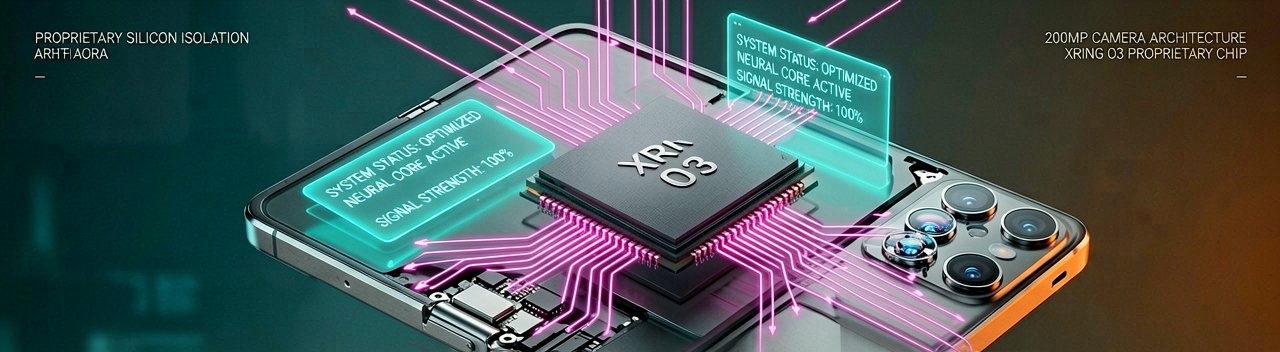
The core catalyst for this adjusted timeline is the integration of the custom in-house XRING O3 application processor. Moving away from total reliance on third-party vendors for its high-end Chinese premium tier allows the manufacturer to optimize hardware and software synergy. According to details tracked by XimiTime, utilizing the proprietary XRING O3 silicon instead of waiting for a commercial Snapdragon alternative alters the standard engineering roadmap. It lets the development teams finalize product testing and regulatory approvals much faster than in previous product generations.
Premium Positioning and Hardware Upgrades
Beyond silicon changes, the device introduces substantial design revisions aimed at securing market share from rival folding platforms. Early production leaks sourced by Gizmochina detail a wider 7.5 to 7.6-inch inner flexible display utilizing an advanced, nearly seamless hinge mechanism to mitigate screen creasing. Additionally, the integration of a 200-megapixel primary camera sensor and a larger 6,000mAh battery pushes the device further into ultra-premium territory. These hardware improvements are expected to accompany a price increase to roughly 10,000 yuan, cementing its role as a premier technology showcase for the domestic market.
Decoding the Foldable Decoupling
Reading Between the Lines: This unconventional launch timing exposes a deeper competitive urgency within the ultra-premium smartphone segment. Historically, foldables served as expensive engineering proof-of-concepts, pinned to the late-summer or autumn release windows of traditional slab flagships. By advancing the certification and launch timeline of the Mix Fold 5, the brand is deliberately dismantling this structural hierarchy. Analysts observe that treating the foldable as an independent vanguard product allows it to capture maximum consumer attention without being overshadowed by the volume-driving numbers of the standard flagship series.
This tactical acceleration is heavily driven by shifting regional dynamics in the Chinese domestic market, where foldable adoption curves are significantly steeper than in Western regions. Competitors have rapidly iterated on hinge durability and chassis thickness, turning the high-end category into a brutal war of millimeters. Launching early gives the engineering teams a vital head start, allowing them to establish a commercial baseline before regional rivals flood the market with their respective third- and fourth-generation flexible devices later in the third quarter.
Behind closed doors, supply chain logistics and component yield rates likely played a massive role in this scheduling shift. Securing component validation from regulatory bodies like the Ministry of Industry and Information Technology well ahead of the standard autumn rush suggests that manufacturing pipelines for advanced flexible displays have stabilized. By decoupling production from the chaotic, high-volume manufacturing ramp-up required for mass-market flagships, factories can dedicate specialized assembly lines to the tighter tolerances that complex folding hinges demand.

Furthermore, the early deployment of a new software architecture on specialized hardware acts as an intentional real-world incubator. Software optimization remains the primary battleground for flexible devices, which require seamless continuity transitions between inner and outer screens. Introducing next-generation ecosystem software on a premium device creates a controlled environment to iron out initial bugs, ensuring a highly stable user experience by the time the software rolls out to millions of mainstream devices globally.
The Skeptic’s Lens on Silicone and Speed
The Reality Behind the Rush: While shifting a hardware pipeline forward is a bold marketing narrative, accelerating a product launch introduces distinct risks that could complicate the brand's long-term premium standing. Pushing a foldable to market ahead of the primary flagship cycle requires a delicate balance between engineering readiness and sheer speed. Opting for proprietary silicon ahead of standard industry chipsets might bypass external supply blockages, but it simultaneously robs the device of the widespread developer optimizations and proven performance baselines that established, mass-produced platforms naturally provide.
This tactical timeline shift also creates an internal contradiction regarding ecosystem positioning. Launching a specialized, low-volume foldable to debut next-generation system software essentially turns the company’s most expensive demographic into an early-access testing pool. While enthusiast users frequently crave the newest features, premium buyers expect absolute stability from a high-priced device. Using a complex folding chassis as the launch vehicle for unproven platform software could easily result in lingering interface bugs, potentially dampening the initial wave of critical and consumer acclaim.
Furthermore, isolating the foldable from the standard flagship launch changes the financial calculation for potential buyers. Without the halo effect and shared media buzz of a mass-market flagship rollout, the Mix Fold 5 must sustain its premium price point purely on its own merits in a highly competitive market. If the broader flagship line arrives just a few months later with superior camera tuning or more efficient thermal handling, early adopters of the advanced foldable may find themselves holding an expensive device that feels prematurely dated.
Ultimately, this aggressive scheduling reveals a defensive posture disguised as an offensive move. The rush to secure early regulatory clearance highlights the intense pressure to defend domestic market share against regional rivals who are iterating on flexible form factors at an unprecedented pace. Moving the launch date forward allows the company to secure temporary bragging rights, but the real test will be whether the finalized hardware can withstand the scrutiny of real-world use once the initial novelty of the early timeline fades.
Paying a premium to be an early adopter used to mean getting the absolute best technology available; nowadays, it increasingly means volunteering to be the highest-paying software tester on the block while waiting for the actual flagships to arrive.
Artūras Malašauskas is an AI Systems Integrator with 20+ years of production-grade web engineering experience. He has designed, shipped, and scaled enterprise Python/PHP systems for logistics, SaaS, and public-sector clients. For the past year, he has focused exclusively on AI integrations: deploying open-source LLMs, building generative media pipelines (image, audio, video), and engineering multi-agent workflows for real production environments. His standard: reproducibility, security, cost-efficient inference—no vaporware. He documents and evaluates emerging AI tooling, separating verified capabilities from marketing noise. Technical editor at: muza-ai.eu, ai-verslas.lt, ai-naujinos.lt Connect on LinkedIn
Comments