The Bleeding Edge: How 2026’s Top Xbox Titles Are Pushing Console Tech to the Brink
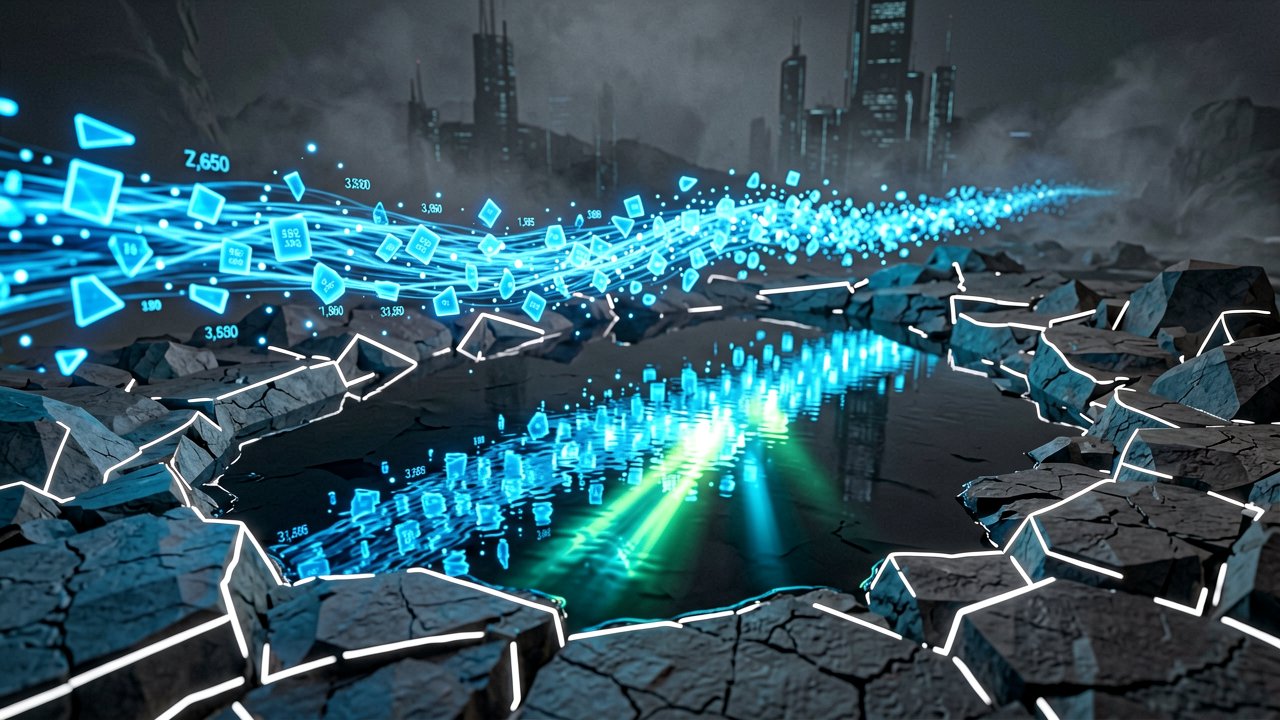
The console landscape is undergoing a massive shift as developers finally unlock the true mathematical and processing potential of mid-generation hardware. This month, entertainment media outlet JoBlo released its highly anticipated rankings of the top Xbox games, offering a fascinating snapshot of how the industry balances high-fidelity rendering with raw player engagement. It is not just about raw pixel counts anymore; the narrative of modern gaming has evolved into a full-blown war between competing software frameworks, proprietary engines, and advanced machine-learning upscalers.
At the center of this technological leap are two fundamentally different approaches to building digital worlds. On one side, we have the continuation of massive, interconnected open-world environments that rely heavily on asynchronous asset streaming and global illumination pipelines. On the other, tight, instances-driven action and horror titles are focusing every ounce of the console's compute power into hyper-detailed, ray-traced micro-environments. The baseline difference comes down to how memory bandwidth is allocated, with some studios sacrificing native output resolution for flawless fluid simulation, while others target a pristine, native presentation at a locked frame rate.
The Multiplatform Titans and First-Party Masterpieces
When looking at the upper echelon of these rankings, the technical wizardry on display highlights a clear divide in development philosophies. Take a look at the critical consensus tracking across platforms like Pure Xbox, and you will see titles like Resident Evil Requiem and Forza Horizon 6 dominating the conversation. The contrast between these two experiences perfectly illustrates the engineering crossroads facing modern studios.
Capcom’s latest survival horror masterpiece pushes the proprietary RE Engine into overdrive by utilizing a dual-protagonist narrative structure that handles environment loading in completely different ways depending on who you play as. For the action-heavy sequences, the engine prioritizes variable rate shading to keep the frame rate smooth during chaotic gunfight sequences. Conversely, the slower, exploratory chapters dial up the path-traced reflections, plunging players into a oppressive atmosphere where lighting behaves exactly as it would in the real world.

Meanwhile, Xbox’s premier racing simulator takes the open-world philosophy to its logical conclusion by moving the festival to the neon-lit corridors and mountain passes of Japan. Instead of relying on traditional smoke and mirrors, the developers implemented a robust global illumination pipeline that handles real-time reflections across hundreds of licensed vehicles simultaneously. The game manages a blistering frame rate while handling complex physics calculations for tire friction, aerodynamics, and dynamic weather changes on the fly. It serves as a masterclass in how to balance a high-speed data stream without bottlenecking the console's central processing unit.
Sub-Resolution Upscaling and the Future of Performance
The real battlefield in current game design is happening behind the scenes in the upscaling pipeline. Gone are the days when running a game at native 4K was the ultimate benchmark of quality. Today, developers are leveraging sophisticated reconstruction algorithms to deliver images that often look sharper than native rendering, saving valuable GPU cycles for advanced physics and geometry density.
This approach has allowed smaller, highly creative titles to stand shoulder-to-shoulder with massive blockbusters. By offloading image reconstruction to dedicated hardware blocks, studios can introduce complex rendering techniques like cinematic motion blur, volumetric fog, and subsurface scattering without tanking performance. The result is a highly diverse ecosystem where experimental art styles and traditional graphical showcases can thrive simultaneously on the same hardware architecture.
Editorial Pros & Cons
| Architecture Type | Operational Advantages | Operational Disadvantages |
|---|---|---|
| Open-World Streaming Pipelines | Uninterrupted player immersion; exceptional environmental scale; superior long-range visibility and dynamic world-state updates. | Massive storage footprint; potential for asset streaming glitches; high development costs for population and optimization. |
| Instanced Ray-Traced Engines | Unmatched visual fidelity; hyper-realistic lighting and shadow interactions; precise control over character animation and asset detail. | Highly restricted play zones; increased risk of input latency; strict hardware thermal and compute limitations. |
The Creative Tug-of-War
Reading Between the Lines: The ongoing conflict between boundless exploration and pinpoint graphical perfection is forcing studios to choose which type of gamer they want to appease. For the open-world advocates, the triumph lies in the invisible engineering that allows a player to sprint across a massive digital country without seeing a single loading screen. It is a triumph of logistical planning, requiring developers to treat asset management less like traditional art and more like a high-speed shipping and fulfillment network running on a microscopic timeline.
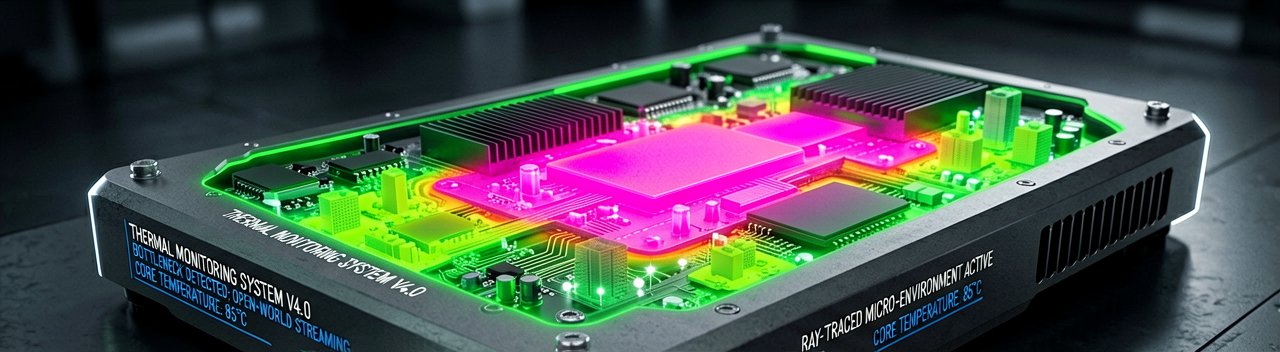
On the flip side, the champions of instanced rendering argue that massive worlds often feel hollow and technically compromised. By pulling the camera in close and locking the player in meticulously crafted corridors, these developers can turn a simple brick wall or a puddle of water into a jaw-dropping technical showcase. The trade-off is entirely psychological, trading the macro-level freedom of choice for micro-level sensory overload that makes every single frame look like a pre-rendered Hollywood marketing asset.
As we move deeper into the current console cycle, the line between these two philosophies is beginning to blur, but the operational realities remain starkly different. Studios that lack the budget for massive asset-streaming optimization are finding refuge in the cinematic predictability of tight, instanced design pipelines. Meanwhile, first-party juggernauts with deep pockets continue to throw immense computing power at the streaming bottleneck, betting that sheer scale will always trump individual ray-traced reflections in the hearts of the broader gaming public.
"We have officially reached the point in console development where a game can either show you an entire planet rendered in real-time or a single, flawless, ray-traced toaster—but asking for both in the same launch window remains a swift recipe for a melted motherboard."
Artūras Malašauskas is an AI Systems Integrator with 20+ years of production-grade web engineering experience. He has designed, shipped, and scaled enterprise Python/PHP systems for logistics, SaaS, and public-sector clients. For the past year, he has focused exclusively on AI integrations: deploying open-source LLMs, building generative media pipelines (image, audio, video), and engineering multi-agent workflows for real production environments. His standard: reproducibility, security, cost-efficient inference—no vaporware. He documents and evaluates emerging AI tooling, separating verified capabilities from marketing noise. Technical editor at: muza-ai.eu, ai-verslas.lt, ai-naujinos.lt Connect on LinkedIn
Comments