Mind-Reading Tech and Brain Implants: The Ethical and Economic Shifts Reshaping Healthcare and Privacy
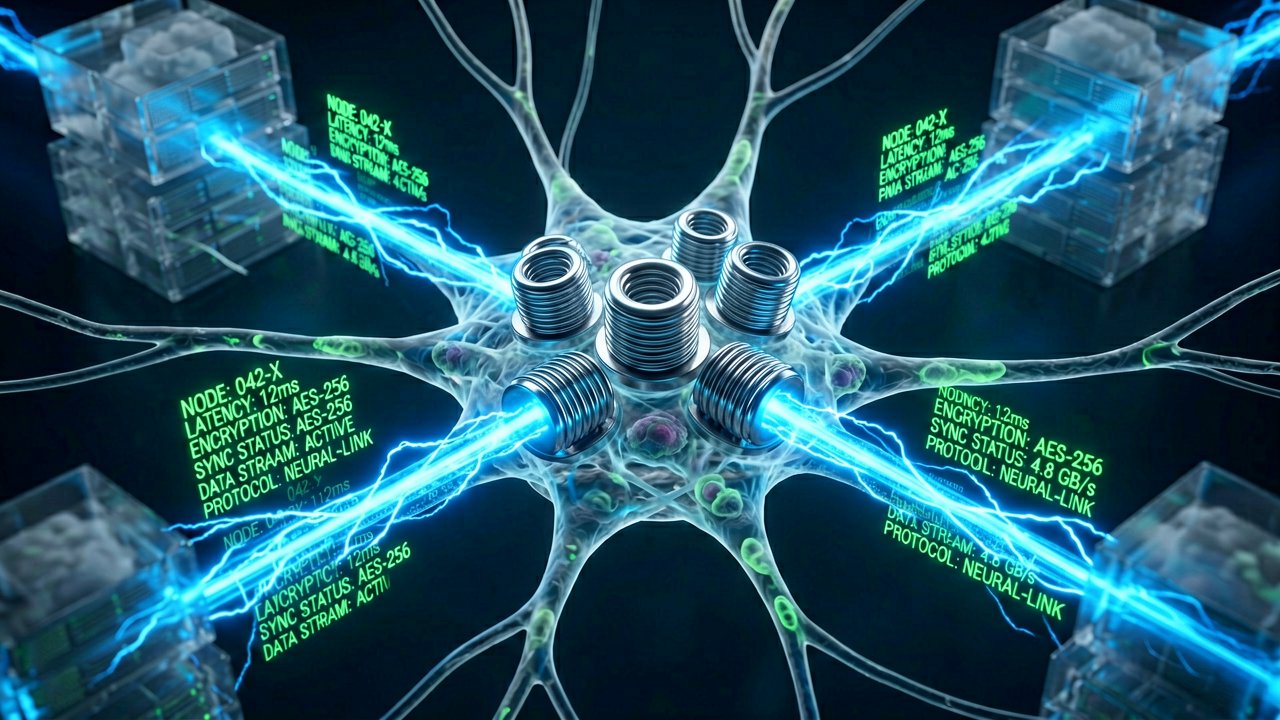
The global brain-computer interface market is undergoing a massive economic surge. Experts project the industry will reach $12.11 billion by 2035, up from $2.41 billion, according to market data from Roots Analysis. This commercial boom is driven by rapid integration with artificial intelligence and massive capital investments from both tech firms and government entities. As neural engineering moves from laboratory trials into commercial sectors, it is triggering structural shifts in medical manufacturing and consumer technology ecosystems.
In healthcare, neurotechnology is transitioning from simple assistive control to complex cognitive and physical restoration. Companies like Neuralink are utilizing advanced robotic systems to implant high-density electrode threads safely into the brain. These devices allow paralyzed individuals to operate computers and robotic limbs using thought alone. At the same time, clinical initiatives like the BrainGate trial are pivoting from basic "point-and-click" cursor control to sophisticated thought-to-speech decoding, as reported by the MIT Technology Review . This allows patients with neurodegenerative diseases to speak through personalized voice clones.
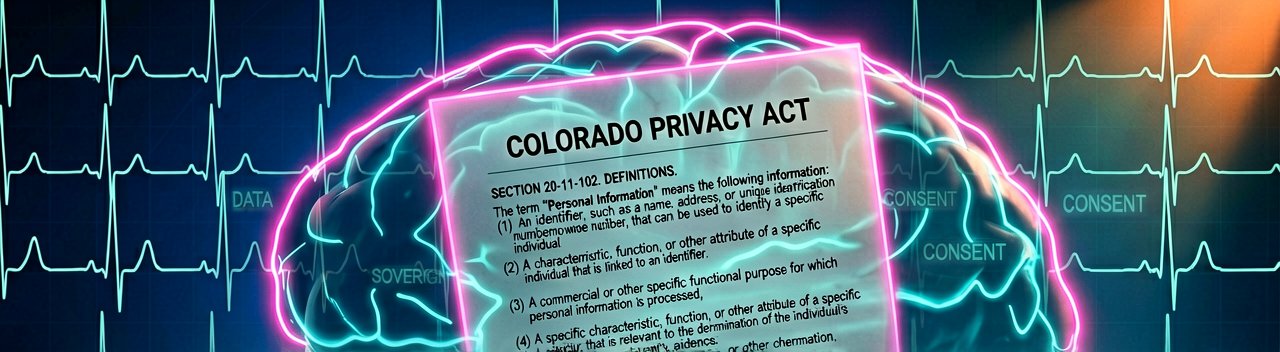
However, the capacity to read and decode neural activity has sparked a severe regulatory backlash regarding mental privacy. Consumer neurotechnology devices often harvest raw brainwave data without strict boundaries on how that information is used or shared. According to research cited by Arnold & Porter, an evaluation by the Neurorights Foundation revealed that nearly all commercial neurotech firms maintain backend access to user brain data. This lack of restriction has pushed governments to act. States like Colorado have updated their privacy statutes to classify human neural data as protected biological information, creating the first legal safeguards for cognitive liberty.
The Medical Monopoly and Commercial Applications
The medical sector remains the dominant economic force in neurotechnology, securing over half of the entire market share. Hospitals and specialized rehabilitation clinics are adopting these systems to manage epilepsy, Parkinson's disease, and spinal cord injuries. Outside of sterile clinical settings, non-invasive systems like electroencephalography headsets are expanding into gaming and corporate wellness. Advanced artificial intelligence models are accelerating this consumer expansion. By feeding neural data directly into large language models, tech firms have significantly boosted thought-to-text accuracy, turning consumer brain-computer interfaces into viable productivity tools.
Surveillance and the Battle for Neurorights
The commercialization of mind-reading systems introduces severe surveillance risks from both corporate entities and state actors. Because advanced sensors can capture subconscious emotional states, the technology opens the door to invasive biometric profiling and data exploitation. Advocacy groups are warning that without strict global guidelines, neural data could be sold to advertisers or misused by law enforcement during interrogations. This threat has birthed the human-rights concept of "neurorights." International legal scholars are actively lobbying for constitutional protections to guarantee that a person's inner thoughts cannot be tracked, mapped, or altered without explicit judicial consent.
Uncharted Terrains in Cognitive Liberty
Beyond the Headlines: The race for neural supremacy is quietly shifting from hardware innovation to a battle over raw data ownership. Early neural implants relied on hardwired setups and simple analog signals. Today, modern brain-computer interfaces act as bilateral data pipelines. They continuously stream high-bandwidth neurological signals to cloud servers. Tech firms train proprietary algorithms on this data. This allows them to monetize the literal pathways of human thought. This shift turns the human brain into the ultimate frontier for big data. It creates an economic loop where user thoughts actively train the systems that decode them.
This dynamic has created a deep divide among major stakeholders. Early-stage patients and disability advocates view these devices as a vital lifeline. They are willing to accept the privacy risks in exchange for physical autonomy. However, digital rights groups warn of a dangerous precedent. They note that unlike a compromised password, a compromised neural profile cannot be reset or changed. If a firm goes bankrupt, its data assets—including the recorded cognitive signatures of its users—can be sold off to unknown buyers. This reality leaves early adopters vulnerable to corporate liquidation loops.
The history of consumer technology shows that regulatory bodies usually react too late to new tech trends. Security researchers have already shown that non-invasive neural headsets can be tricked. They can leak sensitive personal info, like PIN numbers or political views, through a process called brain-spyware engineering. By flashing specific images on a screen and measuring the user's involuntary brain responses, external software can map a user's subconscious preferences. This occurs without the user ever giving conscious consent.
Geopolitical competition is further complicating the regulatory landscape. Defense agencies worldwide are pouring hundreds of millions of dollars into non-invasive neural interfaces. Their goal is to streamline military logistics and drone swarm operations. This military funding accelerates tech development, but it also blurs the line between medical care and defense tech. It complicates international efforts to build a unified legal framework for neural data protection. As a result, individual nations are left to patch together regional privacy laws, creating a fragmented landscape for global tech companies.
The ultimate challenge lies in the upcoming wave of cognitive enhancement devices. As tech firms move past medical repair, they will market interfaces to the general public as productivity tools. This transition will force society to confront deep ethical dilemmas. It will challenge the very core of labor equity and cognitive freedom. When neural connectivity becomes a job requirement for high-speed data processing, the choice to remain disconnected disappears. This leaves the modern worker to navigate an economy where keeping your thoughts private carries a heavy professional cost.
The Illusion of Cognitive Sovereignty
Reading Between the Lines: The prevailing narrative surrounding brain-computer interfaces presumes that human consciousness will remain a private sanctuary, selectively opened via user consent. This assumption collapses when confronted with the realities of modern software monetization and terms-of-service agreements. Tech companies routinely lock basic device features behind data-sharing walls. There is little reason to believe neural implants will be any different. A user may technically own their brain, but they will likely sign away the rights to the neural telemetry it produces just to keep their cognitive software updated.
This creates a glaring contradiction within the medical tech industry. Silicon Valley frames mind-reading tech as the ultimate tool for human liberation and bodily autonomy. Yet, the business models funding these breakthroughs rely on total capitulation to corporate infrastructure. If a firm controls the digital translation layer of a person's thoughts, it holds absolute veto power over their expression. A patch update or a licensing dispute could suddenly render a patient's neural speech processor incompatible. This turns the most intimate human faculty—thought—into a subscription service subject to corporate planned obsolescence.
Furthermore, the push for regional "neurorights" laws creates a false sense of security. Passing state-level privacy updates treats neural data like a static biometric, similar to a fingerprint or an iris scan. However, brain waves are dynamic, continuous, and deeply interconnected with subconscious reactions. A fingerprint does not change when you look at an advertisement, but your neural signature does. Current legal frameworks are fundamentally unequipped to regulate technologies that record intent before it ever manifests as a conscious choice or physical action.
Projecting this trajectory forward reveals an even more complex labor crisis than simple automation. When neural enhancement moves from clinical trials to corporate boardrooms, the concept of a voluntary workforce changes. Employers will not need to mandate implants directly. They will simply reward the heightened processing speeds of enhanced workers. This leaves unaugmented individuals economically sidelined. This shift redefines systemic inequality, moving it from a disparity of wealth and education to a fundamental divide in biological processing power.
Ultimately, the utopian promise of direct mental connection overlooks the baseline messy reality of human biology. Tech firms design interfaces assuming the brain is a clean computer code waiting to be mapped. In truth, human thought is a chaotic mix of noise, trauma, memory, and biology. Attempting to clean this data for commercial algorithms will not lead to perfect communication. Instead, it will likely result in the flattening of human nuance, forcing the brain to adapt to the rigid, binary limits of the machine rather than the other way around.
"We spent centuries fighting for freedom of speech, only to willingly upload our inner monologues to a cloud server that will undoubtedly lock our own thoughts behind a two-factor authentication screen and a monthly premium tier."
Artūras Malašauskas is an AI Systems Integrator with 20+ years of production-grade web engineering experience. He has designed, shipped, and scaled enterprise Python/PHP systems for logistics, SaaS, and public-sector clients. For the past year, he has focused exclusively on AI integrations: deploying open-source LLMs, building generative media pipelines (image, audio, video), and engineering multi-agent workflows for real production environments. His standard: reproducibility, security, cost-efficient inference—no vaporware. He documents and evaluates emerging AI tooling, separating verified capabilities from marketing noise. Technical editor at: muza-ai.eu, ai-verslas.lt, ai-naujinos.lt Connect on LinkedIn
Comments