Faraday Future’s Robotics Expansion Signals Pivot Toward AI-Driven Industrial Automation
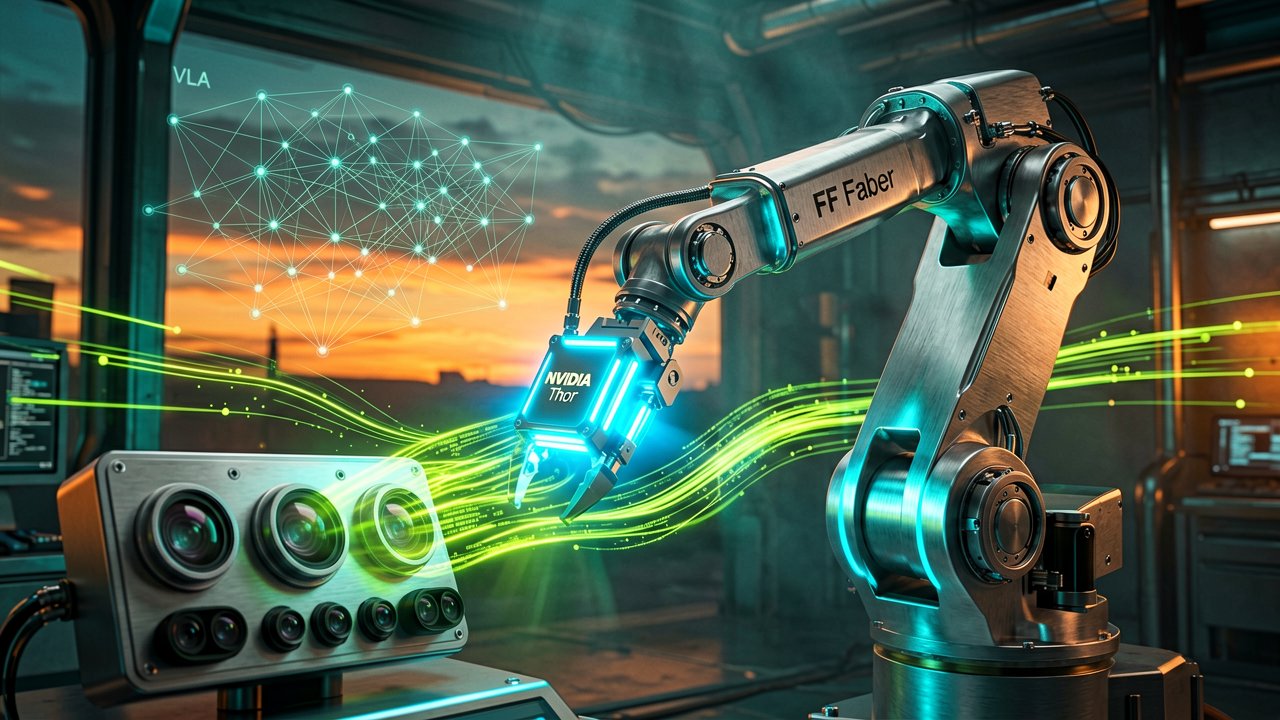
In a decisive move to diversify beyond electric vehicles, Faraday Future Intelligent Electric Inc. has completed the second-half rollout of its Embodied AI (EAI) portfolio at the Automate event in Chicago. The presentation, highlighted by the debut of the FF Faber industrial-grade mobile manipulator, brings the company's full six-series robotic lineup together under a unified architecture. By transitioning from initial niche deployments to an open, scalable commercial hardware ecosystem, the company is positioning itself to capture a significant share of the rapidly growing B2B physical AI market.
The industrial strategy revolves around a core "one brain, multiple forms" development philosophy, utilizing a Vision-Language-Action (VLA) foundation model to drive a broad range of hardware formats. This operational framework allows specialized units to share an identical cognitive layer while maintaining different mechanical profiles optimized for distinct tasks. Instead of focusing resources exclusively on a singular, generalized humanoid form factor, the broader infrastructure accommodates both autonomous mobile manipulators and traditional quadruped variants to meet varied enterprise requirements.
Financially, this pivot arrives as the company optimizes its capital allocation strategy, shifting near-term resources toward high-margin automation assets while deferring heavy capital expenditures associated with mass automotive manufacturing. Real-world commercial progress is accelerating, with internal projections expecting June deliveries to exceed 100 units, pushing the first-half total past the original 220-unit target. This initial operational traction highlights an enterprise-level transition away from standard hardware manufacturing and toward an integrated asset ecosystem capable of yielding long-term software licensing revenues.
The Architecture of the FF Faber Series
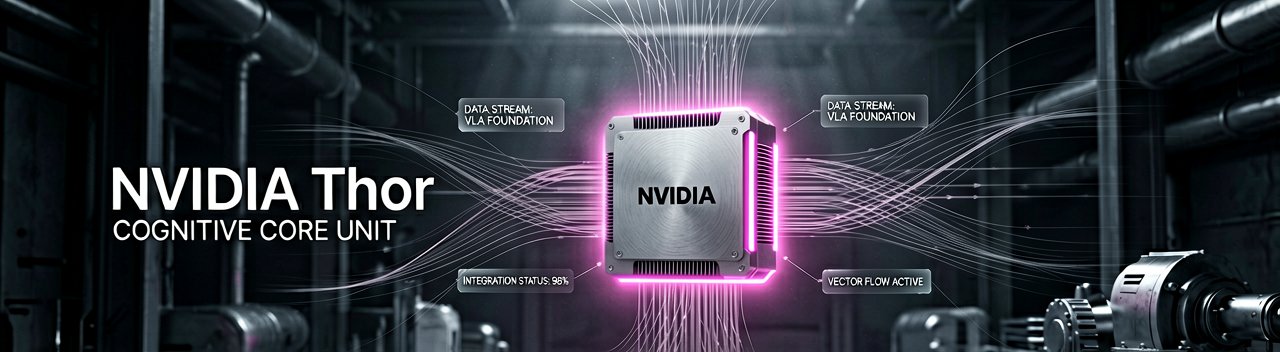
The newly unveiled industrial series comprises three specialized variations engineered specifically for factory floors, warehousing, and logistics fulfillment infrastructure. The premium sub-model leverages high-performance NVIDIA Thor AI compute modules alongside a comprehensive multi-sensor fusion package to enable autonomous navigation in highly dynamic environments. Additional models in the ecosystem feature expanded structural arm dimensions to facilitate large-scale automated data collection or targeted hardware configurations optimized specifically for electrical power facility inspection and data center upkeep.
Ecosystem Monetization and the Shared Economy Model
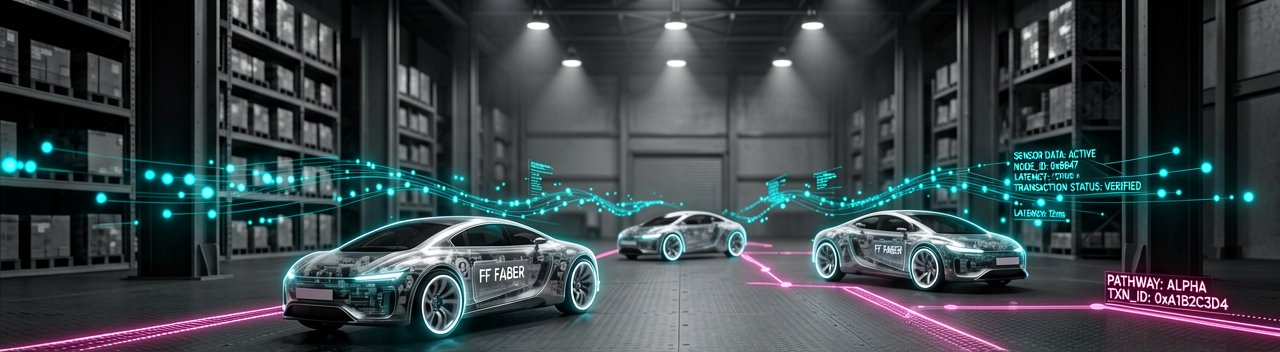
To scale deployment across capital-constrained corporate environments, the company has partnered with external networks to establish a unique Web3-enabled machine-sharing platform. This configuration introduces an asset rental marketplace designed to transition expensive robotic hardware from a traditional upfront capital expense into a recurring operational service model. By facilitating secondary life cycles for active hardware, enterprise clients can access specialized mechanical labor on demand while the manufacturer establishes a predictable baseline of transactional service fees.
Strategic Outlook and Industrial Implications
According to official declarations available on the Faraday Future Investor Relations portal, completing this multi-form product landscape allows the business to scale its proprietary software layer across highly diverse B2B operational environments. Technical reporting provided by Dealroom indicates that the integration of localized motion control technologies allows the systems to achieve roughly six hours of continuous field operations. These detailed developments demonstrate that the enterprise's long-term corporate viability is increasingly tied to standard industrial automation frameworks rather than traditional consumer mobility solutions.
An Analytical Deep Dive into Faraday Future's Automation Transition
Beneath the Corporate Pivot: The decision to rechannel engineering capital from a highly visible, premium electric vehicle platform into the rigid, low-margin domain of factory floor automation marks a calculated gamble to sustain liquidity. Over the last several years, the automotive startup landscape has been heavily battered by capital constraints and manufacturing bottlenecks, forcing a fundamental rethink of what constitutes a modern tech enterprise. By unbundling the artificial intelligence and sensory architectures developed for the FF 91 vehicle series and repackaging them into industrial mobile manipulators, the company is attempting to monetize its existing intellectual property portfolio without the crushing overhead of heavy automotive assembly lines.
This architectural reallocation highlights a broader macroeconomic trend where the boundaries between advanced telemetry for autonomous driving and the spatial awareness needed for industrial fulfillment are rapidly dissolving. Veteran manufacturing analysts note that traditional industrial robots have historically operated in highly structured environments, caged off from human workers and dependent on static pre-programmed routines. The introducing of the FF Faber series, backed by localized compute blocks and continuous multi-sensor fusion, represents an aggressive push toward dynamic, unconstrained environments where machines must safely cohabitate with human staff and shifting warehouse layouts.
From a stakeholder perspective, the transition introduces a distinct set of operational challenges, particularly in convincing conservative supply chain managers to trust a relative newcomer over legacy automation giants. Established factory floors are traditionally dominated by long-standing industrial players who command deep integration partnerships and decades of hardware reliability data. To gain a foothold, the strategic alliance with Web3 asset-sharing frameworks serves as an inventive, if unproven, counter-strategy aimed at mitigating the steep capital expenditure typically required for hardware procurement, effectively shifting the customer acquisition friction from a technology hurdle to a flexible operational expense conversation.
Long-term viability will ultimately hinge on the execution of the shared cognitive layer and the actual performance of the Vision-Language-Action foundation models under sustained, multi-shift industrial workloads. While field tests and initial delivery projections inject a degree of optimism into investor communications, the true test remains the cost-efficiency of maintaining advanced computing rigs in dusty, vibration-heavy factory environments. If the hardware can achieve the promised uptime benchmarks while driving down secondary maintenance costs, this operational pivot could serve as a survival blueprint for capital-strained mobility companies looking to pivot toward the enterprise automation sector.
Skepticism and Strategic Realities in the EAI Pivot
Reading Between the Lines: The transition from high-luxury passenger vehicles to factory-floor robotics is frequently framed as a natural evolution of proprietary artificial intelligence, but it more accurately resembles an act of survival. Developing a functioning Vision-Language-Action foundation model for industrial manipulation requires vastly different training datasets than those harvested from highway driving. While a vehicle must process high-speed spatial environments, a mobile manipulator must master precise spatial mechanics, tactile feedback, and complex object interactions. Replicating the reliability of legacy industrial automation firms requires years of edge-case refinement that a newly pivoted automotive startup may not have the financial runway to complete.
Furthermore, the reliance on a Web3-enabled machine-sharing platform to drive commercial adoption introduces distinct operational contradictions. While an asset rental marketplace lowers the initial financial barrier for capital-constrained clients, it simultaneously transfers the financial burden of hardware depreciation and idle inventory back onto the manufacturer and its network partners. Traditional industrial enterprises prioritize predictable uptime and ironclad service-level agreements over the novelty of decentralized rental models. Convincing factory managers to rely on a shared-economy framework for mission-critical logistics operations remains a remarkably steep uphill climb.
The projected delivery milestones also demand measured scrutiny from market observers accustomed to the historical volatility of the EV sector. Scaling the assembly of complex, multi-sensor mobile manipulators involves navigating the same fractured global supply chains that disrupted the company's automotive ambitions. Achieving initial double-digit or triple-digit unit deployments is a positive operational signal, but true industrial viability is defined by thousands of units operating flawlessly across multiple shifts. Without a massive, sustained influx of enterprise orders, the high overhead of maintaining cutting-edge NVIDIA Thor compute infrastructure could outpace the near-term software licensing revenues generated by these early deployments.
"Repurposing the brains of an unbuilt luxury electric vehicle to power a warehouse forklift is certainly one way to solve the automotive supply chain crisis. If nothing else, it proves that in the age of artificial intelligence, if you cannot deliver the car of the future, you can at least build the robot that cleans up the factory floor."
Artūras Malašauskas is an AI Systems Integrator with 20+ years of production-grade web engineering experience. He has designed, shipped, and scaled enterprise Python/PHP systems for logistics, SaaS, and public-sector clients. For the past year, he has focused exclusively on AI integrations: deploying open-source LLMs, building generative media pipelines (image, audio, video), and engineering multi-agent workflows for real production environments. His standard: reproducibility, security, cost-efficient inference—no vaporware. He documents and evaluates emerging AI tooling, separating verified capabilities from marketing noise. Technical editor at: muza-ai.eu, ai-verslas.lt, ai-naujinos.lt Connect on LinkedIn
Comments