NVIDIA Halos: The Infrastructure Play Setting a New Standard for Physical AI Safety
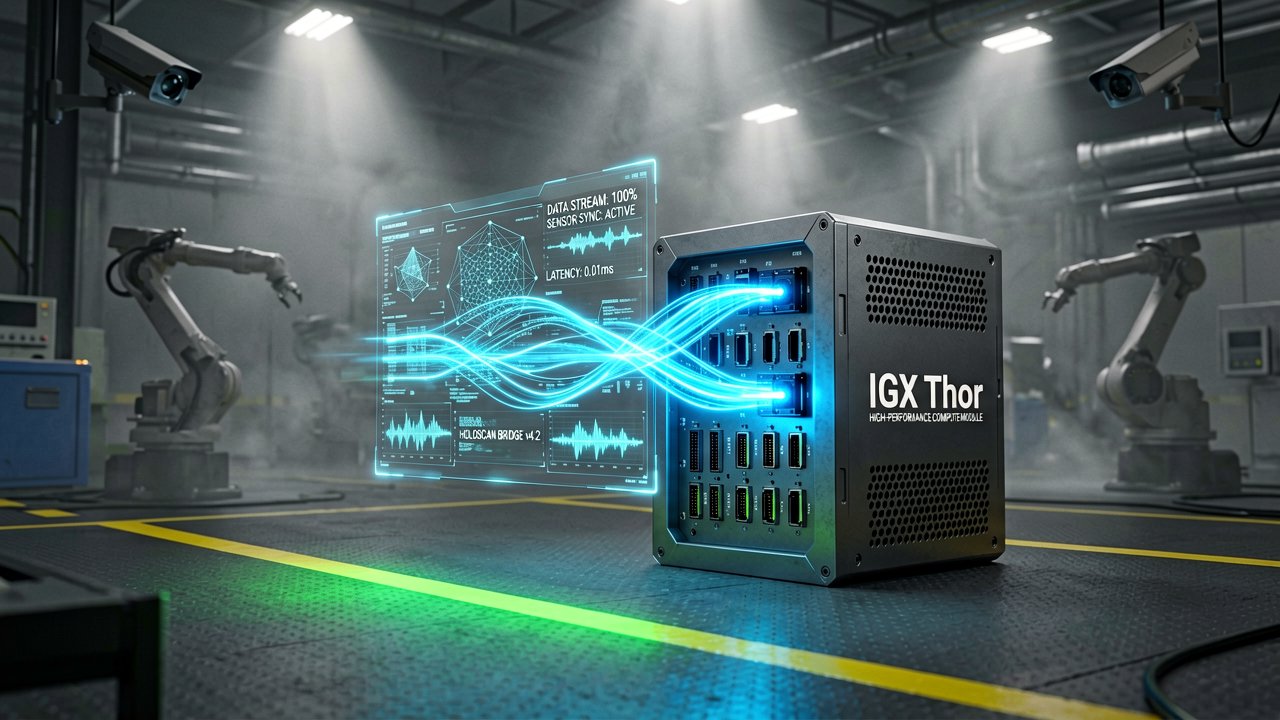
The commercialization of physical AI has reached an inflection point where intelligence is no longer the sole bottleneck; rather, the industry’s primary constraint has shifted to safe, real-world deployment. To bridge this critical gap, NVIDIA Press Release announced the launch of NVIDIA Halos for Robotics. This represents the industry’s first comprehensive, full-stack safety system engineered explicitly for autonomous machines. Leveraging over 18,600 engineering years of rigorous autonomous vehicle safety development, NVIDIA is systematically exporting its proven automotive architectures into the rapidly growing humanoid and industrial automation markets.
By providing a unified safety stack that spans industrial-grade hardware, real-time operating environments, and dynamic situational awareness, the semiconductor giant aims to solve the fragmented compliance issues currently stalling fleet scaling. This strategy positions NVIDIA as the foundational infrastructure layer of physical AI, reminiscent of its historical play in the generative AI software space. Humanoid robotics innovator Agility Robotics has signed on as the foundational pioneer, committing to integrate Halos into its Digit humanoid systems deployed across blue-chip logistics and manufacturing environments.
Defragmenting the Physical AI Safety Architecture
Historically, robotic safety has relied on siloed, reactive approaches. Mobile robots and humanoids frequently operate under artificially constrained velocities or within hard-fenced zones to minimize human risk, severely limiting industrial throughput. The Halos architecture fundamentally disrupts this paradigm by unifying computational power and functional safety into three standardized layers.
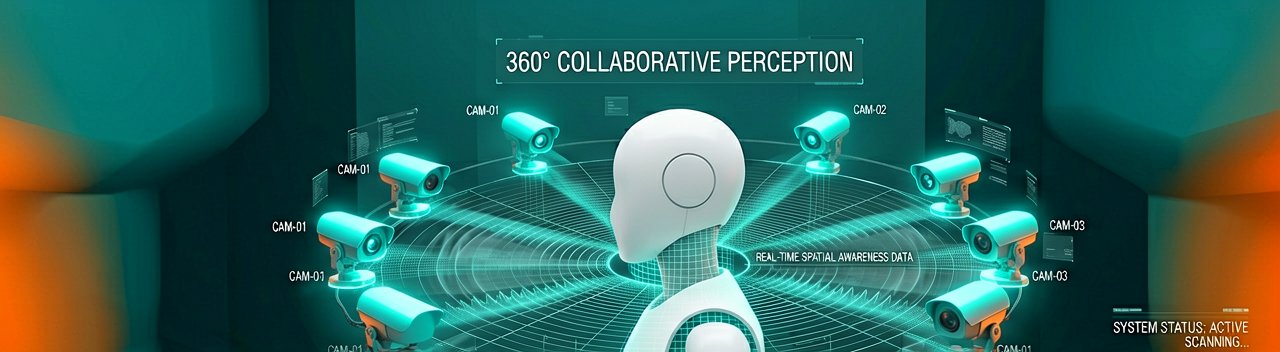
At the silicon and infrastructure layer, NVIDIA pairs its IGX Thor industrial-grade AI computer with the Holoscan Sensor Bridge to deliver real-time, deterministic sensor processing. Moving up the stack, Halos OS and Halos Core provide the foundational software runtime necessary for safety-critical operations. Finally, the system introduces the NVIDIA Technical Blog Outside-In Safety Blueprint, an open-source framework available on GitHub. This framework utilizes off-chassis infrastructure cameras and external AI agents to eliminate vehicular blind spots, allowing machines to dynamically modulate their behavior based on a holistic 360-degree view of the workspace.
Market Impact and the Path to Regulatory Compliance
The broader macroeconomic implications of Halos lie in its ability to de-risk the deployment phase for enterprise customers. As highlighted by market analysts, regulatory frameworks like the upcoming European Union Machinery Regulation of 2027 are introducing strict compliance mandates for machinery exhibiting "self-evolving" or AI-driven behaviors, according to analysis from SiliconANGLE . Without a standardized compliance mechanism, robotics manufacturers face protracted validation timelines that delay time-to-market.
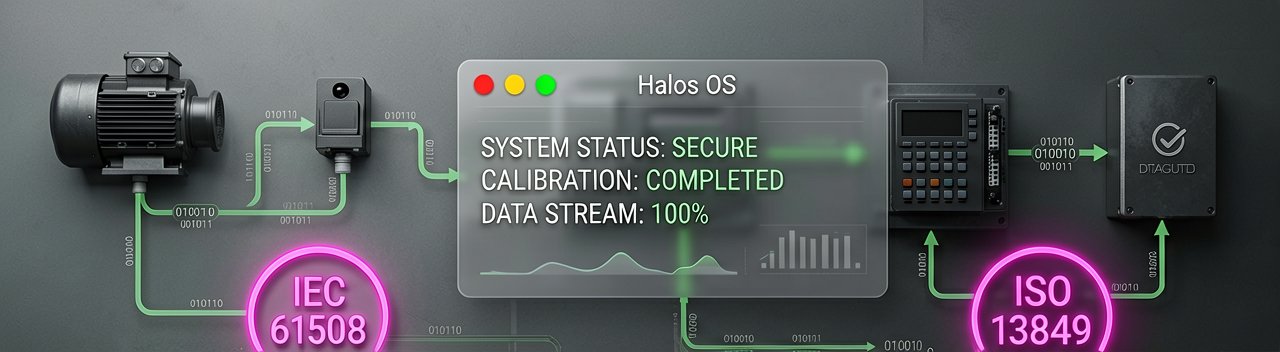
NVIDIA has directly addressed this operational hurdle by launching the NVIDIA Halos AI Systems Inspection Lab, the world's first program accredited by the ANSI National Accreditation Board (ANAB) specifically for physical AI functional safety. This lab allows partners to pre-validate their software, AI subcomponents, and cybersecurity frameworks against international standards like IEC 61508 and ISO 13849. Major third-party assessment organizations—including TÜV Rheinland, UL Solutions, and TÜV SÜD—have already formally integrated this lab into their official certification workflows. This ecosystem-wide alignment drastically compresses the certification loop for hardware developers.
Agility Robotics and Commercial Validation
Agility Robotics’ rapid adoption of Halos Core and IGX Thor for its Digit humanoid robot serves as a powerful market validation. Digit is already undergoing active operational testing at major global enterprises, including Amazon, GXO Logistics, Schaeffler, and Toyota Motor Manufacturing Canada, as detailed by AI Weekly. By embedding Halos directly into Digit’s proprietary human-detection software, Agility can transition its systems from isolated proof-of-concepts into fluid, mixed-workplace realities.
This initial deployment highlights a definitive industry shift away from ad-hoc, proprietary safety mechanisms toward standardized, horizontal platforms. By convincing more than 40 foundational partners—ranging from silicon vendors like NXP and STMicroelectronics to software developers like QNX—to rally around the Halos framework, NVIDIA is successfully establishing a safety ecosystem that could dictate the operational parameters of industrial automation for the next decade.
The Hidden Architecture of Decentralized Risk Mitigation
What Most Reports Miss: The launch of NVIDIA Halos represents a profound philosophical shift in how the robotics industry approaches danger. For decades, robotic safety was defined by physical isolation, using metal cages and light curtains to separate unpredictable machines from humans. As robots shifted from fixed assembly lines to autonomous mobile platforms, safety transitioned to on-board sensors like LiDAR and bumpers. However, this localized approach suffers from a fundamental flaw: line-of-sight limitations. By introducing the Outside-In Safety Blueprint, NVIDIA is shifting the safety burden away from the robot alone, transforming the surrounding factory floor into an intelligent, cooperative ecosystem that acts as a decentralized nervous system.
This structural change addresses a critical friction point for facility managers trying to scale automation. In a typical logistics hub or automotive plant, an autonomous humanoid robot might encounter an obstructed corner, forcing its onboard sensors to halt movement out of caution. This creates micro-delays that degrade warehouse throughput. By utilizing fixed overhead infrastructure cameras processed via the Holoscan Sensor Bridge, the environment itself feeds predictive tracking data to the robot before it even rounds a corner. This collaborative perception allows machines to maintain optimal velocities safely, directly solving the trade-off between strict safety compliance and operational efficiency.
From an enterprise software perspective, the integration of Halos OS and Halos Core provides a standardized abstraction layer that the robotics sector has desperately lacked. Historically, every major robotics manufacturer built their safety runtimes from scratch, relying on highly customized real-time operating systems that were difficult to update without invalidating regulatory certifications. NVIDIA’s move to establish an open-source framework on GitHub, backed by silicon heavyweights like NXP and STMicroelectronics, mimics the strategy that made CUDA the undisputed standard for AI development. By standardizing the lower-level functional safety stack, NVIDIA frees developers to focus entirely on higher-level operational behaviors and manipulation tasks.
This ecosystem play is precisely why early adopters like Agility Robotics are prioritizing immediate integration. For humanoids to be commercially viable, they must seamlessly integrate into brownfield facilities alongside human workers without requiring multi-million dollar structural retrofits. For partners deploying Digit in facilities owned by GXO Logistics or Amazon, the ability to rely on pre-validated safety models backed by accredited bodies like TÜV Rheinland significantly lowers insurance premiums and legal liabilities. By controlling the hardware validation, the software runtime, and the third-party certification pipeline, NVIDIA is effectively building a regulatory moat that makes it incredibly difficult for competing silicon architectures to displace them in industrial environments.
The Technical and Legal Realities Behind Universal Automation Standards
Reading Between the Lines: The promise of a plug-and-play universal safety framework for physical AI glosses over the fragmented, highly proprietary reality of modern manufacturing. While NVIDIA frames Halos as a democratizing force for robotics deployment, it simultaneously positions itself as an inescapable gatekeeper. Entrusting both the runtime safety stack and the pre-validation testing pipeline to a single silicon monolith introduces a dangerous concentration of architectural risk. If an inherent vulnerability or deterministic flaw is discovered deep within the IGX Thor or Halos Core architecture years from now, the blast radius will encompass not just a single product line, but an entire global fleet of diverse robotic brands.
Furthermore, the assumption that external infrastructure cameras can seamlessly solve the line-of-sight dilemma overlooks the messy realities of brownfield logistics facilities. Industrial environments are chaotic, dynamic spaces defined by dust, fluctuating lighting conditions, changing layouts, and wireless interference. Relying on an "outside-in" sensor network introduces a critical reliance on ultra-low-latency, high-reliability edge networking. A temporary network drop or localized packet loss could instantly blind a humanoid robot to surrounding hazards, triggering defensive, hard-stop protocols that paralyze warehouse operations. Until industrial 5G or localized edge networks reach absolute deterministic reliability, this externalized perception layer remains a theoretical ideal rather than a robust frontline defense.
There is also a palpable tension between standardizing functional safety and maintaining competitive differentiation. For pioneering humanoid developers like Agility Robotics, safety architecture has historically been a core piece of proprietary intellectual property. By offloading these safety-critical loops to NVIDIA’s horizontal platform, hardware manufacturers risk commoditizing their own products, effectively reducing themselves to mere mechanical shell-builders while NVIDIA captures the high-margin software value. As regulatory deadlines like the EU Machinery Regulation of 2027 draw closer, enterprise buyers will inevitably demand the certifiability that Halos offers, forcing the rest of the robotics industry into a pragmatic capitulation where compliance takes precedence over architectural independence.
The robotics industry has spent decades trying to build autonomous machines clever enough to navigate our unpredictable world, only to realize it is much easier to just rewire the entire world to look after the machine.
Artūras Malašauskas is an AI Systems Integrator with 20+ years of production-grade web engineering experience. He has designed, shipped, and scaled enterprise Python/PHP systems for logistics, SaaS, and public-sector clients. For the past year, he has focused exclusively on AI integrations: deploying open-source LLMs, building generative media pipelines (image, audio, video), and engineering multi-agent workflows for real production environments. His standard: reproducibility, security, cost-efficient inference—no vaporware. He documents and evaluates emerging AI tooling, separating verified capabilities from marketing noise. Technical editor at: muza-ai.eu, ai-verslas.lt, ai-naujinos.lt Connect on LinkedIn
Comments