The Machines Are Getting Their Own Wallets: Inside OKX’s New On-Chain OS Expansion
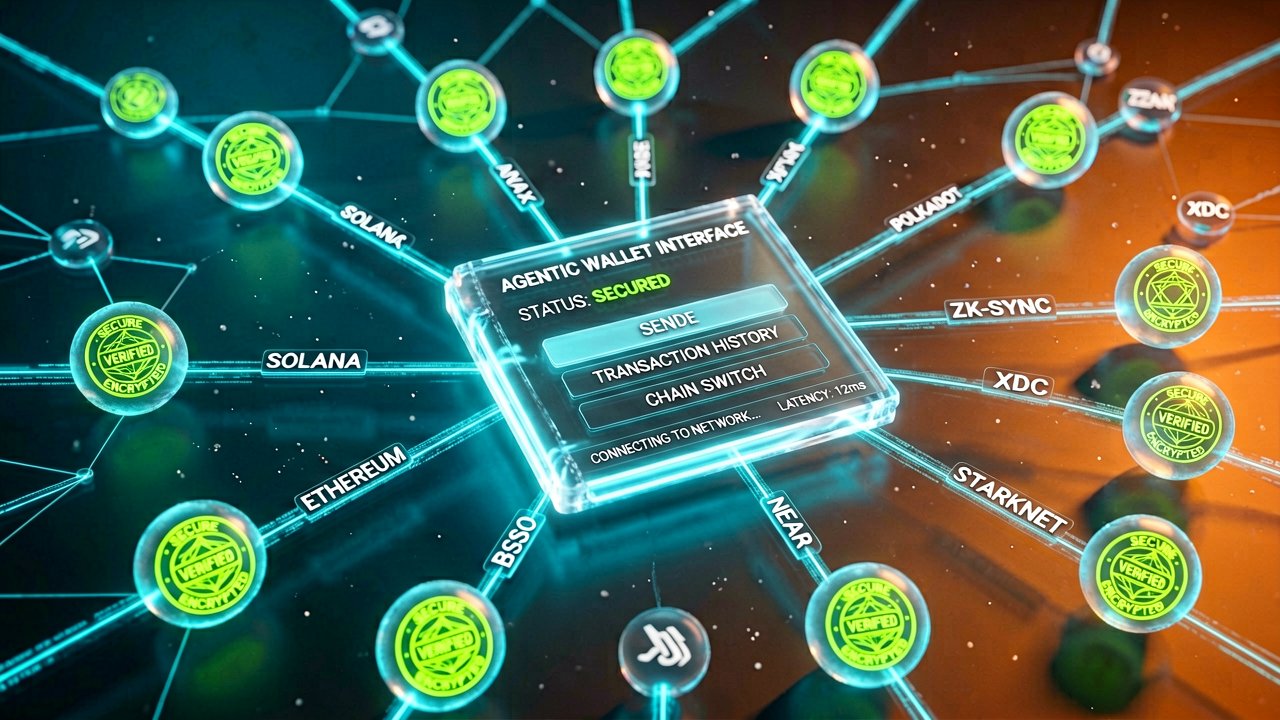
For years, crypto wallets have been designed around human limitations, patiently waiting for a manual click, a biometric scan, or a seed phrase verification. But the landscape shifted when Web3 heavyweight OKX officially rolled out its new Agentic Wallet, a self-custodial infrastructure built specifically for AI agents rather than people. This move strips away the traditional human approval loops, allowing intelligent software to independently hold assets, reason through market conditions, and deploy capital across decentralized networks.
By integrating this system directly into its broader Onchain OS toolkit, the exchange has essentially given AI models a native financial passport. Instead of leaning on clunky API workarounds or restricted fiat rails, developers can now connect their autonomous agents via standard interfaces like the Model Context Protocol (MCP) or a Command Line Interface (CLI). From there, a user can simply issue instructions in plain English, leaving the machine to execute complex, multi-step actions across roughly 20 different blockchains.
Balancing Autonomy with Ironclad Security
Handing over financial control to lines of code naturally triggers security anxieties, but the engineering under the hood aims to mitigate those risks. The architecture separates the "thinking" process of the AI from the actual cryptographic signing process, utilizing Trusted Execution Environments to ensure private keys remain isolated and secure. Furthermore, every autonomous transaction undergoes simulation and pre-flight compliance checks against strict user-defined budgets and rulebooks before hitting the blockchain, proving that delegating execution doesn't have to mean relinquishing ultimate oversight.
What Most Reports Miss: The race to build agentic infrastructure isn't just about giving AI models a convenient way to buy digital collectibles or pay for compute cycles. It represents a fundamental pivot from user-centric Web3 design to an economy where machines, not humans, dominate network traffic. Crypto networks have long suffered from UX fragmentation, requiring users to bridge tokens, calculate gas fees, and decode smart contract data. By standardizing an environment where an AI agent can comfortably digest these technical hurdles on behalf of an enterprise or individual, the underlying blockchain fades into the background, operating purely as an automated backend ledger.
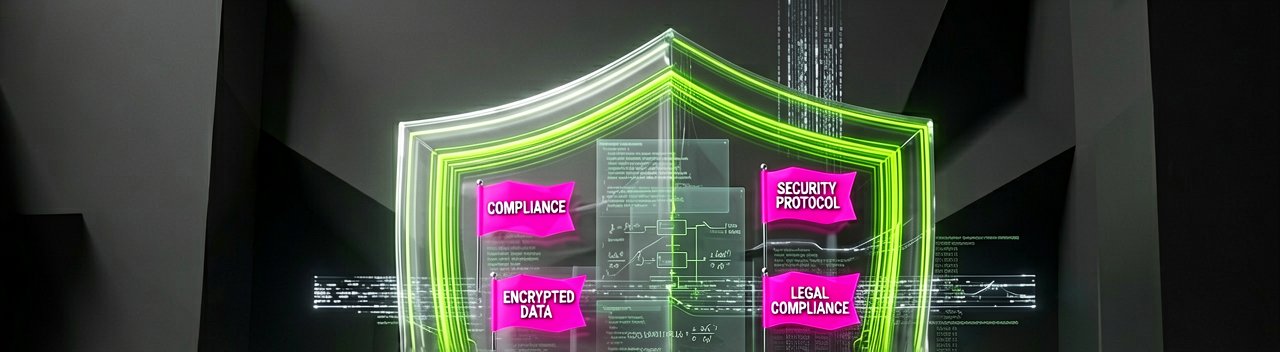
Industry insiders see this shift as an inevitable convergence of two technologies that were practically built for each other. Large language models excel at reasoning and executing sequential instructions, but they traditionally struggle with legacy banking APIs, which require corporate identities, physical signatures, and strict jurisdictional compliance. Self-custodial smart wallets offer a frictionless alternative, enabling an agent running on a server in one part of the world to transact instantly with a contract deployed in another. By eliminating credit card processing delays and chargeback risks, the infrastructure lowers the barrier to entry for micro-transactions down to fractions of a cent.
The Realities of the Sandbox Model
Despite the grand vision of unfettered machine commerce, early enterprise adoption is taking a decidedly measured approach through localized sandboxes. Developers are utilizing strict authorization frameworks to constrain autonomous behaviors, ensuring agents operate within rigidly defined guardrails rather than roaming the decentralized finance ecosystem unchecked. A typical deployment involves binding an agent to specific decentralized protocols or white-listed smart contracts, alongside hard caps on transaction volume and maximum allowable slippage. This allows companies to harness the efficiency of automated yield optimization or programmatic supply chain settlements without exposing themselves to catastrophic smart-contract bugs or runaway algorithmic trading loops.
The long-term success of this paradigm hinges heavily on the broader developer ecosystem adopting unified messaging standards. Historically, cross-chain communication has been plagued by fragmentation, with disparate ecosystems operating like isolated islands. By leveraging open protocols to standardize how these agents interact with decentralized applications, the tech industry is attempting to prevent the emergence of walled gardens. If successful, this cooperative blueprint will allow an agent built on one framework to seamlessly query data, execute trades, and manage liquidity across entirely different blockchain ecosystems, cementing a truly unified, machine-to-machine financial layer.
Reading Between the Lines: The grand promise of machine-to-machine commerce assumes that AI agents will naturally be rational, hyper-efficient economic actors capable of navigating a notoriously volatile crypto landscape better than human traders. Yet, this narrative glosses over a glaring paradox. AI models are notoriously prone to hallucinations, unexpected edge-case failures, and prompt-injection vulnerabilities. Planting these probabilistic engines directly onto immutable blockchains means that a single algorithmic misfire or manipulated data feed can lead to irreversible financial drain before a human administrator can even open a dashboard to intervene.

Furthermore, the reliance on Trusted Execution Environments (TEEs) to protect private keys presents its own set of structural ironies. Web3 has long championed absolute decentralization, yet securing autonomous agents forces developers to rely heavily on specialized hardware enclaves manufactured by a handful of centralized Silicon Valley tech giants. If a critical vulnerability is discovered in the underlying chip architecture, the entire security apparatus safeguarding these independent machine wallets could collapse overnight. This dynamic effectively shifts the trust assumption away from decentralized consensus and places it squarely back into the hands of traditional hardware monopolies.
The Compliance Bottleneck
Beyond the immediate engineering hurdles looms an even larger regulatory wall that no amount of code can easily bypass. Global financial regulators have spent years forcing crypto exchanges and decentralized protocols to implement strict identity verification rules to combat illicit capital flows. An autonomous AI agent possesses no legal identity, no physical jurisdiction, and no traditional tax footprint. Labeling these wallets as self-custodial pushes them into a regulatory gray area, as compliance frameworks are entirely unequipped to handle a piece of software acting as its own beneficial owner.
If these autonomous wallets gain significant traction, regulatory bodies will likely pressure infrastructure providers to enforce mandatory identity tracking at the gateway level. This would force developers to tie every AI agent back to a legally accountable human or corporate sponsor, effectively deflating the dream of pure, borderless machine autonomy. Ultimately, the future of the agentic Web3 economy will not be decided by how fast an AI can sign a transaction, but by how comfortably it can operate within the rigid confines of international financial law.
Giving a machine its own credit card sounds like the ultimate tech milestone, until you realize we have essentially invented a high-frequency trading bot that can argue back in fluent English while accidentally liquidating the corporate treasury.
Artūras Malašauskas is an AI Systems Integrator with 20+ years of production-grade web engineering experience. He has designed, shipped, and scaled enterprise Python/PHP systems for logistics, SaaS, and public-sector clients. For the past year, he has focused exclusively on AI integrations: deploying open-source LLMs, building generative media pipelines (image, audio, video), and engineering multi-agent workflows for real production environments. His standard: reproducibility, security, cost-efficient inference—no vaporware. He documents and evaluates emerging AI tooling, separating verified capabilities from marketing noise. Technical editor at: muza-ai.eu, ai-verslas.lt, ai-naujinos.lt Connect on LinkedIn
Comments