Virtana Reimagines Enterprise Reliability With Agentic SLA Management
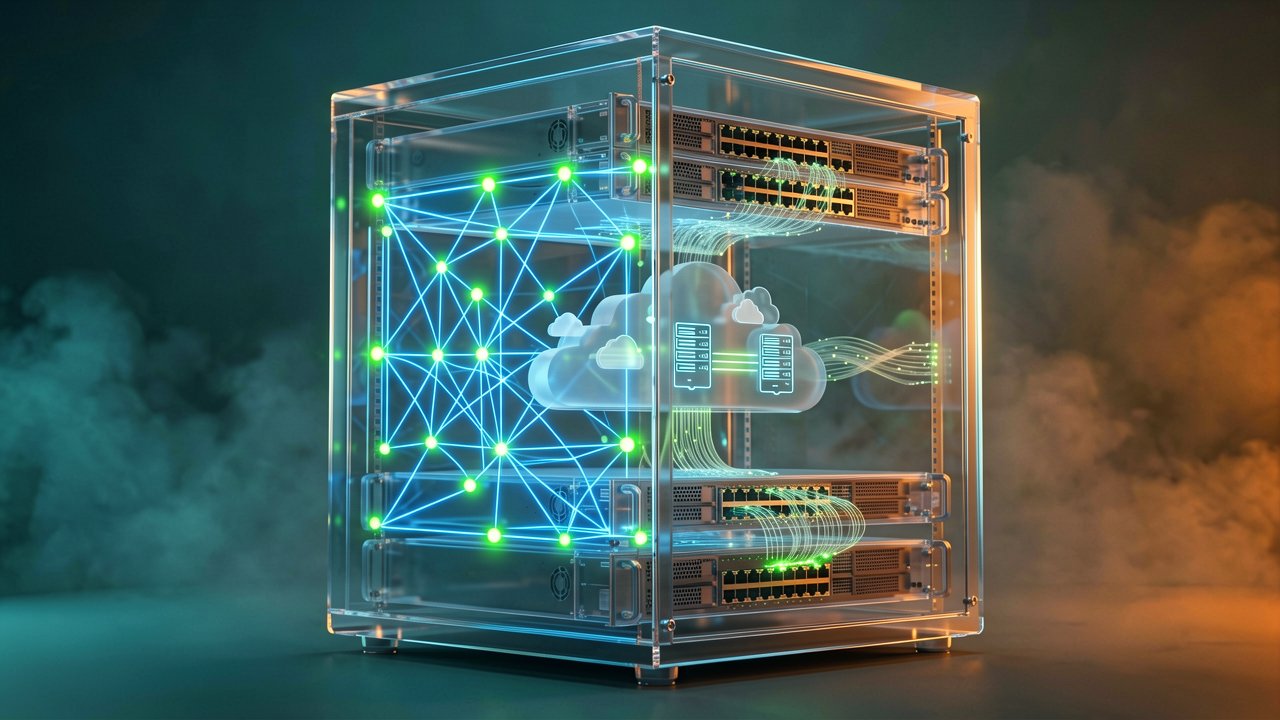
Legacy IT monitoring has always been an exercise in chasing smoke. Enterprise infrastructure teams deploy sprawling monitoring stacks just to watch dashboards light up red after a catastrophic failure has already disrupted operations. Breaking away from this reactive cycle, hybrid cloud observability pioneer launched a revolutionary Agentic SLA Management framework on June 17, 2026, designed to handle the complex, non-deterministic performance bottlenecks crippling modern AI systems.
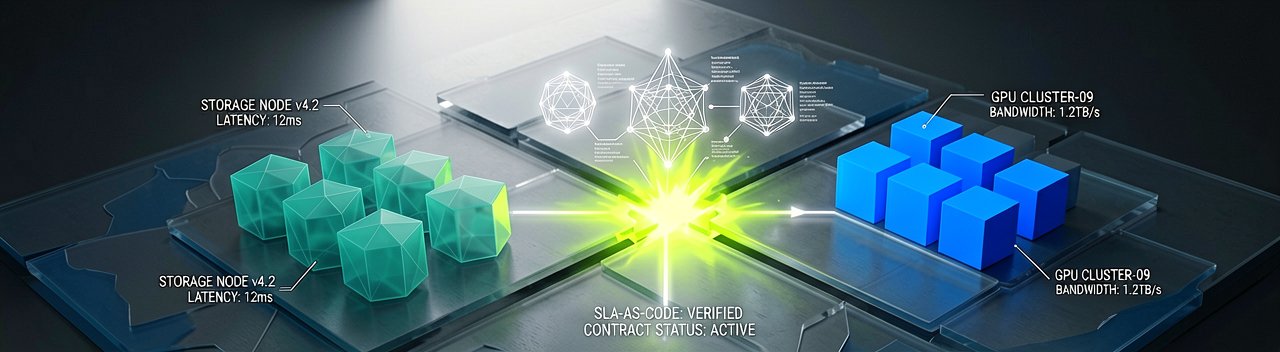
Instead of relying on rigid, pre-defined scripts that easily break under multi-cloud stress, the new architecture integrates autonomous Service Assurance Agents directly into the core execution system. This environment doesn’t just output telemetry; it continuously reasons across databases, Kubernetes clusters, and raw hardware layers. By formalizing agreements through an elegant "SLA-as-Code" methodology, enterprises can shift from arbitrary uptime reporting toward automated, business-aligned commitments.
Autonomous Context via the Model Context Protocol
The operational brains behind this roll-out sit inside the proprietary Model Context Protocol (MCP) Server. Because traditional generative AI models lack live system visibility, Virtana utilizes this standardized protocol layer to feed deep, full-stack infrastructure data into complex foundation models. Rather than operating as isolated data silos, specialized digital agents cooperate in real time to isolate operational risks.
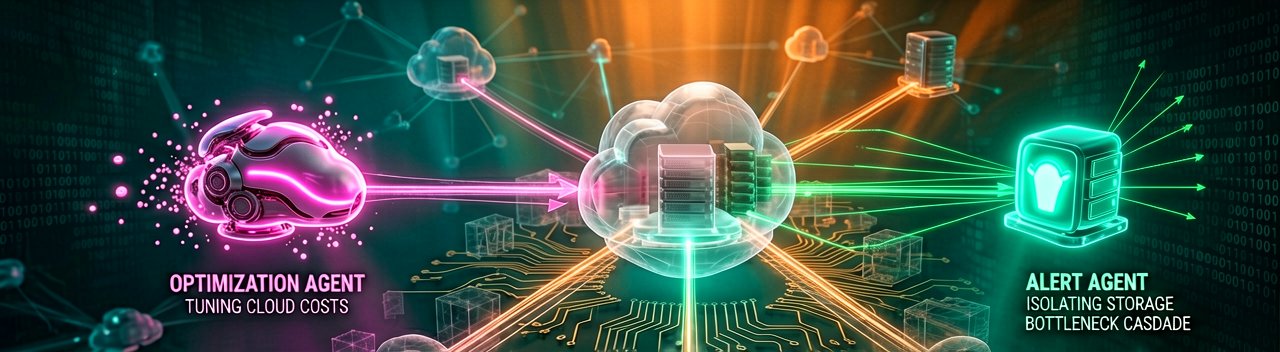
This ecosystem delegates distinct operational duties to four primary agents. The Alert Agent surfaces true signals amid millions of telemetry points, while the Response Agent evaluates operational impact and opens critical escalation workflows. Simultaneously, the Remediation and Optimization Agents step in to fix underlying vulnerabilities and tune multi-cloud costs before a breach or resource bottleneck can impact end users.
Behind the Scenes: The shift toward agentic operations isn’t just a product upgrade; it’s a direct response to a massive infrastructure crisis brewing under the surface of the enterprise AI gold rush. While tech executives celebrate the deployment of grand large language models, their operations teams are quietly drowning in an unprecedented wave of system failures. Recent research by uncovered a sobering reality: 75% of enterprises admit to double-digit failure rates in their live AI jobs. This structural fragility occurs because traditional monitoring platforms treat modern infrastructure like static web servers rather than dynamic, high-concurrency neural networks.
When an enterprise AI pipeline stalls, the root cause rarely sits in a single isolated layer. It is often a complex, multi-cloud cascade where a storage bottleneck chokes data pipelines, which in turn spikes GPU idle time and triggers a timeout in the user-facing application. Legacy Application Performance Monitoring (APM) tools fail because they only see their tiny slice of the pie, forcing human engineers into lengthy, manual root-cause investigations. Virtana CEO Paul Appleby has frequently pointed out that half of all practitioners identify networking and storage limitations as their single greatest roadblock to scaling AI workloads reliably.
Breaking the Silos with Open Standards
To overcome these blind spots, Virtana spent the early months of 2026 establishing an architectural foundation using the open Model Context Protocol (MCP). By embedding a system-aware PR Newswire server directly beneath its automation framework, Virtana bypassed the standard industry practice of building proprietary, vendor-locked ecosystems. This standardized protocol gives any third-party AI agent a single, unified machine-readable map of the enterprise stack, linking everything from hardware nodes to application layers.
This structural clarity completely shifts the economics of managing an enterprise IT environment. By relying on interconnected digital agents that share data smoothly, early enterprise implementations have seen a staggering 95% reduction in root-cause isolation times. Instead of human operators spending hours digging through disconnected dashboards, the platform’s underlying intelligence acts like an experienced site reliability engineer, identifying the exact core issue in real time and automatically shielding the business from costly service disruptions.
Reading Between the Lines: The tech industry’s sudden infatuation with "agentic" solutions carries a heavy whiff of marketing desperation. For years, automation was sold as a magic wand that would render human IT operations obsolete, yet enterprise systems remain notoriously fragile. By rebranding automation as autonomous agents that negotiate service-level agreements, vendors risk overpromising what language models can actually deliver in high-stakes environments. A hallucinating chatbot is an annoyance; a hallucinating remediation agent that accidentally deletes a production database is an existential corporate disaster.
The core contradiction in this new paradigm lies in the unpredictable nature of generative AI itself. Service-level agreements are, by definition, rigid legal and operational contracts demanding absolute predictability and deterministic outcomes. Entrusting these guarantees to non-deterministic agents that rely on probabilistic reasoning is a paradox that seasoned infrastructure architects view with deep skepticism. If an autonomous optimization agent throttles a critical cloud database to save money, it may inadvertently trigger a compliance breach that no software vendor’s indemnity clause will cover.
The Real-World Cost of Autonomy
Furthermore, the infrastructure cost of running these continuous reasoning loops is rarely factored into the efficiency equation. AI agents require immense computational power to constantly parse telemetry, evaluate scenarios, and coordinate through the Model Context Protocol. Enterprises might find themselves in a bizarre cycle where they deploy expensive, compute-heavy AI agents just to monitor and optimize the costs of other expensive, compute-heavy AI workloads. The net savings promised by these platforms could easily be swallowed by the hidden overhead of running the monitoring infrastructure itself.
Despite these valid structural anxieties, the industry is hurtling toward an agentic future because human operators have simply hit a cognitive wall. The sheer volume of telemetry generated by modern Kubernetes clusters, edge nodes, and multi-cloud networks has outpaced human comprehension. If Virtana’s framework succeeds, it will not be because its agents are flawless, but because they are faster at triage than a sleepy engineer paged at three in the morning. Ultimate success will depend entirely on how tightly organizations constrain these agents with rigid guardrails, transforming them into reliable digital assistants rather than giving them completely free rein over corporate infrastructure.
"We are rapidly approaching an era where software programs will autonomously argue with other software programs about why the corporate website is slow, leaving human engineers with the sole remaining responsibility of explaining to the board of directors why the automation budget keeps going up."
Artūras Malašauskas is an AI Systems Integrator with 20+ years of production-grade web engineering experience. He has designed, shipped, and scaled enterprise Python/PHP systems for logistics, SaaS, and public-sector clients. For the past year, he has focused exclusively on AI integrations: deploying open-source LLMs, building generative media pipelines (image, audio, video), and engineering multi-agent workflows for real production environments. His standard: reproducibility, security, cost-efficient inference—no vaporware. He documents and evaluates emerging AI tooling, separating verified capabilities from marketing noise. Technical editor at: muza-ai.eu, ai-verslas.lt, ai-naujinos.lt Connect on LinkedIn
Comments