Estonia’s AI Identity System Sets Landmark Precedent for Global Governance
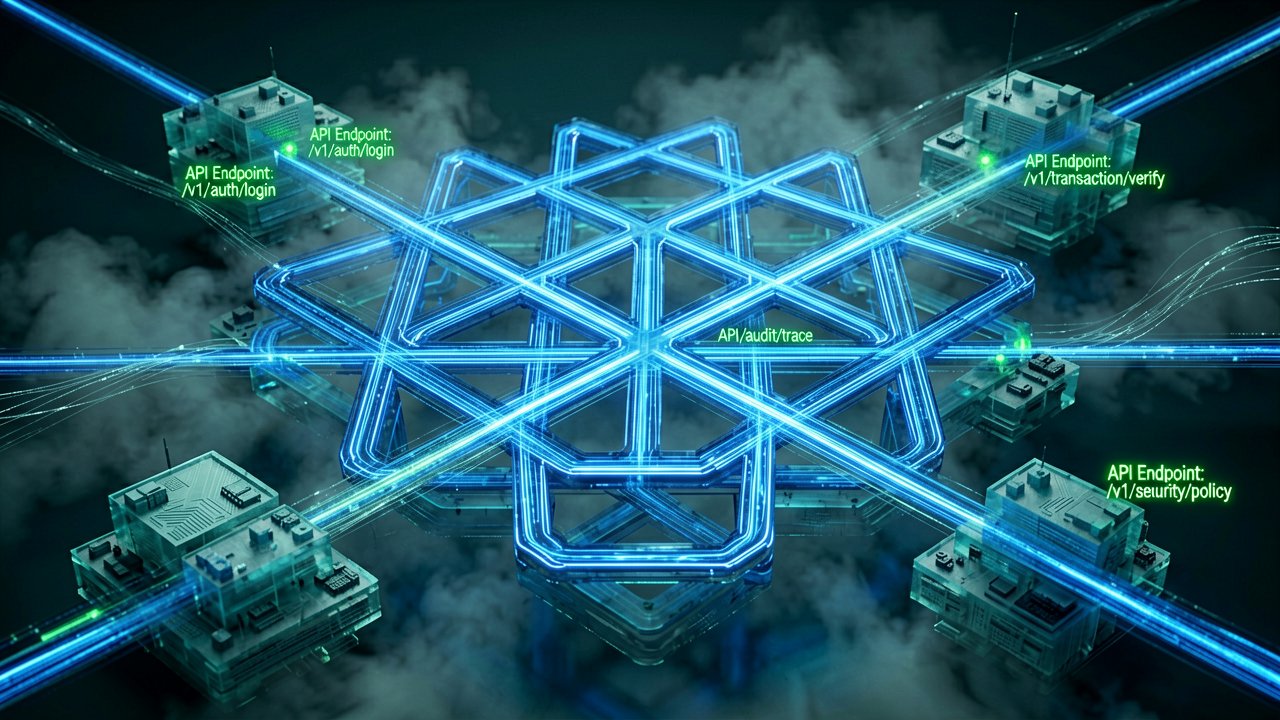
The global push for agentic artificial intelligence governance has reached a historic milestone. Estonia has announced its intention to become the first country in the world to issue government-backed digital identities—known as "AI-isikukood" or AI personal identification codes—to autonomous software agents. Championed by Prime Minister Kristen Michal and the Eesti.ai advisory board, this framework aims to transition automated operations away from risky, all-or-nothing account sharing. Instead, it provides machines with constrained, state-verified credentials, as reported by The Register.
This initiative targets a critical vulnerability in today's digital economy. Currently, for an AI assistant to book flights, interact with public registries, or process transactions, human owners must frequently surrender full password access and complete digital identity control to external software. The Estonian model resolves this by issuing distinct machine IDs. These identifiers explicitly define and limit what actions a bot is authorized to perform on behalf of a person or corporation, according to market coverage from . For example, a system can be confined to simply editing documents or initiating payments within a strict financial ceiling.
By transforming machine authorization into national public infrastructure, Estonia leverages its historic expertise in state-level digital security. The state will utilize its robust data-exchange framework, the X-Road layer, alongside decentralized architectures to ensure that every machine action remains auditable, controllable, and traceable. Market analysts note that while software giants like Microsoft and Amazon Web Services provide commercial identity management tools, Estonia’s solution introduces authentic state authority. This provides a blueprint for compliance with broader international regulations, including the European Union's regulatory mandates, as outlined by Fintech Baltic.
Strategic Shifts in Corporate Accountability
The introduction of AI ID codes introduces a fundamental shift in legal and corporate compliance. Historically, companies using automated web scrapers or execution workflows operated in a legal gray area regarding systemic failures or accidental liabilities. By tying automated actions to a precise government-issued registry, the state creates an ironclad audit trail. This infrastructure prevents corporate entities from pleading ignorance when autonomous agents make mistakes, forcing enterprise risk-management systems to redefine how they track and audit autonomous software workflows.
Market Impact on Agentic AI Ecosystems
For B2B software vendors and developers of agentic AI frameworks, Estonia's approach establishes a standard for security interoperability. Instead of spending capital building ad-hoc, proprietary authorization boundaries for every corporate client, technology developers can build to a uniform, public API standard. This drastically lowers friction for deploying autonomous agents across banking, logistics, and legal tech. Startups and international enterprises can run live, automated agents with the peace of mind that their financial exposure and data privacy boundaries are explicitly ring-fenced at the state level.
Addressing the Legal Vacuum of Machine Liability
While the strategy provides an unprecedented trust mechanism, it also highlights an unresolved global legal vacuum. The Estonian government has not yet detailed how liability will be distributed if a uniquely identified AI agent suffers an unpredicted algorithmic failure that results in major financial losses. Technology journalists observe that current legal systems are unprepared to handle autonomous agents as semi-independent legal actors. However, by establishing a concrete system for identifying machines first, Estonia is successfully forcing the global legal tech market to accelerate its development of specialized liability insurance and algorithmic accountability frameworks.
Operational Granularity and Technical Architecture
What Most Reports Miss: The shift toward assigning "AI-isikukood" numbers is not an attempt to grant legal personhood or human-like rights to software programs. Instead, according to cybersecurity insights from The Register, the Estonian government treats this development strictly as a technical-operational authorization layer. Industry experts stress that the core objective is to move away from systemic over-privileging, where an autonomous bot requires access to an entire corporate database or personal bank account just to execute minor administrative tasks.
By treating machine authorization as public infrastructure, Estonia intends to leverage its established state-level digital security protocols. In practice, the state registry will mint distinct machine credentials that map directly back to a responsible individual or corporation. This architecture mirrors emerging industry concepts like the Agent Name Service proposed by the Open Web Application Security Project. However, Estonia elevates the concept by injecting sovereign authority into the trust loop, ensuring that every financial or administrative transaction initiated by a bot remains permanently auditable within a centralized public system.

The Challenge of Transnational Accountability
As enterprises prepare to deploy agentic software frameworks at scale, identity is rapidly morphing from basic authentication infrastructure into an operational governance model. Analysts at Biometric Update point out that while technology providers like Microsoft or Okta provide commercial identity tools, a state-backed registration database forces a new level of accountability. If an automated system initiates a contract or processes payments incorrectly, the government-controlled code provides an ironclad digital audit trail that prevents human owners from dodging corporate liability.
However, this legislative framework faces major hurdles regarding global boundaries and jurisdiction. It remains unclear how the Baltic state will enforce these identification mandates on autonomous software operating across international borders, or which specific systems will fall under the jurisdiction of the new law. The initiative successfully forces the international legal tech sector to address a massive regulatory vacuum. It establishes a template for operational restrictions before a consensus has been reached on how to handle cross-border liability when autonomous systems suffer unpredictable algorithmic failures.
The Practical Limits of Sovereign Identity in an Agnostic Cloud
Reading Between the Lines: The ambition to anchor ethereal, multi-tenant AI agents to a centralized sovereign identity system exposes a fundamental clash between bureaucratic idealism and technical reality. While the concept of a state-verified "AI-isikukood" provides an elegant framework for domestic registry systems, it assumes a static, easily inspectable software architecture. In practice, modern agentic workflows are highly distributed, frequently morphing their codebases, swapping underlying large language models, and executing across disparate server infrastructures that operate outside Estonian jurisdiction. Tying a single, permanent government ID to an algorithmic entity that changes its operational profile by the minute introduces a rigid administrative layer that may struggle to track real-world machine behaviors.
This structural misalignment introduces a paradox for corporate accountability and risk distribution. The state-backed registry seeks to eliminate corporate deniability by establishing a clear digital audit trail for autonomous actions. Yet, by standardizing and validating these machine identities at the state level, the government inadvertently risks absorbing a portion of the operational blame. If a government-vetted, uniquely identified AI agent triggers an unpredictable economic loop or executes a flawed transaction that results in severe financial damage, the legal boundaries of liability become blurred. The technology market will quickly find that separating the liability of the human owner, the model developer, and the state registrar is far more complex than issuing a digital certificate.
Furthermore, the true utility of this identity framework rests entirely on international reciprocity, a prospect that remains highly uncertain in a fragmented geopolitical landscape. For Estonia's AI identity infrastructure to achieve meaningful global adoption, foreign financial institutions, cloud providers, and digital platforms must actively integrate and respect these Baltic credentials. Without formal bilateral agreements or broader incorporation into frameworks like the European Union's digital identity mandates, the system risks becoming a localized experiment. This dynamic creates a classic chicken-and-egg dilemma where global platforms are hesitant to rebuild their authorization APIs for a small market, while enterprise developers remain reluctant to adopt state-backed machine IDs that lack universal utility.
“We have spent decades trying to teach humans how to safely manage their own digital passwords, and our immediate solution to the rise of autonomous machines is to give the software its own state-issued passport. Hopefully, the algorithms will be significantly better at standing in digital lines and filling out the required government paperwork than their creators ever were.”
Artūras Malašauskas is an AI Systems Integrator with 20+ years of production-grade web engineering experience. He has designed, shipped, and scaled enterprise Python/PHP systems for logistics, SaaS, and public-sector clients. For the past year, he has focused exclusively on AI integrations: deploying open-source LLMs, building generative media pipelines (image, audio, video), and engineering multi-agent workflows for real production environments. His standard: reproducibility, security, cost-efficient inference—no vaporware. He documents and evaluates emerging AI tooling, separating verified capabilities from marketing noise. Technical editor at: muza-ai.eu, ai-verslas.lt, ai-naujinos.lt Connect on LinkedIn
Comments