Sui Mainnet Welcomes Seal MPC: A Secure Leap Forward for Autonomous AI Commerce
The decentralized economy just took a major step toward practical, autonomous machine-to-machine commerce. In a move that bridges the gap between raw artificial intelligence capability and secure cryptographic execution, the team behind Sui Network officially deployed its highly anticipated Seal MPC protocol directly to its mainnet on June 18, 2026. This launch shifts the paradigm for on-chain data security, giving developers a robust, programmable access layer capable of handling real-time financial transactions for AI agents without breaking a sweat.
For a long time, the biggest bottleneck for AI agents operating on Web3 networks wasn't their intellect—it was their wallet security. Giving an autonomous script access to a private key usually meant trusting a centralized server, a glaring vulnerability in any decentralized framework. By bringing Multi-Party Computation (MPC) into the fold, Sui flips the script. Now, developers can slice trust across distributed MPC committees, standalone key servers, or a hybrid of both, ensuring that no single entity can compromise an agent's financial bandwidth.
How Seal Reframes On-Chain Trust
At its core, Seal serves as a programmable encryption layer built to govern how sensitive digital assets and data are handled. According to technical documentation on the official Seal by Mysten Labs platform, this infrastructure enables precise, policy-driven access controls. Instead of relying on rigid, all-or-nothing key access, the protocol supports threshold encryption mechanics, meaning multiple independent parties must cryptographically sign off before data is decrypted or a payment is triggered.
This approach is already being put to work by projects trying to conquer real-world privacy challenges. For instance, platforms like Kled AI use Seal to enforce strict dataset licensing and access policies, while privacy-centric assistants utilize the tech to encrypt user conversations securely. By making these cryptographic tools natively available on the mainnet, Sui isn't just offering a patch for today's dApps; it is building the foundational economic rails for tomorrow's autonomous software agents.

The Hidden Architecture of Autonomous Money
Beneath the Marketing Buzz: The true breakthrough of Seal MPC lies not in the mere fact that AI agents can now spend money, but in how it reengineers the concept of digital ownership. Historically, crypto wallets required a singular private key—a string of code that represents total, uncompromising control. If an autonomous AI agent needs to buy API bandwidth or cloud computing power, developers traditionally had to give that agent the full private key. This created a massive security liability, as a bug in the AI's logic or a breach of its hosting server could instantly drain the entire wallet.
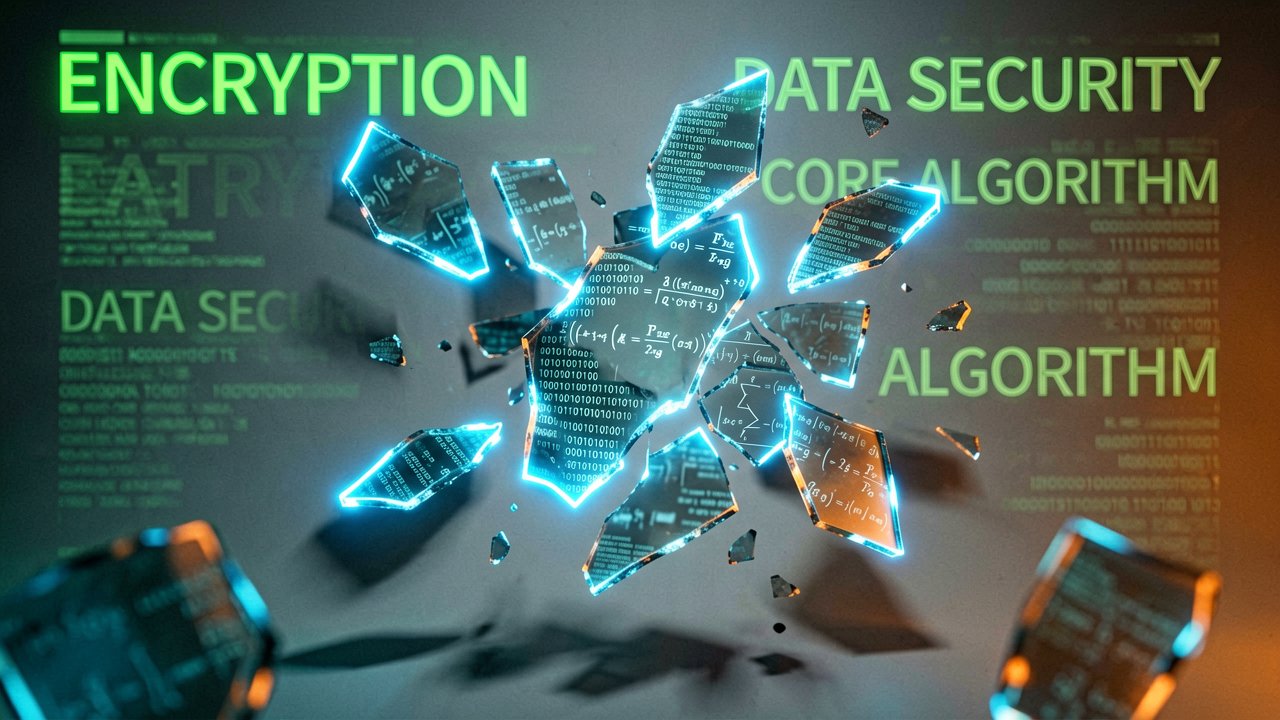
By implementing Multi-Party Computation directly into the Sui mainnet ecosystem, Mysten Labs has effectively shattered the private key into cryptographic shards. These shards are distributed across a decentralized network of nodes, meaning the actual key never exists in its entirety in any single location. When an AI agent needs to execute a real-time micropayment, the nodes collaborate to sign the transaction mathematically without ever revealing their individual secret pieces. This subtle shift transforms AI agents from high-risk experimental scripts into secure, institutional-grade economic actors.
This launch reflects a broader tactical pivot for the Sui network as it competes for dominance in the Web3 infrastructure race. While other layer-1 blockchains have focused heavily on maximizing simple transactions per second for retail meme-coin trading, Sui is quietly positioning itself as the foundational ledger for the machine economy. Industry insiders note that by embedding threshold encryption and programmable access controls directly into the network architecture, Sui is addressing the exact enterprise compliance and security concerns that have kept traditional tech giants from deploying autonomous agent networks on public blockchains.
The implications of this roll-out stretch far beyond simple automated trading bots. Early adopters in the developer community are already leveraging Seal MPC to build decentralized data marketplaces where AI models can negotiate, purchase, and ingest encrypted datasets on the fly without human intervention. By removing the latency of human approval and mitigating the security risks of key management, the protocol lays the groundwork for a highly fluid, automated financial ecosystem capable of handling millions of micro-transactions every second.
The Reality Check: Friction in the Machine Economy
Reading Between the Lines: While the promise of seamless, real-time machine payments paints a utopian picture of the future, the practical reality of deploying Seal MPC on the mainnet introduces a new set of complex challenges. The industry often treats "autonomous AI agents" as a monolithic concept, assuming these digital entities will flawlessly navigate financial ecosystems. In truth, an AI agent is only as secure as its underlying code. Splitting a private key into cryptographic shards protects against brute-force theft, but it does absolutely nothing to prevent a rogue or poorly optimized AI from efficiently spending its entire budget on bad data or redundant API calls.
Furthermore, this architecture introduces a glaring paradox regarding decentralization. To achieve the real-time execution speeds required for microscopic machine-to-machine transactions, the MPC committees responsible for signing these transactions must be highly optimized. If the network relies on a small, tightly knit group of specialized node operators to keep latency low, it risks recreating the very centralization Web3 explicitly purports to destroy. True decentralization inherently introduces latency, and in a high-speed AI economy, even a few milliseconds of lag can mean the difference between an efficient transaction and a failed operation.
There is also the looming shadow of regulatory compliance to consider. Financial regulators worldwide are already struggling to police human activity in the crypto space; the introduction of entirely autonomous, self-funded AI agents operating across a borderless ledger will undoubtedly trigger intense scrutiny. If an AI agent utilizing Seal MPC inadvertently funds a sanctioned entity or purchases illicit data, determining legal liability becomes a bureaucratic nightmare. The developers may claim the agent acted autonomously, while regulators will likely hold the creators accountable, creating a chilling effect that could stall enterprise adoption regardless of how secure the technical infrastructure claims to be.
"We have spent years worrying that artificial intelligence would become smart enough to take our jobs, but the immediate reality is much more mundane: we have simply given software its own credit card, and now we must sit back and hope it doesn’t accidentally subscribe to a million SaaS platforms it will never use."
Artūras Malašauskas is an AI Systems Integrator with 20+ years of production-grade web engineering experience. He has designed, shipped, and scaled enterprise Python/PHP systems for logistics, SaaS, and public-sector clients. For the past year, he has focused exclusively on AI integrations: deploying open-source LLMs, building generative media pipelines (image, audio, video), and engineering multi-agent workflows for real production environments. His standard: reproducibility, security, cost-efficient inference—no vaporware. He documents and evaluates emerging AI tooling, separating verified capabilities from marketing noise. Technical editor at: muza-ai.eu, ai-verslas.lt, ai-naujinos.lt Connect on LinkedIn
Comments