AI Gets its Own Inbox: Why Nylas Giving Agents Their Own Email Addresses Matters
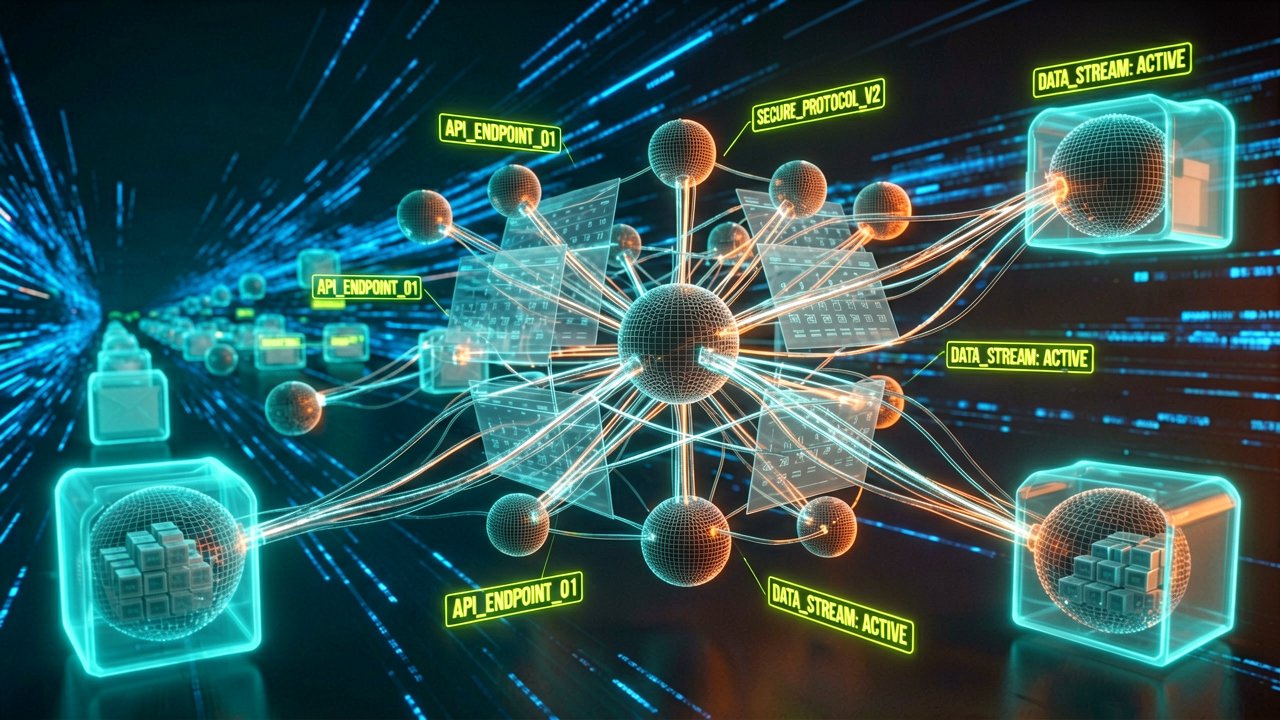
The tech industry spent the last few years treating AI agents like highly capable interns—handy for drafting responses or pulling data, but ultimately forced to borrow a human’s credentials to do any real heavy lifting. That awkward hand-off just came to an end. Communications infrastructure platform Nylas officially announced the general availability of Nylas Agent Accounts, a development that grants artificial intelligence agents their own independent, fully hosted email addresses and calendars.
Announced on June 17, 2026, this move aims to solve a bottleneck in enterprise automation. Instead of forcing developers to rig complex workarounds or share human OAuth tokens—practices that routinely give security teams nightmares—the new infrastructure lets an application provision dedicated, isolated communication hubs for digital entities. It represents a subtle but profound shift from AI acting as a co-pilot to AI functioning as an independent digital teammate.
Building the Infrastructure for Autonomous Workflows
The mechanics behind the launch address a persistent infrastructure gap. While LLMs have become incredibly sophisticated at reasoning, they historically lacked the native execution primitives required to interact seamlessly with legacy communication channels like Gmail, Microsoft Outlook, or corporate IMAP servers. According to details shared on the Nylas Blog, these new Agent Accounts provide a structured, native identity. A sales scheduling agent or an automated customer support bot can now own its inbox, manage its schedule, and process incoming data streams without piggybacking on a human employee's profile.
This isolation is not just about convenience; it is a critical architecture choice for data privacy and multi-tenancy. As detailed in official documentation on the Nylas CLI Portal, the infrastructure allows a single B2B application to spin up hundreds of individual agent accounts, ensuring each client tenant operates within a completely sandboxed environment. If an enterprise needs to offboard a client, removing the AI agent's access is a matter of a single API deletion rather than untangling a web of shared employee permissions.
From Chatbots to Communication-Driven Coworkers
By giving digital agents a permanent identity, the platform also bypasses a major headache for AI developers: dealing with complex provider SDKs and session maintenance. Instead of forcing a language model to handle raw authentication, frameworks like LangChain can now interface with the inbox via simple, tool-based commands. As Nylas CEO Jeff Koets noted in a statement carried by Business Wire, business outcomes happen where communication lives—in the inbox and on the calendar. By giving agents the native tools to navigate these spaces independently, the industry moves closer to realizing actual communication-driven automation at scale.
Behind the Scenes: The launch of Nylas Agent Accounts addresses a long-standing architectural bottleneck that has quietly hindered the rollout of enterprise AI. Historically, deploying an autonomous agent meant forcing software engineers to make an unappetizing choice: either share a human employee's personal inbox credentials or go through the arduous process of provisioning a brand-new corporate user account. The former created immense security vulnerabilities, while the latter saddled IT departments with hefty monthly SaaS licensing fees for a user that did not actually exist. By decoupling the inbox from a physical person, the Nylas Blog highlights how the platform turns the AI inbox into a standard, programmatically managed developer resource.
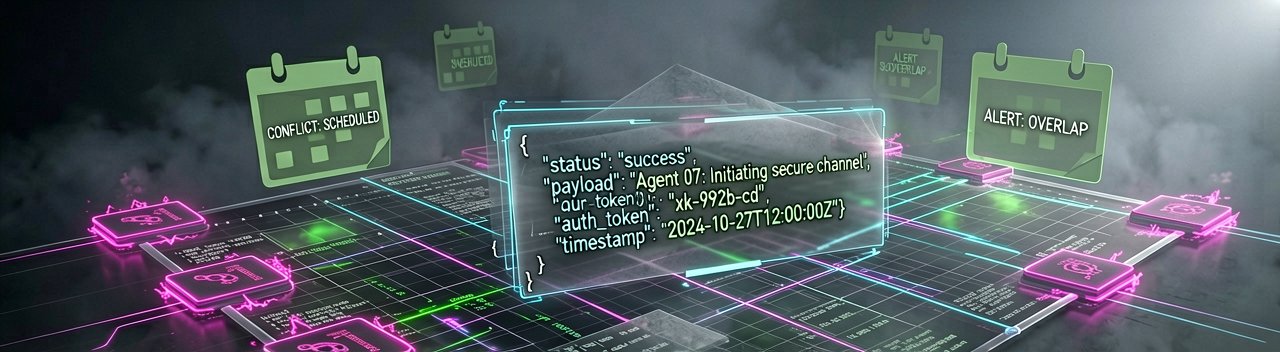
This structural shift opens the door to an intriguing paradigm known as agent-to-agent email communication. Instead of forcing distinct enterprise software platforms to build custom API integrations, webhooks, or shared database queues to exchange data, AI systems can now communicate using the universal language of the inbox. As outlined in the Nylas CLI Portal, two autonomous systems can exchange structured JSON payloads inside standard email bodies. This architecture leverages existing email protocols like RFC 5321 for built-in retry mechanics, while relying on established security standards like SPF and DKIM to natively verify identity, transforming email into a decentralized service mesh for digital entities.
The Operational Reality of the Digital Fleet
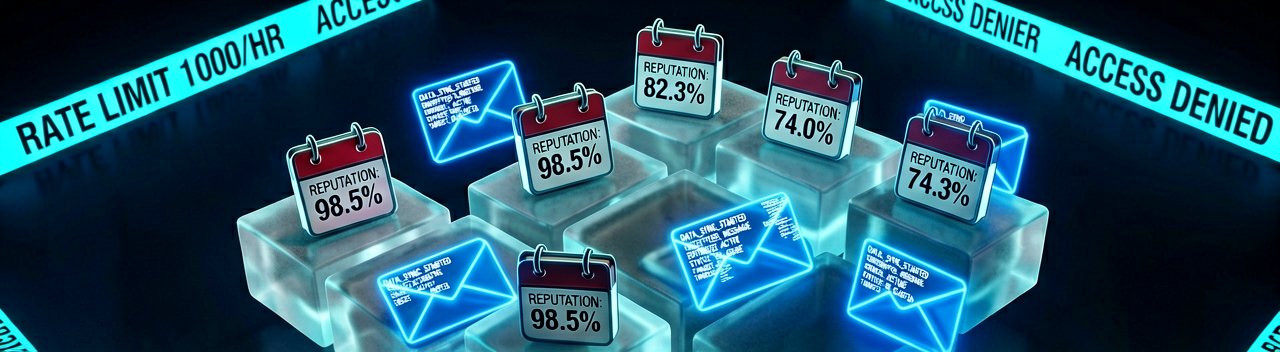
For enterprise technology leaders, managing these autonomous agents requires a sharp departure from traditional software maintenance. According to data and insights from the Nylas Documentation, each agent account acts as a genuine, fully functional mailbox with its own standalone outbound deliverability reputation. If an engineered bot begins spamming client inboxes or formatting outbound meeting requests poorly, it risks damaging its specific sender score. Consequently, operations teams are treating these accounts like a dynamic fleet—monitoring lifecycle stages from initial programmatic creation to strict credential rotation, and implementing automated rules to pause or completely retire accounts when client contracts expire.
Furthermore, pairing these specialized inboxes with native, fully hosted calendars solves the coordination dead-ends that historically plagued automated schedulers. In traditional setups, a customer support or sales bot could read an incoming message but lacked the ability to natively cross-reference multi-attendee schedules, forcing a clunky hand-off back to a human coworker. Technical documentation on the Nylas Calendar Guide reveals that pairing calendar and inbox access on a single, isolated token allows language models to parse free/busy windows, propose standardized iCalendar invites, and reserve slots natively. This capability significantly lowers token consumption overhead by filtering raw, dense calendar data into small, structured arrays before it ever reaches the LLM.
Reading Between the Lines: The tech industry is widely celebrating this move as a critical milestone for operational efficiency, yet giving artificial intelligence agents independent communication infrastructure introduces a paradox. While tech leaders routinely boast about "eliminating the human in the loop" to save money, they overlook how this shift transfers costs from human salaries to API overhead. The financial burden shifts from a fixed employee paycheck to variable computing expenses. Every time an agent polls an inbox, processes data, or modifies a calendar slot via a platform like Nylas, it consumes tokens and api calls. Enterprises may discover that trading a human salary for unpredictable, scaling server bills fails to deliver the massive cost reductions promised by generative AI enthusiasts.
This architectural shift also exposes a massive tension between automated speed and the limits of legacy communication infrastructure. Email was designed as a human-to-human system that implicitly relies on a slower pace of interaction. When automated agents start emailing other automated agents at machine speeds, they risk overwhelming mail servers with unprecedented volumes of conversational data. The Nylas Documentation outlines strict rate limits to prevent these systems from crashing external systems, but the risk remains high. If a loop occurs where two agents endlessly reply to each other due to a slight formatting misunderstanding, they could easily blackhole a corporate domain's sender reputation before a human admin even spots the error.
The Realities of Automated Accountability
Furthermore, isolating these digital entities into sandboxed accounts creates a massive legal and compliance headache. Tech companies pitch isolated accounts as a major security win, but separating an agent's communication history from a human supervisor makes tracking accountability far more difficult. If a customer service bot accidentally sends proprietary data or promises an illegal discount, assigning blame becomes tricky. Compliance teams will have to build entirely new monitoring systems just to audit these autonomous inboxes, as shown in the security frameworks on the Nylas CLI Portal. This creates a strange reality where companies spend just as much time managing their software agents as they used to spend managing human workers.
Ultimately, this change forces a massive reevaluation of security perimeters in corporate networks. For decades, security teams relied on simple rules, assuming that an active email address belonged to a verified human employee. With platforms now spinning up thousands of temporary, programmatic accounts at scale, distinguishing a legitimate internal agent from a sophisticated phishing bot becomes incredibly difficult. The industry is rapidly moving toward an environment where the corporate directory is flooded with digital ghosts, making true network visibility an elusive goal for IT departments.
"We have spent decades trying to clear out our inboxes and escape unnecessary meetings, only to build a brand-new class of digital workers whose entire purpose is to send more emails and schedule more calendar invites. If the future of artificial intelligence is just two corporate bots politely arguing over a 2:00 PM calendar slot while their human supervisors try to figure out who to blame for the server bill, then tech has truly achieved its ultimate corporate destiny."
Artūras Malašauskas is an AI Systems Integrator with 20+ years of production-grade web engineering experience. He has designed, shipped, and scaled enterprise Python/PHP systems for logistics, SaaS, and public-sector clients. For the past year, he has focused exclusively on AI integrations: deploying open-source LLMs, building generative media pipelines (image, audio, video), and engineering multi-agent workflows for real production environments. His standard: reproducibility, security, cost-efficient inference—no vaporware. He documents and evaluates emerging AI tooling, separating verified capabilities from marketing noise. Technical editor at: muza-ai.eu, ai-verslas.lt, ai-naujinos.lt Connect on LinkedIn
Comments