AIOS Transforms Insurance Decision-Making with Domain-Specific AI Integration
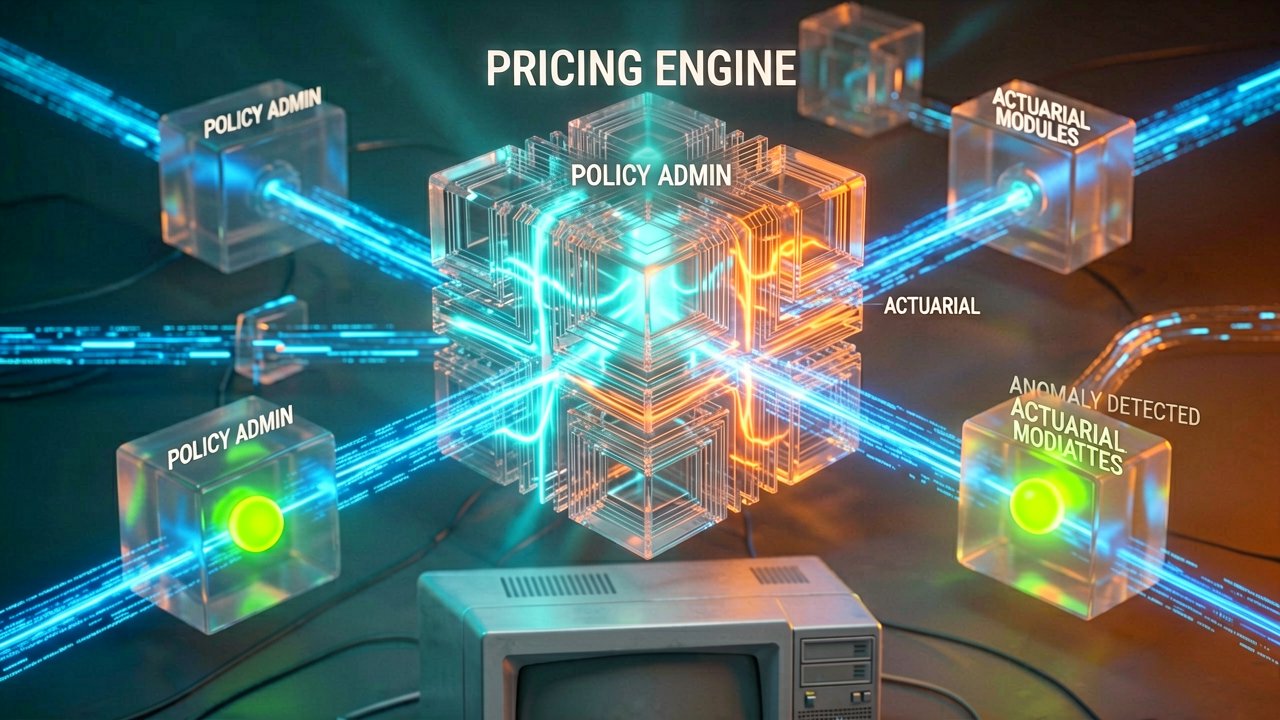
Insurance technology leader Earnix has launched AIOS (AI Orchestration System), an artificial intelligence platform purpose-built to embed intelligent decisioning across the entire insurance lifecycle. This enterprise-grade platform operates directly within core workflows, shifting operations from traditional isolated AI experiments to comprehensive live production. By anchoring intelligence natively within a carrier's execution layers, the infrastructure aims to eliminate operational fragmentation across legacy core systems.
The market launch addresses a widespread implementation hurdle within the global insurance landscape. While a recent industry report from Earnix indicates that 55% of UK insurers have embedded artificial intelligence into core business functions, a massive execution gap persists. Disconnected tools historically strand high-stakes analytical insights inside siloed pilots. This strategic deployment bridges that gap by connecting data, multi-step workflows, and human review into a unified operational engine.
Overcoming the Production Barrier
Modern underwriting and actuarial teams operate under escalating pressure from volatile risk conditions, narrowing margins, and heightened regulatory scrutiny. Generic, consumer-grade large language models and general predictive tools frequently fail in these high-stakes environments due to a lack of governance. As highlighted by Computer Weekly, this software delivers "anchored intelligence," ensuring analytics are directly tied to an organization's specific pricing, claims, and underwriting logic rather than operating in an architectural vacuum.
Enterprise Orchestration and Compliance
The system integrates smoothly into existing IT environments, utilizing open APIs to connect with standard policy administration systems and customer relationship management platforms without requiring costly infrastructure replacements. According to an official announcement published by Business Wire, the framework unifies multiple AI paradigms, combining predictive models for risk assessment with generative and agentic workflows to handle complex, automated operational tasks. Crucially, the platform logs a thorough audit trail detailing data sources and model logic, providing the strict mathematical transparency required to satisfy global regulatory boards.
Operationalizing High-Stakes Analytics
Behind the Tech Stack: The architectural evolution of insurance software has historically been bottlenecked by the rigidity of core policy administration systems. Actuarial teams have long faced frustrating latency between finalizing a predictive risk model and actually deploying it into live markets, sometimes waiting months for IT departments to recode mathematical algorithms into legacy infrastructure. By establishing a specialized orchestration layer that bypasses traditional coding dependencies, this new infrastructure allows carriers to test, adjust, and deploy complex algorithms in real time without destabilizing their underlying operational platforms.
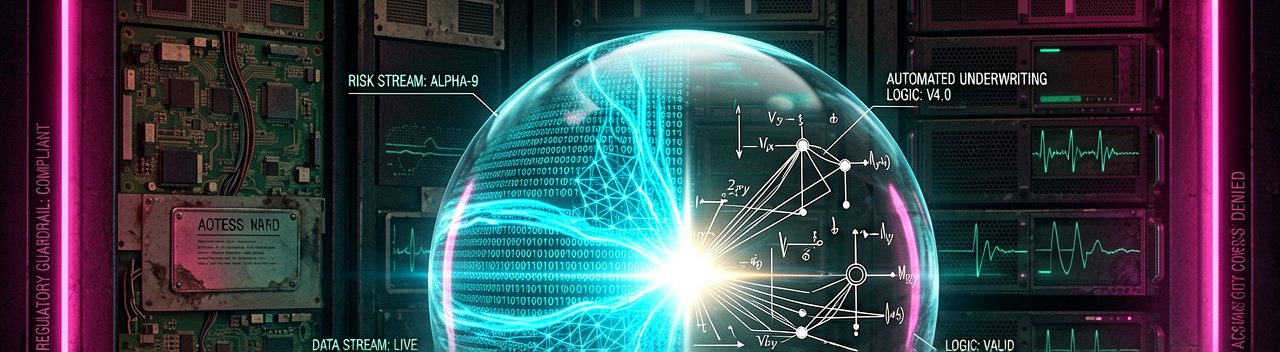
From an engineering perspective, the true breakthrough lies in how the software balances unstructured data ingestion with deterministic guardrails. In modern underwriting, automated systems are flooded with disparate data streams, ranging from connected telematics devices and regional climate risk grids to scanned medical documents and historical claims logs. The platform utilizes advanced agentic workflows to interpret these unstructured datasets, translating raw variables into structured insights that instantly feed into automated pricing engines, reducing human overhead while maintaining mathematical accuracy.
Corporate risk officers and compliance attorneys remain highly skeptical of black-box algorithms, particularly as global regulatory bodies tighten rules regarding algorithmic bias and price optimization. The enterprise architecture directly addresses this friction by separating the analytical model from the underlying underwriting rules, enabling compliance officers to impose firm regulatory constraints over automated decisions. Every single algorithmic calculation is mapped, tracked, and stored, creating a defensible audit trail that satisfies rigorous transparency demands during formal market conduct examinations.
The strategic deployment also reshapes the internal dynamic between traditional data scientists and business unit leaders. Historically, data science teams operated in isolation, building highly sophisticated predictive models that business executives struggled to utilize effectively due to clunky software interfaces and conflicting corporate KPIs. This unified system provides a collaborative framework where technical teams easily import existing open-source models, while commercial underwriters retain granular control over the ultimate business strategy and risk appetite parameters.
The Friction Between Autonomy and Accountability
Reading Between the Lines: The insurance industry's sudden embrace of domain-specific orchestration systems reveals a deeper institutional anxiety about the limits of autonomous software. While enterprise marketing emphasizes seamless automation, the reality of deploying agentic workflows in real-time pricing environments introduces a volatile paradox. Insurers are racing to eliminate human friction from the underwriting loop, yet the core mechanics of risk management inherently demand a level of cautious skepticism that automated nodes simply cannot replicate. The promise of hyper-efficiency frequently glosses over the operational vulnerabilities that emerge when automated models ingest subtly flawed external datasets at scale.
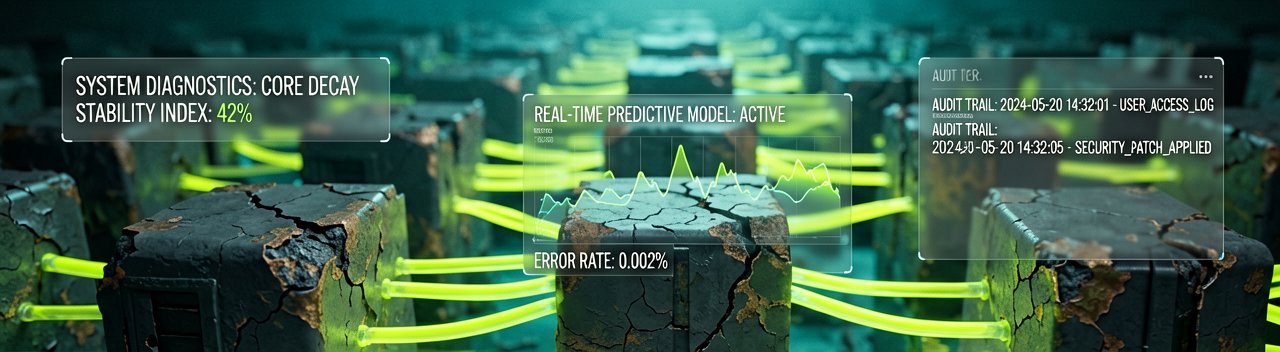
Furthermore, the claim that domain-specific architectures completely bridge the implementation gap overlooks the persistent reality of technical debt. Forcing modern, API-driven orchestration layers to communicate with fragile, decades-old mainframe databases creates an invisible layer of architectural tension. Even if an enterprise system processes variables in milliseconds, the ultimate business velocity remains restricted by the slowest legacy node in a carrier's tech stack. This operational mismatch suggests that the immediate return on investment for these platforms may vary wildly depending on how deeply a company's infrastructure is buried under outdated software code.
From a regulatory standpoint, the promise of mathematical transparency operates in direct opposition to the commercial desire for competitive differentiation. Carriers use advanced analytics specifically to uncover hidden risk patterns that their competitors miss, creating a natural incentive to protect proprietary algorithms. If regulatory compliance mandates that every single decision trail must be fully decomposable and universally explainable, the technological advantage of running complex, non-linear AI models begins to erode. Carriers may find themselves forced into a delicate compromise, running neutered versions of their best algorithms just to remain within the safe, explainable boundaries of local insurance laws.
Ultimately, the long-term impact of this technology will likely trigger a structural talent crisis within actuarial and underwriting departments. As automated systems absorb the routine analytical tasks of risk evaluation and premium calculation, the entry-level tasks that traditionally trained human underwriters vanish. This shift leaves a profound experiential void between junior personnel and senior executives who possess the institutional memory required to override flawed automated decisions. If the technology performs flawlessly for years, carriers risk cultivating a generation of professional operators who lack the foundational critical thinking skills to intervene when the system inevitably encounters an unprecedented macroeconomic black swan event.
The corporate dream of replacing expensive actuaries with a flawless, real-time pricing machine hits a reality check when the software encounters an unpredictable human world, proving that while AI can easily process a billion points of historical risk data, it still cannot predict when a distracted driver will spill hot coffee in their lap.
Artūras Malašauskas is an AI Systems Integrator with 20+ years of production-grade web engineering experience. He has designed, shipped, and scaled enterprise Python/PHP systems for logistics, SaaS, and public-sector clients. For the past year, he has focused exclusively on AI integrations: deploying open-source LLMs, building generative media pipelines (image, audio, video), and engineering multi-agent workflows for real production environments. His standard: reproducibility, security, cost-efficient inference—no vaporware. He documents and evaluates emerging AI tooling, separating verified capabilities from marketing noise. Technical editor at: muza-ai.eu, ai-verslas.lt, ai-naujinos.lt Connect on LinkedIn
Comments