Alibaba Steps Into the Physical World With the Qwen-Robot AI Suite
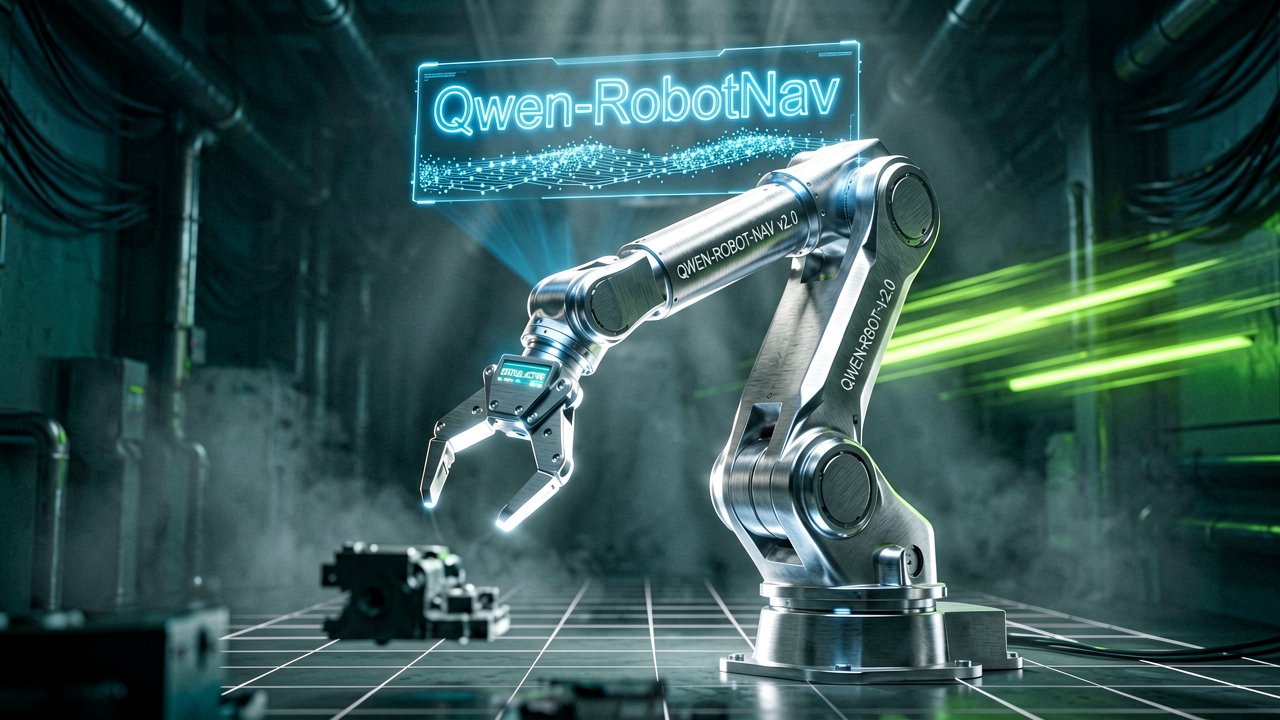
The tech industry's obsession with chatbots is officially taking a backseat to something far more tangible. On Tuesday, Chinese e-commerce and cloud juggernaut Alibaba Group Holding unboxed its first dedicated suite of artificial intelligence foundation models engineered specifically for robotics, signaling a massive strategic pivot toward "embodied AI." Developed by the company's specialized AI research unit, Tongyi Lab, the newly minted Qwen-Robot Suite has already made the leap from purely academic research straight into pilot testing with select enterprise clients on Alibaba Cloud, as reported by the South China Morning Post. It is a clear sign that the race for Next-Gen automation is moving away from the screen and directly onto the factory floor.
By shifting focus from digital conversation to physical manipulation, the launch establishes a new battlefield where software intelligence must tightly integrate with real-world physics and sensor data processing. The timing is anything but accidental. Alibaba is aggressively positioning itself to capitalize on the lucrative automation market, aiming to transform unpredictable physical environments into structured, manageable spaces for machines. According to details shared by TechNode, this framework allows robots to seamlessly align natural language instructions with complex physical actions, breaking down the traditional barriers that have kept robotic arms and automated guided vehicles confined to rigidly pre-programmed routines.
The Three Pillars of Robotic Intelligence
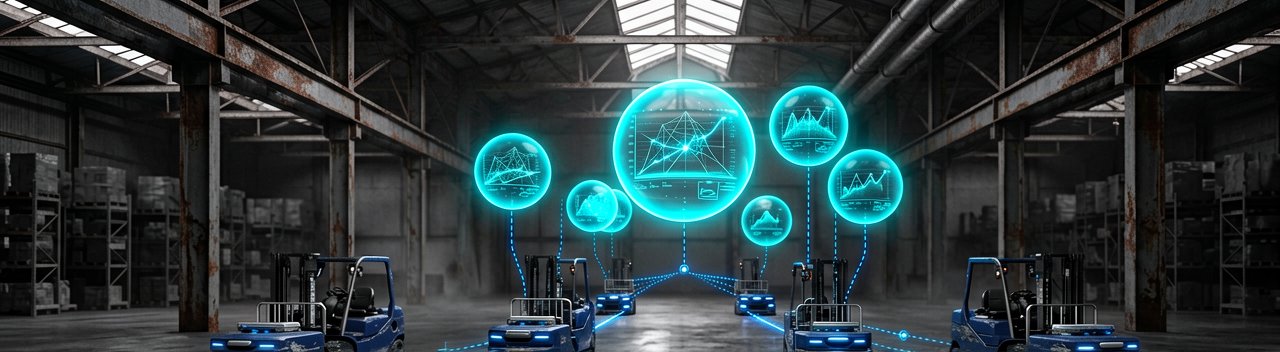
Alibaba isn't just throwing a single model at the problem; it has architected a three-layered ecosystem to give machines a comprehensive understanding of their surroundings. The first component is Qwen-RobotNav, a scalable vision-language navigation model built to handle spatial perception, target tracking, and path planning. It basically gives mobile robots the ability to figure out where they are and where they need to go without relying on static, pre-mapped environments.
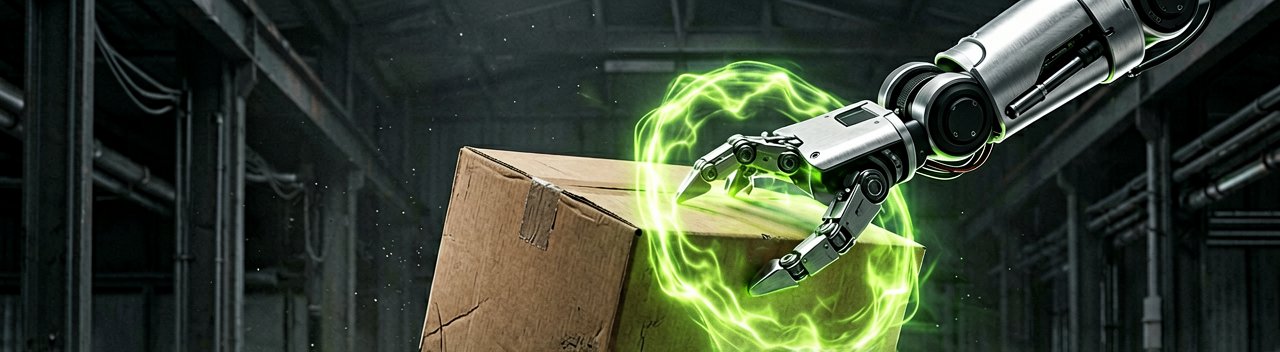
Working in tandem with navigation is Qwen-RobotWorld, a video-based "world model" that introduces a critical predictive reasoning layer. Instead of moving blindly, a robot utilizing this model can simulate and predict how a physical scene will change before it ever executes a physical action, essentially modeling the consequences of its movements in real-time. Finally, the heavy lifting is handled by Qwen-RobotManip, a generalist vision-language-action model built on the Qwen3.5-4B architecture. According to The Daily Star, this manipulation model standardizes how a robot's hands interact with objects and recently snagged the top score on the generalist track of the RoboChallenge real-robot benchmark.
Commercial Stakes and the Global AI Race
This rollout highlights a broader trend among tech incumbents to weave physical AI directly into enterprise infrastructure. While young startups scramble to refine pure language models, heavyweights like Alibaba are looking at the bigger picture, constructing an ecosystem that spans from cloud data processing to physical execution. CEO Eddie Wu has previously noted that AI-related product revenue is expected to become the primary engine driving growth for the company's cloud segment, making this hardware-adjacent rollout a vital part of the balance sheet. By pairing its massive domestic cloud footprint with specialized robotics models, the company is attempting to build a vertically integrated stack that software-only rivals will find incredibly difficult to match.
Behind the Silicon and Steel: The launch of the Qwen-Robot Suite marks a massive philosophical shift in how tech giants approach physical automation. For years, the robotics industry was plagued by a fundamental disconnect: hardware engineers built incredibly precise machinery, but software engineers could only provide rigid, pre-programmed instructions. If a box on a conveyor belt was tilted slightly out of place, the entire assembly line ground to a halt. Alibaba's new models aim to erase this friction entirely by introducing adaptive intelligence that treats the physical world not as a static grid, but as a dynamic, constantly changing environment that requires real-time improvisation.
Industry insiders note that this move is a direct response to China's rapidly shifting economic realities, characterized by a tightening labor market and an urgent national push toward high-end manufacturing. By embedding these models directly into the Alibaba Cloud architecture, the company is lowering the barrier to entry for factory owners who cannot afford to hire army-sized teams of specialized robotics engineers. Instead of spending weeks manually scripting a robot's trajectory for a new product run, a warehouse manager can theoretically use natural language commands to deploy updated workflows overnight, fundamentally shifting the return-on-investment calculus for industrial automation.
However, the transition from pristine laboratory benchmarks to the messy reality of the factory floor is rarely seamless. While snagging the top spot on the RoboChallenge benchmark proves the technical viability of Qwen-RobotManip, seasoned automation experts remain cautious about edge cases in unpredictable environments. A stray piece of plastic wrap, unexpected glare from a skylight, or dust accumulation on a camera lens can easily degrade visual processing models. Alibaba's inclusion of the video-based Qwen-RobotWorld predictive model is a deliberate attempt to mitigate these exact real-world messy variables, giving machines a split second to simulate outcomes and course-correct before making a costly physical blunder.
This rollout also intensifies the geopolitical and commercial rivalry surrounding foundation models for embodied AI, placing Alibaba in direct competition with global tech firms and specialized robotics startups alike. As Western competitors pour capital into humanoid robotics research, Alibaba is taking a pragmatically industrial approach, focusing heavily on upgrading existing infrastructure like robotic arms, automated forklifts, and sorting systems. It is a strategy designed to monetize AI capabilities immediately through enterprise cloud subscriptions, proving that the true value of next-generation models lies not in human-like parlor tricks, but in the unglamorous, high-volume world of logistics and supply chain optimization.
Reading Between the Lines: The corporate enthusiasm surrounding "embodied AI" conveniently glints over a glaring contradiction in the tech sector's current business model. For the past two years, cloud providers have sold generative AI as an asset-light, infinitely scalable software miracle that prints money through digital API calls. By tethering their latest models to physical gears, hydraulics, and factory floors, Alibaba and its rivals are diving headfirst into an operational minefield defined by low margins, hardware depreciation, and brutal maintenance cycles. A software bug might crash an app, but an AI hallucination in a five-ton industrial arm could comfortably tear through a factory wall or destroy an entire shipment of inventory.
This reality forces a critical look at the true scalability of a framework like the Qwen-Robot Suite. While Alibaba Cloud can seamlessly distribute software updates to millions of virtual servers simultaneously, updating the physical behavior of thousands of heterogeneous, multi-brand robots is an entirely different beast. Industrial automation relies on deeply fragmented legacy systems, with proprietary controllers and highly specific safety protocols. Convincing a manufacturing sector notorious for its extreme risk aversion to turn over the keys of its heavy machinery to an unpredictable, constantly evolving vision-language-action model will require a level of trust that benchmark scores alone simply cannot buy.
Furthermore, the reliance on massive cloud infrastructure creates a structural dependency that many enterprise clients might find unpalatable. If a factory's automated guided vehicles require real-time cloud data processing from Alibaba Cloud to calculate their paths and predict physics via Qwen-RobotWorld, a single network jitter or latency spike could theoretically paralyze operations. While edge-computing hardware is improving, running multi-billion parameter multimodal models locally on a robot's onboard chassis remains a massive battery and thermal constraint, suggesting that full physical autonomy is still far more tethered to data center power grids than the marketing materials suggest.
Ultimately, the pivot to robotics might be less about an immediate manufacturing revolution and more about finding a desperate sink for excess AI computing capacity. With text and image generation markets rapidly commoditizing, tech giants are under immense pressure to justify their eye-watering capital expenditure on graphics processors and server farms. Repurposing these massive compute clusters to simulate physical worlds and train robotic manipulation paths provides a convenient narrative of industrial utility. Whether the factory floor actually wants or needs this level of complex, cloud-dependent intelligence over a rock-solid, predictable PLC script remains the trillion-dollar question.
"We were promised a future where artificial intelligence would gracefully handle our mundane chores so humans could paint and write poetry; instead, we have built complex, multi-billion-parameter neural networks just to teach a robotic arm how to reliably pick up a slightly lopsided cardboard box without crushing it."
Artūras Malašauskas is an AI Systems Integrator with 20+ years of production-grade web engineering experience. He has designed, shipped, and scaled enterprise Python/PHP systems for logistics, SaaS, and public-sector clients. For the past year, he has focused exclusively on AI integrations: deploying open-source LLMs, building generative media pipelines (image, audio, video), and engineering multi-agent workflows for real production environments. His standard: reproducibility, security, cost-efficient inference—no vaporware. He documents and evaluates emerging AI tooling, separating verified capabilities from marketing noise. Technical editor at: muza-ai.eu, ai-verslas.lt, ai-naujinos.lt Connect on LinkedIn
Comments