Robotic Surgery in Rajasthan: A Landmark Shift in Regional Healthcare Accessibility
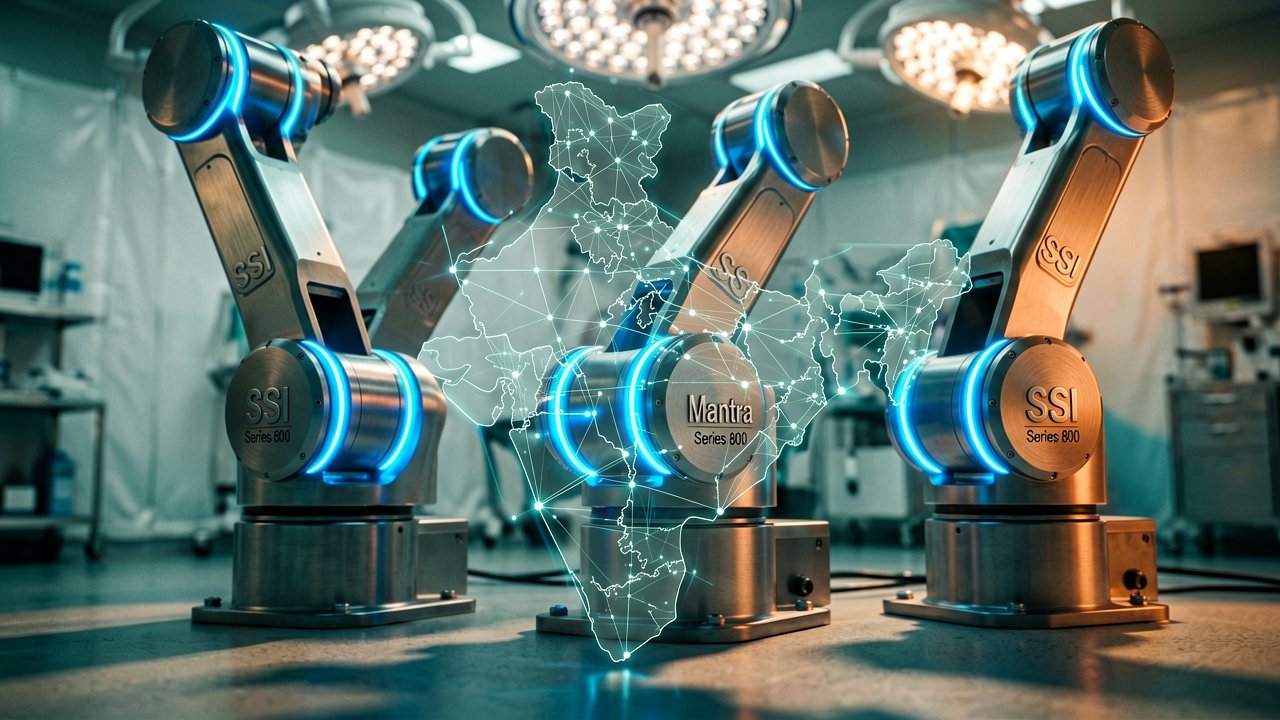
The formal launch of the advanced robotic surgery program at Jawaharlal Nehru (JLN) Medical College, Ajmer represents a critical inflection point for the regional healthcare infrastructure of Rajasthan. In an ecosystem where cutting-edge medical technologies historically cluster within tier-one metropolises, this deployment transitions high-precision therapeutics directly into regional centers. Inaugurated by Rajasthan Legislative Assembly Speaker Vasudev Devnani, the initiative addresses historically uneven distribution patterns of surgical innovation. By establishing a localized hub for advanced procedures, the state begins to systematically eliminate the geographical and financial friction that traditionally forces regional patients to migrate to distant cities for complex medical care.
From a market dynamics perspective, the core catalyst of this institutional transformation is the deployment of the SSI Mantra, an indigenous surgical robotic system engineered by SS Innovations International Inc. The utilization of a domestic platform alters the financial economics that long constrained medical robotics adoption across India, where imported hardware from dominant global monopolies frequently incurs prohibitive capital and operational expenses. Led by SS Innovations Founder and JLN Medical College alumnus Dr. Sudhir Srivastava, the program successfully executed inaugural multi-specialty interventions on its launch day. These initial cases spanned general surgery—including a robotic cholecystectomy and inguinal hernia repair—alongside complex cardiac interventions, notably achieving a robotic Atrial Septal Defect (ASD) closure completed in 78 minutes.
This deployment establishes an operational framework for integrating autonomous and robotic platforms into public and regional medical institutions. By combining lower-cost domestic hardware with public medical college infrastructures, the initiative outlines a scalable methodology to democratize advanced clinical interventions. Beyond expanding immediate therapeutic access, the program reshapes the local medical labor market. It integrates advanced ergonomics and high-magnification 3D visualization into the training curriculum, allowing regional institutions to retain top-tier surgical talent and equip the next generation of medical professionals with necessary digital competencies.
Strategic Market Reorientation via Indigenous Technology
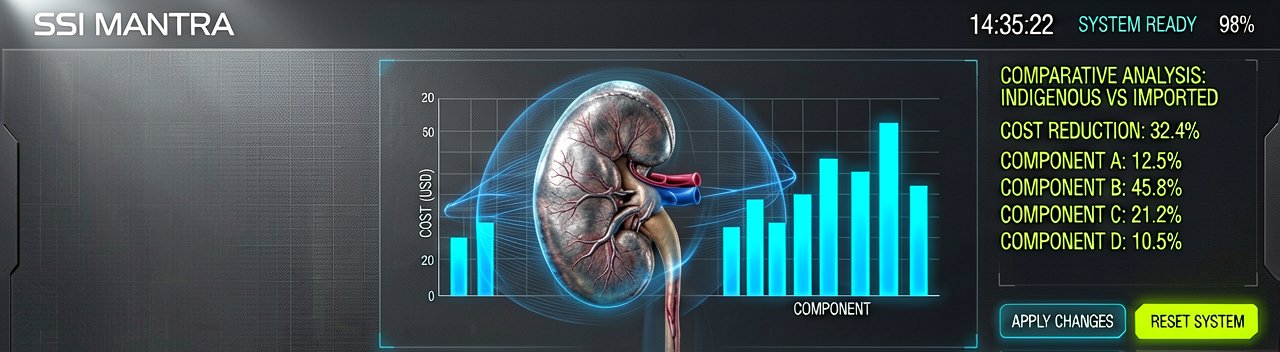
The commercial paradigm of surgical robotics within developing healthcare sectors has encountered chronic barriers due to high capital costs. Historically, global multi-port systems commanded acquisition costs between $1.8 million and $2.5 million, alongside high recurring instrument expenses. This restricted advanced robotics to premium, private medical centers located in affluent urban corridors, such as private setups in Jaipur. The selection of the SSI Mantra by JLN Medical College confirms a deliberate strategic pivot toward cost-efficient, indigenous alternatives designed to withstand high public patient volumes. This cost reduction lowers the financial threshold for public health institutions, enabling regional medical colleges to offer minimally invasive surgeries that reduce post-operative complications and accelerate hospital bed turnover rates.
Decentralization of Tier-One Clinical Capabilities
This initiative alters the competitive positioning of regional medical centers relative to state capitals and metropolitan healthcare networks. According to regional clinical assessments reported via The Indian Practitioner, introducing these platforms directly into Ajmer structures a robust referral ecosystem across central Rajasthan. Patients gain access to precision care without the secondary socioeconomic burdens of long-distance medical travel. This decentralization model matches broader macroeconomic efforts to balance healthcare distribution. It demonstrates that regional public institutions can successfully adopt and maintain advanced cybernetic systems, provided they utilize optimized procurement pipelines.
Clinical Specialization and Institutional Workforce Retention
Beyond immediate patient outcomes, the introduction of robotic systems addresses long-standing institutional talent retention challenges in regional sectors. By equipping JLN Medical College with multi-specialty robotic capability, the institution secures an essential asset for advanced academic and clinical training. The system scales motion down and filters physiological tremors, which extends the career longevity of experienced operators and accelerates the technical development of junior residents. This infrastructure prevents brain drain to private urban hospital chains. It transforms a regional public college into a competitive destination for surgical research, clinical trials, and specialized professional training.
Behind the Scenes of the Regional Robotic Paradigm
The institutional friction behind transitioning a tier-two public medical college into a robotic surgery hub reveals a complex negotiation between legacy clinical workflows and emerging cybernetic protocols. For decades, institutions like JLN Medical College in Ajmer operated under immense patient pressure, prioritizing high-throughput traditional open surgeries over capital-intensive technological adoptions. The shift required a complete reconfiguration of the physical architecture within the operating theaters, necessitating specialized sterilization zones, uninterrupted power grids, and rigorous recalibration protocols. This spatial and technical transformation was driven not just by administrative mandates, but by a collective realization that regional public healthcare must evolve to prevent systemic obsolescence.
A primary catalyst for this shift is the changing perspective of senior clinical faculty, who initially viewed the introduction of robotic arms with professional skepticism. Traditional surgeons, proud of their tactile feedback and decades of open-cavity experience, had to adapt to a detached console environment where sight replaces touch. The integration of 3D high-definition visualization and wristed instruments offering a greater range of motion than the human hand eventually turned skepticism into advocacy. Experienced clinicians noted that the system significantly reduced physical fatigue during prolonged multi-hour procedures, an overlooked variable that directly influences surgical precision and institutional safety margins in high-volume public hospitals.
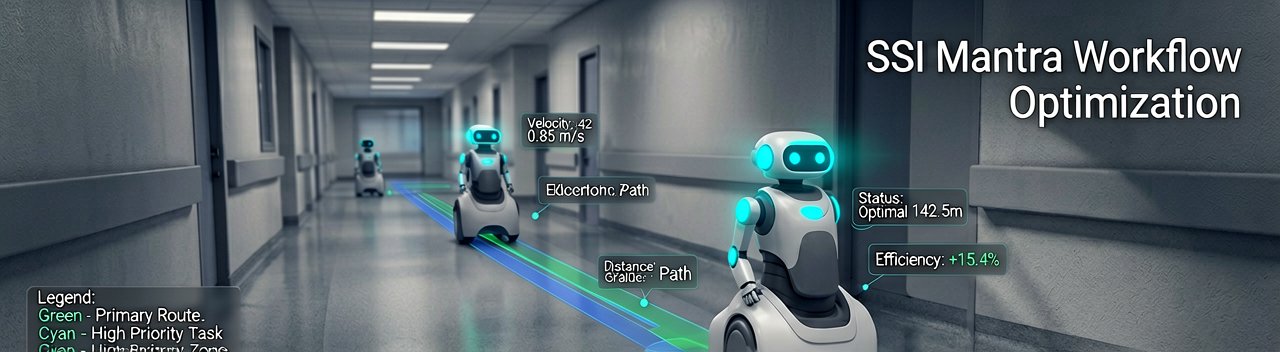
From the perspective of medical economics, the reliance on a domestic system like the SSI Mantra alters the cost-per-procedure calculus that previously paralyzed public health procurement boards. In a standard governmental healthcare setting, spending public funds on imported proprietary instruments that expire after a fixed number of uses was politically and financially unviable. By utilizing localized engineering, the cost barrier of consumables dropped sufficiently to align with state-sponsored insurance schemes, making advanced care accessible to low-income demographics. This economic alignment changes the narrative from technology as a luxury symbol to technology as an optimization tool for public welfare.
Furthermore, the broader socio-economic impact on patient families underscores the true value of decentralizing advanced clinical care. When a patient from a rural district undergoes complex surgery in a tier-one metropolis, the hidden costs—such as family displacement, loss of daily wages, and urban accommodation—often exceed the direct medical bills. By anchoring these capabilities within Ajmer, the regional healthcare system mitigates the financial shock that frequently drives rural families into medical debt. The success of this program creates a scalable blueprint for other states aiming to bridge the stark divide between urban medical advancement and regional healthcare delivery.
Reading Between the Lines of the Technological Leap
The celebratory narrative surrounding the democratization of robotic surgery often obscures a stark operational contradiction within public healthcare infrastructure. While deploying a cutting-edge robotic console in a regional medical college creates a compelling headline, it introduces a fragile high-tech node into an ecosystem frequently beset by baseline resource constraints. The pragmatic reality of public health budgeting means that funding an advanced cybernetic platform must coexist with chronic shortages of fundamental supplies, ranging from basic surgical drapes to specialized nursing staff. Forcing a sophisticated digital system into an environment designed for high-volume, low-resource throughput risks creating an isolated island of excellence rather than a systemic elevation of care.
Furthermore, the fiscal sustainability of this model relies on an optimistic projection of long-term maintenance and hardware reliability. Although an indigenous platform significantly lowers the initial capital expenditure hurdle, the ongoing operational costs remain tied to specialized components and proprietary software updates. Public procurement systems in regional states are notoriously bureaucratic, often resulting in month-long delays for spare parts and servicing contracts. If a critical robotic arm component requires replacement, the system faces the immediate threat of extended downtime, during which patient backlogs will inevitably swell and push cases back toward traditional, less efficient surgical modalities.
There is also a subtle institutional hazard regarding the misallocation of clinical focus and training priorities. As junior residents flock to robotic consoles to secure globally marketable skills, the foundational mastery of open and laparoscopic techniques risks becoming secondary. A surgeon over-reliant on 3D magnification and automated tremor filtration may find themselves underprepared when a sudden intraoperative crisis demands an immediate conversion to an open laparotomy. Striking a balance between pioneering technological adoption and maintaining robust baseline clinical competency will require strict administrative oversight, ensuring that the glamour of innovation does not eclipse the rigorous fundamentals of public medical education.
"In the grand theater of modern medicine, installing a multi-million-rupee robot in a regional ward is the easy part; the true miracle occurs when the hospital bureaucracy manages to keep the power grid stable and the proprietary software updated without requiring a legislative assembly vote for every single spare screw."
Artūras Malašauskas is an AI Systems Integrator with 20+ years of production-grade web engineering experience. He has designed, shipped, and scaled enterprise Python/PHP systems for logistics, SaaS, and public-sector clients. For the past year, he has focused exclusively on AI integrations: deploying open-source LLMs, building generative media pipelines (image, audio, video), and engineering multi-agent workflows for real production environments. His standard: reproducibility, security, cost-efficient inference—no vaporware. He documents and evaluates emerging AI tooling, separating verified capabilities from marketing noise. Technical editor at: muza-ai.eu, ai-verslas.lt, ai-naujinos.lt Connect on LinkedIn
Comments