Faraday Future Unleashes Six New Robot Lines—Including a $1,990 Quadruped to Hijack the Classroom
Faraday Future is making another aggressive pivot, and this time, it's steering hard into the world of affordable, everyday robotics. On June 17, 2026, the California-based tech firm officially revealed the first-half launch of its ambitious Full-Form EAI Robot World ecosystem, showcasing six distinct product series alongside a dedicated "Three-in-One" robotics education strategy. Instead of focusing solely on multi-million dollar industrial machinery, the company wants to flood the market with accessible tech, positioning itself to conquer classrooms and developer spaces alike.
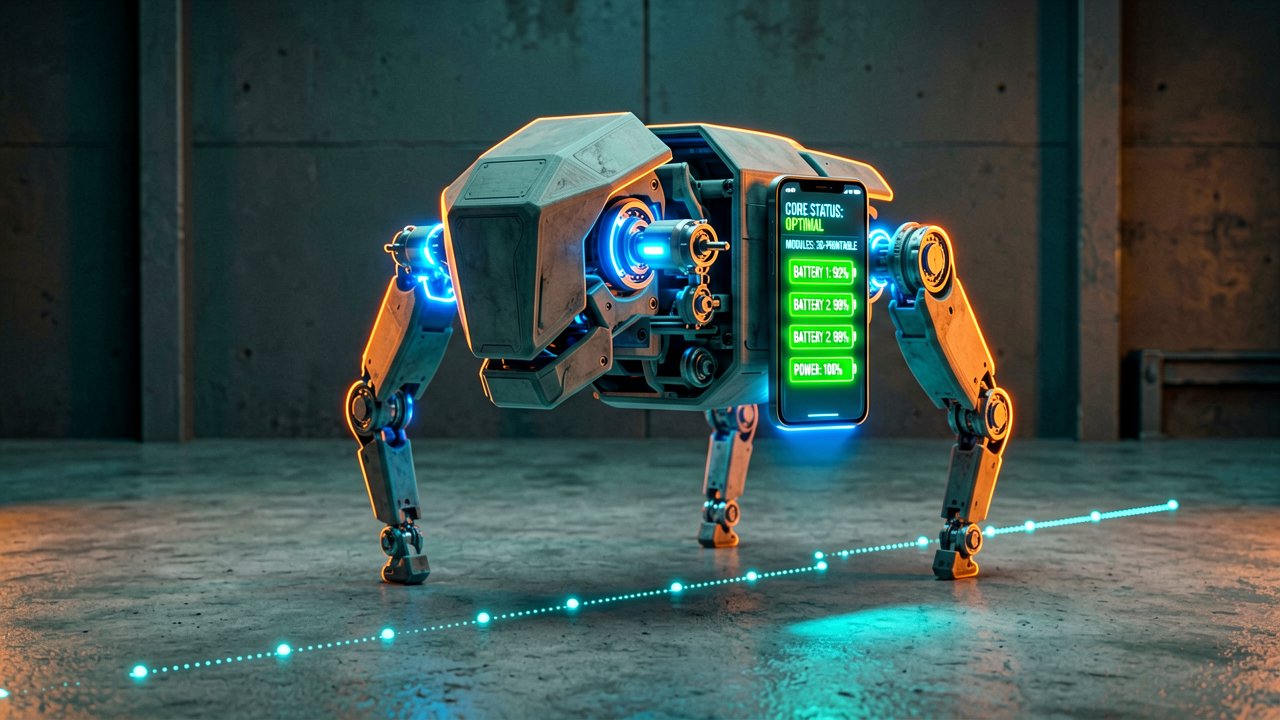
The clear showstopper for budget-minded tech enthusiasts is the FX Navi, an agile learning quadruped robot that commands a surprisingly slim $1,990 price tag. According to details shared by Faraday Future Investors, this makes it the only four-legged robot in the United States retailing under two grand that actually supports open secondary programming development. It strips away the traditional cost barriers by letting owners use an ordinary iOS or Android smartphone as the robot's main processing brain. Packed with 12 joint motors, a modular 3D-printable head, and a visual programming suite, it's built explicitly to give young developers a playground for testing new autonomous scripts without burning through an entire research budget.
Heavy Hitting Hardware: The All-New Futurist
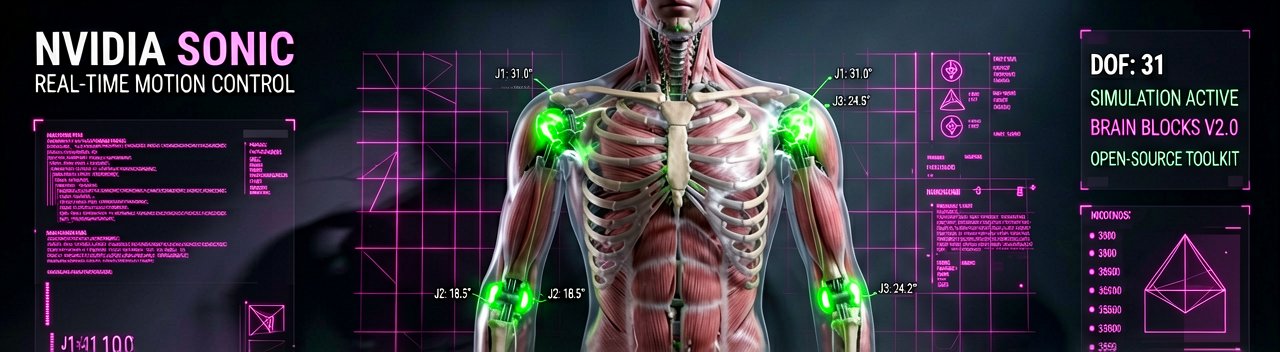
For those looking for something a bit more human, the company also debuted the All-New Futurist. Standing 5 feet 8 inches tall and dropping its weight down to 121 pounds, it is the first full-size humanoid in the U.S. to natively plug into NVIDIA Sonic's full-body motion control platform. It runs on 31 degrees of freedom and pushes up to six hours of juice on a dual-battery layout. It's a massive bet on "one brain, multiple forms"—an ecosystem architecture that layers a central Vision-Language-Action (VLA) World Model across completely different robot shapes so skills can easily transfer from a mechanical dog to a bipedal assistant. With open-source developer toolkits like Brain Blocks and EAI Soul going live immediately, the company isn't just selling metal; it's practically begging the developer community to build out the future software framework for them.
What Most Reports Miss: This pivot isn’t just a random diversification play; it’s a calculated survival blueprint from a company that has spent years dodging the financial graveyard. For over a decade, Faraday Future struggled to deliver its hyper-luxury electric cars, plagued by cash crunches and boardroom drama. By shifting gears to lean into Embodied AI (EAI), founder YT Jia is aggressively chasing a new growth curve, utilizing the company's existing automotive software engineering infrastructure to catch up with rivals like Tesla in the race for robotic dominance.
Industry insiders point out that the real value proposition lies in the "Device-Data-Brain" flywheel Faraday Future is trying to spin. Building physical robots is notoriously capital-intensive, but by leveraging an open developer platform that leans heavily on the community, the company shifts a portion of the software development burden onto its buyers. Every time a student codes an FX Navi to navigate a classroom or an early adopter tests an open-source tool, the central AI brain collects interaction data. This crowdsourced loop aims to dramatically accelerate how fast the underlying Vision-Language-Action models learn, bypassing the need for multi-billion dollar internal R&D simulation programs.
A Strategy Born From Automotive Scars
The decision to bundle hardware sales with recurring revenue models is straight out of the modern tech playbook, but with a unique twist tailored to institutional buyers. Unlike consumer-facing toy bots, the Faraday Future Investors framework relies heavily on "Ecosystem Skill Packages." It’s an approach that lowers the initial upfront barrier to entry for cash-strapped educational institutions while securing predictable, long-term software licensing fees. For schools trying to update their STEM curriculums to match a rapidly evolving AI market, paying a predictable subscription for advanced software tools is far more palatable than buying ultra-expensive enterprise machinery.
Skeptics naturally wonder if the company can genuinely execute a synchronized hardware rollout given its historically turbulent automotive delivery timeline. Yet, early traction reveals some surprisingly firm footing; the robotics division managed to quickly secure over 1,200 non-binding B2B deposits and has already begun dispatching initial shipments to select luxury hospitality and educational testing sites. By targeting controlled environments like university labs and commercial real estate first, the engineering teams can iron out real-world telemetry bugs before attempting the kind of high-volume mass production that has previously proved to be an elusive milestone.
Reading Between the Lines: The sheer scale of this deployment raises immediate engineering eyebrows, as history shows that launching six distinct hardware platforms simultaneously is usually a recipe for supply chain whiplash. Silicon Valley is littered with the carcasses of well-funded robotics startups that failed while trying to master just a single bipedal or quadrupedal form factor. By attempting to colonize education, commercial spaces, and personal assistance all at once, Faraday Future risks spreading its engineering talent incredibly thin. This scattered focus makes it incredibly difficult to achieve the deep, hyper-specialized optimization required to move these machines out of controlled demo rooms and into the unpredictable chaos of the real world.

There is also a glaring contradiction in the company’s math regarding the $1,990 FX Navi quadruped. While offloading the heavy computational lifting to a user’s smartphone is a clever trick to artificially depress the retail price, it introduces an absolute nightmare for software standardization. The processing performance, thermal throttling, and camera optics of an older budget Android phone are worlds apart from the latest flagship iOS device. Forcing a delicate, 12-motor balance and navigation script to run reliably across a fragmented sea of consumer smartphones could quickly turn Faraday Future's open-source developer forum into a chaotic technical support desk.
The Real Battle is Over the Data Flywheel
Furthermore, relying on cash-strapped universities and open-source hobbyists to build out the "EAI Soul" software ecosystem is a double-edged sword. While it dramatically lowers the company's initial research overhead, academic developers are notoriously fiercely protective of their intellectual property and rarely build polished, commercial-grade software out of the goodness of their hearts. If the developer community realizes that their free labor is simply being ingested to train a proprietary Vision-Language-Action world model that Faraday Future plans to monetize later through enterprise channels, the initial goodwill driving this launch could evaporate overnight.
Ultimately, this entire robotics push feels less like a traditional product roadmap and more like a high-stakes race to validate a brand-new corporate valuation before the patience of the public markets completely runs out. If these machines successfully integrate into school curriculums and start racking up reliable subscription revenue, the company might just pull off one of the greatest pivot-to-tech stories in modern corporate history. However, if the hardware proves too fragile and the software fragmentation remains unsolved, this ambitious robot world risks being remembered as an expensive, multi-legged distraction from an automotive dream that never quite crossed the finish line.
It turns out that when building a street-legal electric hypercar proves too difficult, the logical corporate pivot is simply to build thirty-one-degree-of-freedom humanoid robots instead; after all, machines don't need to pass a highway crash test to look brilliant on a balance sheet.
Artūras Malašauskas is an AI Systems Integrator with 20+ years of production-grade web engineering experience. He has designed, shipped, and scaled enterprise Python/PHP systems for logistics, SaaS, and public-sector clients. For the past year, he has focused exclusively on AI integrations: deploying open-source LLMs, building generative media pipelines (image, audio, video), and engineering multi-agent workflows for real production environments. His standard: reproducibility, security, cost-efficient inference—no vaporware. He documents and evaluates emerging AI tooling, separating verified capabilities from marketing noise. Technical editor at: muza-ai.eu, ai-verslas.lt, ai-naujinos.lt Connect on LinkedIn
Comments