Alibaba’s Qwen-Robot Suite Redefines Embodied AI, Shifting the Robotics Industry from Chatbots to Autonomous Physical Agents
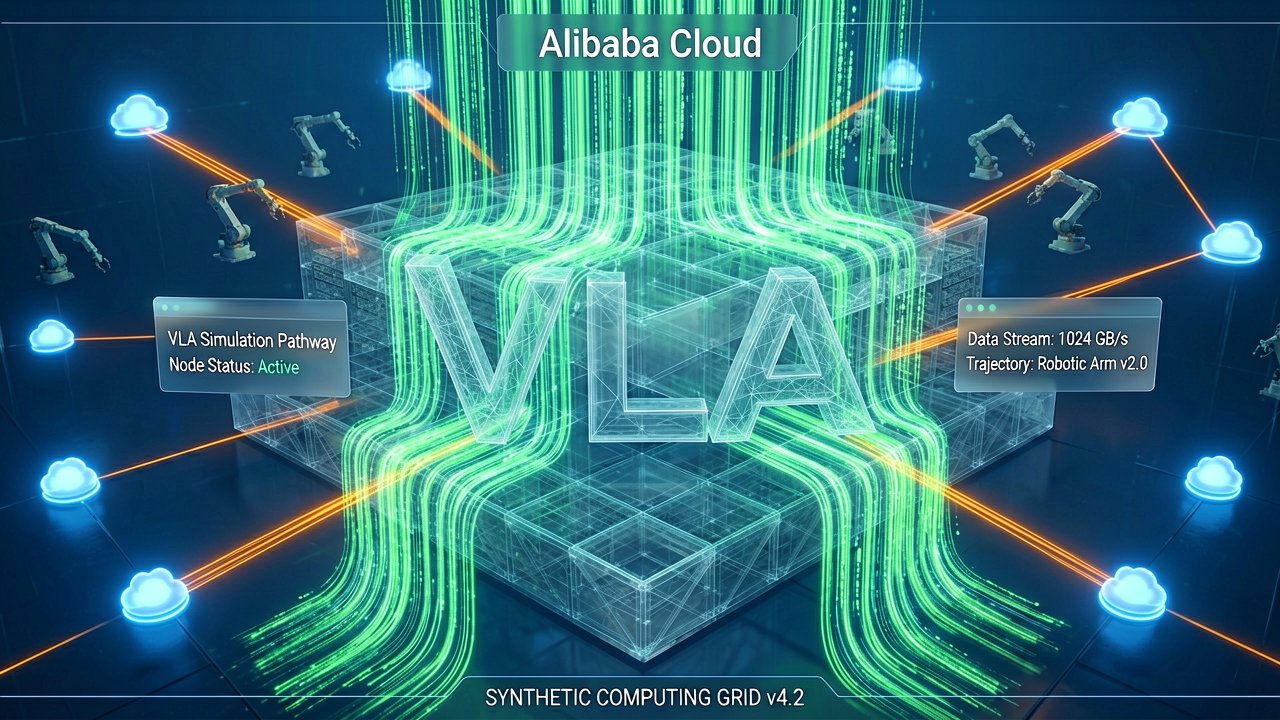
The global artificial intelligence landscape is undergoing a structural realignment as tech giants pivot from virtual chatbots to physical automation. Alibaba Group Holding has accelerated this transition by launching the Qwen-Robot series, its first comprehensive family of foundational AI models designed specifically for embodied intelligence. Developed by Alibaba’s AI research unit, South China Morning Post reported that the suite splits robotic intelligence into three interconnected layers to synchronize visual perception, predictive reasoning, and physical task execution.
This product launch shifts AI workloads directly into real-world environments, utilizing Alibaba Cloud infrastructure to operationalize intelligent machinery. According to market coverage by MarketScreener, the newly introduced models have already entered pilot testing with select enterprise cloud customers within the robotics sector. By establishing a unified software framework for multi-platform hardware, Alibaba aims to position its open ecosystem as the architectural backbone for the next generation of industrial automation, factory logistics, and smart terminal applications.
The Tri-Model Architecture: Hands, Feet, and Brain
The Qwen-Robot series addresses long-standing bottlenecks in traditional robotic control, particularly weak task generalization in unstructured environments. The ecosystem distributes capabilities across three specialized foundational models:
- Qwen-RobotManip: Operating as a vision-language-action (VLA) model built on the Qwen3.5-4B architecture, this system interprets natural language instructions and directly maps them to incremental poses in camera coordinates. This enables robotic arms to manipulate objects flexibly without pre-programmed spatial paths.
- Qwen-RobotNav: A vision-language-navigation (VLN) model that unifies target tracking, instruction following, goal-directed navigation, and autonomous driving. It provides mobile automated guided vehicles (AGVs) and industrial machinery with spatial path-planning and obstacle avoidance capabilities.
- Qwen-RobotWorld: Functioning as a high-level cognitive world model, this system allows an agent to predict and simulate environmental changes via a natural-language action interface. By calculating physically consistent future outcomes before physical movement occurs, it introduces a predictive reasoning layer crucial for autonomous learning.
Strategic Market Reorientation and Cloud Monetization
Alibaba's foray into physical AI reflects an aggressive infrastructure strategy rather than a move toward hardware manufacturing. Unlike pure-play hardware developers, Alibaba is prioritizing the platform layer, licensing the Qwen-Robot software architecture across varying robotic form factors. This allows the firm to tie industrial robotics deployment directly to Alibaba Cloud computing consumption, converting cutting-edge physical AI into a high-margin enterprise software pipeline.
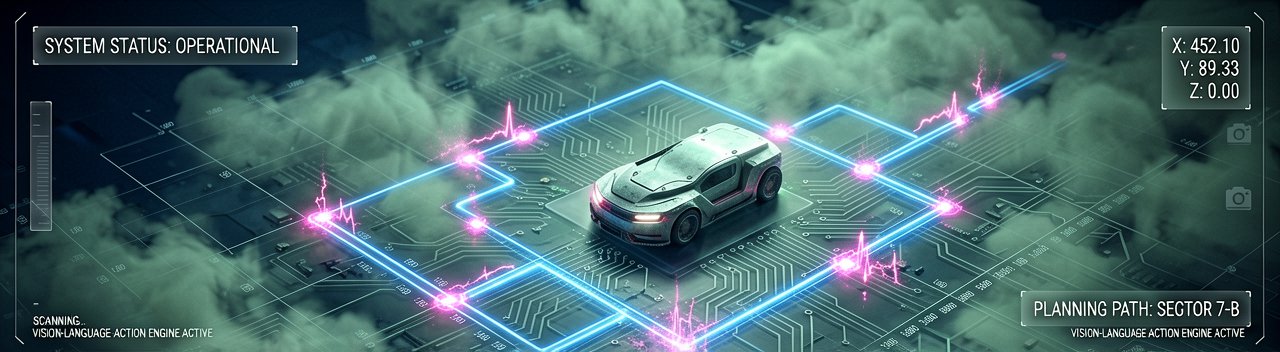
This launch intensifies regional and global competition in the physical AI sector. Tech incumbents like Baidu and Tencent are aggressively scaling competitive platforms, such as the HY-Embodied series, while heavily funded global startups race to construct generic robotic brains. By leveraging extensive e-commerce and logistics data alongside a robust cloud network, Alibaba is consolidating its position to capture the enterprise software tier of an industrial robotics market increasingly reliant on autonomous decision-making.
Behind the Scenes of the Embodied AI Shift
The unveiling of the Qwen-Robot suite represents more than a milestone in technical engineering; it signals a radical reconfiguration of capital and cloud resources inside Alibaba. Over the last three years, the tech giant's robotics division operated primarily in the shadow of its consumer-facing Large Language Models, struggling to justify the immense capital expenditure required to train models on spatial data. Industry insiders note that the breakthrough came when Alibaba Cloud engineering successfully adapted its video-processing pipelines to generate millions of synthetic hours of physical simulation data. This synthetic environment solved the acute real-world data scarcity problem that has historically crippled vision-language-action frameworks, transforming a localized research project into an enterprise-ready infrastructure play.
For decades, traditional industrial automation relied on rigid, deterministic code, where a robotic arm on an assembly line required exact coordinates to manipulate a uniform part. A deviation of mere millimeters could halt an entire production facility. Alibaba's approach alters this dynamic by shifting the operational center of gravity from the physical hardware to cloud-edge hybrid networks. By distributing the computation between localized edge processing for low-latency movement and centralized cloud computing for high-level cognitive world modeling, factories can deploy cheaper, less computationally heavy hardware. This decentralization addresses a primary concern among tier-one manufacturing stakeholders who are hesitant to overhaul existing, multi-billion-dollar robotic infrastructure just to accommodate AI software.
The domestic geopolitical backdrop further intensifies the strategic urgency of this deployment. As China faces a shrinking workforce and surging labor costs, the state has actively subsidized industrial intelligence initiatives to maintain global manufacturing dominance. Alibaba's decision to offer open-ecosystem components within the Qwen-Robot architecture directly taps into these national modernization initiatives. Early trials within Alibaba’s own Cainiao logistics centers reportedly demonstrated an unprecedented drop in package-sorting exception rates, proving that adaptive, vision-language-navigation agents can autonomously resolve floor obstructions that previously required manual human intervention. This practical validation serves as a vital proof-of-concept for conservative supply chain executives.

However, the transition from simulated predictability to complex factory environments introduces significant friction. Hardware integrators working with early developer kits have raised concerns over unpredictable latency spikes during cloud-to-edge handshakes, which can cause micro-stutters in physical movement. In heavy industrial environments, a half-second delay in a robotic arm's trajectory poses severe safety and financial liabilities. Alibaba's engineering teams are currently racing to optimize localized model quantization, aiming to compress the Qwen-RobotManip architecture so that it can run entirely on on-premise industrial chipsets. The success of this compression effort will ultimately determine whether the suite achieves mass adoption or remains restricted to highly specialized, low-risk warehousing operations.
Reading Between the Lines: The Reality of the Automated Frontier
The tech industry's rapid embrace of Alibaba’s embodied AI narrative overlooks a fundamental economic contradiction: the mismatch between variable cloud pricing models and fixed industrial operating margins. Alibaba’s business model inherently relies on continuous, intensive compute cycles hosted on Alibaba Cloud to power the Qwen-Robot brains. However, the manufacturing sector operates on razor-thin margins where capital expenditures are depreciated over decades, not months. Factory owners accustomed to predictable, one-time hardware investments are showing immense resistance to variable, subscription-based AI licensing models that expose their core operational costs to the volatile fluctuations of cloud computing fees.
Furthermore, the promise of a universal "robotic brain" capable of seamlessly switching between picking logistics boxes and assembling precision electronics ignores the messy reality of hardware fragmentation. While a vision-language-action model like Qwen-RobotManip might excel in a clean laboratory simulation, it faces severe degradation when subjected to the dust, vibrational noise, and erratic lighting of a real-world foundry. The current promotional materials gloss over the extensive, hyper-localized fine-tuning required for each unique factory layout. This technical debt means that instead of deploying an autonomous plug-and-play solution, enterprise clients remain heavily dependent on a small army of specialized integration engineers, effectively replacing manual floor labor with highly expensive software maintenance teams.
There is also a strategic irony in Alibaba’s open-ecosystem approach. By licensing the software across diverse hardware platforms, Alibaba risks diluting its control over the quality of execution. If a third-party robotic chassis experiences a mechanical failure or an actuator latency lag while running a Qwen model, the brand damage falls squarely on Alibaba’s software reputation. As rival tech conglomerates launch tightly integrated, proprietary hardware-software packages reminiscent of closed consumer ecosystems, Alibaba's reliance on a fragmented network of disparate hardware vendors may ultimately hinder the standardized reliability that heavy industry demands above all else.
"We are told that these brilliant new robotic brains will soon autonomously manage our entire supply chain from cloud to factory floor, which is a comforting thought—provided your warehouse enjoys flawless Wi-Fi, your robotic arms never get dusty, and you don’t mind paying a cloud subscription fee every time a machine decides to pick up a wrench."
Artūras Malašauskas is an AI Systems Integrator with 20+ years of production-grade web engineering experience. He has designed, shipped, and scaled enterprise Python/PHP systems for logistics, SaaS, and public-sector clients. For the past year, he has focused exclusively on AI integrations: deploying open-source LLMs, building generative media pipelines (image, audio, video), and engineering multi-agent workflows for real production environments. His standard: reproducibility, security, cost-efficient inference—no vaporware. He documents and evaluates emerging AI tooling, separating verified capabilities from marketing noise. Technical editor at: muza-ai.eu, ai-verslas.lt, ai-naujinos.lt Connect on LinkedIn
Comments