Epic’s Controlled Chaos: The Generative AI Pipeline Powering Fortnite’s Next Generation of Skin Designs
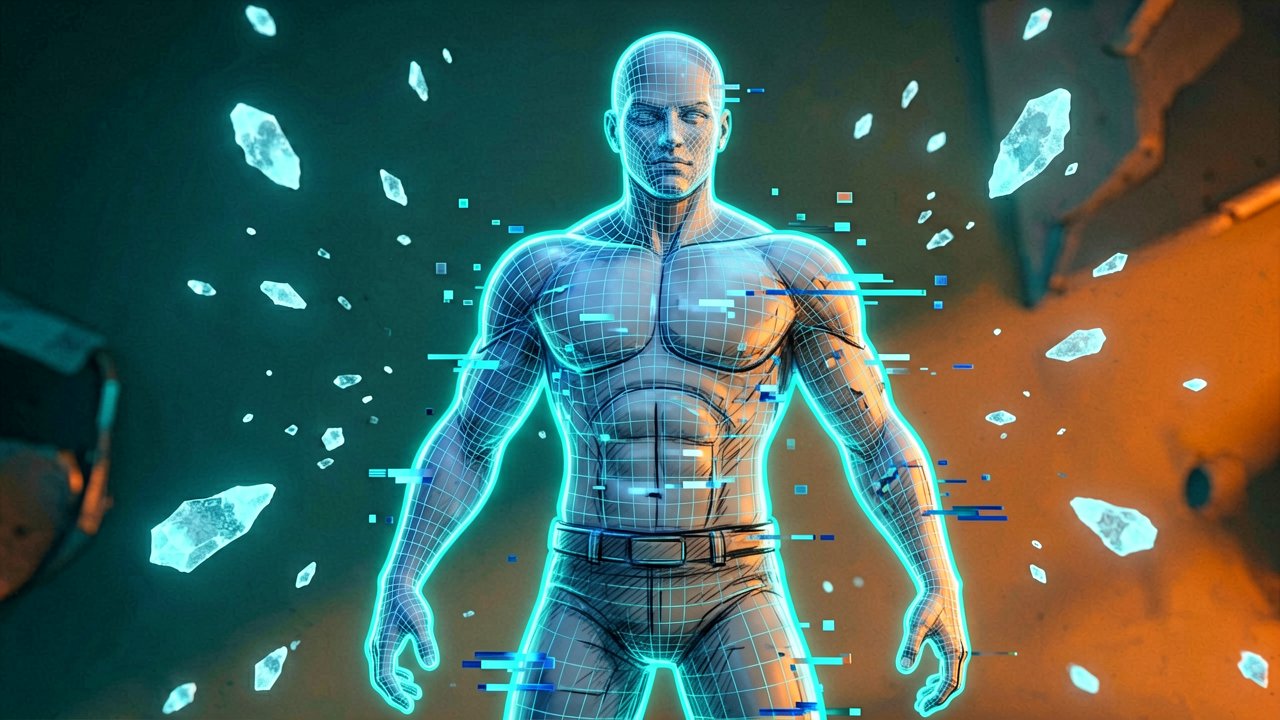
Epic Games has cracked open its development vault to show how machine learning is actively reshaping Fortnite's cosmetic ecosystem. Through a newly released behind-the-scenes look covered by Kotaku, the studio revealed that generative artificial intelligence has graduated from an experimental side project to an embedded pillar of its concept art pipeline. By leveraging an internal bridge called GenMedia alongside third-party models, Epic's artists are drastically accelerating the ideation stage of characters, environmental elements, and character skins. It is a highly deliberate technical architecture designed to speed up the creative cycle by feeding rough human sketches into machine learning algorithms to produce rendered variants within seconds.
What makes this deployment unique isn't just the speed; it is Epic's active embrace of algorithmic flaws. Instead of fighting the common hallucinations and visual artifacts characteristic of generative models—such as asymmetrical armor pieces, misplaced gear pouches, or distorted textures—the studio treats them as a creative spark. Hand-drawn orthographic sketches are run through the pipeline, generating rapid visualizations that intentionally introduce unpredictable errors. Human artists then step back into the loop to paint over, adjust, or completely rethink the designs based on those happy accidents. Epic pitches this as an optimization strategy that keeps human decision-making front and center, transforming what would traditionally be considered software defects into unexpected avenues for design inspiration.
Inside the GenMedia Architecture
The backend fueling this workflow relies heavily on the custom-built GenMedia bridge, which functions as a direct connective tissue between industry-standard creative software like Adobe Photoshop and underlying machine learning frameworks. Rather than handing complete creative autonomy over to the machine, the system functions on a prompt-to-render basis. An artist inputs a foundational sketch and uses the GenMedia integration to issue specific parameters, such as asking the system to clean up the rendering without altering the foundational silhouette. This architecture is supplemented by standard machine learning models tailored for localized asset generation, enabling rapid iteration cycles that convert ten-hour manual shading tasks into rapid, iterative feedback loops.
Performance Gains and Pipeline Metrics
Transitioning to this hybrid generative model has yielded distinct performance advantages across Epic's design departments. By automating the foundational color-blocking and lighting passes that typically consume the bulk of early-stage concept cycles, the studio has managed to squeeze production timelines significantly. Early workflow data indicates that tasks previously requiring extensive rendering hours are now compressed into localized bursts, allowing concept artists to churn through multiple style permutations in a single afternoon. The efficiency gains enable Epic to maintain its relentless seasonal release cadence for Fortnite while freeing up human labor to focus strictly on complex 3D modeling and final asset polishing.

The reception from the broader community, however, illustrates the ongoing friction point between automation and industry labor. Critics and digital artists have voiced sharp skepticism on platforms like Aftermath, arguing that relying on machine learning to fill in the visual blanks strips away genuine creative intent. Despite the pushback and growing player demands for explicit disclaimers on AI-assisted shop items, Epic remains deeply committed to scaling its machine learning infrastructure. By institutionalizing controlled chaos within the initial design phases, the studio is betting that its blend of automated generation and manual curation will define the future of live-service game development.
Behind the Scenes: Optimizing the Generative Latent Space for Live-Service Scalability
Behind the Scenes: Engineering a pipeline capable of injecting intentional chaos into Fortnite’s creative workflow requires moving far beyond basic API calls to external image generators. Epic’s systems engineers treat the latent space of generative models as a highly programmable database, where raw random noise must be bound by strict structural constraints. To achieve this, the GenMedia backend implements customized ControlNet pipelines coupled with Latent Consistency Models (LCMs) to run on local, high-throughput GPU clusters. By freezing the structural silhouette of an artist's initial sketch inside the spatial conditioning layers, the system can systematically manipulate the denoising strength parameters. This granular control allows engineers to dial the model's creative variance up or down, ensuring that while the textures and accessory placements remain unpredictable, the core skeleton conforms exactly to Fortnite’s rigid rigging and animation standards.
To prevent this automated chaos from becoming a massive computational bottleneck, Epic's infrastructure prioritizes TensorRT acceleration and deep memory-bandwidth optimizations. Processing high-resolution orthographic views in real-time demands massive VRAM allocations, which the engineering team mitigates through selective activation checkpointing and 16-bit floating-point (FP16) quantized execution graphs. By stripping away redundant precision calculations during the forward diffusion passes, the GenMedia bridge reduces generation latency to sub-second intervals per iteration loop. This performance profile ensures that an artist can actively cycle through dozens of structural variations without experiencing the typical UI lag that disrupts a natural creative workflow.
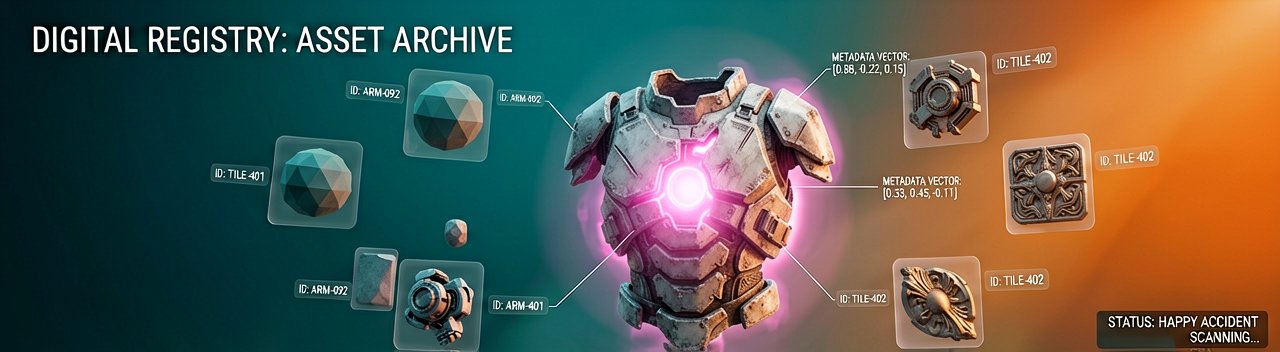
The true architectural marvel lies in how Epic handles asset caching and the downstream delivery of these machine-assisted concepts to the 3D modeling teams. Every AI-generated output is indexed alongside its exact seed value, prompt weights, and conditional control maps inside a centralized internal asset registry. This metadata footprint allows the studio to maintain absolute reproducibility, meaning a design artifact or "happy accident" generated months prior can be re-synthesized, modified, or audited for style consistency at a moment's notice. By treating machine learning generations as structured, deterministic data arrays rather than ephemeral image files, Epic successfully transforms volatile, chaotic algorithms into a reliable, enterprise-grade engineering asset.
Reading Between the Lines: The Cost of Commercializing Chaos
Reading Between the Lines: Epic’s romanticization of "controlled chaos" as a catalyst for player-driven innovation neatly deflects from a more clinical reality: live-service games are insatiable content treadmills. By framing software-generated hallucinations as happy accidents, the studio masterfully rebrands the inherent instability of generative AI as an intentional design feature. There is a glaring contradiction in celebrating unpredictable errors within a pipeline that ultimately feeds into one of the most strictly regulated, corporate-vetted IP ecosystems in entertainment. While an artist might find inspiration in a misplaced gear pouch or a scrambled texture, every asset entering Fortnite must still clear a gauntlet of legal, brand, and optimization hurdles that leave very little room for true, unscripted chaos.
Furthermore, the assertion that this pipeline keeps human decision-making front and center overlooks the insidious ways automation shifts the nature of creative labor. When human artists spend their days painting over machine-generated variants and correcting algorithmic mistakes, their roles risk transitioning from visionary creators to high-end content janitors. This shift creates a bizarre paradox where a studio leverages cutting-edge technology to accelerate ideation, only for its highly skilled workforce to spend hours reversing the technical regressions introduced by that very same software. The efficiency gains are undeniable, but they come at the expense of a fragmented creative process that trading deliberate artistic intent for rapid, algorithmic permutations.
Looking ahead, the long-term implication of institutionalizing this workflow is a subtle homogenization of game aesthetics disguised as endless variety. Because generative models inherently predict the most statistically probable next pixel based on existing data, their outputs are fundamentally derivative. Epic may successfully squeeze its production timelines and maintain its relentless seasonal release cadence, but relying on a feedback loop of machine-learning models risks trapping Fortnite's visual identity in an echo chamber of its own past designs. In the rush to outrun the content treadmill, the industry may find that outsourcing the spark of human error to a machine yields a universe of infinite variations, yet remarkably little genuine novelty.
"In the end, Epic’s grand experiment proves that while you can successfully teach a machine to make mistakes faster than any human ever could, you still need a salaried artist to explain why a character shouldn't have three kneepads and an inverted elbow."
Artūras Malašauskas is an AI Systems Integrator with 20+ years of production-grade web engineering experience. He has designed, shipped, and scaled enterprise Python/PHP systems for logistics, SaaS, and public-sector clients. For the past year, he has focused exclusively on AI integrations: deploying open-source LLMs, building generative media pipelines (image, audio, video), and engineering multi-agent workflows for real production environments. His standard: reproducibility, security, cost-efficient inference—no vaporware. He documents and evaluates emerging AI tooling, separating verified capabilities from marketing noise. Technical editor at: muza-ai.eu, ai-verslas.lt, ai-naujinos.lt Connect on LinkedIn
Comments