U.S. Risks Falling Behind in AI Race Without Lifting Anthropic Restrictions, Experts Warn
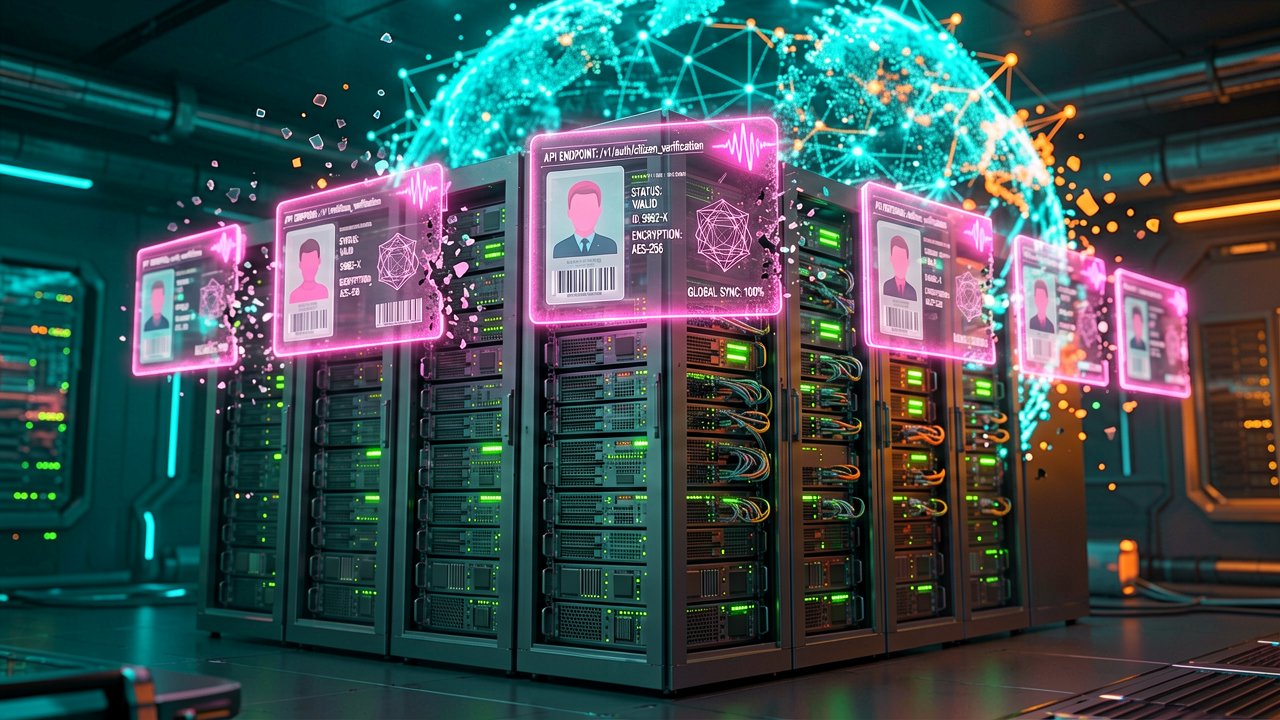
The Trump administration's unprecedented decision to issue an export control directive restricting foreign national access to Anthropic's newly released frontier models, Mythos 5 and Fable 5, has ignited an intense debate over U.S. technological leadership and national security. In response to the federal order, which banned usage by any non-U.S. citizen both domestically and abroad, CNBC reported that Anthropic abruptly disabled access to both systems for all users globally to guarantee compliance. This abrupt shift from the administration’s promised "light-touch" regulatory framework has raised deep concerns across the technology sector that erratic, ad hoc government interventions will cripple domestic innovation at a critical juncture in the global AI race.
Market dynamics are shifting rapidly as the broad mandate impacts not only overseas clients but also highly skilled foreign-born researchers working within the United States. Policy advocates and industry groups warn that enforcing citizenship-based verification on software infrastructure creates administrative roadblocks that incentivize talent and venture capital to migrate to more predictable regulatory environments. According to coverage by The Hill, tech leaders argue that bypassing transparent, evidence-based standards in favor of sudden executive edicts undermines commercial predictability, putting American companies at a distinct disadvantage against international rivals operating under structured frameworks.
The geopolitical stakes are further compounded by concerns within the defensive tech sector, where advanced models are heavily utilized to counter foreign cyber threats. Over 100 cybersecurity executives and tech leaders from major firms signed a joint letter to the White House demanding the administration lift the export restrictions, as documented by the Associated Press . The coalition asserted that isolating American frontier technology inadvertently favors global adversaries, who continue to advance open-access models without equivalent bureaucratic friction.
The Cybersecurity Paradox and Adversary Advantage
The core of the executive restriction rests on unquantified cybersecurity risks and potential "jailbreak" vulnerabilities within the Mythos 5 architecture. However, security professionals argue that removing top-tier models from the market paralyzes defensive capabilities while doing little to slow down foreign adaptation. Industry experts noted in a report by Virginia Business that international competitors, including China's Kimi 2.7 model, possess comparable mathematical and software exploitation capabilities, meaning the U.S. ban fails to achieve isolation while actively starving domestic cyber-defenders of state-of-the-art vulnerability-patching tools.
Operational Chaos and the Chilling Effect on Capital
The enforcement of the directive marks the first time the U.S. government has leveraged export controls to claw back commercially deployed software rather than hardware components like semiconductors. Legal and corporate analysts observed via Reuters that because frontier AI development depends heavily on multinational teams, prohibiting foreign national employees from interacting with internal codebases threatens day-to-day operations. This operational instability complicates pending capital market maneuvers, cloud-provider agreements with partners like Amazon Web Services, and upcoming initial public offerings across the entire Silicon Valley ecosystem.
The Hidden Fault Lines of Digital Sovereignty
Behind the Corporate Veil: The forced shutdown of Anthropic’s flagship models has exposed a fundamental misunderstanding within federal regulatory bodies regarding how modern artificial intelligence is built and maintained. Silicon Valley’s frontier systems do not exist as isolated software packages that can be locked behind a physical border. Instead, they rely on distributed cloud infrastructure and continuous, real-time reinforcement learning feedback loops managed by a highly international workforce. By enforcing strict citizenship-based barriers on who can interact with a live model, the administration has disrupted the core engineering workflows of major AI laboratories, forcing companies to partition their development teams and slow down the deployment of critical safety patches.
This aggressive intervention marks a significant strategic pivot from the historical precedent of export controls, which traditionally focused on tangible hardware components like extreme ultraviolet lithography machines and high-bandwidth memory chips. Veteran technology policy analysts note that attempting to regulate code as if it were a physical munition creates an unenforceable compliance nightmare for enterprise software providers. Because global cloud networks are inherently borderless, software firms are now being forced to implement invasive identity verification mechanisms for API users worldwide, a move that is already alienating allied European and Asian tech hubs that depend on American infrastructure for their own domestic software applications.
The domestic fallout extends directly into the venture capital ecosystem, where institutional investors are reassessing the risk profiles of American AI startups. For years, the primary risk metric for frontier AI investments centered on compute costs and algorithmic efficiency. Now, capital allocators must factor in geopolitical regulatory risk, fearing that a sudden executive order could overnight invalidate a portfolio company's international customer base or restrict its access to foreign engineering talent. This regulatory volatility is beginning to redirect early-stage seed funding toward decentralized open-source projects and international artificial intelligence firms operating out of jurisdictions with more predictable, legally codified frameworks.

Furthermore, the long-term impact on the academic and research pipelines could permanently degrade the domestic talent pool. Historically, the United States has maintained its technological edge by absorbing the world’s top mathematical and computer science minds through university research programs and corporate sponsorships. By signaling that foreign national researchers will face systemic exclusion from working on state-of-the-art architectures, the current policy framework inadvertently accelerates a reverse brain drain. This shift directly benefits competing tech ecosystems in Canada, the United Kingdom, and the European Union, which are actively expanding their specialized visa programs to capture the highly skilled professionals displaced by shifting American policies.
The Counterproductive Mechanics of Techno-Nationalism
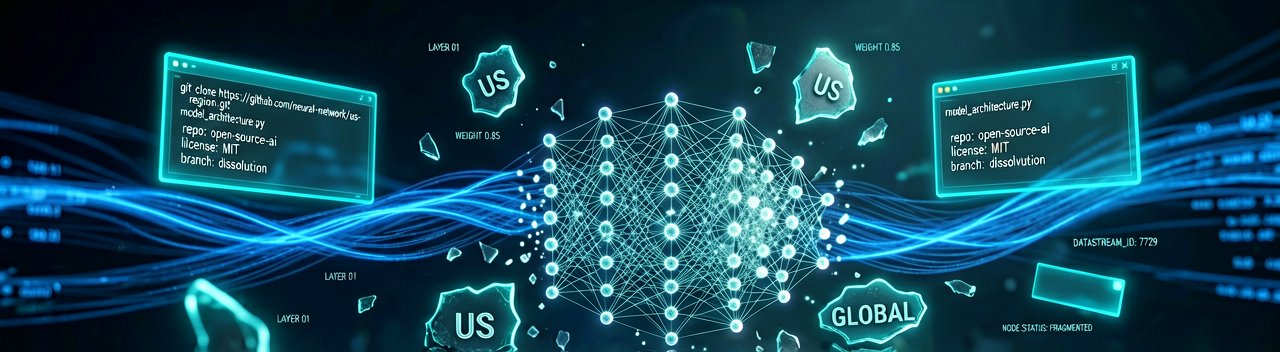
Reading Between the Lines: The administration’s aggressive use of export controls to isolate software code rests on a deeply flawed assumption that state-of-the-art AI models can be corralled like physical munitions. While restricting access to advanced semiconductors like specialized graphics processing units has proven highly effective due to concentrated hardware supply chains, imposing a digital iron curtain around algorithmic architectures is an entirely different operational challenge. Code is infinitely replicable, and the mathematical principles underpinning the latest neural networks are already widely distributed throughout the global academic community. Attempting to freeze software deployment mid-stride ignores the open-source reality of modern computer science, where international researchers routinely replicate proprietary breakthroughs within months using slightly less efficient hardware.
A striking contradiction lies at the heart of this national security mandate. By cutting off access to allied nations and foreign nationals, the federal government intends to protect proprietary American innovation from being reverse-engineered or weaponized by adversaries. However, the immediate practical effect is exactly the opposite. Denying international markets access to secure, regulated American models simply creates an immediate market vacuum. Foreign enterprise clients and developer communities will not halt their operations; instead, they are actively being pushed into the arms of non-American ecosystems, accelerating the adoption of alternative architectures that Washington has absolutely no ability to monitor, audit, or influence.
This heavy-handed regulatory approach also threatens to dismantle the very economic engine that funds frontier AI development in the first place. The immense capital required to train next-generation models—now measuring in the billions of dollars per cluster—is sustained by rapid commercialization and global enterprise software-as-a-service revenues. Stripping companies like Anthropic of their international consumer base overnight cripples their monetization pipelines. When domestic regulations artificially choke commercial revenue while state-backed foreign competitors operate with massive government subsidies, the U.S. technology sector is left fighting a war of attrition with one hand tied behind its economic back.
Ultimately, treating software as a static resource rather than a dynamic process could permanently stall the American innovation flywheel. The true source of technological dominance has never been a specific snapshot of code or a single model version frozen in time; it is the sheer velocity of iterative development. By forcing engineers to pivot away from active research and focus instead on building labyrinthine compliance systems, identity verification walls, and citizenship tracking databases, the policy slows down the domestic release cycle. In a hyper-accelerated industry where standing still for a fiscal quarter equates to falling behind, bureaucratic friction may prove far more damaging to national security than the theoretical risks of international access.
"In its quest to build an impenetrable digital fortress around American innovation, Washington appears to have forgotten a basic rule of the software era: nothing stays locked down for long, and the only thing faster than a silicon Valley startup losing its edge is a bureaucrat trying to regulate a line of code with a clipboard."
Artūras Malašauskas is an AI Systems Integrator with 20+ years of production-grade web engineering experience. He has designed, shipped, and scaled enterprise Python/PHP systems for logistics, SaaS, and public-sector clients. For the past year, he has focused exclusively on AI integrations: deploying open-source LLMs, building generative media pipelines (image, audio, video), and engineering multi-agent workflows for real production environments. His standard: reproducibility, security, cost-efficient inference—no vaporware. He documents and evaluates emerging AI tooling, separating verified capabilities from marketing noise. Technical editor at: muza-ai.eu, ai-verslas.lt, ai-naujinos.lt Connect on LinkedIn
Comments