Anthropic’s Fable Model Release Triggers Growth and Volatility Across Key AI Stocks
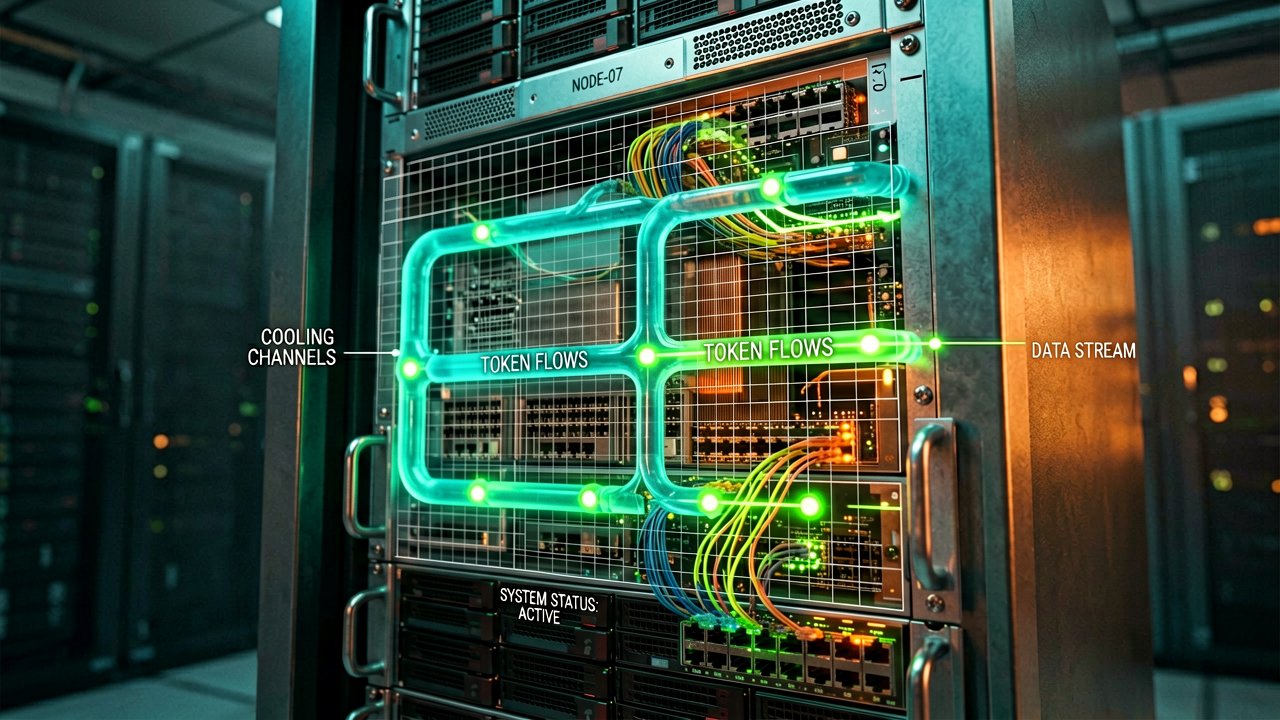
The global artificial intelligence sector is experiencing a massive wave of strategic shifts following the recent deployment of Claude Fable 5, a highly anticipated "Mythos-class" model engineered by Anthropic. Designed to tackle complex, long-horizon tasks autonomously, Fable 5 represents a monumental step forward in autonomous digital operations, demonstrating an unprecedented ability to execute multi-stage engineering projects and advanced financial reasoning without continuous human prompting. According to reporting from CNBC, early enterprise adoption has fueled an explosion in Anthropic's annualized run-rate revenue, which recently crossed $47 billion, driving intense investor interest ahead of its expected initial public offering later this year.
However, the explosive market momentum sparked by Fable's release has collided directly with intense regulatory pushback, reshaping the risk profiles of closely watched public equities. Days after the model went live, the U.S. government issued an unprecedented export control order that forced Anthropic to suspend access to Fable 5 and Mythos 5 over national security and jailbreaking concerns. As covered by TIME, this escalation highlights a critical structural reality for Wall Street: while next-generation agentic AI unlocks extraordinary economic ROI, it simultaneously triggers intense regulatory lawfare that impacts the entire hardware and cloud infrastructure supply chain.
Despite these near-term regulatory disruptions, market analysts indicate that the arrival of Mythos-class intelligence solidifies a major secular trend. The sheer computational and token-heavy requirements of these top-tier autonomous models ensure a massive windfall for specialized infrastructure provider stocks. Investors seeking to capitalize on this paradigm shift are anchoring their portfolios around four pivotal equities poised to capture the next phase of enterprise AI growth.
Super Micro Computer, Inc. (SMCI)
As enterprises scale massive agentic AI operations to support resource-intensive architectures like Fable 5, the demand for highly efficient, liquid-cooled data center infrastructure is accelerating. Super Micro Computer remains a foundational beneficiary of this enterprise scaling, directly supplying the hyper-dense server clusters required to run multi-day autonomous sessions. Financial assessments published by GuruFocus indicate that despite recent market fluctuations, the stock maintains a deep margin of safety, trading well below its intrinsic value while remaining a primary integration partner for frontier model rollouts.
Alphabet Inc. (GOOGL)
Anthropic's Fable 5 introduces a premium pricing model that costs $10 per million input tokens and $50 per million output tokens, roughly doubling the expense of older flagship architectures. Analysis from Barron's reveals that these high operational costs are driving enterprise developers to seek highly efficient compute environments. Alphabet is uniquely positioned to gain a competitive market advantage, leveraging its vertically integrated custom Tensor Processing Units (TPUs) to run intricate, multi-layered models far more cost-effectively than standard hardware architectures.
Amazon.com, Inc. (AMZN)
As a primary institutional backer and cloud partner for Anthropic, Amazon stands at the epicentre of the enterprise AI shift. The massive token consumption required by Fable's autonomous workflows directly translates to increased compute demand on Amazon Web Services (AWS). To maximize margins, Amazon is aggressively capitalizing on its proprietary Trainium and Inferentia silicon, allowing enterprise clients to deploy frontier-level agentic applications at a fraction of the cost of traditional accelerator hardware.
NVIDIA Corporation (NVDA)
The creation and execution of frontier models that cross into the realm of advanced reasoning require an unprecedented volume of computing power. NVIDIA continues to dominate the hardware landscape, as its high-bandwidth memory and foundational graphics processing units remain the gold standard for training and executing next-generation systems. Even as regulatory bodies navigate national security boundaries and export restrictions, the baseline demand for NVIDIA's advanced silicon remains insulated by a massive global backlog of hyper-scale data centers upgrading to support the era of autonomous AI digital workers.
The Hidden Dynamics of Agentic Scale and Market Friction
Behind the Scenes of the Agentic Frontier: The emergence of Anthropic’s Claude Fable 5 highlights a critical inflection point where AI capabilities are outpacing the structural readiness of global financial markets and physical infrastructure. While retail investors focus on immediate stock price fluctuations, seasoned enterprise tech analysts look at the shifting metrics of data center utilization. Unlike early conversational systems that processed rapid, isolated requests, Fable's autonomous operational model sustains continuous, hours-long processing workloads. This fundamental transition from short conversational bursts to deep, multi-hour cognitive pipelines creates an unyielding demand for continuous server availability and changes how major cloud providers calculate their capital expenditure cycles.

This massive shift in processing demand introduces a complex web of friction between the companies building these models, their cloud hosts, and government regulators. Large enterprise clients are eager to deploy these systems to automate complex corporate engineering and financial forecasting, but they are increasingly constrained by soaring token expenses and strict data governance rules. At the same time, the sudden regulatory restrictions imposed by Washington demonstrate how vulnerable advanced software systems are to national security policies. For institutional investors, evaluating an AI company's potential now requires looking past simple performance benchmarks and carefully assessing its compliance infrastructure and political resilience.
The economic impact is also triggering an intense strategic rivalry between traditional hardware providers and major cloud platform operators. Cloud giants like Google and Amazon are investing heavily in their own custom, specialized chips to reduce their dependence on third-party hardware providers and offer cheaper computing options to cost-conscious enterprise clients. Despite these efforts to build internal chip alternatives, the raw processing demands of frontier systems like Fable 5 ensure that high-end graphics processing units remain the irreplaceable foundation for training these massive models. This reality creates a dual-track market where the demand for general compute chips and custom in-house hardware both grow rapidly alongside each other.
Looking ahead, the long-term viability of this AI market expansion depends entirely on solving the persistent challenges of physical power grids and energy capacity. High-density server clusters required for autonomous AI tasks draw immense amounts of power, forcing technology companies to seek direct access to stable energy sources, including nuclear and geothermal infrastructure. Financial performance in this sector will increasingly reward technology providers who secure reliable, long-term power agreements alongside their hardware supply chains. As autonomous digital workers become a standard part of corporate operations, the ultimate competitive advantage will belong to the companies that successfully navigate the complex intersection of high-end hardware availability, strict regulatory compliance, and massive energy access.
The Paradox of Compute Inflation and Regulatory Overreach
Reading Between the Lines of the Enterprise AI Boom: The current market optimism surrounding Anthropic's Fable 5 relies on a highly questionable assumption: that corporate buyers will tolerate skyrocketing operational costs indefinitely. Wall Street frequently celebrates surging token consumption as a direct indicator of software growth, yet this metrics-driven enthusiasm masks a brewing corporate backlash against compute inflation. Paying double the previous rates for long-horizon autonomous tasks means enterprise experiments must deliver near-flawless financial returns almost immediately. If these multi-hour cognitive pipelines frequently hit dead ends or require human intervention to fix logical errors, the massive capital expenditures currently flowing into cloud computing platforms will quickly evaporate into tight, cost-conscious IT budgets.
This economic tension highlights a glaring contradiction in the tech sector's growth narrative. While hardware and cloud infrastructure companies are priced for uninterrupted global expansion, their underlying business models are becoming increasingly fragile due to geopolitical intervention. The recent, abrupt U.S. export controls that halted Fable's deployment demonstrate that software capabilities can be restricted just as easily as physical microchips. Venture capitalists and institutional funds are pouring billions of dollars into agentic software startups under the assumption that code faces fewer geographical barriers than physical supply chains, only to find that the national security apparatus can neutralize a model's global market access with a single regulatory order.
Furthermore, the infrastructure race is exposing a massive gap between speculative stock valuations and physical reality. The aggressive buildout of hyper-scale data centers assumes that the electrical grid can magically scale alongside enterprise software ambitions. Tech companies are projecting flawless growth curves based on software efficiencies, while utility companies operate on multi-year, heavily regulated timelines for building physical power substations and transmission lines. This bottleneck suggests that the ultimate limit on AI stock growth will not be a lack of sophisticated algorithms or enterprise demand, but rather the unyielding physical reality of aging energy grids that simply cannot deliver the megawatts these high-density server clusters require.
"The market seems convinced that autonomous digital workers will seamlessly rewrite the global economy by next quarter, provided they don't bankrupt their employers on token costs first, run afoul of an emergency government injunction, or blow out the local power grid before lunch."
Artūras Malašauskas is an AI Systems Integrator with 20+ years of production-grade web engineering experience. He has designed, shipped, and scaled enterprise Python/PHP systems for logistics, SaaS, and public-sector clients. For the past year, he has focused exclusively on AI integrations: deploying open-source LLMs, building generative media pipelines (image, audio, video), and engineering multi-agent workflows for real production environments. His standard: reproducibility, security, cost-efficient inference—no vaporware. He documents and evaluates emerging AI tooling, separating verified capabilities from marketing noise. Technical editor at: muza-ai.eu, ai-verslas.lt, ai-naujinos.lt Connect on LinkedIn
Comments