Breaking the Pixel Barrier: How Moonlake AI's Reverie Architecture Is Engineering True Spatial Reality
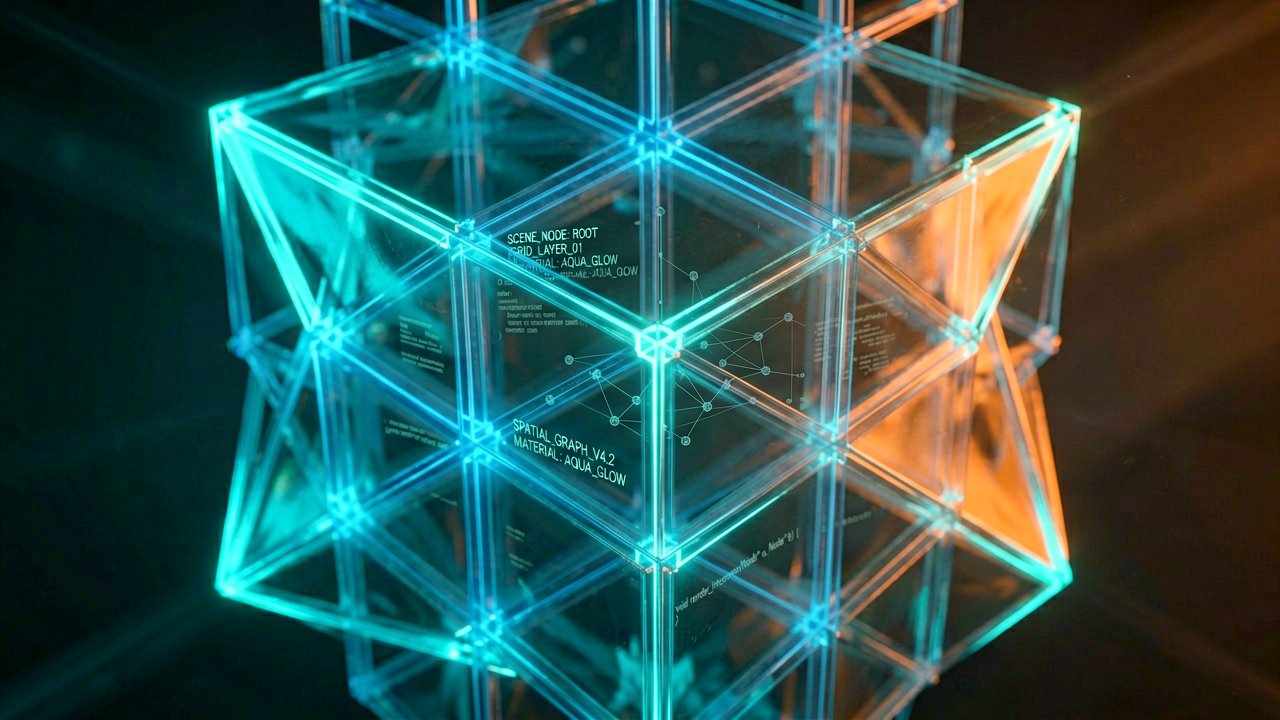
Generative video has gotten incredibly good at fooling the human eye, but it remains fundamentally broken when it comes to understanding the physical rules of the universe. When you push a digital cup off a table in a standard generative model, the asset frequently dissolves, clips through the floor, or morphs into a completely different object because pixel-level prediction lacks systemic memory. To bridge this gap, Moonlake AI emerged from stealth with $28 million in funding, pioneering a category of controllable world modeling designed to replace passive, short-lived video loops with fully persistent, multiplayer, and interactive virtual realities. By leaning heavily into structure over raw scale, their approach fundamentally shifts AI from generating sequential media to executing deterministic simulations.
At the center of this paradigm shift is Reverie, Moonlake AI's programmable diffusion model explicitly engineered for real-time simulation frameworks. Unlike conventional vision-language models that struggle with fine-grained spatial accuracy, the Reverie architecture operates on a layered stack that physically separates visual appearance from underlying geometric logic. Under the hood, Moonlake deploys long-running autonomous agents that optimize a unique, three-tiered reward system. The top layer ensures visual fidelity and prompt alignment, the middle layer guarantees consistency against initial reference art, and the foundational bottom layer enforces absolute structural correctness. Objects aren't merely drawn; they are programmatically connected and validated through rigorous code-based verification to guarantee proper hinge articulation, alignment, and physical connectivity.
Unifying the Symbolic Layer and Real-Time Performance
What sets this framework apart is how it anchors a real-time neural rendering engine to a rich symbolic layer of abstracted 3D information. Instead of relying solely on massive GPU clusters to brute-force visual continuity, Moonlake uses program synthesis and tool orchestration to build assets directly compatible with industry-standard physics engines like Epic Games' Unreal Engine and NVIDIA's Isaac-Sim. Creators can effortlessly dictate how an entire environment reacts—whether managing localized elemental damage, tracking complex weather cycles, or shifting spatial audio mechanics—and the generative game engine maintains that state indefinitely across multiple frames and player interactions without drifting.
This structural grounding yields performance metrics that leave traditional video-generation models in the dust. While mainstream pixel-prediction setups hit an immersive ceiling of roughly 60 seconds before suffering structural collapse, Moonlake's architecture delivers infinite runtime stability by operating inside stateful, rule-governed virtual pipelines. This seamless integration enables developers to scale 3D asset generation up to 100 times faster than manual workflows, dramatically compressing the traditional "sim-to-real" development loop for robotics training, industrial digital twins, and reactive game environments.
Behind the Scenes: Deep-Level Verification Pipelines
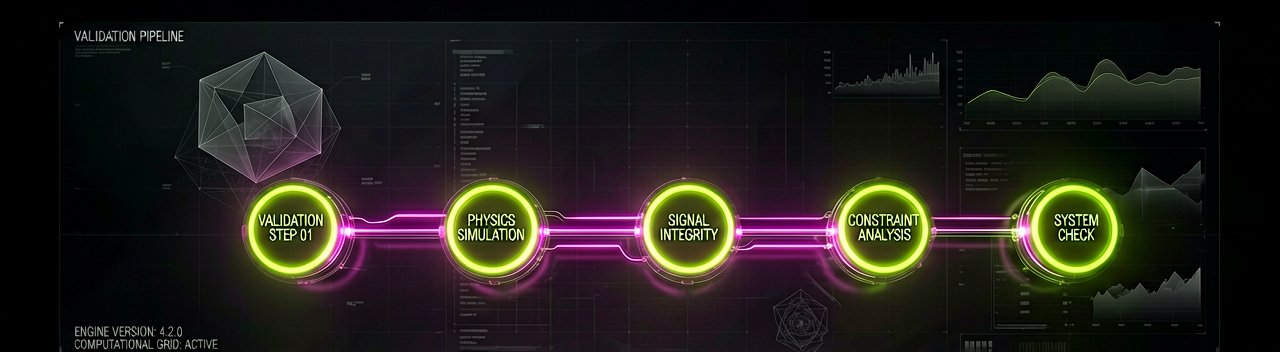
Behind the Scenes: Engineering a world model that doesn't collapse under its own structural weight requires moving past native neural rendering into the territory of rigid systems engineering. While the Reverie model handles the initial semantic layout, the true technical heavy lifting happens inside Moonlake's stateful compilation pipeline. This specialized subsystem ingests the probabilistic, messy tensor outputs from the diffusion layers and passes them directly through an automated code-based validator. By treating the physical laws of a scene as a set of strict software assertions, the architecture instantly catches and strips out floating anomalies, clipping geometry, and disjointed transformations before the frame ever renders to the screen.
To keep latency predictable at scale, the architecture maps its structural evaluation to a low-level symbolic intermediate representation. Rather than tracking millions of loose vertex transformations across a scene, the execution engine dynamically builds an optimized spatial scene graph. This layer defines hard geometric constraints, bounding volumes, and relational dependencies using highly performant C++ bindings. This means if a user introduces an object into a simulation, the engine doesn't spend precious cycles re-evaluating the entire visual canvas; instead, it runs targeted mathematical checks solely on the bounding boxes and contact points affected by that specific entity.
Memory Management and Asset Serialization
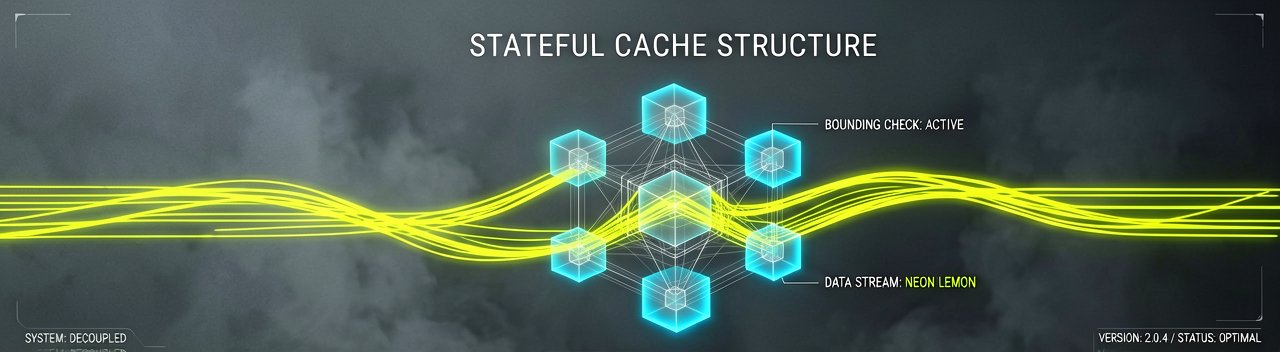
Standard video diffusion architectures are notorious memory hogs, frequently choking on VRAM limitations due to their reliance on massive self-attention matrices across temporal dimensions. Moonlake bypasses this bottleneck by decoupling the high-frequency visual textures from the low-frequency structural logic, storing the latter in a lean, stateful cache. Because spatial coherence is handled by the symbolic engine, the system can aggressively stream texture assets in and out of GPU memory using a localized paging algorithm. This ensures that multi-user sessions remain synchronized without triggering the out-of-memory errors that typically plague real-time generative models.
The ultimate payoff of this dual-layer pipeline is its native compatibility with production-grade runtime environments. The system compiles the verified spatial graphs directly into universally understood formats like Universal Scene Description (OpenUSD) or structured gTF data, effectively eliminating the noisy artifacting common to raw neural fields. This clean serialization lets developers pipeline the AI's real-time outputs straight into physical simulators without needing a manual clean-up phase. By treating world generation as a deterministic software compilation problem, the framework transforms unpredictable generative outputs into robust, production-ready engineering blocks.
Reading Between the Lines: The Friction Between Chaos and Control
Reading Between the Lines: The engineering blueprint behind Moonlake AI is undeniably elegant, but it forces a head-on collision between the inherent randomness of generative models and the uncompromising rigidity of deterministic software. Silicon Valley has a long history of claiming it can tame neural networks with symbolic wrappers, yet the reality on the factory floor is often much messier. Forcing a probabilistic diffusion model to play nice with hard-coded physics constraints is like trying to write a banking app in poetry; somewhere along the line, the creative nuance of the AI gets mangled by the strict compiler, or the compiler simply crashes under the weight of hallucinatory data inputs.
There is a distinct operational irony in building an infinite, real-time world model that relies so heavily on a secondary, code-based verification pipeline to keep it from breaking its own rules. If an architecture requires an extensive library of C++ bindings, spatial scene graphs, and rigorous bounding-box checks just to ensure a coffee cup doesn't fall through a table, it raises the question of whether the underlying AI truly understands the physics of the world at all. What we are looking at might not be a revolutionary leap in machine intelligence, but rather an incredibly sophisticated, automated cleanup crew working at breakneck speed behind a very shiny neural curtain.
Furthermore, scaling these multi-layered architectures introduces massive infrastructure bottlenecks that venture capital funding rounds cannot simply sweep under the rug. Even with localized paging algorithms and decoupled texture caches, the sheer computational overhead of running simultaneous real-time rendering, symbolic graph optimization, and physics verification across multi-user environments is staggering. While the sim-to-real training loop for robotics might contract on paper, the energy bills and specialized hardware clusters required to sustain these pristine, drift-free realities could easily gatekeep the technology from the very developers who need it most.
Looking past the immediate horizon of gaming and digital twins, the long-term utility of these highly engineered world models rests on a razor's edge. If the system is too restrictive, it becomes just another glorified, expensive game engine with automated asset pipelines, stripping away the emergent, unpredictable behavior that makes AI-driven simulation so appealing in the first place. Conversely, loosen the verification constraints even a fraction to encourage creative spontaneity, and the entire simulation risks dissolving back into the familiar, hallucinatory pixel soup that has plagued generative media since its inception.
"We have spent decades trying to make computers understand the messy, unpredictable nature of our physical world, only to realize that the easiest solution is to build a hyper-regulated virtual sandbox and pray the AI doesn't figure out how to clip through the floorboards before the demo ends."
Artūras Malašauskas is an AI Systems Integrator with 20+ years of production-grade web engineering experience. He has designed, shipped, and scaled enterprise Python/PHP systems for logistics, SaaS, and public-sector clients. For the past year, he has focused exclusively on AI integrations: deploying open-source LLMs, building generative media pipelines (image, audio, video), and engineering multi-agent workflows for real production environments. His standard: reproducibility, security, cost-efficient inference—no vaporware. He documents and evaluates emerging AI tooling, separating verified capabilities from marketing noise. Technical editor at: muza-ai.eu, ai-verslas.lt, ai-naujinos.lt Connect on LinkedIn
Comments