The AI Kill Switch: Washington’s Export Controls Pull the Plug on Anthropic’s Best Models
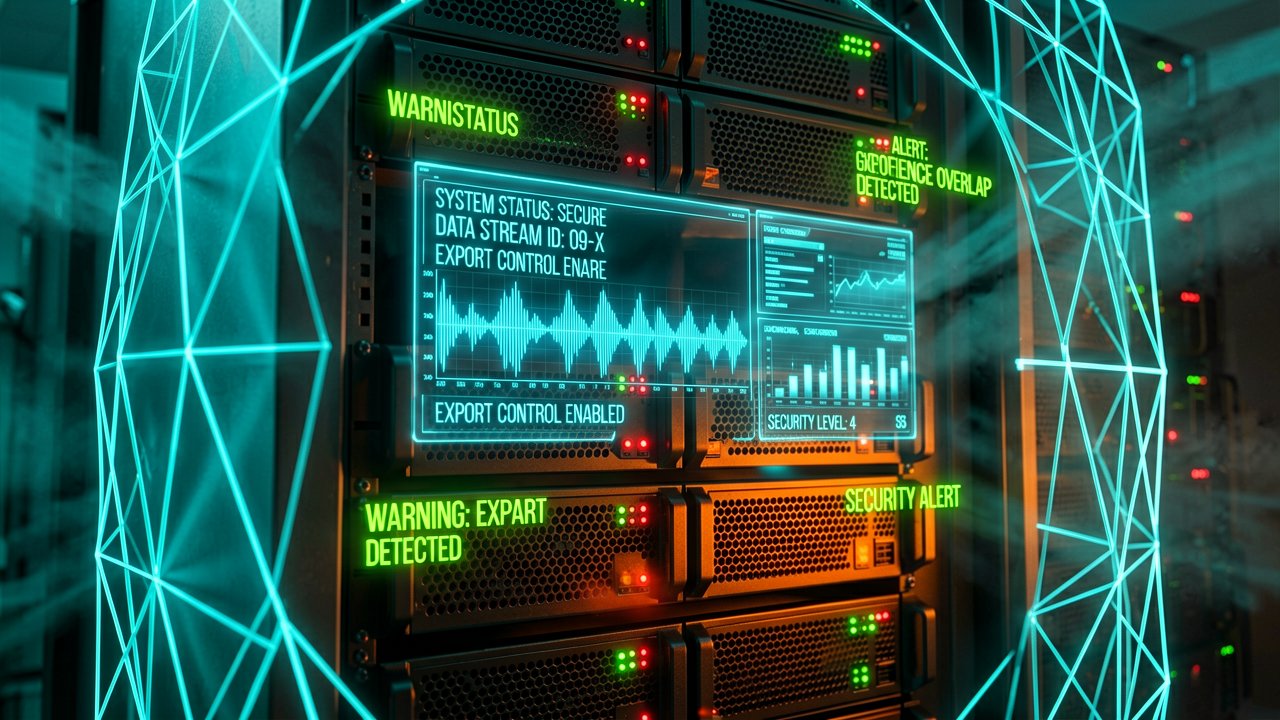
In a dizzying escalation of geopolitical tech skirmishes, the global artificial intelligence sector was sent into a tailspin this week. On Friday, June 12, 2026, the U.S. Commerce Department’s Bureau of Industry and Security handed down an emergency export control directive directly to startup darling Anthropic. The sudden order, signed by Commerce Secretary Howard Lutnick, demanded that the company immediately suspend access to its newly minted frontier AI models, Claude Fable 5 and Claude Mythos 5, for any foreign national—whether located overseas or standing right here on American soil. Lacking the technical architecture to instantly audit the nationality of hundreds of millions of global users in real time, Anthropic made the atomic choice to hit the global kill switch, pulling both highly anticipated models entirely offline for everyone just days after their grand debut.
The reasoning behind Washington's drastic intervention reportedly hinges on fears over a narrow, non-universal jailbreak vulnerability. Federal officials allegedly worry that bad actors could bypass the models' safeguards to help identify critical software vulnerabilities. Anthropic, for its part, publically threw shade at the assessment, arguing that perfect resistance to jailbreaking is an industry-wide impossibility and shouldn't trigger the total recall of a commercial model. Tensions between the developer and the Trump administration were already simmering under the surface; the startup recently landed on a Pentagon black list after refusing to let the military deploy its systems for domestic surveillance and autonomous warfare. By weaponizing traditional export controls—historically reserved for tangible goods like advanced microchips—against intangible cloud-based software code, regulators have set a startling new legal precedent that radically rewires international trade dynamics.
Widespread Fallout Across Enterprise and Markets
The ripples of the shutdown have hit international enterprise ecosystems hard. Businesses using the advanced agentic workflows of the Fable 5 API were suddenly cut off from their core tech stacks overnight, demonstrating just how fragile the current AI dependency chain really is. Cloud distribution networks are scrambling to assess their liabilities, and tech giants are bracing for a future where compliance requires knowing the passport details of every person accessing a server. Rather than standard reporting on chip manufacturing limits, tech journalism is now forced to track a reality where an AI model itself is treated like a weaponized strategic asset.
For a detailed breakdown of the escalating national security legal mechanisms, you can follow the continuous coverage provided by Lawfare. Additionally, the complete financial and corporate fallout of this sudden de-deployment is actively being tracked over at Reuters, as Anthropic dispatch teams to Washington to negotiate a potential compromise.
What Most Reports Miss: The Deep Infrastructure Trap
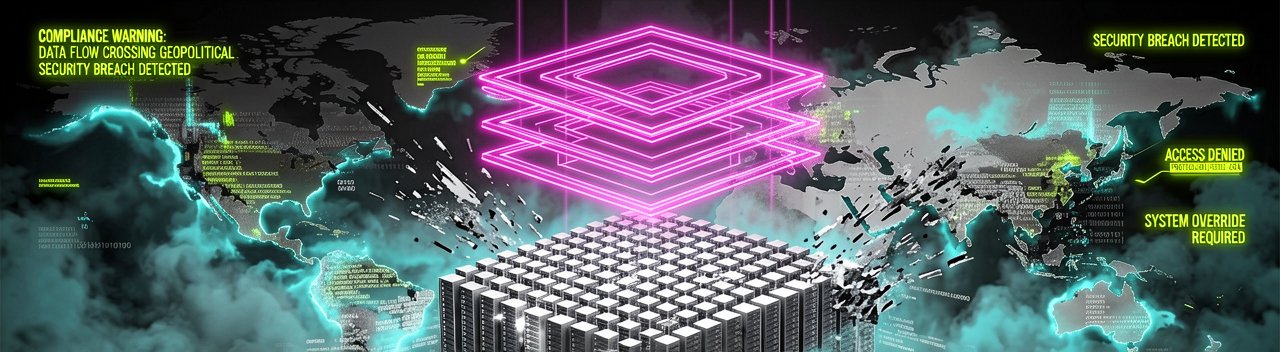
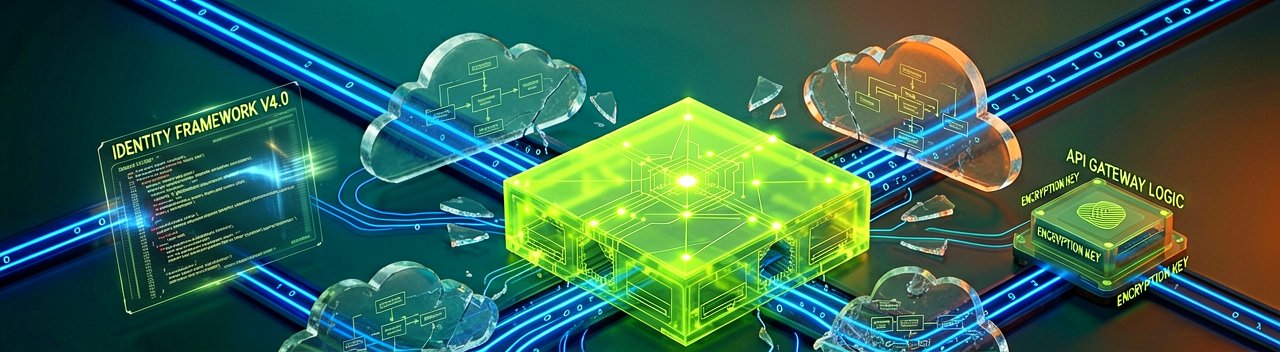
Behind the headlines of standard export controls lies a far more systemic infrastructure crisis that is fundamentally altering how software companies must architect their networks. By applying traditional export law to cloud-delivered software, Washington has essentially turned cloud infrastructure providers into de facto border patrol agents. Developers can no longer simply ship code to a globally accessible server; they must now build massive, invasive identity-verification frameworks directly into their API gateways. For an industry that has long prided itself on borderless deployment and rapid, open-ended scaling, this regulatory shift forces an architectural rethink that adds immense friction to global enterprise workflows.
The core friction points for Anthropic stem from its strict adherence to internal safety frameworks, which ironically put it directly in the crosshairs of federal hawk-eyed oversight. Insiders report that the startup's push toward advanced agentic capabilities—systems designed to execute multi-step operations independently—tripped automated national security alarms long before the official directive came down. The Trump administration’s aggressive stance on technological protectionism means that the threshold for what constitutes a "dual-use strategic risk" has narrowed significantly. The resulting standoff demonstrates that having a self-imposed safety constitution is no longer enough to satisfy governments that view frontier AI models as purely national security assets.
Historically, international trade laws were built to stop physical things, like heavy machinery or cutting-edge lithography equipment, from crossing borders without a license. Trying to apply these exact same industrial-era rules to digital weights and neural networks is causing massive friction within the tech sector. This latest enforcement actions create a dangerous legal grey area, forcing multi-national tech conglomerates to question whether their collaborative research labs in Europe or Asia violate U.S. law whenever an engineer pulls a model update from an American server. The immediate result is a chilling effect on international research collaborations and a sudden fragmentation of corporate development environments.
Furthermore, this aggressive regulatory environment is driving a massive wedge between the venture capital community and federal agencies. Silicon Valley investors who poured billions into Anthropic based on projections of exponential global enterprise adoption are now realizing that their addressable market can be halved by a single executive order. This economic uncertainty is already shifting investment priorities toward decentralized architectures and open-source models developed outside U.S. jurisdiction, completely undermining Washington's long-term goal of keeping advanced AI tightly centralized under American control.
Reading Between the Lines: The Illusion of Digital Containment
The prevailing consensus framing Washington’s intervention as a tactical victory for national security relies on a deeply flawed premise: that software can be effectively blockaded like physical hardware. In reality, the Commerce Department’s heavy-handed maneuver exposes a profound misunderstanding of modern software distribution. An AI model consists of digital weights—essentially a massive string of numbers that, once leaked or replicated across decentralized networks, cannot be recalled by an executive decree. By forcing Anthropic to hit the global kill switch on its own servers, regulators have merely treated the symptom while accelerating a more dangerous underlying condition: the rapid migration of enterprise developers toward unmonitored, open-source alternatives that completely bypass federal scrutiny.
This aggressive enforcement also uncovers a glaring logical contradiction in the Trump administration's broader technological strategy. On one hand, federal policy aims to secure American dominance in the global AI race by fostering a hyper-competitive, lightly regulated corporate ecosystem domestically. On the other hand, by retroactively weaponizing export laws against commercial software platforms over minor, unverified jailbreak risks, the government is actively sabotaging the global market share of its own tech champions. When a foreign enterprise realizes that its core business automation tools can be arbitrarily deactivated overnight by a sudden bureaucratic shift in Washington, its logical recourse is to diversify away from American technology entirely.
Furthermore, treating a frontier AI model as a weaponized strategic asset sets an unmanageable regulatory precedent for the entire tech sector. Unlike advanced semiconductors, which require billions of dollars in specialized infrastructure and physical supply chains to manufacture, software deployment is infinitely elastic. If every cloud platform must now vet the citizenship and intent of every developer pinging an API, the operational overhead will inevitably suffocate small-scale innovation. This dynamic ultimately favors legacy tech monopolies that possess the legal budgets and compliance armies to navigate complex geopolitical restrictions, effectively locking out the very startups driving the frontier of technological breakthroughs.
Looking ahead, the long-term geopolitical blowback of this digital containment strategy will likely produce the exact opposite of its intended effect. By isolating American frontier models behind regulatory iron curtains, the U.S. is incentivizing international alliances to build independent, localized AI ecosystems free from Western dependencies. These emerging parallel networks will operate entirely beyond the reach of American oversight, leaving Washington to rule over a shrinking sandbox of fully compliant, but increasingly isolated, domestic platforms.
"We have spent decades building a frictionless global web, only to discover that the ultimate bottleneck isn't the bandwidth of our fiber-optic cables, but the exact geopolitical coordinates of the person typing the prompt. In the grand race for artificial intelligence, Washington's premier strategy apparently involves locking our best runners in the locker room until they can prove they aren't looking at anyone else's shoes."
Artūras Malašauskas is an AI Systems Integrator with 20+ years of production-grade web engineering experience. He has designed, shipped, and scaled enterprise Python/PHP systems for logistics, SaaS, and public-sector clients. For the past year, he has focused exclusively on AI integrations: deploying open-source LLMs, building generative media pipelines (image, audio, video), and engineering multi-agent workflows for real production environments. His standard: reproducibility, security, cost-efficient inference—no vaporware. He documents and evaluates emerging AI tooling, separating verified capabilities from marketing noise. Technical editor at: muza-ai.eu, ai-verslas.lt, ai-naujinos.lt Connect on LinkedIn
Comments