Apple Redefines the Web: Inside the Massive Safari Overhaul at WWDC 2026

Apple completely shifted the paradigm of web browsing during its annual software keynote in Cupertino. Unveiled at WWDC 2026, the tech giant debuted a thoroughly reimagined Safari browser that sheds traditional design constraints in favor of context-aware, deeply integrated intelligence. Rather than offering incremental speed bumps or minor privacy toggles, the update leverages next-generation machine learning to transform the application from a passive portal into an active digital assistant.
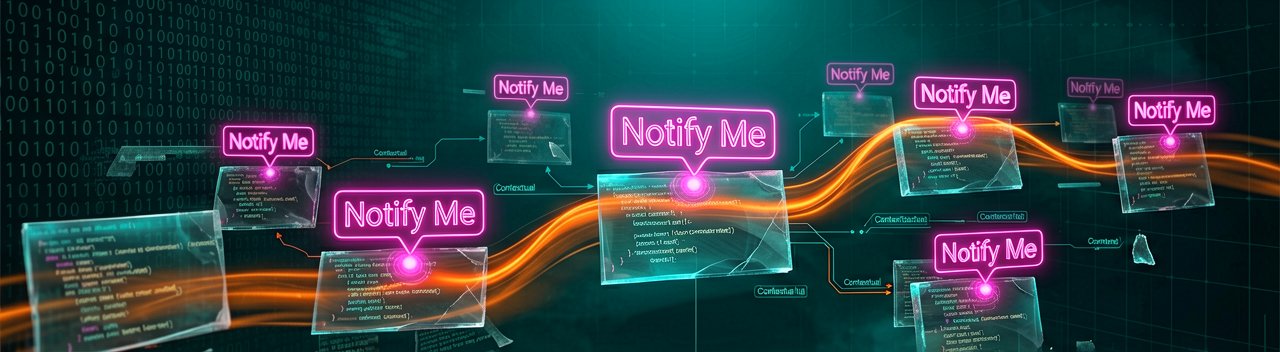
The most drastic shift comes down to how we manage our digital clutter. Safari now utilizes native Apple Intelligence to analyze your open tabs, automatically sorting dozens of chaotic pages into distinct, structured topics. It doesn't stop at historical grouping either; as you browse, the engine automatically routes newly opened tabs into these established buckets. This contextual approach is backed by an innovative "Notify Me" feature, which lets users describe what they are looking for in natural language to keep tabs on real-time changes—like tracking elusive product restocks or unpredictable price drops without manual refreshing.
Intelligent Security and Modular Freedom
Beyond UI organization, the overhaul tackles user-generated customization and high-stakes privacy. According to a detailed breakdown by Mashable, users can now describe completely custom browser extensions using natural language prompts, allowing Safari to build niche tools like instant recipe savers on the fly. Security also gets a major upgrade via an automated credential patching engine. If the browser detects that any of your account passwords have been compromised in a breach, it allows you to update them across the web all at once using AI, mitigating security threats with a single authorization.
This aggressive modernization signals a clear defensive posture against competing AI-first search projects and data-heavy browsers. By locking these heavy computational tasks down to local hardware, the Cupertino firm manages to uphold its strict privacy stance while delivering features that usually require cloud-connected scraping. The complete details of the platform's architectural advancements are hosted directly on the Apple Newsroom, mapping out a rollout that will hit consumer devices later this year.

Behind the Tech Infrastructure: The dramatic overhaul of Safari represents a pivotal course correction for a browser that has historically favored conservative efficiency over raw feature parity. For years, power users critiqued Apple for treating its browser as a utility rather than a workspace, pushing developers toward Chromium-based alternatives. By integrating localized machine learning directly into the rendering pipeline, Apple is attempting to bypass the heavy memory footprints that plague modern browsers, executing complex layout adaptations on-device without draining laptop batteries.
Industry engineers point out that the automatic tab routing mechanism relies on a heavily optimized, on-device variant of Apple's transformer models. Unlike cloud-reliant solutions that risk transmitting user telemetry, Safari tokenizes and categorizes web content within the secure enclave of local Apple silicon chips. This architecture satisfies stringent internal data isolation standards while solving the persistent problem of web clutter, offering an immediate tangible benefit to the average multi-tab user.
The Developer Ecosystem Disruptor
The introduction of natural language extension generation is already ripples through the developer ecosystem. By allowing users to verbally dictate the functionality they want—such as stripping video paywalls or automatically formatting text—Apple effectively lowers the barrier to browser customization to zero. While this empowers everyday users, it raises complex questions regarding intellectual property and content monetization, as tailored user scripts can now easily bypass traditional advertising structures without relying on curated extension marketplaces.
Web developers will face a shifting landscape as the "Notify Me" feature changes traffic patterns across the web. Instead of users repeatedly visiting e-commerce platforms or news sites to check for updates, Safari will ping site endpoints autonomously in the background. Engineers will need to optimize their web architectures to handle these automated, headless requests, which could drastically alter traditional server loads and distort analytical tracking metrics.
A Shield for the Cookieless Future
From a regulatory and market perspective, this update reinforces Apple's ongoing campaign to position privacy as a premium consumer commodity. By managing credential patching and security monitoring natively, the browser acts as an aggressive barrier against third-party data tracking networks. This move cuts off critical data pipelines used by advertising giants, forcing the broader tech industry to adapt to an environment where the browser itself decides what data leaves the machine.
Ultimately, this repositioning changes Safari from a standard web viewer into an active semantic layer sitting between the user and the open internet. The long-term implications stretch far beyond clean interfaces or smart tabs; Apple is quietly establishing a model where AI interprets, filters, and restructures the web experience before a single pixel hits the screen, setting a new benchmark for how digital information is consumed.
Reading Between the Lines: While Apple positions this Safari overhaul as a triumph of consumer empowerment, the strategy carries an undercurrent of platform consolidation that warrants skeptical examination. The ability to generate custom extensions via natural language prompts sounds liberating, but it simultaneously bypasses the traditional developer ecosystem. By giving users the tools to build their own ad-hoc web scrapers and interface modifiers, Apple is effectively commoditizing the work of independent web developers, reducing complex web applications to mere data feeds for its own on-device AI to reshape.
There is also a glaring contradiction in Apple’s dual stance on web standards and native application dominance. Historically, Cupertino has kept Safari's feature set intentionally lean to nudge developers toward building native iOS and macOS apps—which sit comfortably inside the App Store where Apple collects its lucrative commission. If Safari becomes an ultra-powerful, AI-driven operating system in its own right, it risks cannibalizing the very app ecosystem that fuels Apple's service revenue, revealing a delicate internal tension between software innovation and corporate profitability.
The Monopolization of the Semantic Layer
Furthermore, the automation of credential patching and background site monitoring places an immense amount of trust in a single ecosystem. When Safari decides how a compromised password should be patched across various web domains, it transitions from a neutral browser to an active web broker. This creates a hyper-centralized point of failure where a single bug in Apple’s automated remediation pipeline could theoretically lock users out of dozens of critical external accounts simultaneously, replacing distributed security risks with a single systemic vulnerability.
We must also look closely at the "Notify Me" feature and its impact on the open web's advertising economy. By allowing the browser to silently scrape and monitor changes in the background, Apple is essentially filtering out the human element of web browsing. If users no longer need to land on homepage layouts, view display ads, or interact with sponsored content to get their updates, the financial viability of independent journalism and niche e-commerce sites will crater, leaving behind a web populated only by platforms massive enough to survive the drop in direct traffic.
Ultimately, this update is less about improving the web and more about colonizing it. By inserting an aggressive, AI-powered semantic layer between the raw code of the internet and the human eye, Apple ensures that it controls the context, the presentation, and the data flow of your digital life. It is a masterclass in platform lock-in, wrapped neatly in the comforting banner of user privacy and sleek minimalist design.
"We are rapidly approaching a future where nobody actually visits a website anymore; instead, our AI agents will spend all day politely bartering with other AI agents for data, while we sit back and stare at perfectly organized, completely sterilized tab groups."
Artūras Malašauskas is an AI Systems Integrator with 20+ years of production-grade web engineering experience. He has designed, shipped, and scaled enterprise Python/PHP systems for logistics, SaaS, and public-sector clients. For the past year, he has focused exclusively on AI integrations: deploying open-source LLMs, building generative media pipelines (image, audio, video), and engineering multi-agent workflows for real production environments. His standard: reproducibility, security, cost-efficient inference—no vaporware. He documents and evaluates emerging AI tooling, separating verified capabilities from marketing noise. Technical editor at: muza-ai.eu, ai-verslas.lt, ai-naujinos.lt Connect on LinkedIn
Comments