Why the Sonos Beam Gen 2 is the No-Brainer Audio Upgrade You Should Buy Right Now
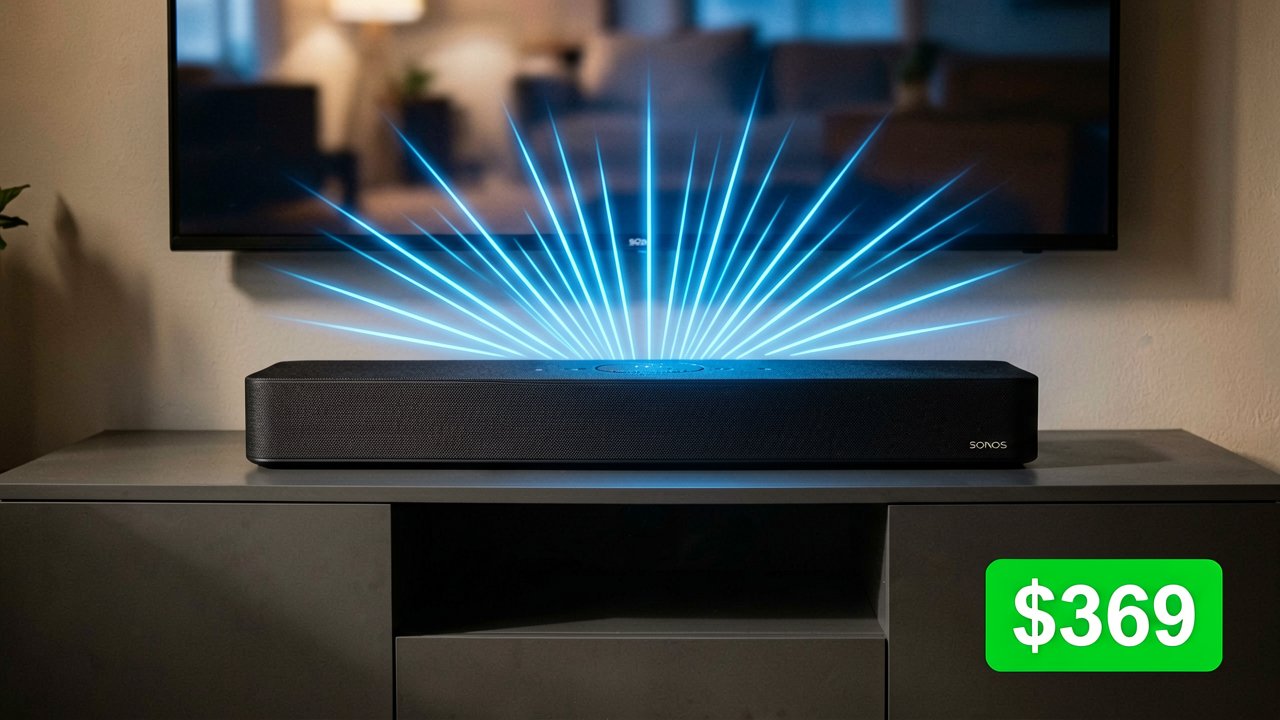
Sonos gear rarely comes cheap, which is exactly why the tech world does a collective double-take whenever a serious markdown hits the shelves. Right now, bargain hunters can snag an impressive $130 discount on the Sonos Beam Gen 2, bringing its price down from the standard $499 MSRP to a much friendlier $369. This temporary price cut has captured major attention across tech media as an absolute standout opportunity for anyone looking to ditch their lackluster television speakers without tearing apart their living room.
The deal, which was heavily spotlighted by Mashable on June 15, 2026, knocks the compact soundbar down by 26 percent. While the retail giant Amazon frequently shifts its promotional pricing around, hitting this particular $369 sweet spot matches some of the deepest historical price drops we have seen for this specific hardware, short of rare holiday clearances. It is an ideal mid-year window for home theater enthusiasts who want premium acoustics without waiting around for late-autumn sales events.
Small Footprint, Massive Soundstage
Do not let the compact form factor fool you. The magic of the second-generation Beam lies in its computational audio and updated internal processing power. Unlike its predecessor, this iteration uses advanced psychoacoustic techniques to simulate height channels. That means you get a remarkably convincing Dolby Atmos experience from a single, discrete cabinet that slides effortlessly beneath a 55-inch television screen.
Beyond cinematic duty, the system acts as a high-fidelity standalone music speaker when the television is turned off. It integrates seamlessly into the broader ecosystem via the official mobile app, allowing users to sync audio with other components like the portable Move or architectural surrounds. Because premium brands so rarely compromise on pricing outside of structured seasonal windows, pulling the trigger on a 26 percent discount represents real, tangible value for a living room upgrade.

What Most Deal Reports Miss: The timing of this deep discount is not just a random act of retail generosity; it points to a broader, highly strategic chess match playing out in the premium audio market. Sonos has recently weathered a storm of public relations challenges following a major, highly controversial overhaul of its mobile application. By aggressively lowering the barrier to entry on proven, critically acclaimed hardware like the Beam Gen 2, the company is effectively lowering the stakes for hesitant buyers, offering top-tier hardware value to offset any lingering consumer anxiety regarding software stability.
From a product lifecycle perspective, the second-generation Beam occupies a fascinating sweet spot that industry insiders watch closely. Launched as a successor to the original 2018 model, the Gen 2 brought crucial upgrades to the table, most notably a faster processor and eARC compatibility. This eARC connection is the essential pipe required to handle high-bandwidth audio formats like Dolby Atmos. For consumers, this means the soundbar remains thoroughly future-proof, even as television manufacturers push the envelope with advanced audio pass-through technologies on their latest displays.
Balancing Ecosystem Lock-in Against Raw Value
Audio analysts frequently point out that buying into Sonos is rarely a one-off purchase, but rather an initiation into a larger, tightly integrated ecosystem. A markdown on the Beam often serves as a classic "loss leader" strategy in disguise. Once a user experiences the seamless integration of a single soundbar, they are far more likely to eventually invest in a dedicated Sub or a pair of Era 100 speakers to build out a true wireless surround sound network. This network effect gives the company immense lifetime value per customer, justifying the steep upfront discounts seen in current retail channels.
Competition in the compact soundbar space has also intensified dramatically over the past year. Rivals like Bose, Sony, and even budget-friendly contenders like Vizio have flooded the market with compelling Atmos-capable alternatives, often undercutting traditional premium price points. To maintain its dominant market share in the mid-range home theater segment, the brand must periodically leverage aggressive pricing to remind consumers that high-end acoustic engineering does not always require a four-figure investment.

Ultimately, this price correction bridges the gap between casual listeners and audiophiles who demand precision without complex receiver setups. The Beam Gen 2 utilizes phased speaker arrays that steer sound around the room, creating an expansive soundstage that punches far above its physical weight class. For the discerning buyer, securing this level of acoustic engineering at a fraction of its standard retail cost represents a rare alignment of premium performance and pragmatic budgeting.
Reading Between the Lines: The temptation to view this massive discount as a simple victory for the consumer ignores the precarious balancing act Sonos is currently performing. While a 26 percent markdown undeniably moves inventory, it simultaneously risks devaluing a brand that has historically traded on its premium, near-luxury status. For years, the company maintained strict price integrity, forcing consumers to pay full MSRP outside of tightly controlled Black Friday windows. This sudden willingness to slash prices on a flagship soundbar suggests that the pressure to hit quarterly unit shipment targets is beginning to outweigh the desire to maintain a pristine, discount-immune brand image.
Furthermore, this promotion highlights an underlying contradiction in the modern smart-home philosophy: the tension between hardware longevity and software dependency. Physically, the Beam Gen 2 is a masterpiece of compact engineering, boasting durable drivers and an amplifier setup designed to easily last a decade. Yet, this beautifully machined aluminum and plastic shell is entirely at the mercy of cloud architecture and firmware updates. By slashing prices, the company successfully drives hardware adoption, but it also inherits a massive influx of new users who expect flawless app performance—an area where the brand has recently looked surprisingly vulnerable.
The Real Cost of a "Discounted" Smart Home
Market analysts also remain skeptical about whether these temporary price drops can genuinely insulate the company from shifting consumer habits. The home audio landscape is fracturing, with younger demographics increasingly leaning toward high-end wireless headphones or ultra-portable party speakers rather than traditional living room configurations. A soundbar, no matter how heavily discounted, still requires a dedicated television setup to justify its existence, tying its market relevance directly to the stagnation or growth of the traditional home theater market.
There is also the inevitable question of what comes next in the product pipeline. In consumer electronics, a sustained, deep discount from a premium manufacturer is frequently the first smoke signal indicating that a next-generation replacement is nearing production. Buyers jumping on this deal might find themselves holding yesterday's tech within a few months, though the substantial cash savings tucked away in their pockets will likely soften that blow significantly.
"In the modern tech ecosystem, buying a smart speaker on sale is a bit like adopting a very sophisticated digital puppy: the initial acquisition fee is delightfully low, but you are quietly signing up for a lifetime of feeding it software updates, troubleshooting your local Wi-Fi router, and explaining to guests why the living room is bossing them around."
Artūras Malašauskas is an AI Systems Integrator with 20+ years of production-grade web engineering experience. He has designed, shipped, and scaled enterprise Python/PHP systems for logistics, SaaS, and public-sector clients. For the past year, he has focused exclusively on AI integrations: deploying open-source LLMs, building generative media pipelines (image, audio, video), and engineering multi-agent workflows for real production environments. His standard: reproducibility, security, cost-efficient inference—no vaporware. He documents and evaluates emerging AI tooling, separating verified capabilities from marketing noise. Technical editor at: muza-ai.eu, ai-verslas.lt, ai-naujinos.lt Connect on LinkedIn
Comments