Gujarat’s Manufacturing Ambition Gets an Upgrade: Unveiling the 2026 Industrial Policy
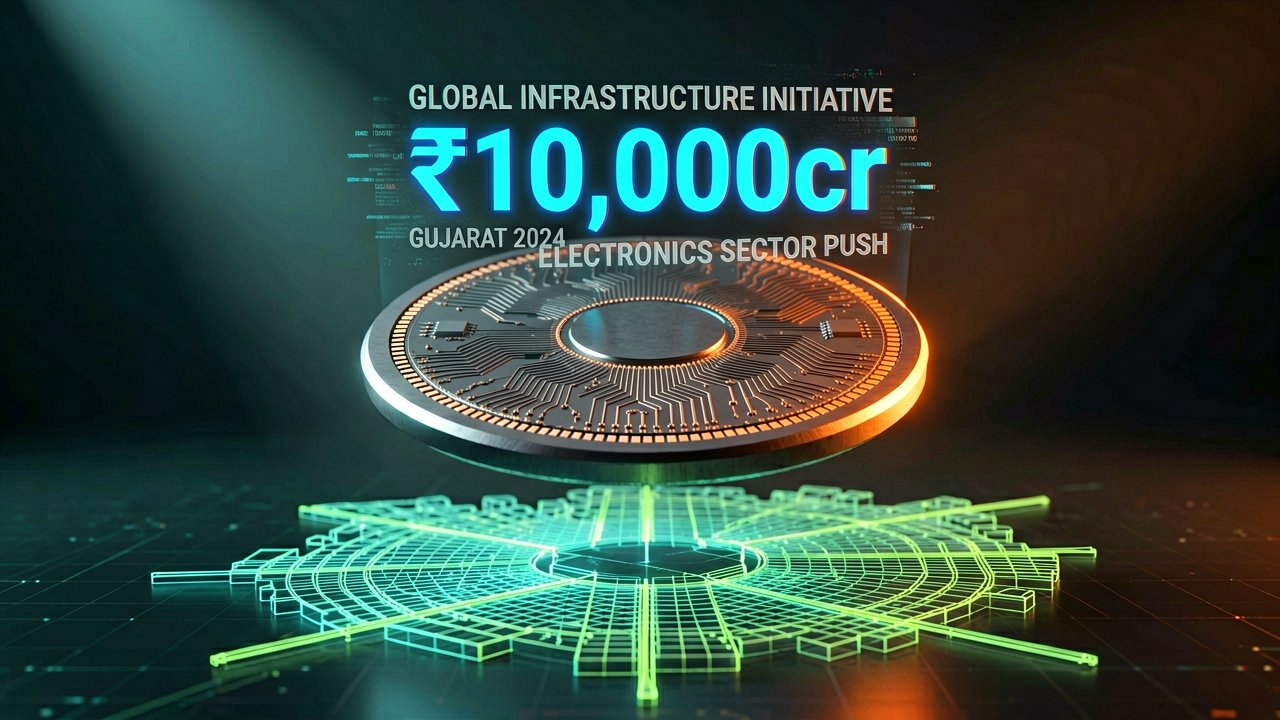
Gujarat is aggressively positioning itself to remain India's undisputed industrial powerhouse. Chief Minister Bhupendrabhai Patel, alongside Deputy Chief Minister Harsh Sanghavi, officially pulled back the curtain on the highly anticipated Viksit Gujarat Industrial Policy 2026 at the Mahatma Mandir in Gandhinagar. This massive statutory update replaces older legacy frameworks and isn't just a routine administrative refresh; it’s a direct bid to catalyze a jaw-dropping ₹10 lakh crore in fresh investments while pushing the state’s manufacturing capabilities further into high-tech territory.
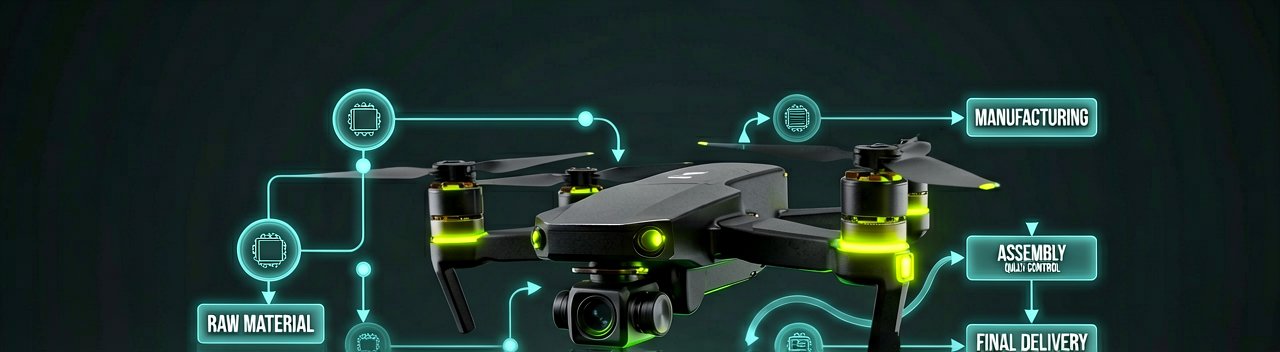
The timing couldn’t be sharper. As global supply chains continue their volatile structural realignments, Gujarat’s new roadmap aims to turn the region into a definitive hub for next-generation hardware. Instead of merely doling out generic subsidies, the administration is focusing heavily on niche, high-growth categories. If you're building semiconductors, green hydrogen infrastructure, or commercial drones, the state is rolling out the red carpet with tailored financial perks.
The 'Ultra Mega' Strategy and Flexible Sops
The most compelling part of this policy update is the formal introduction of an "Ultra Mega" industrial unit classification. According to initial details tracked by Livemint, projects that commit to a minimum investment of ₹10,000 crore and guarantee at least 3,000 jobs in designated thrust sectors can unlock custom incentives covering up to 40% of their capital investment. It’s an explicit mechanism to attract multi-billion-dollar foreign fabrication plants and heavy industrial conglomerates looking for a stable alternative to East Asian manufacturing corridors.
Simultaneously, the state is injecting much-needed flexibility into how smaller businesses survive. Reporting from Gujarat Samachar notes that Micro, Small, and Medium Enterprises (MSMEs) will no longer be locked into rigid, predefined assistance programs. Instead, founders can mix and match capital subsidies, interest relief, and power tariff assistance based on what their operational cash flows actually require. For factories willing to set up shop outside congested urban centers, the financial sweeteners scale up even higher—a tactical move to distribute industrial wealth across the state's tier-2 and tier-3 talukas.
Nurturing Deep Tech and Startups
By pairing physical infrastructure with digital capabilities, Gujarat is signaling that its economic future won't rely solely on heavy factories. Beyond the manufacturing floor, the policy dedicates substantial state capital toward R&D ecosystems, offering robust incentives for domestic patent filings and dedicated corporate research centers. This fits neatly into the state's broader technology push, coming right on the heels of major IT infrastructure wins in GIFT City, where global tech firms are actively scaling out AI and cloud-computing hubs. With specialized skill development centers getting up to ₹10 crore in state backing, the government is betting that a more sophisticated talent pool will keep investors anchored for the long haul.
Beneath the Polished Bureaucratic Framing: The Viksit Gujarat Industrial Policy 2026 represents a calculated pivot from defensive economic preservation to an aggressive, offensive grab for global supply chains. For the past two decades, Gujarat’s industrial playbook relied heavily on its traditional strengths: petrochemicals, textiles, and diamond processing. However, state planners have quietly acknowledged that low-margin assembly and heavy, carbon-intensive industries cannot sustain the state's ambitious growth targets in an era dominated by decarbonization and artificial intelligence. This new policy is an explicit admission that to remain India's economic engine, the state must transform its coastline and arid plains into high-tech corridors capable of competing directly with tech manufacturing hubs in Vietnam, Taiwan, and Shenzhen.
A closer look at the "Ultra Mega" project incentives reveals a highly deliberate geopolitical strategy. By setting the investment threshold at ₹10,000 crore, the state is targeting the upper echelon of multinational corporations—specifically those looking to de-risk their manufacturing dependencies away from China under "China+1" corporate strategies. Local trade body representatives whisper that the policy was drafted after extensive, closed-door consultations with major global semiconductor consortia, aerospace firms, and renewable energy developers. The state is no longer waiting for industries to knock on its door; it is effectively underwriting the massive upfront capital expenditures that usually deter cutting-edge hardware companies from establishing greenfield operations in South Asia.
Balancing Megaprojects with Grassroots Realities
Yet, the grand ambition of attracting multi-billion-dollar fabrication plants has sparked a necessary, parallel focus on the state's sprawling MSME sector. Historically, when massive industrial clusters drop into rural regions, local smaller enterprises find themselves squeezed out of the talent pool and real estate market. To prevent an economic disconnect, the 2026 framework introduces a strict, tiered localization mandate. Major corporations accessing the top-tier capital subsidies are expected to integrate local vendor ecosystems into their supply chains, creating a downstream multiplier effect that ensures smaller tool-and-die shops, logistics providers, and component manufacturers benefit directly from the incoming foreign direct investment.
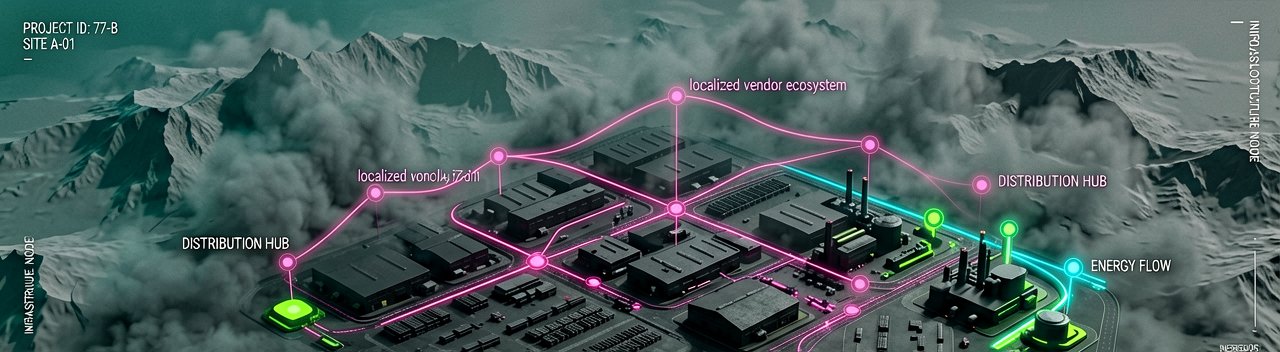
Geographic decentralization forms the final, critical pillar of this regulatory overhaul. By intentionally scaling up financial perks for companies willing to venture into developmentally lagging talukas, the administration is attempting to curb the unsustainable urban migration choking major cities like Ahmedabad and Surat. Providing deeper power tariff concessions and streamlined land allotments in peripheral regions serves a dual purpose. It offers tech manufacturers vast, affordable acreage for expansive footprints—like solar manufacturing fields or massive automated drone testing grounds—while simultaneously modernizing the infrastructure of Gujarat’s hinterlands, shifting the state toward a more balanced, multi-polar economic geography.
The Friction Between Blueprint and Reality: While the headline-grabbing ₹10 lakh crore target makes for excellent political copy, translating these sweeping fiscal promises into operational factories requires navigating a minefield of structural bottlenecks. The policy’s hyper-focus on drawing in capital-intensive sectors like semiconductors and advanced robotics assumes that a massive influx of cash can instantly bypass the stubborn realities of industrial execution. In reality, high-tech manufacturing does not just demand capital; it demands an uninterrupted, flawless supply of highly specialized resources. For a state that frequently grapples with seasonal water scarcity and the complex logistics of cross-country renewable energy transmission, guaranteeing the pristine operational conditions required by microchip fabrication plants is a monumental logistical gamble.
Furthermore, an uncomfortable contradiction sits at the heart of the policy's job creation mandates. The administration is aggressively courting heavily automated, Industry 4.0-driven sectors while simultaneously tying its top-tier "Ultra Mega" incentives to strict, traditional employment quotas of at least 3,000 jobs. Modern semiconductor fabs and advanced drone assembly lines are explicitly designed to minimize human intervention on the factory floor to maintain precision and quality control. Forcing high-tech global giants to meet rigid headcount targets to unlock financial subsidies creates an artificial operational friction, potentially pitting the state's urgent need for mass employment against the corporate drive for hyper-efficiency.
The Real Battle is Talent, Not Tariffs
There is also the unresolved question of the talent pipeline. While the policy generously earmarks funds for specialized skill development centers, building a world-class engineering and deep-tech workforce takes decades, not fiscal quarters. Gujarat has historically excelled at cultivating brilliant entrepreneurs, traders, and heavy-industry managers, but its local ecosystem has not traditionally been a magnet for top-tier software architects or silicon design engineers, who still overwhelmingly favor established tech hubs like Bengaluru or Hyderabad. Subsidizing the brick-and-mortar construction of training facilities is the easy part; pulling the intellectual center of gravity away from India's traditional tech capitals will require a cultural and educational shift that a purely industrial policy simply cannot mandate.
Ultimately, the true measure of the 2026 framework will not be the number of Memorandums of Understanding signed at glitzy investor summits, but how many projects survive the grueling journey from paper to production. As competing Indian states roll out equally aggressive incentive packages to capture the same pool of fleeing global capital, the subcontinent is quickly becoming a buyer's market for multinational corporations. Gujarat's seasoned bureaucracy undoubtedly gives it an edge in cutting through red tape, but maintaining its industrial dominance will depend entirely on whether it can deliver the frictionless infrastructure it has promised, or if it will find itself weighed down by the sheer scale of its own ambitions.
"In the grand theater of industrial planning, policy documents are always written in the poetry of flawless automation and boundless investment, but the actual drama is always performed in the prose of bureaucratic land acquisitions, delayed environmental clearances, and an unexpected shortage of engineers who actually know how to program the robots."
Artūras Malašauskas is an AI Systems Integrator with 20+ years of production-grade web engineering experience. He has designed, shipped, and scaled enterprise Python/PHP systems for logistics, SaaS, and public-sector clients. For the past year, he has focused exclusively on AI integrations: deploying open-source LLMs, building generative media pipelines (image, audio, video), and engineering multi-agent workflows for real production environments. His standard: reproducibility, security, cost-efficient inference—no vaporware. He documents and evaluates emerging AI tooling, separating verified capabilities from marketing noise. Technical editor at: muza-ai.eu, ai-verslas.lt, ai-naujinos.lt Connect on LinkedIn
Comments