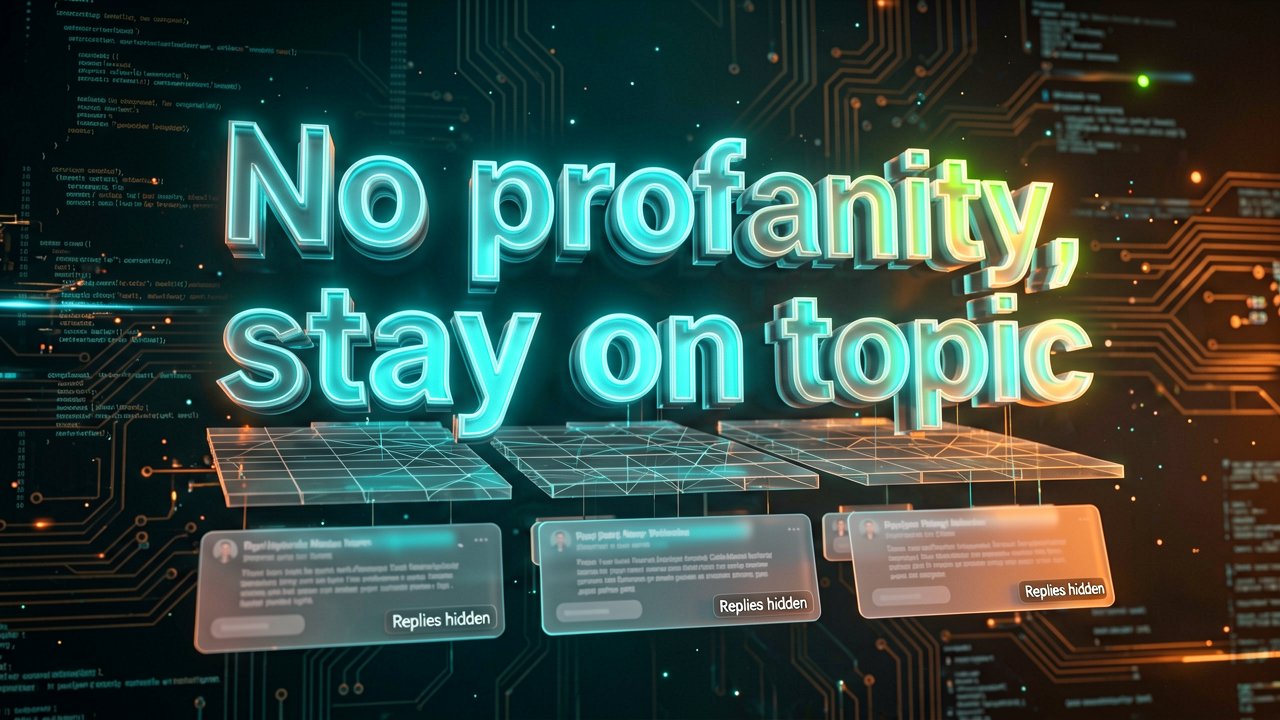
Substack has officially deployed "Reply Rules," a dynamic community management feature that shifts moderation authority directly into the hands of independent publishers. According to the announcement on the Substack Blog, the new toolkit allows creators to define natural language behavioral guidelines that are displayed to users before they engage across posts, Notes, and Chat. To minimize operational friction for high-growth publications, the system implements an automated, machine-learning-driven filtering engine that hides non-compliant comments behind a standardized "Replies hidden" label without alerting the offender, as detailed by Substack Support.
This strategic roll-out introduces an algorithmic loop that systematically trains itself based on active human moderation. As reported by TechCrunch, the platform-wide system notes every manual action a writer takes to conceal a message, proactively shielding the broader community from targeted harassment, promotional spam, and unwanted artificial intelligence text. The decentralization of safety architecture marks a critical evolutionary turn for subscription-first media platforms, transferring structural curation responsibilities away from corporate algorithms to individual brand owners.
Decentralizing Content Moderation as a Growth Strategy
By substituting top-down, standardized censorship with localized community frameworks, Substack aims to reconcile its historically permissive corporate speech policy with the practical demands of creator retention. The implementation of specific boundaries, such as banning profanity or mandating topic adherence, mitigates the systemic burnout experienced by digital writers who navigate unmoderated comment sections. Industry analysts observe that optimizing the immediate social environment directly correlates with lower subscriber churn and sustained engagement, as high-value paying audiences are far more likely to retain premium memberships when digital discussion spaces remain civil and high-yield.
Market Implications for Platform Competitiveness
The roll-out of adaptive filtering tools establishes an important benchmark for competitor networks like X and Meta, which primarily rely on generalized engagement algorithms that frequently amplify adversarial interactions to drive traffic. Substack's structural pivot positions the quality of the audience interaction ecosystem as a premium product layer that drives direct monetary conversions. By provisioning automated infrastructure that processes free-form text directives into functional moderation guardrails, the platform expands its competitive moat within the creator economy, presenting a safer, highly customizable alternative for premium independent media businesses.
What Most Reports Miss: The Architectural Shift to Intentional Friction
Behind the Scenes: The introduction of Reply Rules highlights an intentional move toward structural friction in a digital landscape traditionally obsessed with frictionless scaling. For years, major social media platforms optimized comment sections to spark continuous, high-conflict feedback loops that maximize user screen time. Substack is deliberately reversing this design philosophy by forcing users to read a creator's custom-written standards before they can type a single word. This deployment turns the entry point of community engagement from an impulsive reflex into an explicit social contract between the audience and the author.
This structural change directly addresses a massive structural crisis for independent media: the rising tide of automated spam and artificial intelligence text generation. Independent creators frequently report that their discussion boards are flooded by commercial bots and synthetic responses, transforming valuable spaces for paying subscribers into unreadable noise. By allowing writers to feed custom commands—such as hiding self-promotional links or automated copy—directly into an adaptive, machine-learning backend, Substack builds a specialized defense infrastructure that scales alongside a writer's audience without requiring thousands of hours of manual administrative labor.

From a product standpoint, this update deepens Substack's long-term commitment to a decentralized, hands-off platform governance model. Rather than employing massive, centralized content evaluation teams to litigate political or cultural speech boundaries, the company builds tools that let individual creators draw their own borders. This allows a publication focusing on complex financial analysis to ban short-form jokes, while a creative writing space can demand responses only in specified artistic forms, keeping the platform immune to traditional content complaints while giving writers total control over their micro-ecosystems.
Ultimately, this architectural strategy solidifies a crucial commercial barrier against competitive subscription networks and copycat products. When creators own their distribution, mailing lists, and moderation rules, the cost of moving to an alternative platform drops significantly. Substack protects its market position by offering automated, high-utility backend infrastructure that independent operators cannot easily duplicate on their own servers, proving that long-term retention in the creator economy depends heavily on providing deep, highly customizable community management tools.
The Realities of Algorithmic Delegation and Content Gilded Cages
Reading Between the Lines: The celebration surrounding custom moderation tools assumes that independent content creators possess the emotional neutrality and administrative competence of professional trust and safety teams. By outsourcing the enforcement of arbitrary community guidelines to an automated machine-learning model, Substack introduces a layer of unpredictable, silent filtering. When a system hides non-compliant comments without telling the commenter, it risks turning discussion sections into echo chambers where dissenting, valid criticisms are algorithmically erased because they triggered a writer's personalized hypersensitivity filter.
Furthermore, Substack's hands-off philosophy relies on a fundamental contradiction regarding user growth versus community curation. Substack Notes has spent quarters aggressively mimicking traditional social networks to drive internal traffic, urging writers to cross-pollinate and capture unaligned readers. Introducing highly restrictive, automated reply rules directly undercuts this discovery mechanism, as newcomers stepping into highly specialized micro-ecosystems will inevitably breach localized speech protocols, facing instant, automated exclusion from the conversation. The platform is essentially building sophisticated gates for houses it simultaneously begs the public to visit.
This dynamic also shifts the liability and reputational damage of moderation mistakes entirely onto the creator's shoulders. When an automated rule misinterprets nuance or incorrectly targets a paid subscriber, the resulting backlash will land on the writer who configured the prompt, rather than the platform that hosts the infrastructure. Over time, managing, auditing, and fine-tuning these personalized natural language instructions could easily transform into a secondary, unpaid job for independent operators, replacing the exhaustion of reviewing manual spam with the unique fatigue of prompt engineering a personal censorship engine.
"In the end, Substack has built the perfect digital paradox: a system that empowers writers to deploy automated executioners against their own audiences, proving that the true price of total creative freedom is spending your weekends acting as the tech support, judge, and jury for your own comment section."

Artūras Malašauskas is an AI Systems Integrator with 20+ years of production-grade web engineering experience. He has designed, shipped, and scaled enterprise Python/PHP systems for logistics, SaaS, and public-sector clients. For the past year, he has focused exclusively on AI integrations: deploying open-source LLMs, building generative media pipelines (image, audio, video), and engineering multi-agent workflows for real production environments. His standard: reproducibility, security, cost-efficient inference—no vaporware. He documents and evaluates emerging AI tooling, separating verified capabilities from marketing noise. Technical editor at: muza-ai.eu, ai-verslas.lt, ai-naujinos.lt Connect on LinkedIn
Comments