11 bit studios Implements Layoffs Amid Intense Market Pressures
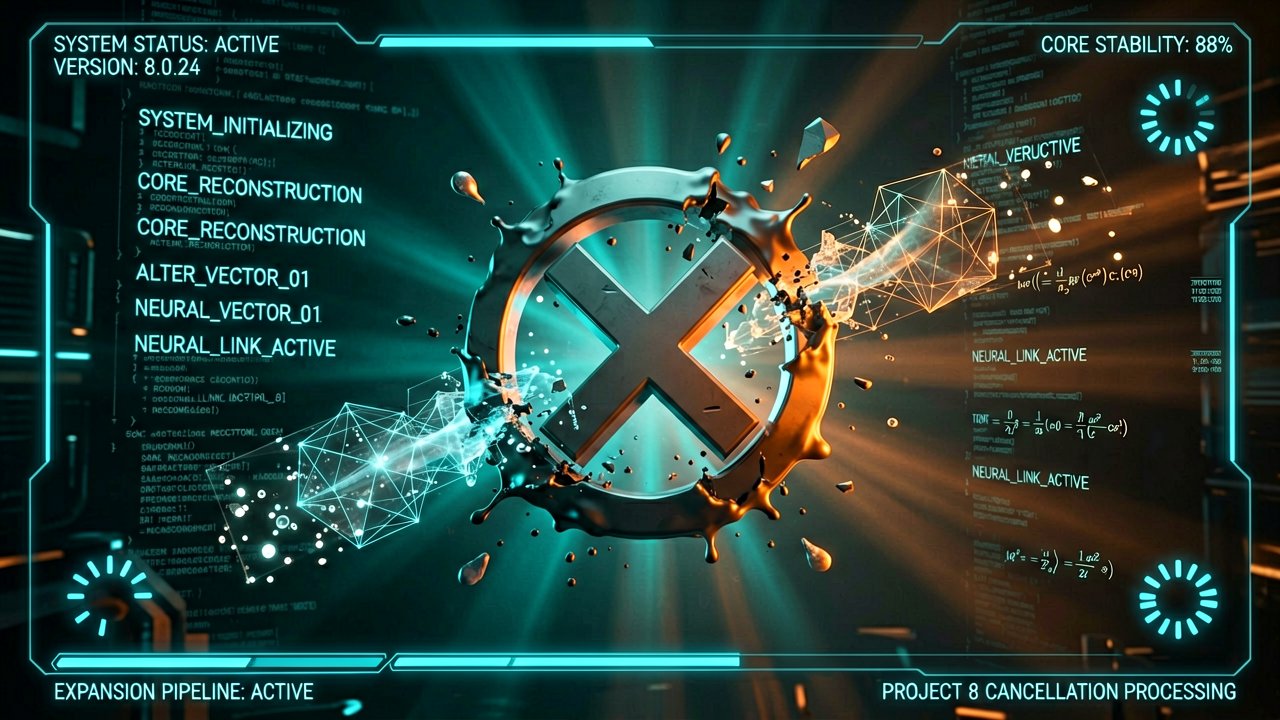
The relentless wave of restructuring washing over the gaming industry hasn't spared independent powerhouses. Polish developer and publisher 11 bit studios has implemented a fresh round of layoffs impacting roughly 20 employees, as reported by industry business tracker WN Hub. The staff reductions, which came to light on June 15, 2026, after former team members shared their departures on professional networks, represent a calculated trimming of the studio's headcount. Management later confirmed the move, framing the cuts as "team adaptations" necessary for navigating the natural shift in a game's development lifecycle.
It is an uneasy moment for the Warsaw-based outfit, which employed around 265 staff members at the end of last year. This isn't their first encounter with downsizing either; the studio previously let staff go following the cancellation of its long-running, multi-million dollar "Project 8" initiative. This latest development hit nearly all departments, including the internal team currently working on the upcoming expansion for The Alters. The studio maintains that its pipeline remains secure, and scheduled releases shouldn't suffer any operational delays.
The Reality Facing Mid-Tier Developers
Even though letting go of 20 people seems relatively minor compared to the massive, thousands-deep purges seen at major publishers, it highlights a persistent, uncomfortable truth. Independent and mid-sized developers face an increasingly brutal landscape where escalating development costs collide with hyper-competitive market distribution. When a project's scope shifts, or when capital pressures tighten, studios are forced into structural adjustments simply to stay agile.
For a company celebrated for mature, high-stakes narratives like This War of Mine and Frostpunk, balancing creative ambition with financial sustainability remains an ongoing tightrope walk. As 11 bit studios pushes forward with its current release roadmap, the broader industry continues to watch how mid-tier teams navigate these challenging macroeconomic headwinds without losing their signature creative edge.

Beyond the Headline Numbers: The reality of modern game development is that the line between a mid-sized indie success and financial vulnerability has never been thinner. For years, 11 bit studios operated as a golden standard for the Polish gaming sector, parlaying the massive success of This War of Mine into a sophisticated publishing and development pipeline. Yet, the studio's recent workforce adjustments underscore a systemic shift affecting the entire industry, where the traditional safety nets for mid-tier creators are rapidly evaporating.
A major catalyst for this internal friction stems from the escalating stakes of game production. As independent projects balloon in scope to rival traditional AAA titles, their budgets and development timelines expand exponentially. When a major project like the long-gestating "Project 8" faces cancellation or severe redirection, the financial hangover isn't easily absorbed by a studio of a few hundred people. Unlike conglomerate publishers that can write off aborted projects against massive live-service revenues, an independent studio must recalibrate its entire overhead almost immediately to protect its remaining portfolio.
The Delicate Timing of Team Adaptations
The timing of these layoffs reveals the brutal operational math currently governing game studios. 11 bit studios is in the thick of managing major active properties, including post-launch support for its high-profile strategy sequels and the impending debut of new intellectual properties like The Alters. Trimming staff during active production cycles is historically a risky maneuver, often signaling to investors that a company is prioritizing immediate cost mitigation over long-term labor stability. It forces the remaining developers to shoulder a heavier burden, creating a pressure-cooker environment just as games near their critical launch windows.
From a stakeholder perspective, the studio's executive leadership faces a grueling balancing act. Management must appease shareholders who demand fiscal discipline in a sluggish global market, while simultaneously maintaining morale among a creative workforce that thrives on stability. Framing these cuts as "team adaptations" is a familiar corporate strategy used to reassure the market that the studio is simply optimizing its structure. However, within the tight-knit Polish development community, such moves inevitably trigger concerns about the broader health of the regional ecosystem, which has long been celebrated for its rapid growth.
Ultimately, this situation serves as a stark reminder that critical acclaim does not grant immunity from macroeconomic pressures. The gaming landscape is currently oversaturated, discoverability is at an all-time low, and securing funding for experimental, narrative-driven experiences is harder than it has been in a decade. As 11 bit studios navigates this transitional period, their ability to successfully ship their upcoming slate will dictate whether this downsizing was a temporary course correction or the beginning of a more conservative operational era.
Reading Between the Lines: There is a glaring contradiction in how the modern gaming market treats its most reliable mid-tier champions. Studios like 11 bit have built their entire brand on corporate empathy, creating harrowing interactive essays on human survival under extreme pressure. Yet, the corporate machinery required to sustain those very narratives operates on the same cold, algorithmic calculus as the rest of the tech sector. Labeling layoffs as mere "team adaptations" serves as an ideological shield, masking the uncomfortable reality that creative sustainability is increasingly subordinate to short-term fiscal metrics.
The skepticism deepens when one evaluates the claim that these cuts are just part of the natural post-production lifecycle. Historically, healthy studios shifted specialized talent smoothly from wrapping up one project to the pre-production phases of the next. When layoffs hit core internal development teams right in the middle of preparing expansions and upcoming major intellectual properties, it signals a structural bottleneck rather than a routine transition. It suggests that the revenue generated by recent launches may not be providing the hefty financial cushion that optimistic post-release press releases initially implied.
The High Cost of Independence
This structural friction exposes the vulnerability of the entire "AA" publishing model. For years, the industry assumption was that mid-tier developers held the sweet spot—agile enough to innovate without the crushing overhead of a billion-dollar conglomerate, yet capitalized enough to deliver premium experiences. In reality, they are caught in a pincer movement. They must compete with AAA production values to grab the attention of a fatigued audience, but they lack the massive marketing budgets or deep cash reserves needed to survive a single underperforming launch or a prolonged development delay.
Projecting outward, the long-term implications for 11 bit studios' creative output are concerning. When a studio undergoes successive rounds of tightening, the cultural fallout often manifests as a pivot toward safer, more predictable project design. The risk-taking spirit that birthed genre-defining titles risks being replaced by a defensive posture meant to satisfy risk-averse investors. If the remaining developers are forced to do more with less, the polish and depth that consumers expect from the brand could face subtle, devastating erosion.
The ultimate irony is that as the wider industry continues to consolidate and contract, the pool of experienced talent expands while the number of stable homes for that talent shrinks. Mid-sized studios will likely continue to trim their sails, chasing an elusive equilibrium in a market that rewards nothing short of astronomical scale. Until the underlying economics of digital distribution and game funding shift, these periodic restructurings will remain a permanent fixture of the corporate landscape, regardless of how much heart a studio pours into its games.
"In the modern gaming industry, the reward for successfully designing a masterclass in resource management and bleak survival is the privilege of practicing it in your own HR department."
Artūras Malašauskas is an AI Systems Integrator with 20+ years of production-grade web engineering experience. He has designed, shipped, and scaled enterprise Python/PHP systems for logistics, SaaS, and public-sector clients. For the past year, he has focused exclusively on AI integrations: deploying open-source LLMs, building generative media pipelines (image, audio, video), and engineering multi-agent workflows for real production environments. His standard: reproducibility, security, cost-efficient inference—no vaporware. He documents and evaluates emerging AI tooling, separating verified capabilities from marketing noise. Technical editor at: muza-ai.eu, ai-verslas.lt, ai-naujinos.lt Connect on LinkedIn
Comments